Types of Elastic: Braided, Knit, Woven and More (2026)
Waistbands, cuffs, swimwear and fitted sheets all rely on elastic. But elastics behave differently: some narrow when stretched, some roll, and some stay flat. Here is how to choose the right one.
In This Article
Elastic in Brief
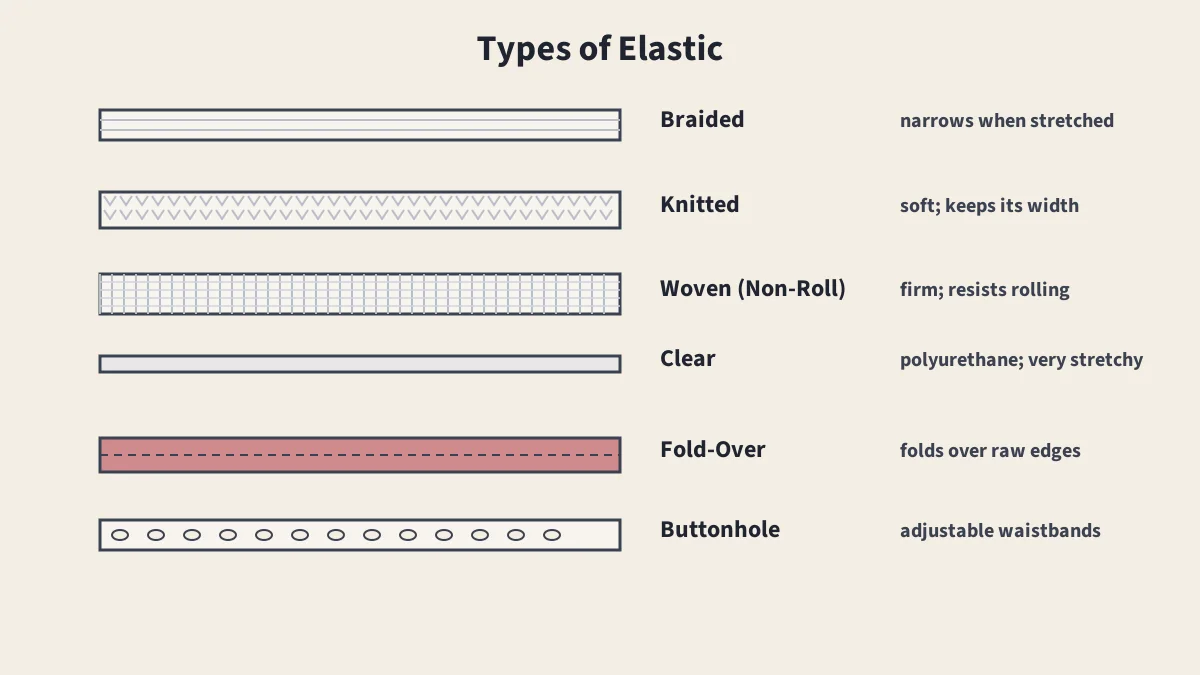
- Braided: the most common; narrows when stretched
- Knitted: soft; keeps its width
- Woven (non-roll): firm and strong
- Clear: polyurethane; stabilizes knit seams
- Fold-over: binds raw edges
Elastic adds stretch to a garment, either to let the wearer move or to let one size fit a range of bodies. Most elastic has a stretchy core of rubber (from latex) or a synthetic such as spandex, covered with fibers like polyester, cotton or nylon. How those fibers are braided, knitted or woven decides how the elastic behaves.
Elastic by Construction
| Type | Behavior | Typical Uses |
|---|---|---|
| Braided | Lengthwise ribs; narrows as it stretches | Casings, hems, sleeves, swimwear and leg bands |
| Knitted | Soft, light and strong; keeps its width when stretched | Lightweight garments; can be sewn directly to fabric |
| Woven (non-roll) | Firm, thick, strong and shrink-resistant | Waistbands, upholstery and covers |
| Clear (transparent) | Polyurethane; stretches three to four times its length | Stabilizing knit seams, swimwear and lingerie |
| Fold-over | Knitted, with a weaker center that folds in half | Binding raw edges on underwear, headbands and baby clothes |
| Buttonhole | Holes along its length | Adjustable waistbands on children's and maternity clothes |
Elastic by Fiber
- Polyester-covered: the everyday default.
- Nylon: soft luster, used for lingerie and some swimwear, but it does not tolerate high dryer heat.
- Cotton: a natural option that shrinks slightly after washing.
- Rubber-free: some medical elastics are made without rubber.
Two Ways to Use Elastic
In a Casing
A casing is a tunnel of fabric, often a folded-over edge. The elastic is threaded through with a bodkin or safety pin, joined into a loop, and the casing is closed. Braided and woven elastics work well this way; see hand sewing needles for bodkins.
Sewn Directly
The elastic is stretched as it is stitched to the fabric with a zigzag or serger stitch, so the fabric gathers when it relaxes. Knitted, clear and fold-over elastics are made for this; see machine stitch types.
Tips for Sewing Elastic
- Cut a little shorter than the body measurement, following the pattern, so it holds snugly.
- Divide and mark the elastic and the garment edge into quarters, then match the marks to stretch evenly.
- Use a stretch stitch so stitches do not break when the elastic stretches.
- Avoid piercing braided elastic too much; it can weaken it.
- Wash gently and avoid high heat to extend elastic life.
For the stretch fiber inside many elastics and stretch fabrics, see spandex.
Sources
- Elastic (notion), Wikipedia
Frequently Asked Questions
What is the most common type of elastic?
Braided elastic. It has lengthwise ribs and becomes narrower as it stretches, which makes it well suited to casings, hems and sleeves but less ideal for sewing directly to fabric.
Which elastic is best for waistbands?
Woven non-roll elastic is a common choice for waistbands because it is firm, strong and resists rolling or twisting inside a casing. Knitted elastic is softer and works well for lighter garments.
What is clear elastic used for?
Clear elastic is made of polyurethane and can stretch to three or four times its length. It is used to stabilize seams in knits, such as shoulder seams, and in swimwear and lingerie.
Why does elastic lose its stretch?
Heat, chlorine, sunlight and age can break down rubber and spandex. High dryer heat is especially hard on some elastics, including nylon types.
Keep Reading
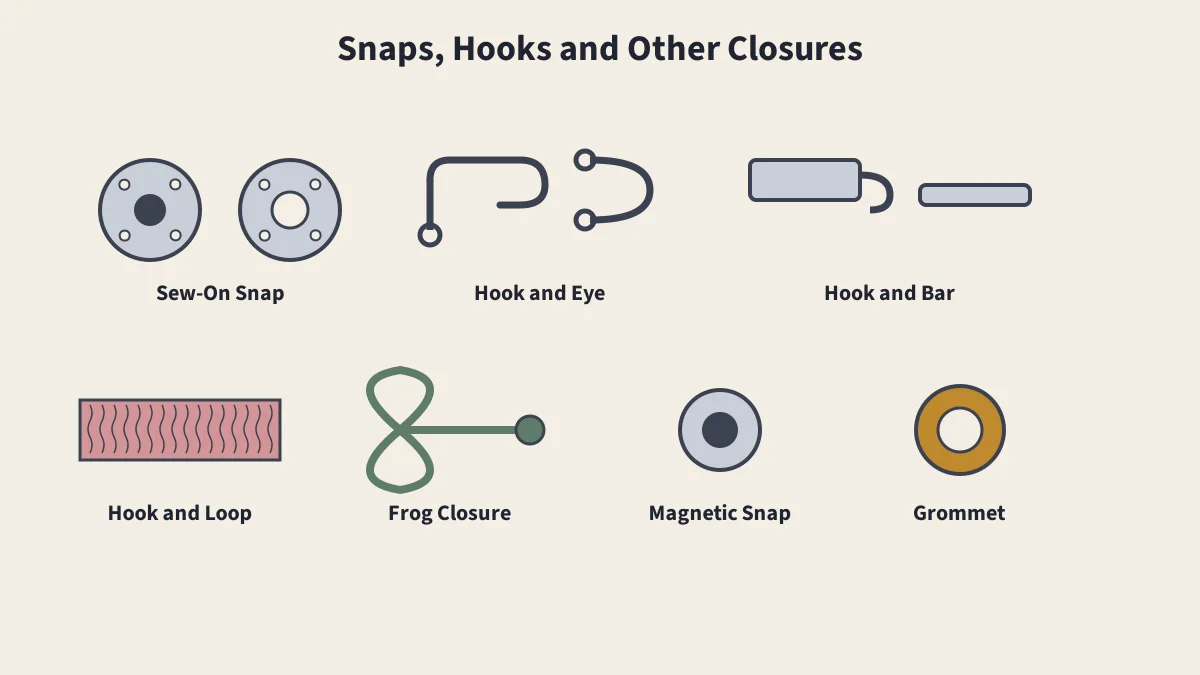
Snaps, Hooks and Closures
Snaps, hooks and eyes, hook and bar, frogs, magnets and grommets.
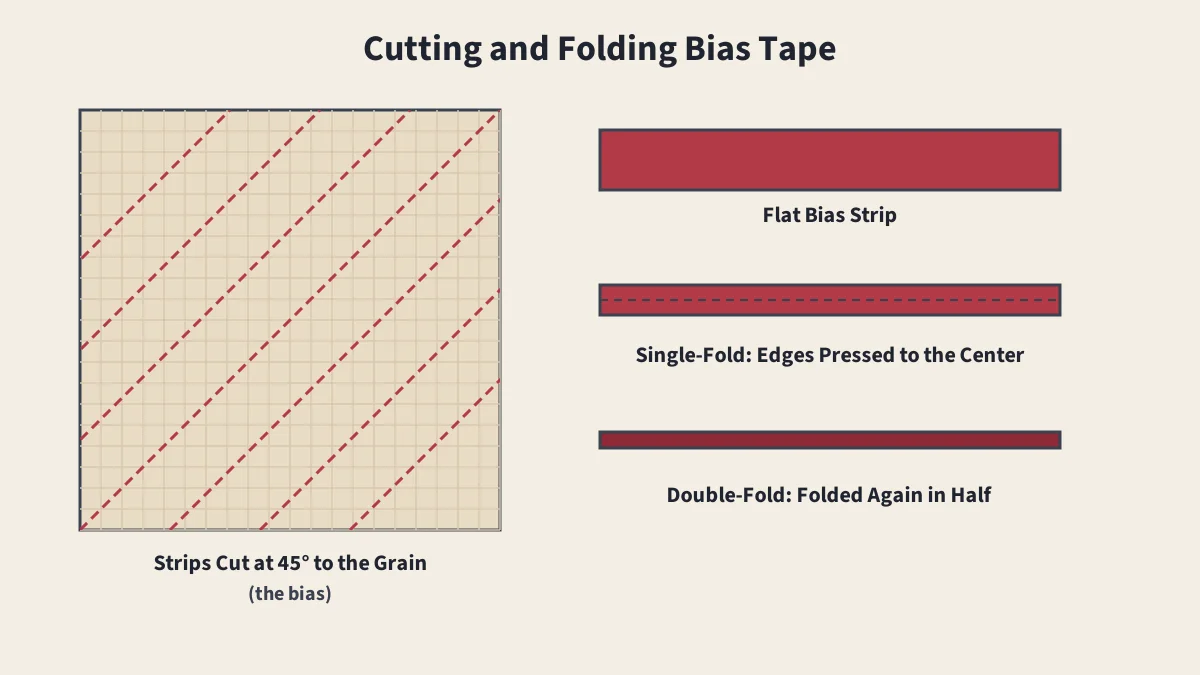
Bias Tape and Binding
Single-fold vs. double-fold bias tape, and how to use binding.
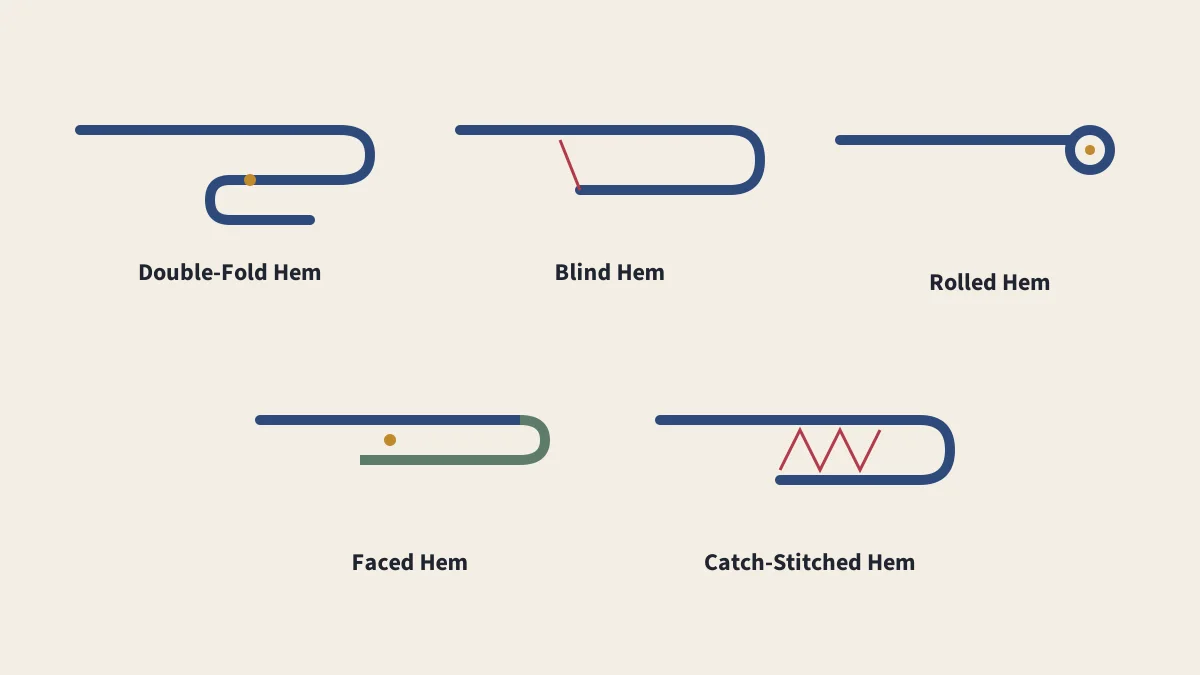
Types of Hems
Double-fold, blind, rolled, faced, bound and knit hems compared.
Types of Thread
Thread fibers, uses, and weight, tex and denier explained.