Types of Sewing Scissors and Shears: Which Cut Is Which? (2026)
Sewists often own several pairs of scissors, and each earns its place. Long shears cut patterns, small scissors trim, pinking shears tame fraying edges, and snips clip threads. Here is what each type does.
In This Article
Cutting Tools in Brief
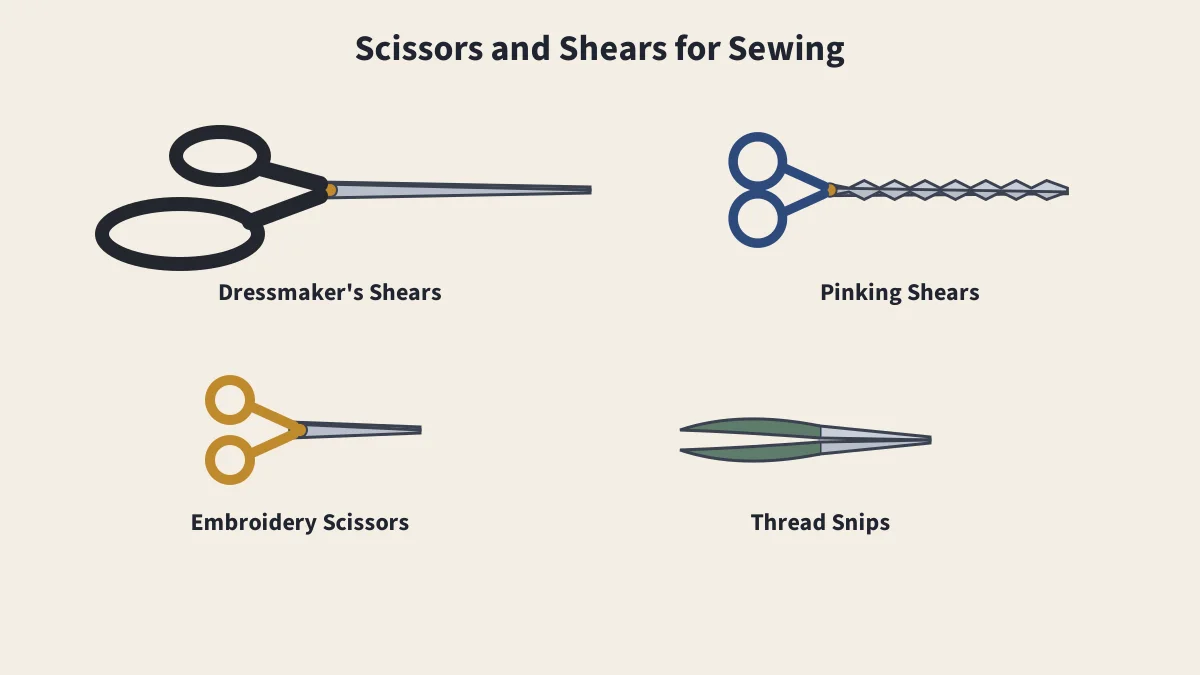
- Dressmaker's shears: long blades for cutting out fabric
- Tailor's shears: heavy-duty, for thick fabric and layers
- Pinking shears: zigzag edge to limit fraying
- Embroidery scissors: small and pointed for detail
- Thread snips: spring-action clippers for threads
Scissors have been around for thousands of years; see the history of scissors. In 1761, Robert Hinchliffe of Sheffield produced the first pair of scissors made of cast steel intended for the mass market. Today sewists choose from many specialized types, each shaped for one part of the job.
Scissors or Shears?
The two words overlap. Heavy-duty scissors intended for cutting tough materials tend to be called shears. In sewing, shears usually means longer-bladed cutting tools, often with a larger lower handle that takes several fingers, while scissors means smaller tools with matching handle loops.
The Main Types
| Type | What It Looks Like | Used For |
|---|---|---|
| Dressmaker's shears | Long blades, handles often bent upward | Cutting out pattern pieces |
| Tailor's shears | Heavier and longer | Thick materials such as leather or multiple layers of fabric |
| Pinking shears | Saw-toothed blades | Cutting a zigzag edge to limit fraying |
| Embroidery scissors | Small, with fine, sharp points | Trimming threads and detailed work |
| Thread snips | Spring-action, no finger loops | Quickly clipping threads at the machine |
| Buttonhole scissors | Short blades, often with an adjustable stop | Opening buttonholes |
| Appliqué scissors | One wide, paddle-shaped blade | Trimming close to stitching without cutting the layer below |
Why Dressmaker's Shears Are Bent
Many dressmaker's shears have handles that angle up from the blades. That lets the lower blade glide along the table while you cut, so the fabric stays flat and does not lift and shift. The result is more accurate cutting along pattern lines.
Pinking Shears
Pinking shears have saw-toothed blades that produce a zigzag edge instead of a straight one, and they are used mainly on woven cloth. The zigzag does not stop fraying, but it keeps each loose thread short, which limits the damage; see seam finishes.
Left-Handed Scissors
There are two kinds. Semi-left-handed scissors simply have reversed finger grips, but their blades open and close as on right-handed scissors. True left-handed scissors reverse both the grips and the blades, like a mirror image of a right-handed pair, so the cutting line stays visible to a left-handed user. Most scissors sold as ambidextrous are still right-handed in their blade layout.
Caring for Sewing Scissors
- Use fabric shears only on fabric. Paper and other materials dull blades faster; keep a separate pair for patterns.
- Do not drop them. A fall can knock blades out of alignment or chip the points.
- Keep them dry and clean to prevent rust and buildup from fusible interfacing.
- Have them sharpened by a professional when they start chewing fabric.
For fast straight cuts, many sewists also use a rotary cutter and mat.
Sources
- Scissors, Wikipedia
- Pinking shears, Wikipedia
Frequently Asked Questions
What is the difference between scissors and shears?
The terms overlap. Heavy-duty scissors intended for cutting tough materials tend to be called shears. In sewing, 'shears' usually means long-bladed cutting scissors, often with one handle loop larger than the other.
What are pinking shears for?
Pinking shears have saw-toothed blades that cut a zigzag edge. The zigzag does not stop fraying, but it keeps each loose thread short, which limits fraying on woven fabrics.
Why are dressmaker's shears bent?
Many dressmaker's shears have handles angled up from the blades, so the lower blade can rest flat on the table while cutting. This keeps fabric flat and helps cuts stay accurate.
Are there left-handed sewing scissors?
Yes. 'True' left-handed scissors have reversed handles and reversed blades. Some scissors sold as left-handed or ambidextrous only reverse the finger grips, which leaves the blades in the right-handed arrangement.
Keep Reading
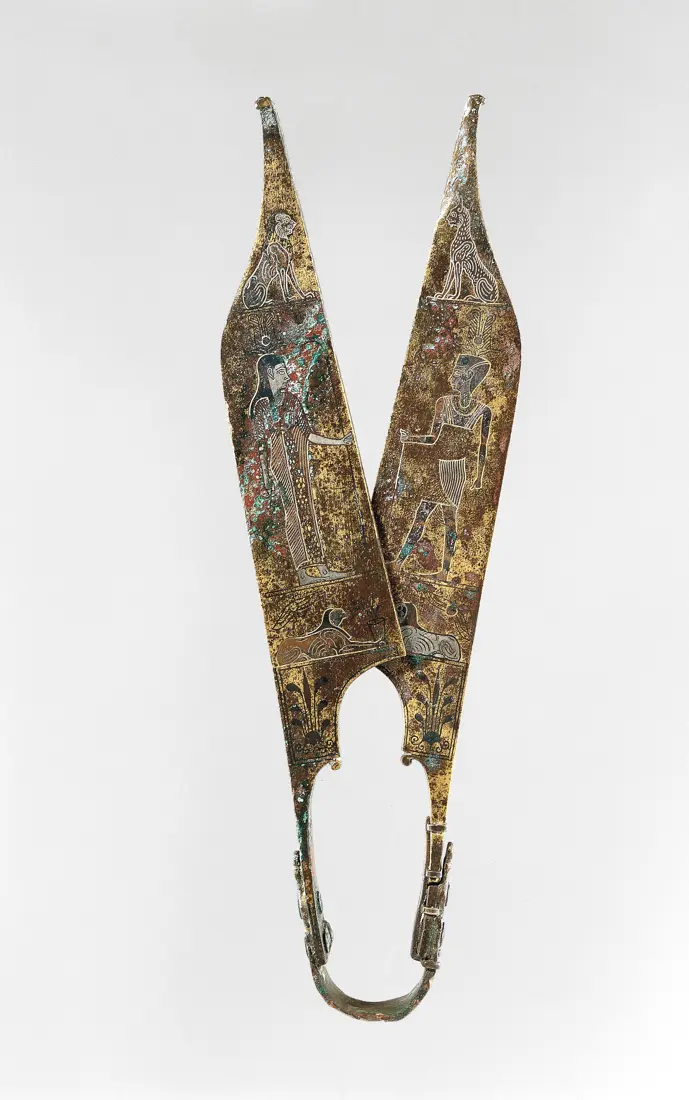
History of Scissors and Shears
From Bronze Age spring shears to Sheffield steel and pinking shears.
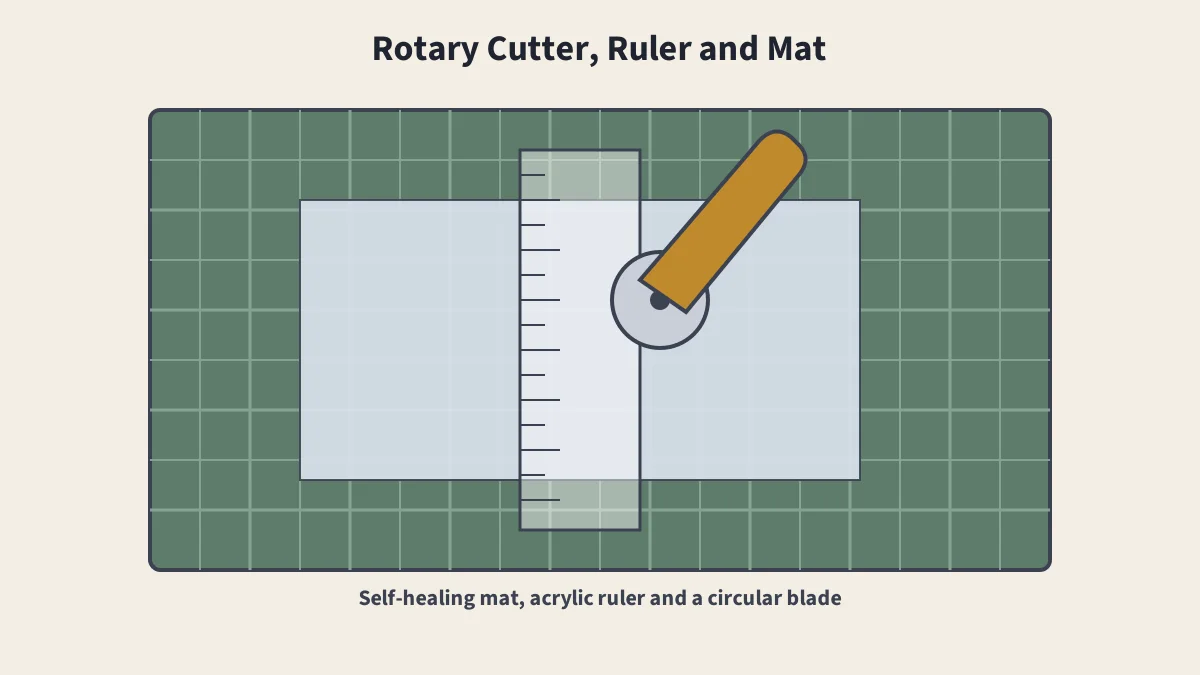
Rotary Cutters and Mats
The 1979 invention, blade sizes, mats, rulers and safe cutting.
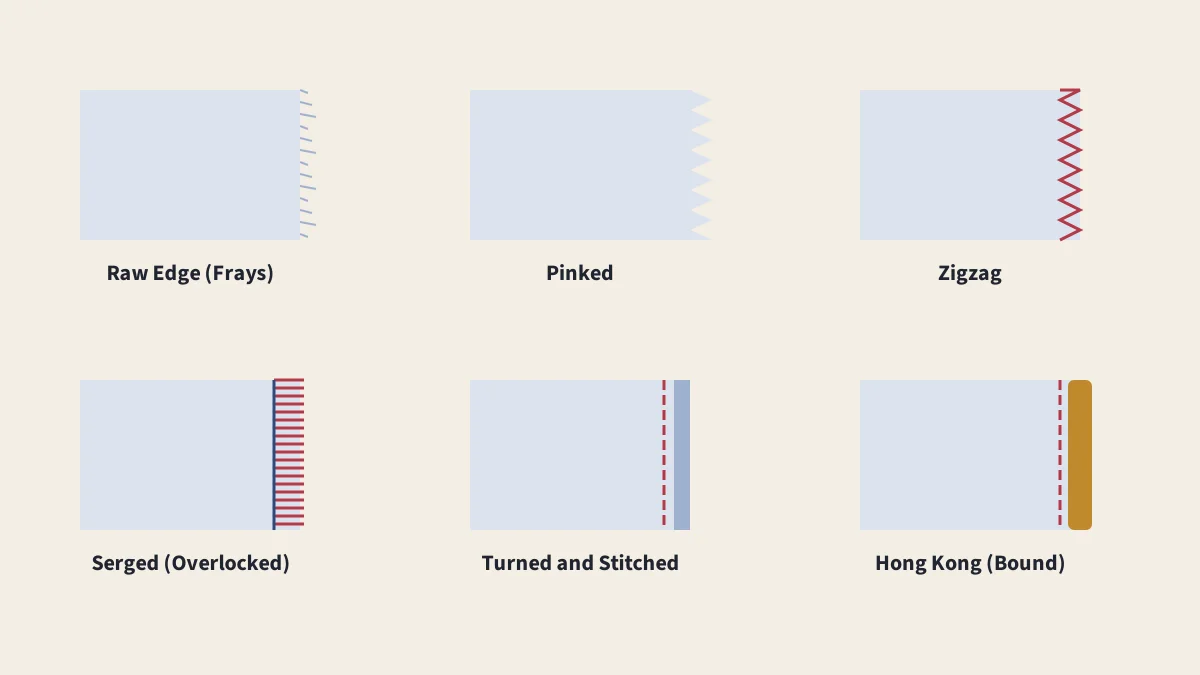
Seam Finishes
Pinked, zigzag, serged, Hong Kong, bound and enclosed finishes.
Sewing Tools and Notions
The core sewing toolkit, from needles and pins to cutters and rulers.