Fabric Marking Tools: How to Transfer Pattern Marks to Fabric (2026)
Patterns are full of dots, darts, notches and fold lines, and every one of them has to reach the fabric. Marking tools do that job, from a sliver of chalk to ink that vanishes with water or heat.
In This Article
Marking Tools in Brief
- Chalk: quick and removable; triangles, pencils and wheels
- Pens: water-soluble, air-erasable or heat-erasable
- Tracing wheel and paper: transfer lines in one pass
- Thread: tailor's tacks and thread tracing for delicate fabric
- Snips and pins: notches and quick temporary marks
A paper pattern carries far more information than its outline. Dots show where pockets and darts go, notches show which edges join, and lines show grain, folds and buttonholes. Marking tools carry that information from paper to fabric, so the pieces can be assembled accurately. For how patterns developed, see the history of sewing patterns.
The Main Marking Tools
| Tool | How It Marks | Removal | Good For |
|---|---|---|---|
| Tailor's chalk | A chalky or waxy edge drawn on fabric | Brushes off; wax types press away | Wool and most wovens |
| Chalk wheel | Loose chalk powder rolled out in a fine line | Brushes off | Long, precise lines |
| Water-soluble pen | Ink line | Water | Light, washable fabrics; quilting lines |
| Air-erasable pen | Ink that fades on its own | Time | Marks you will sew soon |
| Heat-erasable pen | Ink that clears with heat | An iron | Fabrics that will be pressed |
| Tracing wheel and paper | Wheel presses colored transfer paper onto fabric | Varies by paper | Darts, seam lines and stitching lines |
| Tailor's tacks | Loose loops of thread | Pulled out | Delicate, textured or hard-to-mark fabrics |
| Snips and pins | Small cuts or pins at notches and dots | Pins removed; snips stay in the seam allowance | Quick marks on most fabrics |
Tailor's Chalk
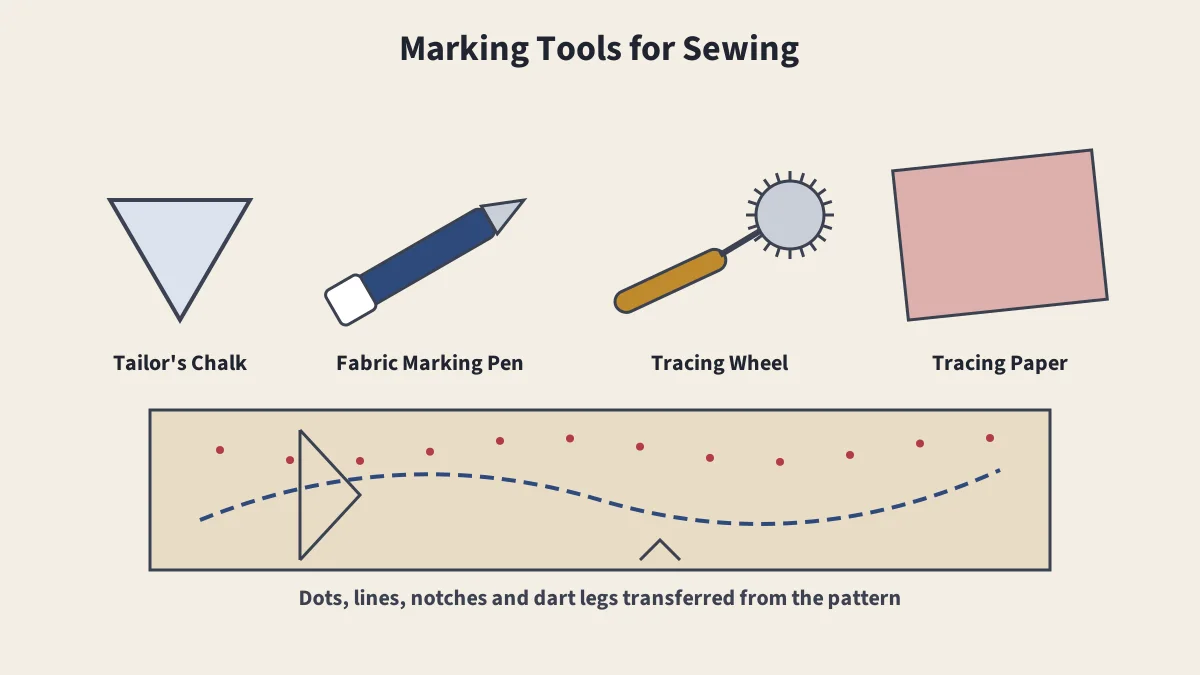
Chalk is the traditional marker for tailors. Natural chalk is almost pure calcium carbonate, but the "French chalk" used by tailors is now usually made of talc. Chalk comes as flat triangles or squares with a thin edge, in pencils for fine lines, and as loose powder in rolling wheel dispensers. Waxy chalks hold a sharper line on wool and can be removed with an iron, while powdery chalks brush away.
Fabric Marking Pens
Marking pens draw a clean, visible line and are popular for quilting and light-colored fabrics. They come in three main kinds: water-soluble ink that rinses out, air-erasable ink that fades over hours or days, and heat-erasable ink that clears with an iron. Each has a catch: heat can set water-soluble ink, air-erasable marks can disappear before you sew, and heat-erasable marks can reappear in the cold on some fabrics.
Tracing Wheel and Transfer Paper
A tracing wheel is a small wheel on a handle. Run over a pattern line with colored transfer paper beneath, it leaves a line of dots on the fabric. Serrated wheels make dotted lines; smooth wheels are gentler on delicate fabrics. This method transfers long seam lines and darts quickly, but marks can be hard to remove on some fabrics, so place them on the wrong side; see right side vs. wrong side.
Marking With Thread
For fine silks, sheers, velvets and tailoring wool, thread is often the best marker because it leaves nothing behind. Tailor's tacks are loose loops of thread sewn through both layers at a pattern dot, then snipped apart so each layer keeps a tuft. Thread tracing is a line of long basting stitches that marks a seam line or center front.
Notches and Snips
Notches are small triangles on the cut edge of a pattern that show which edges match. Sewists transfer them either by cutting the triangles outward from the edge or by making a short snip into the seam allowance; see seam allowance. Pins can mark dots temporarily; see types of pins.
Choosing a Marker
- Match the fabric color: light chalk or pens on dark fabric, dark on light.
- Match the fabric care: washable fabrics suit water-soluble pens; dry-clean-only fabrics suit chalk or thread.
- Mark the wrong side unless the mark is meant to be sewn over on the right side.
- Mark just before sewing when using fading inks.
For what each pattern marking means, see pattern symbols and markings.
Sources
- Chalk, Wikipedia
Frequently Asked Questions
What is the best way to mark fabric?
It depends on the fabric. Chalk works on most wovens and brushes off; water-soluble pens suit washable light fabrics; tailor's tacks in thread work on delicate or textured fabrics where other marks would not show or might stain. Always test on a scrap first.
What is tailor's chalk made of?
Traditional chalk is mostly calcium carbonate, but the 'French chalk' used by tailors is now usually made of talc. Many modern marking chalks are also made with wax, which presses away with an iron on wool.
Do disappearing fabric pens really disappear?
Usually, but test first. Air-erasable ink fades over time, water-soluble ink washes out, and heat-erasable ink disappears with an iron but may reappear in the cold on some fabrics. Heat can also set some inks permanently.
What are notches on a sewing pattern?
Small triangles or lines on the cutting edge of a pattern piece that show which edges match. They are transferred by cutting a small snip into the seam allowance or a small triangle outward from it.
Keep Reading
Measuring Tools
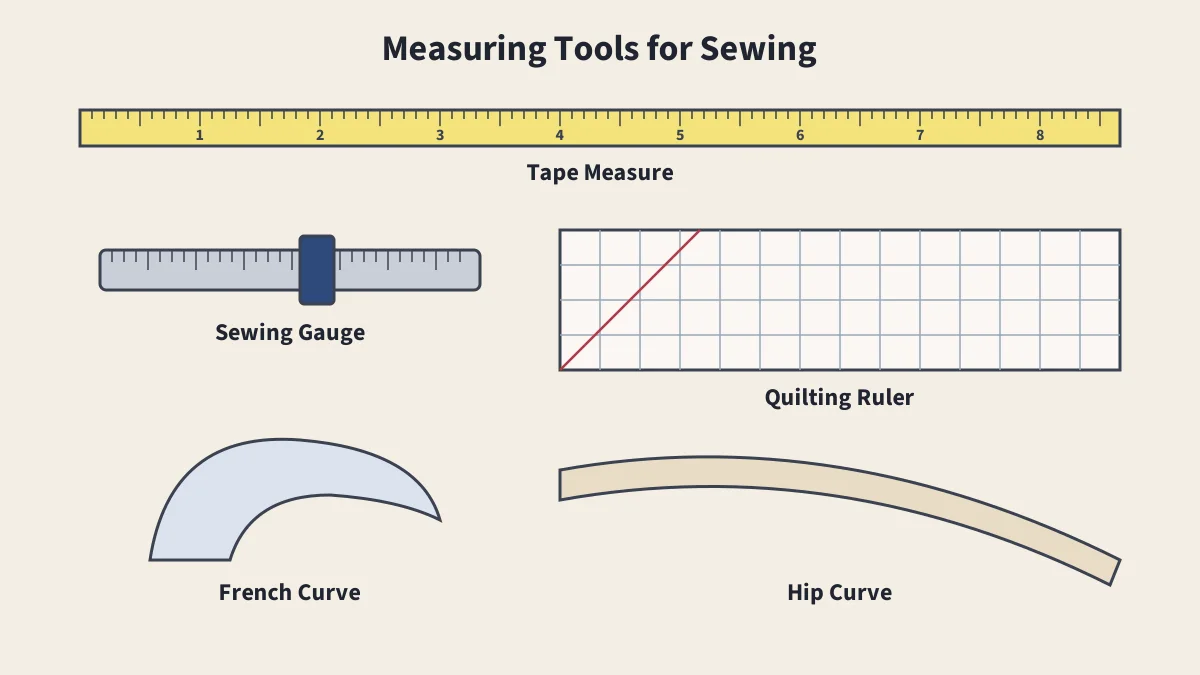
Tape measures, gauges, quilting rulers and curves explained.
Types of Pins
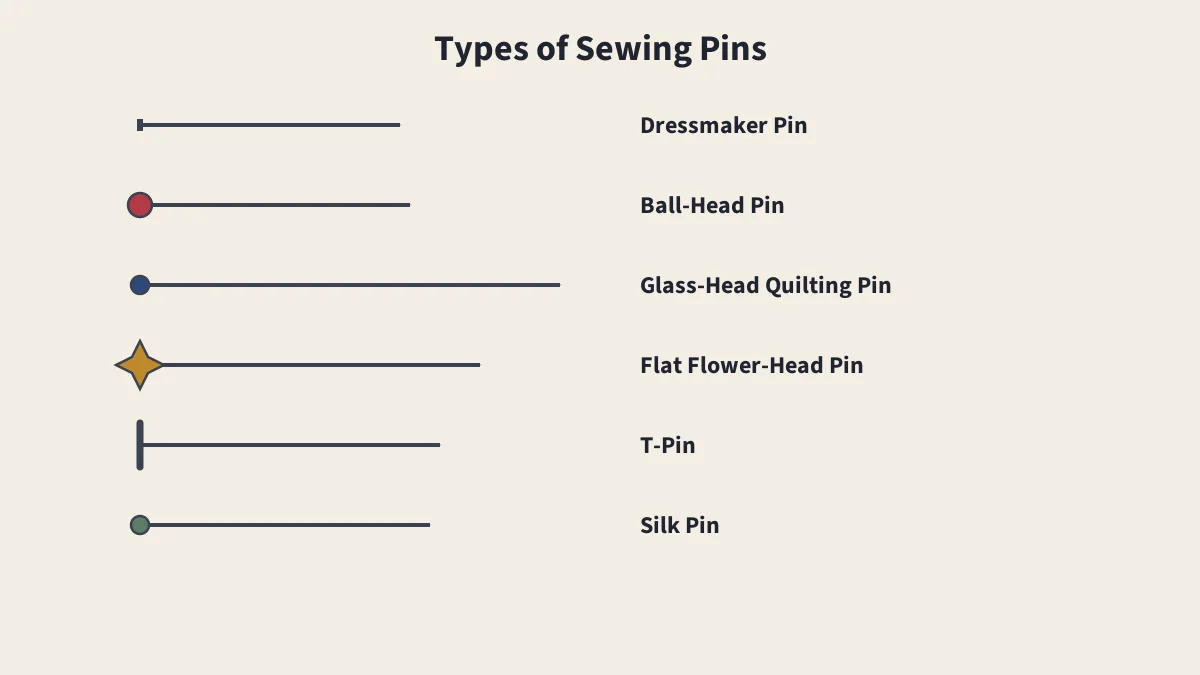
Pin types, sizes and head styles, plus a short history of the pin.
Right Side vs. Wrong Side of Fabric
Simple checks for prints, solids, selvedges, knits and double-sided cloth.
History of Sewing Patterns
Butterick, McCall's, Vogue and Simplicity, from 1800s magazines to PDFs.