Upcycling Clothes: Turning Old Garments Into Something New (2026)
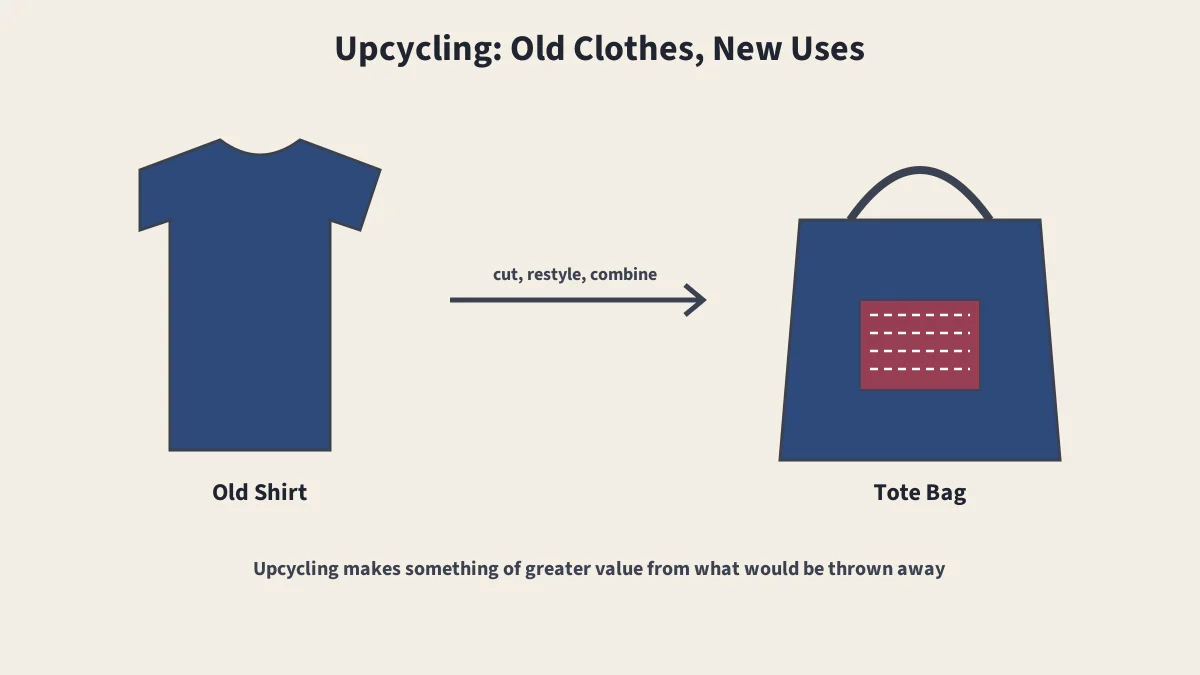
Upcycling turns unwanted clothes into something of greater value instead of throwing them away. It uses the same skills as alterations and mending, applied with more imagination.
In This Article
Upcycling in Brief
- Definition: making something of greater value from waste
- Term: first in print in 1994
- vs. Recycling: recycling remakes; upcycling adds value
- Skills: unpicking, cutting, alterations, mending
- Best sources: good fabric in tired shapes
Upcycling, sometimes called creative reuse, turns waste, by-products or unwanted items into products of greater value. Recycling usually breaks a material down to make similar items again, while downcycling produces something of lower quality. The words upcycling and downcycling first appeared in print in 1994, in a SalvoNEWS article by Thornton Kay quoting Reiner Pilz.
Why Upcycle Clothes?
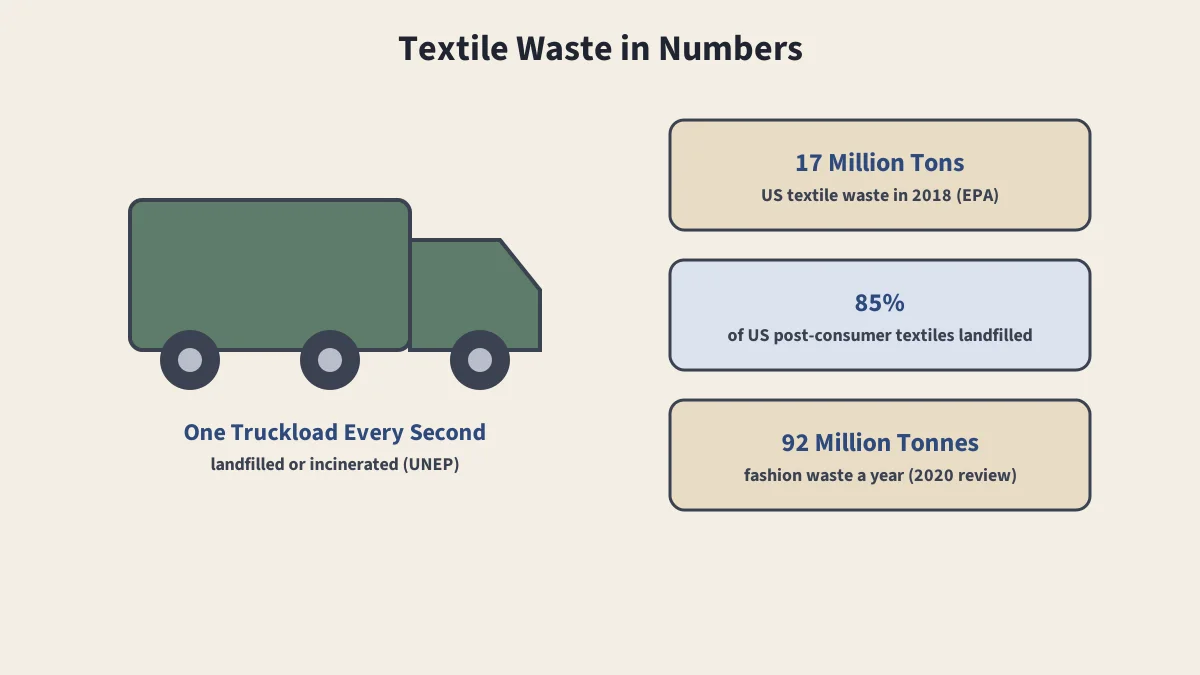
Upcycling keeps usable fabric in use and is often cheaper than buying new. For the bigger picture on textile waste, see textile waste and sustainable fabrics. Reusing fabric is not new: during the Depression, families made clothes from cotton feed sacks; see feed sack dresses, and in wartime Britain the Make Do and Mend campaign encouraged remaking old clothes.
Five Ways to Upcycle
| Approach | Examples | Skills |
|---|---|---|
| Restyle | Crop a top, shorten jeans into shorts, change a neckline, remove sleeves | Cutting, hemming, facings |
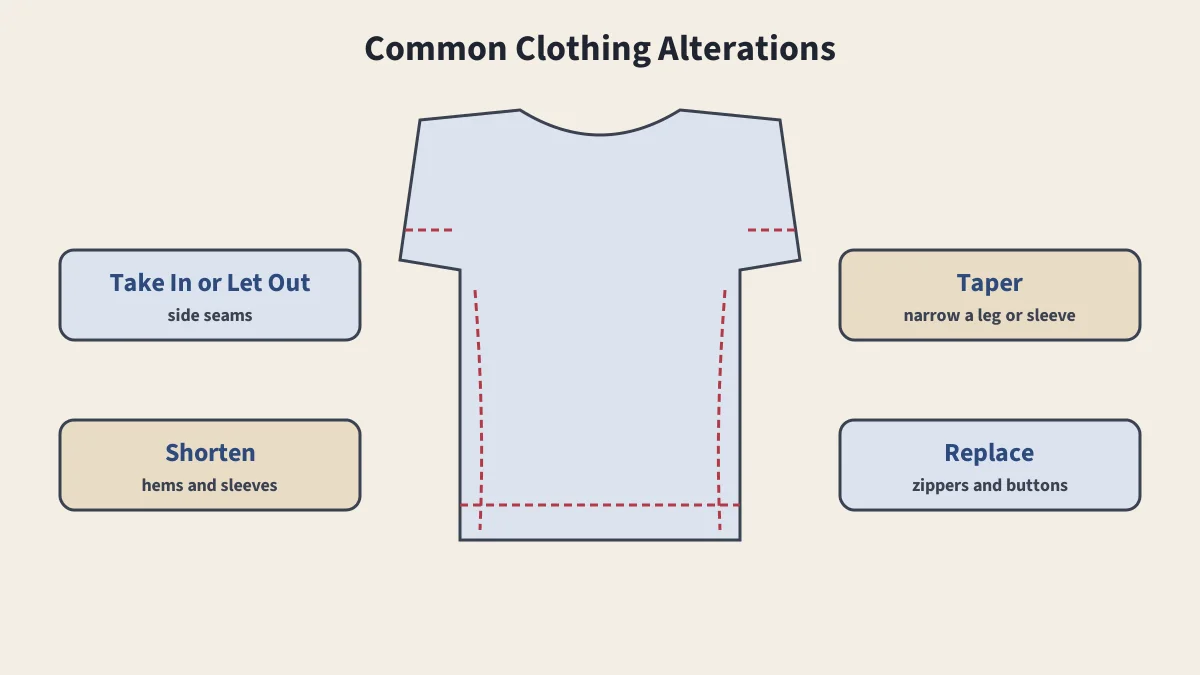
| Refit | Take in an oversized shirt, taper trousers | Alterations |
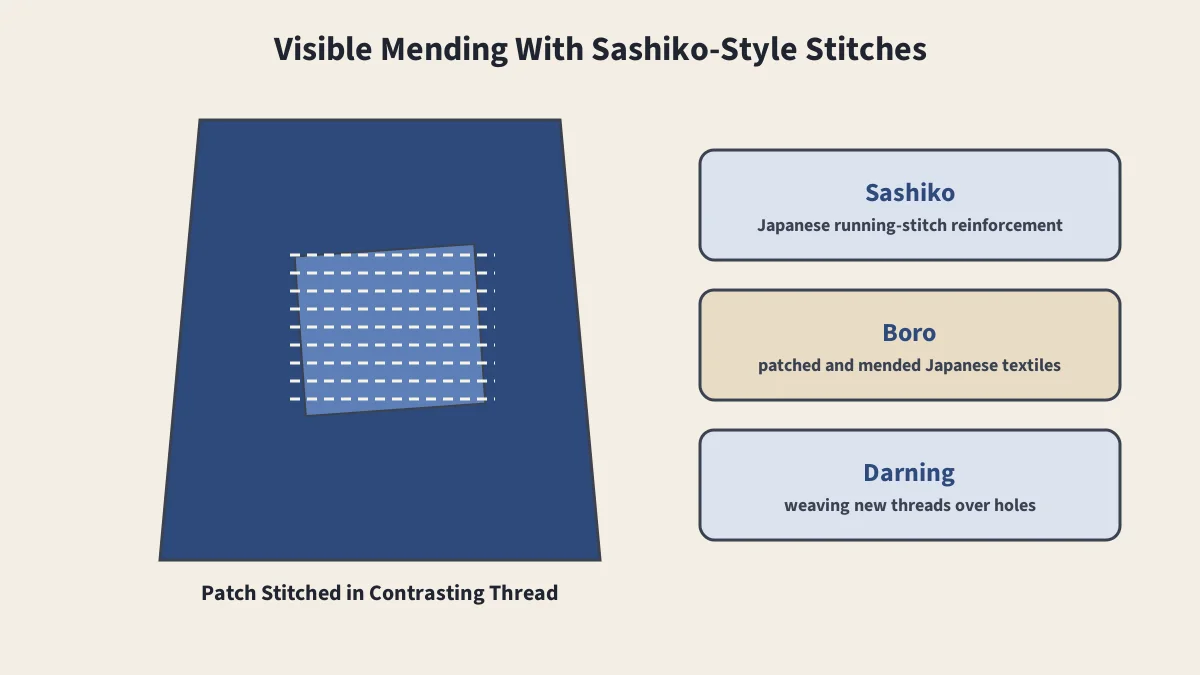
| Embellish | Cover stains with patches, embroidery or appliqué | Visible mending |
| Combine | Join two shirts into one, add a contrasting yoke or panel | Pattern matching, seams |
| Repurpose | Tote bags, cushion covers, quilts, rag rugs | Basic seams |
Getting Started
- Wash the garment first, so it has shrunk as much as it will.
- Look at the fabric: check for thin areas, stains and the grain; see grain and bias.
- Unpick rather than cut when you need the most fabric; seams hold extra fabric in their allowances.
- Reuse the finished edges: existing hems, plackets and buttonholes save time.
- Use a pattern piece where you can, laying it on the opened garment like flat fabric; see cutting and layout.
Beginner Project: T-Shirt Tote Bag
- Cut off the sleeves just inside the seams.
- Cut a wider scoop from the neckline to form the handles.
- Turn inside out and sew the bottom hem closed, twice for strength, or cut a fringe and knot it.
- Turn right side out. Knits don't fray, so the cut edges can stay raw; see sewing knits.
Upcycling in Fashion
Designers such as Ksenia Schnaider and Reet Aus have made whole collections from fabric scraps, and UPMADE is a certification for textile upcycling. Luxury brands have sued sellers of upcycled products over trademarks, so reworking branded items for sale can raise legal issues.
Sources
- Upcycling, Wikipedia
Frequently Asked Questions
What is upcycling?
Upcycling, or creative reuse, turns waste, by-products or unwanted items into products of greater value. Recycling usually breaks materials down to remake similar items, and downcycling turns them into lower-quality products.
Who coined the word upcycling?
The terms upcycling and downcycling first appeared in print in a 1994 SalvoNEWS article by Thornton Kay, quoting Reiner Pilz.
What are easy upcycling projects for beginners?
Turning T-shirts into tote bags, shortening jeans into shorts, cropping or adding sleeves to tops, making cushion covers from shirts, and adding patches or embroidery to cover stains.
Where can I find clothes to upcycle?
Your own wardrobe first, then charity shops, swaps and family hand-me-downs. Garments with good fabric but outdated shapes are ideal.
Keep Reading
Textile Waste and Sustainability
Sourced textile waste figures, recycling and practical steps.
Clothing Alterations Basics
Easy and hard alterations, and when to see a tailor.
Patching and Visible Mending
Patching methods, sashiko, boro and visible mending.
Feed Sack Dresses
How flour and feed bags became printed dress fabric for rural families.