Types of Lace: How Openwork Fabric Is Made (2026)
Lace is a fabric made of holes, outlined in thread. Since the 16th century it has been made by twisting bobbins, looping needles, knotting shuttles and, eventually, running machines. Here are the main kinds.
In This Article
Lace in Brief
- Definition: openwork textile made without a pre-existing fabric
- Handmade types: bobbin, needle, tatting, crochet, knitted
- Other types: net, tape, cutwork, chemical and machine lace
- Earliest examples: 16th-century Italy (origin disputed)
- Famous laces: Alençon, Chantilly, Brussels, Honiton
Lace is a decorative openwork textile made without the use of a pre-existing fabric. Its name traces back to the Latin laqueus, meaning noose, and a noose is exactly what lace is built from: open spaces outlined with thread. Lace can be made by hand or by machine, and it is used for trims, collars, veils, lingerie and whole garments. For lace as a trim, see sewing trims.
How Lace Is Made
| Type | Technique |
|---|---|
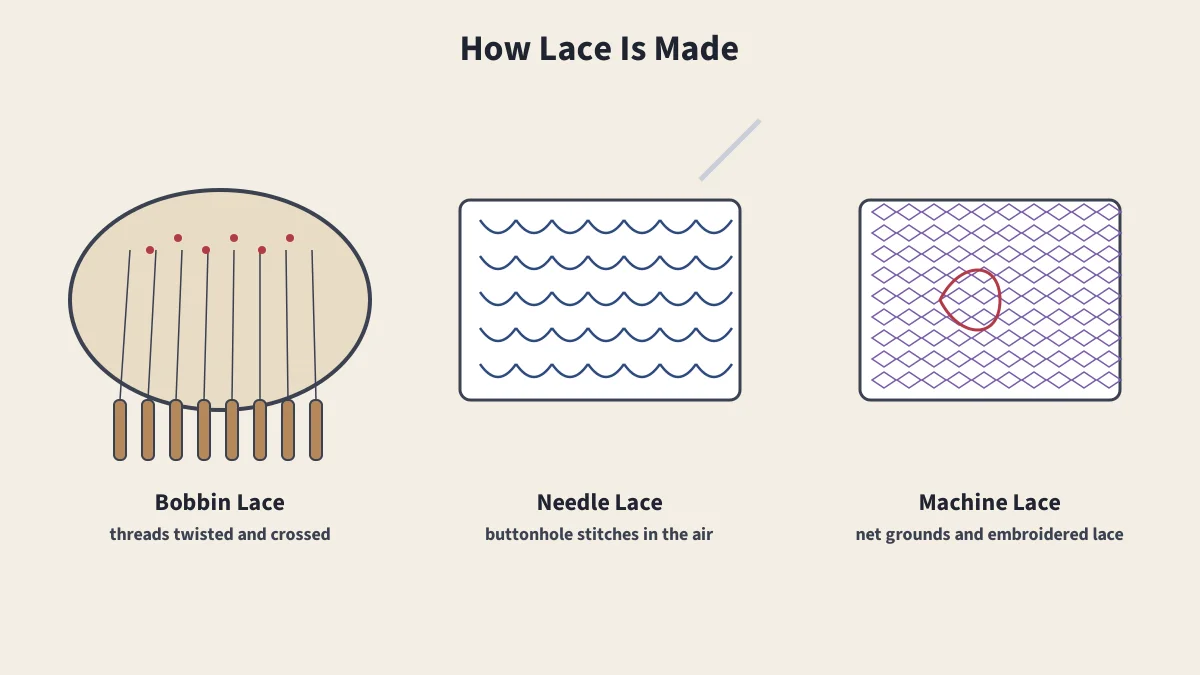
| Bobbin lace | Threads wound on bobbins are twisted and crossed over a pillow, held by pins |
| Needle lace | Built with a needle and thread, such as Venetian Gros Point |
| Tatting | Knots and loops formed with a shuttle or needle |
| Crocheted and knitted lace | Openwork made with crochet or knitting stitches |
| Net lace | Ready-made net embellished with stitching |
| Tape lace | Tape shaped and joined, embellished with needle or bobbin lace |
| Cutwork and drawn thread work | Threads cut or drawn out of a woven background |
| Chemical lace | Embroidery on a dissolvable ground, typically by machine |
| Machine lace | Any style made or replicated mechanically |
Where Lace Began
The earliest examples of lace are from 16th-century Italy, but its origin is disputed. A 1493 will of the Milanese Sforza family is cited in support of Italy, while a lace-trimmed garment in a Hans Memling painting from around 1485 is cited for Flanders. Because lace evolved from several different techniques, it is hard to pin it to one place.
Famous Laces
| Country | Laces |
|---|---|
| France | Alençon, Argentan, Chantilly |
| Belgium | Brussels (Point d'Angleterre), Mechlin, Valenciennes, Binche |
| England | Honiton |
| Ireland | Limerick, Carrickmacross, Kenmare, Youghal |
| Italy | Venetian and Burano |
Many laces are named after the towns that made them; see fabrics named after places.
Sewing With Lace
- Plan motif placement before cutting; lace often has scalloped edges you can use as finished hems.
- Join with overlapped seams: lap one piece over another along the motifs and zigzag around them, then trim the excess, for nearly invisible joins.
- Underline or line lace for modesty and stability; silk organza or tulle work well; see sheer fabrics.
- Use a fine needle and a narrow zigzag.
- Press face-down on a towel with a pressing cloth so the texture is not flattened.
For lace-like embroidery on white fabric, see whitework.
Sources
- Lace, Wikipedia
- Bobbin lace, Wikipedia
- Needle lace, Wikipedia
Frequently Asked Questions
What are the two main types of handmade lace?
Bobbin lace, made by twisting and crossing threads wound on bobbins over a pillow, and needle lace, made with a needle and thread using variations of the buttonhole stitch.
Where was lace invented?
The earliest examples are from 16th-century Italy, but historians dispute the origin. Claims point to both Italy and Flanders, and because lace grew out of several techniques, it is hard to assign to one place.
What is chemical lace?
Lace made by embroidering on a ground that is then dissolved away, leaving only the stitched design. It is typically machine-made.
Where does the word lace come from?
From Middle English, tracing back through Old French las and Latin laqueus, meaning noose. A noose describes an open space outlined with thread.
Keep Reading
Sewing Trims
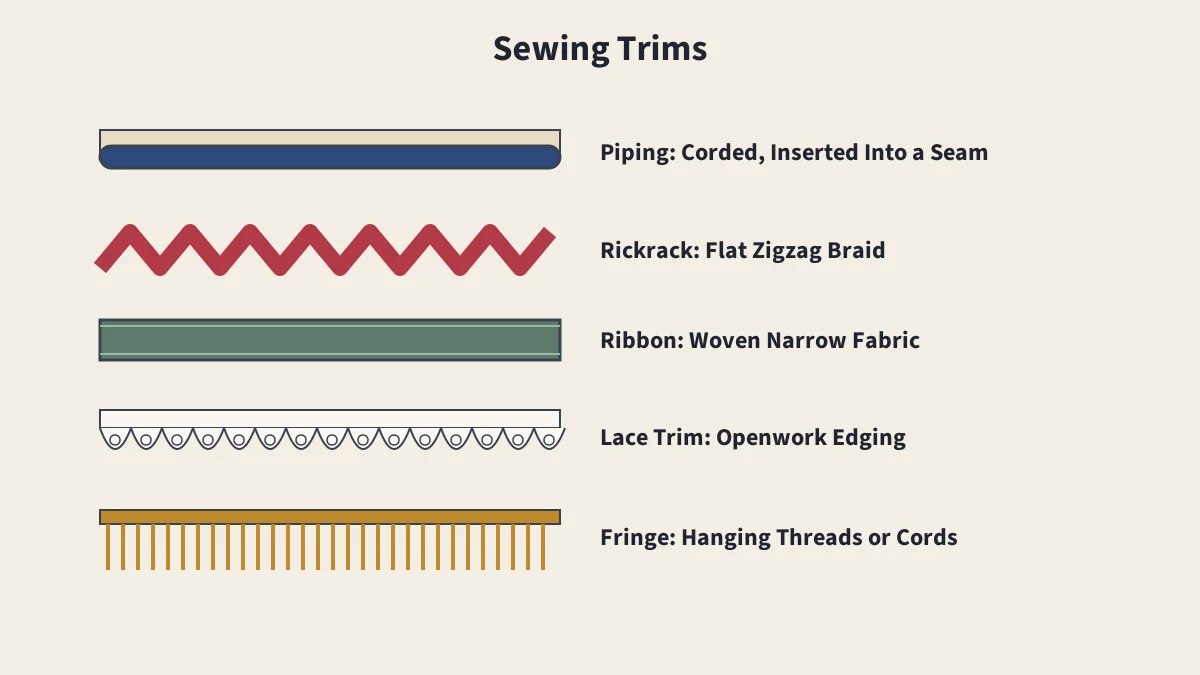
Piping, rickrack, ribbon, lace trim and fringe explained.
Sheer Fabrics
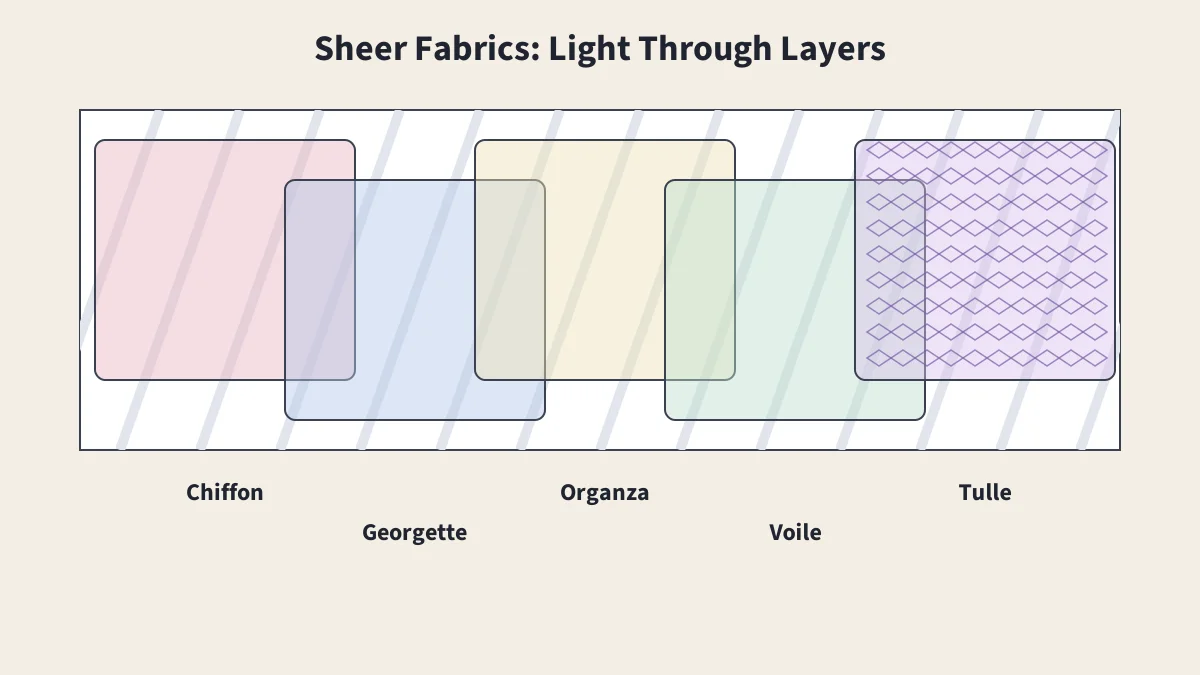
Chiffon, georgette, organza, voile and tulle compared.
Embroidery Stabilizers
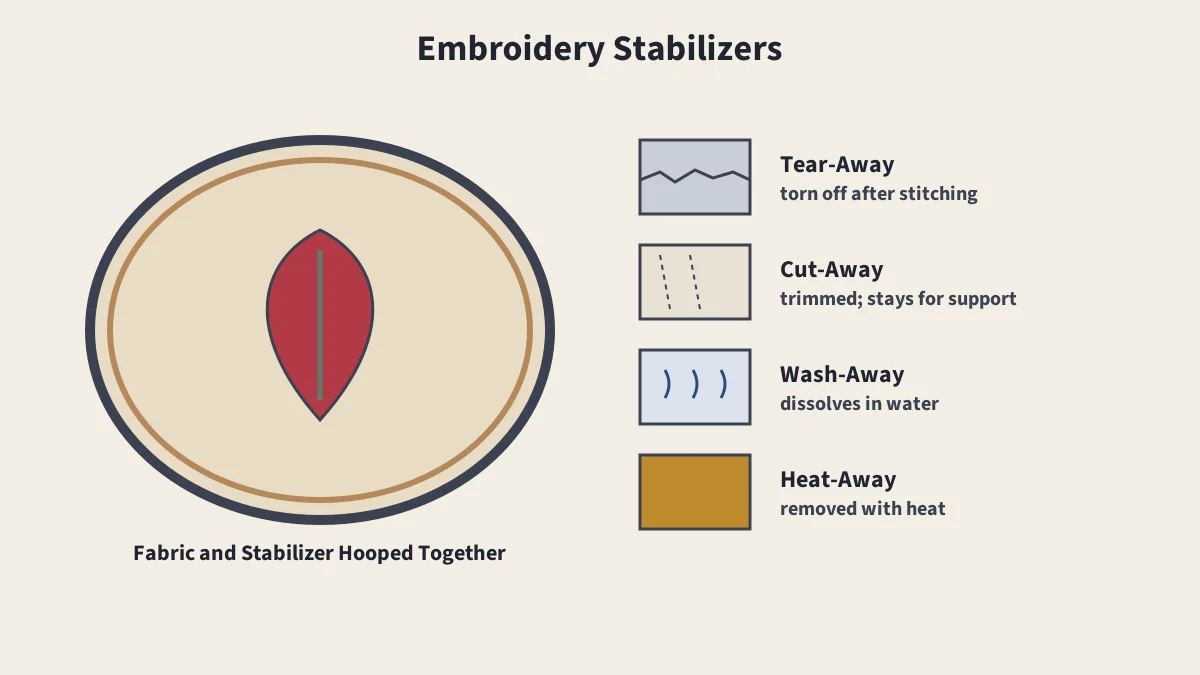
Tear-away, cut-away, wash-away and heat-away stabilizers explained.
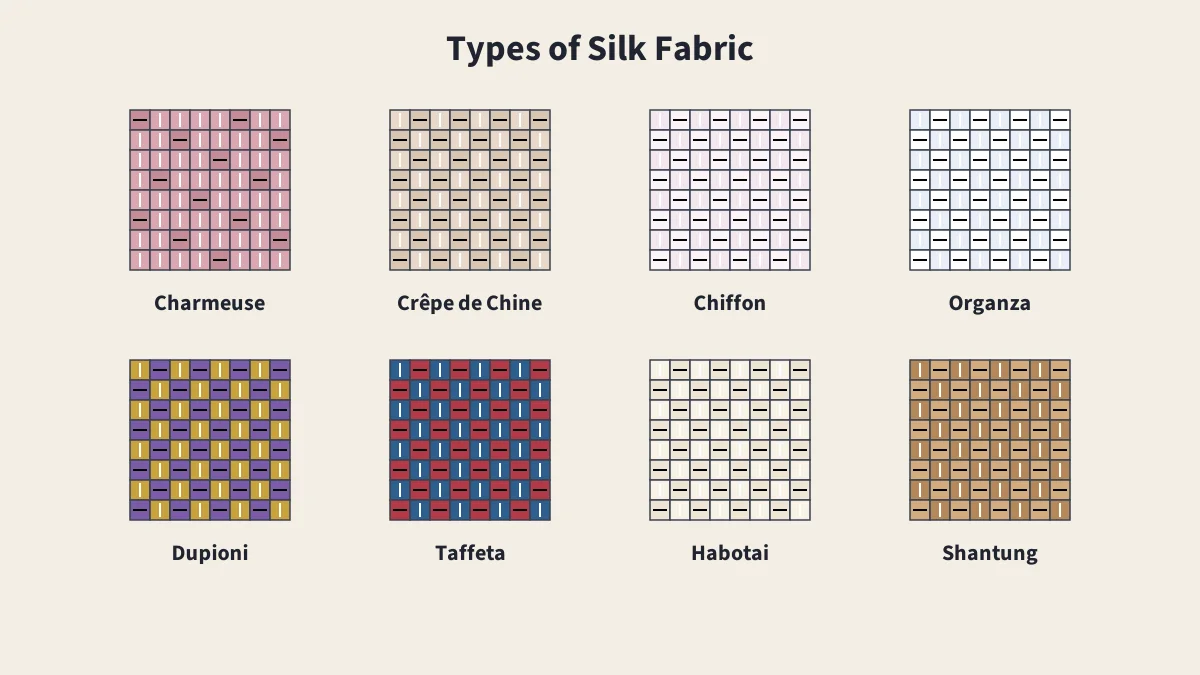
Types of Silk Fabric
Charmeuse, crêpe de chine, organza, dupioni, taffeta and more.