Sewing Machine Problems: Causes and Fixes for Every Common Fault (2026)
Most sewing machine trouble comes down to a handful of causes: threading, the needle, the bobbin, lint or settings. Work through them in the right order and you can fix most problems in minutes, before calling a technician.
In This Article
- The Five-Step Reset
- Thread Nests Under the Fabric (Bird's Nesting)
- Skipped Stitches
- Upper Thread Keeps Breaking
- Bobbin Thread Breaks or Looks Wrong
- Needle Breaks
- Fabric Won't Feed or Feeds Unevenly
- Puckered Seams
- Machine Runs but the Needle Doesn't Move
- Machine Is Jammed, Noisy or Sluggish
- Quick Troubleshooting Table
- Prevention: Small Habits, Fewer Problems
- Sources
- Frequently Asked Questions
The Five-Step Reset
- 1. Rethread the upper thread with the presser foot up
- 2. Change the needle to a new one of the right type and size
- 3. Reinsert the bobbin and check it is the correct class
- 4. Clean lint from the bobbin area and feed dogs
- 5. Check settings: stitch, length, width, tension and presser foot
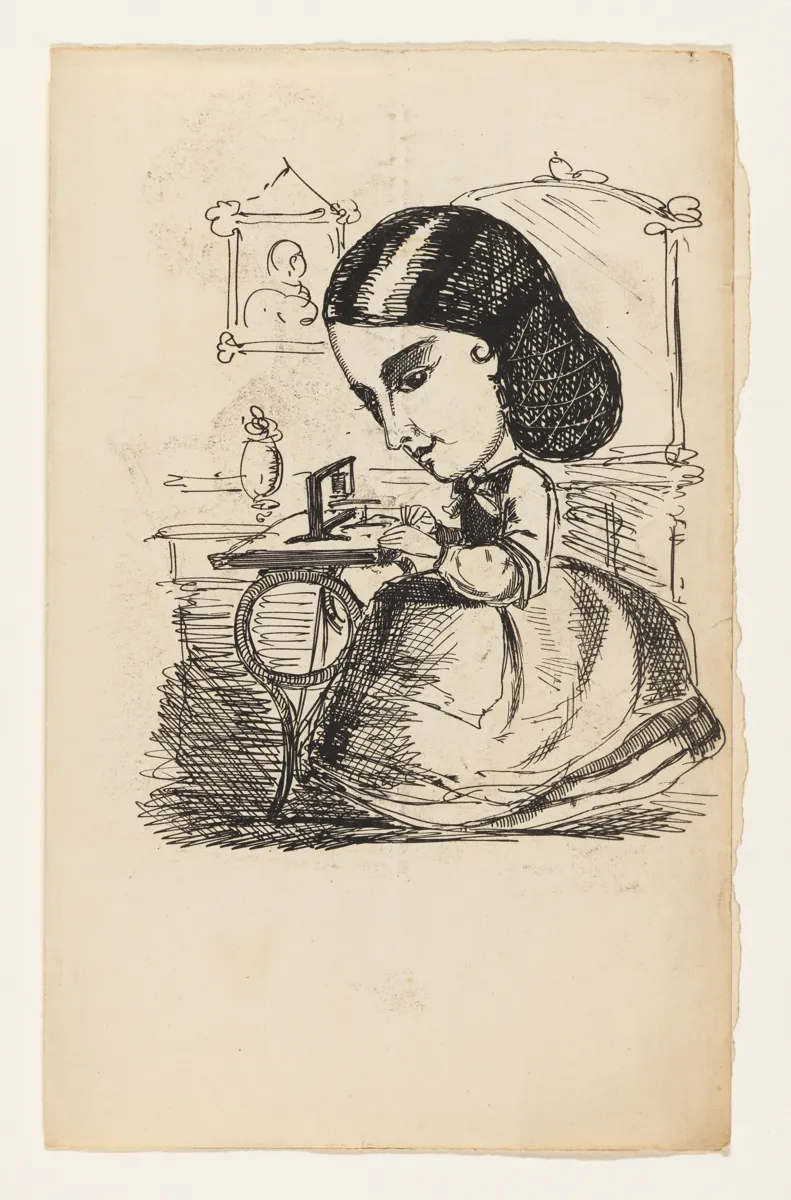
Sewing machines have frustrated their owners ever since they were invented, as the comic valentine above suggests. The good news is that most problems have simple causes. Technicians and experienced sewists start with the same short list: threading, needle, bobbin, lint and settings, in that order. Try the five-step reset above before anything else; it fixes a remarkable share of problems on its own.
Thread Nests Under the Fabric (Bird's Nesting)
What you see: a tangled mass of thread on the underside of the fabric, sometimes jamming the machine.
Likely causes: This looks like a bobbin problem, but it is almost always caused by the upper thread. When the presser foot is up, the upper tension discs are open; when it is lowered, they close. If the machine was threaded with the foot down, or the thread missed the take-up lever, there is no tension on the upper thread and it piles up underneath. Not holding the thread tails for the first few stitches can also pull thread into the bobbin area.
Fix:
- Stop sewing. Raise the presser foot and needle, and gently cut the tangled threads to free the fabric. Do not yank it out.
- Remove the upper thread completely and rethread with the presser foot raised and the needle at its highest point, checking that the thread is seated in the take-up lever. See how to thread a sewing machine.
- Check that the presser foot is down before you start sewing.
- Hold both thread tails toward the back for the first few stitches.
Skipped Stitches
What you see: gaps where the machine missed a stitch, often on knits or thick layers.
Likely causes and fixes:
- Worn or bent needle: replace it. Damaged needles are a leading cause of skipped and uneven stitches.
- Wrong needle type: use a jersey or stretch needle for knits, a microtex for tightly woven fabrics, a denim needle for heavy fabric. See sewing machine needles.
- Needle not fully inserted or facing the wrong way: push it all the way up with the flat side positioned as your manual shows.
- Fabric flagging (lifting with the needle): check presser foot pressure, or use a straight stitch plate and foot for fine fabric.
- Persistent skipping on every fabric after these checks can mean the hook timing is off, which is a job for a technician.
Upper Thread Keeps Breaking
- Threading error: rethread, checking every guide.
- Tension too tight: lower the upper tension slightly; see stitch length and tension.
- Needle eye too small for the thread, or a burr on the needle: change to a larger or topstitch needle.
- Thread catching on the spool: turn the spool so its notch faces away, or add the correct spool cap.
- Old or poor-quality thread: old thread can become brittle. Try a fresh spool.
Bobbin Thread Breaks or Looks Wrong
- Bobbin wound unevenly or loosely: rewind it; see how to wind a bobbin.
- Bobbin inserted backward or not seated: reinsert it following the direction on your machine.
- Wrong bobbin class: compare it with an original; see bobbin types and classes.
- Lint packed in the bobbin case or under the tension spring: clean it out.
Needle Breaks
- Sewing over pins: remove pins before they reach the needle.
- Pulling or pushing the fabric: let the feed dogs move it. Pulling deflects the needle into the plate.
- Needle too fine for heavy fabric or thick seams: use a larger or denim needle and slow down over bulky seams.
- Needle hitting the foot: check that the stitch width and needle position suit the presser foot, especially with a zipper or straight-stitch foot.
- Loose needle clamp: tighten the screw after inserting a needle.
Fabric Won't Feed or Feeds Unevenly
- Presser foot up: lower it.
- Feed dogs lowered: raise them; they may have been dropped for free-motion sewing or darning.
- Stitch length at 0: increase it.
- Lint packed between the feed dogs: remove the needle plate and brush it out.
- Layers shifting: use a walking foot for quilts, thick fabrics and slippery fabrics; see the presser feet guide.
- Fine fabric pulled into the needle plate: start on a scrap or tissue paper, use a straight stitch plate, and hold the thread tails as you begin.
Puckered Seams
- Tension too tight: lower the upper tension slightly.
- Stitch too long or too short for the fabric: test a different length.
- Needle too thick or dull: use a finer, new needle.
- Thread too heavy for the fabric: switch to a finer thread.
- Fabric grain: some fabrics pucker along the lengthwise grain; holding the fabric gently taut in front of and behind the foot, without pulling, helps.
Machine Runs but the Needle Doesn't Move
On many machines, the bobbin winder is still engaged, or the handwheel clutch is loosened from winding a bobbin. Push the winder spindle back to its sewing position, or tighten the clutch knob in the center of the handwheel.
Machine Is Jammed, Noisy or Sluggish
- Jammed: turn off the machine, remove the fabric, needle plate and bobbin case, and clear any thread wrapped around the hook. Turn the handwheel toward you gently; never force it.
- Noisy or clunking: often lint, a bent needle or a lack of oil (on machines that need oiling). Clean and oil according to your manual.
- Sluggish: old oil and lint can make mechanical machines stiff; a cleaning and service often restores them.
Quick Troubleshooting Table
| Symptom | Check First | Then Check |
|---|---|---|
| Nest under fabric | Rethread top with foot up | Take-up lever, thread tails, foot down when sewing |
| Skipped stitches | New needle of correct type | Needle inserted correctly, then timing (technician) |
| Top thread breaks | Rethread | Tension, needle eye size, spool notch, thread quality |
| Needle breaks | Pins and pulling fabric | Needle size, foot and stitch width, clamp screw |
| Fabric won't move | Presser foot down, feed dogs up | Stitch length, lint in feed dogs |
| Puckering | Tension and needle | Stitch length, thread weight |
| Loops on top | Bobbin seated and threaded correctly | Bobbin class, bobbin tension |
Prevention: Small Habits, Fewer Problems
- Thread with the presser foot up, every time.
- Change the needle regularly and match it to the fabric.
- Brush out lint from the bobbin area after every project or two.
- Oil only where and as often as your manual says. Many modern machines need little or no oiling by the owner.
- Use good-quality thread and the correct bobbins.
- Cover the machine when not in use to keep dust out.
- Have the machine serviced if it is used heavily or problems persist. See sewing machine maintenance.
Understanding the machine makes troubleshooting much easier. Start with parts of a sewing machine and how a sewing machine works.
Sources
- Comic Valentine Original Illustration: Sewing Machine, The Metropolitan Museum of Art
Frequently Asked Questions
Why is my sewing machine making a bird's nest under the fabric?
Usually because of the upper thread, not the bobbin. The most common causes are threading with the presser foot down, so the thread missed the tension discs, or the thread missing the take-up lever. Rethread the top thread completely with the presser foot raised and the needle at its highest point.
Why does my sewing machine skip stitches?
The most common causes are a dull, bent or wrong-type needle, a needle inserted incorrectly, or a needle too fine or too coarse for the fabric. Knits often skip with a universal needle; try a jersey or stretch needle.
Why does my needle keep breaking?
Needles break when they hit pins, the presser foot or the needle plate, when they are too fine for thick fabric, or when fabric is pulled or pushed while the needle is down. Let the feed dogs move the fabric and remove pins before they reach the needle.
When should I take my sewing machine to a technician?
If the machine will not turn, the timing seems off after rethreading and changing the needle, it makes grinding or knocking noises, or problems continue after you have cleaned and checked everything in this guide.
Keep Reading
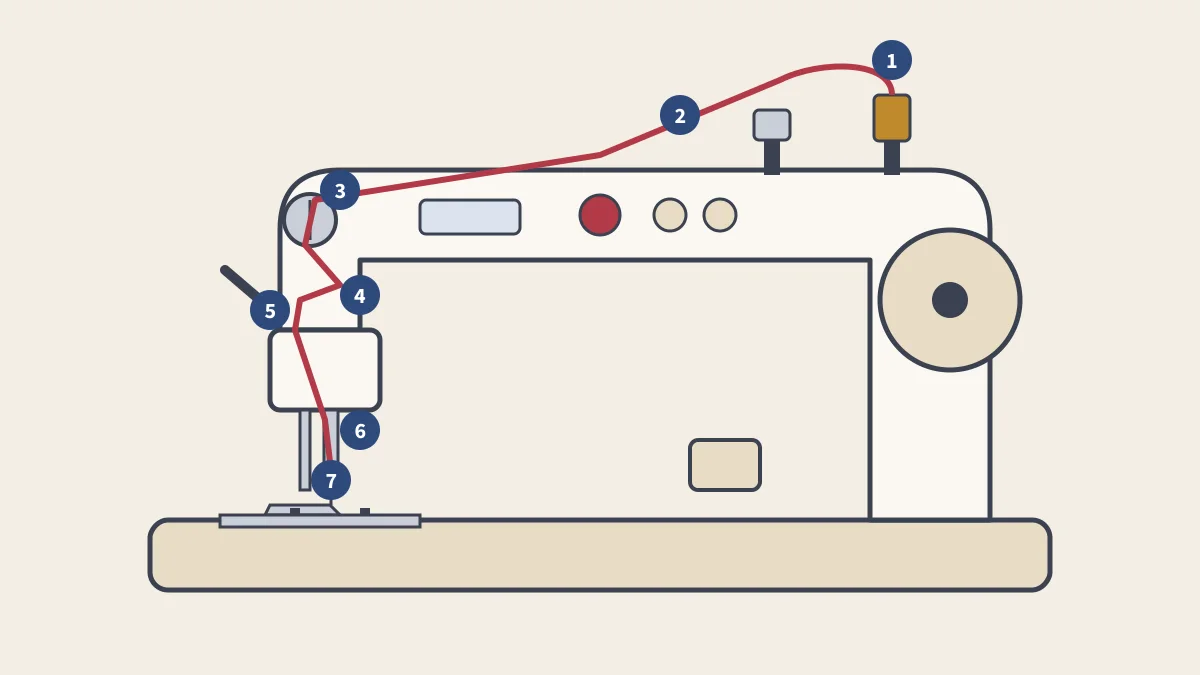
How to Thread a Sewing Machine
The thread path step by step, plus the habits that prevent tangles.
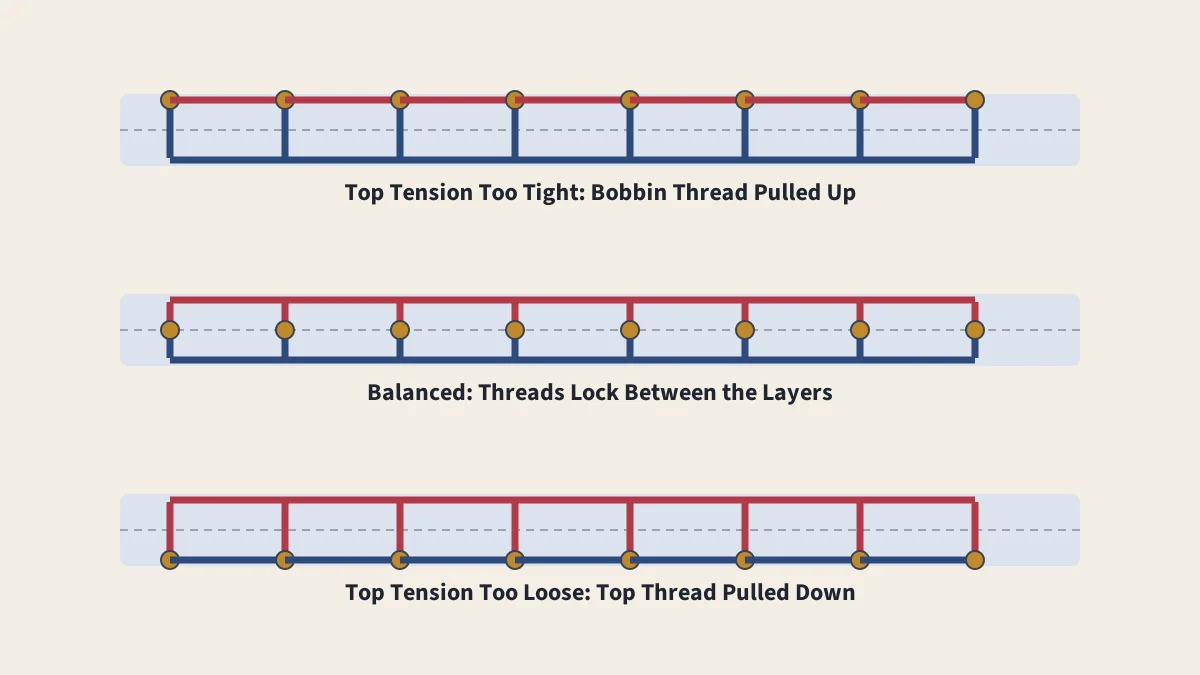
Stitch Length and Tension Explained
What the dials mean, common settings, and how to balance tension.
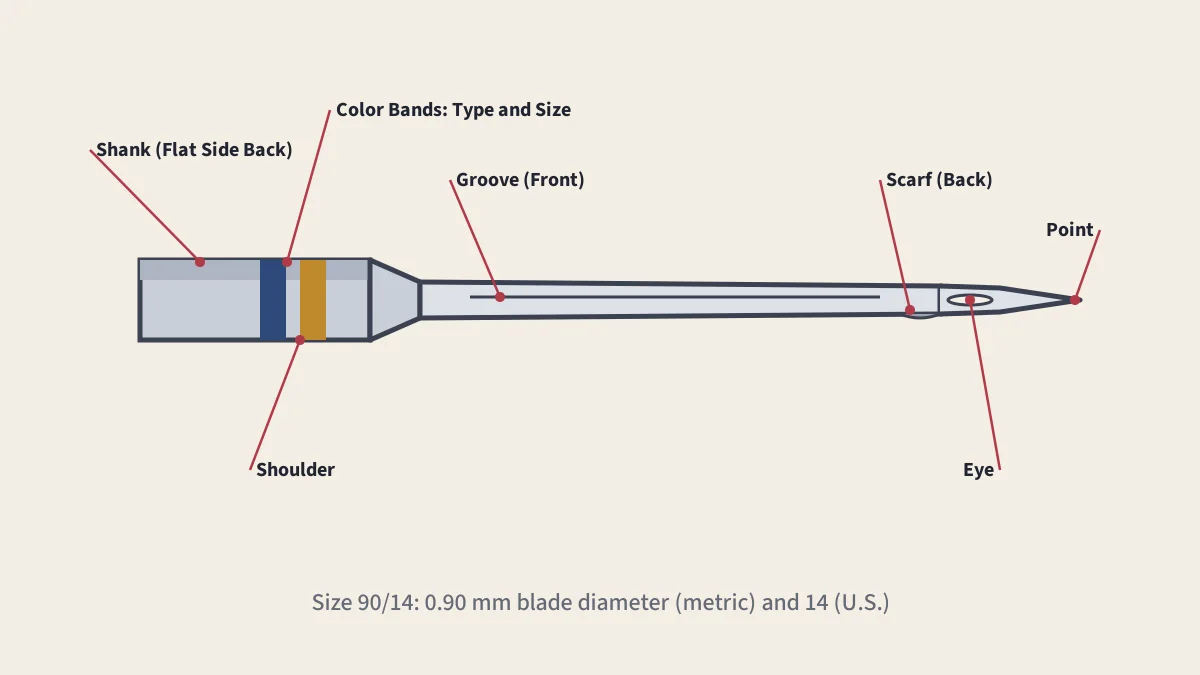
Sewing Machine Needle Sizes and Types
Needle sizes, types, color codes and when to change them.
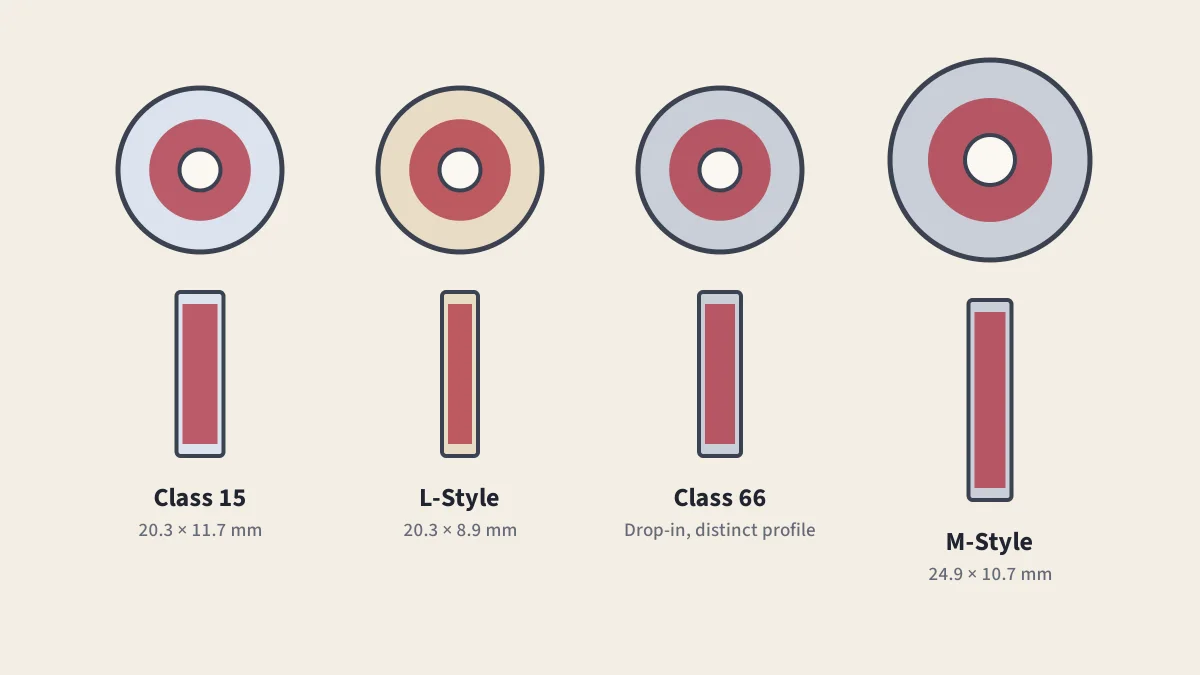
Bobbin Types and Classes
Class 15, 15J, 66, L and M bobbins compared, with sizes.