Serger vs. Sewing Machine: What Each Does and Whether You Need Both (2026)
A serger trims, sews and wraps a seam's edge in one pass, which is why the inside of a store-bought T-shirt looks so neat. But it cannot do everything a sewing machine can. Here is how they compare.
In This Article
The Short Version
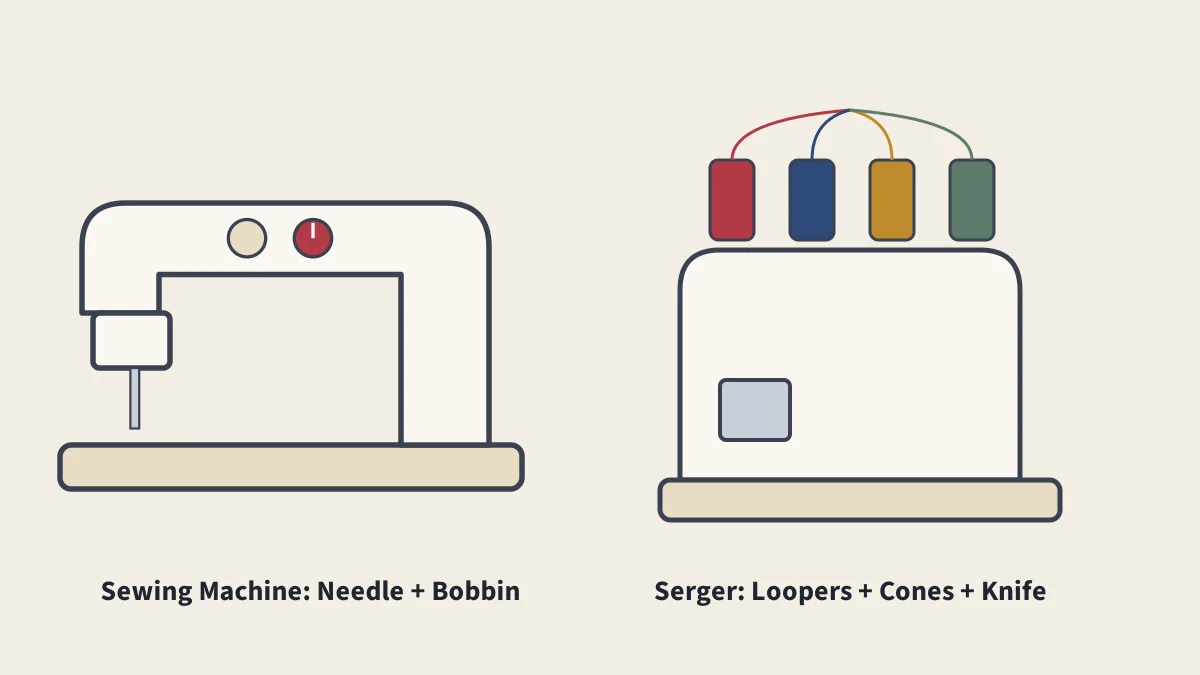
- Sewing machine: needle and bobbin, sews anywhere, does almost every job
- Serger: loopers, several cones and a knife; trims and wraps the edge in one pass
- A serger cannot topstitch, insert zippers or make buttonholes
- Buy a sewing machine first; add a serger if you sew many garments or knits
Turn a store-bought T-shirt inside out and look at the side seams. You will see a band of looped threads wrapped around the cut edges. That is an overlock stitch, made by a serger. Home sewists can do the same with a serger of their own, but the machine is a partner to a sewing machine rather than a replacement for it.
What Makes a Serger Different
An overlock machine usually trims the fabric's edge as it is fed through; machines with cutters are called sergers in North America. It differs from a lockstitch sewing machine in that it uses loopers fed by multiple thread cones rather than a bobbin. Overlocking is also called overedging, merrowing or serging, and in practice the terms are used interchangeably.
Overlock stitching was invented by the Merrow Machine Company in 1881. The company's name lives on in "merrowing," the term for two- and three-thread overedge stitching. Our guide to how a serger works explains the loopers and stitch types in detail.
Side-by-Side Comparison
| Feature | Sewing Machine | Serger |
|---|---|---|
| Stitch formation | Lockstitch: needle thread and bobbin thread | Overlock: needle threads and looper threads |
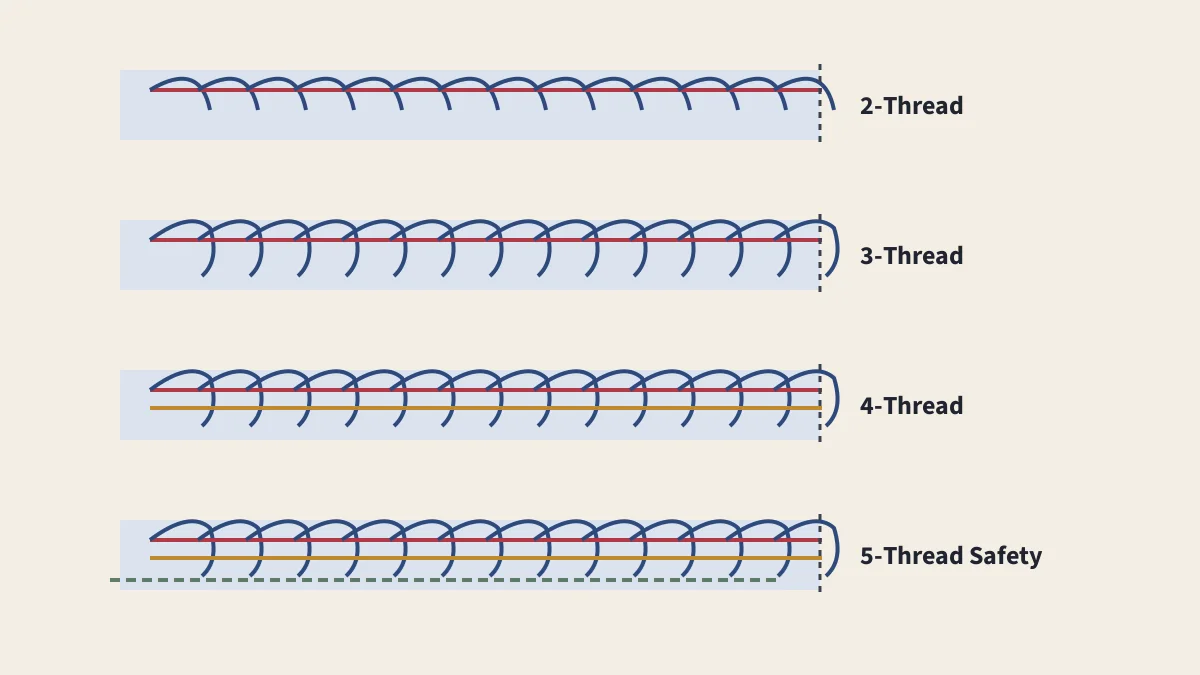
| Threads | Two (needle and bobbin) | Usually 3–4; some 2, 5 or more |
| Cutting knife | No | Yes, trims the edge as it sews |
| Where it sews | Anywhere on the fabric | Along an edge |
| Stretch in seams | Limited; needs stretch stitches | Good; overlock stitches stretch with knits |
| Speed | Moderate | Fast |
| Zippers, buttonholes, topstitching | Yes | No |
| Pivoting at corners | Yes | No; corners are sewn off the edge |
| Threading | Simple | More complex (several paths) |
What a Serger Does Best
- Finishing raw edges on woven fabrics so they do not fray, in one fast pass.
- Sewing knit seams that stretch with the fabric, such as T-shirts, leggings and swimwear.
- Rolled hems on scarves, napkins and ruffles.
- Flatlock seams, decorative seams that lie flat, often seen on activewear.
- Gathering with differential feed, on machines that have it.
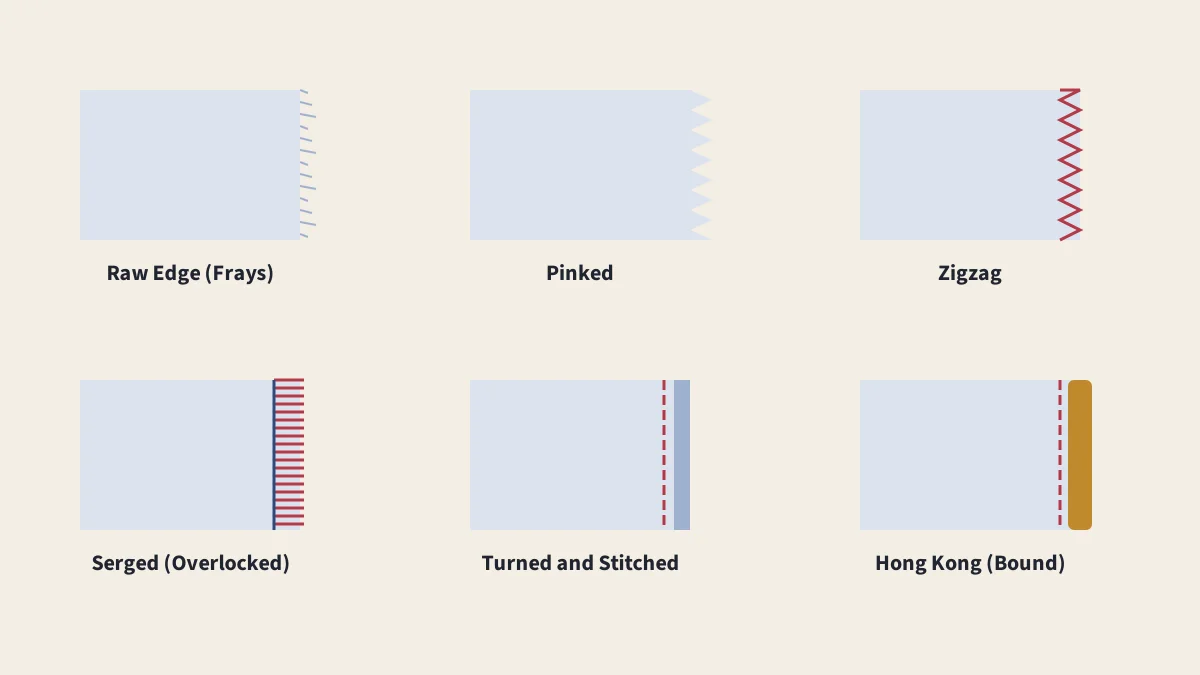
For more ways to finish edges, with or without a serger, see our guide to seam finishes.
What Only a Sewing Machine Can Do
- Topstitching and edgestitching
- Inserting zippers
- Making buttonholes and sewing on buttons
- Sewing darts, pockets and facings away from an edge
- Quilting and appliqué
- Pivoting at corners and sewing precise curves inside a garment
Can a Sewing Machine Imitate a Serger?
Partly. Most sewing machines have an overcast or "overlock-look" stitch, and many come with an overcast foot that keeps the edge flat. A zigzag along the raw edge also stops fraying. These options are slower and less neat than true serging, but they are perfectly adequate for many projects. For knits, a narrow zigzag or stretch stitch with a ballpoint needle works well; see machine stitch types.
Do You Need Both?
| You Mostly Sew... | Recommendation |
|---|---|
| Quilts, home décor, bags, mending | Sewing machine only |
| Occasional garments in woven fabrics | Sewing machine; finish edges with zigzag or overcast |
| Many garments, especially knits | Sewing machine plus serger |
| Activewear, T-shirts and loungewear in volume | Sewing machine, serger and possibly a coverstitch machine |
Sources
- Overlock, Wikipedia
- Merrow Sewing Machine Company, Wikipedia
Frequently Asked Questions
Can a serger replace a sewing machine?
No. A serger is excellent for seams and edge finishes, especially on knits, but it cannot topstitch, sew zippers, make buttonholes, sew far from an edge or pivot at corners. Most sewists use a sewing machine first and add a serger later.
Is a serger the same as an overlocker?
Yes. Serger is the usual name in North America; overlocker is common in the UK, Australia and elsewhere. Strictly, serging means overlocking with a cutting knife, but the words are used interchangeably.
Do I need a serger to sew knits?
No. A sewing machine with a stretch stitch or narrow zigzag and a ballpoint needle can sew knits well. A serger makes knit sewing faster and gives a more professional finish.
Why do sergers use so many threads?
A serger uses loopers instead of a bobbin, and each needle and looper has its own thread. A typical home serger uses three or four threads; some use five or more for a safety stitch that adds a separate line of chain stitching.
Keep Reading
How a Serger Works
Loopers, knives, differential feed and every thread combination.
Coverstitch Machines
How coverstitch hems work and how they compare with sergers.
Seam Finishes
Pinked, zigzag, serged, Hong Kong, bound and enclosed finishes.
Types of Sewing Machines
Every type of sewing machine explained, from mechanical to industrial.