Industrial vs. Domestic Sewing Machines: The Real Differences (2026)
An industrial sewing machine is not just a stronger home machine. It is usually built to do one job, very fast, for hours on end. Here is how the two compare and when an industrial machine makes sense at home.
In This Article
The Key Differences
- Purpose: industrial machines usually do one task; domestic machines do many
- Speed: industrial machines run several times faster
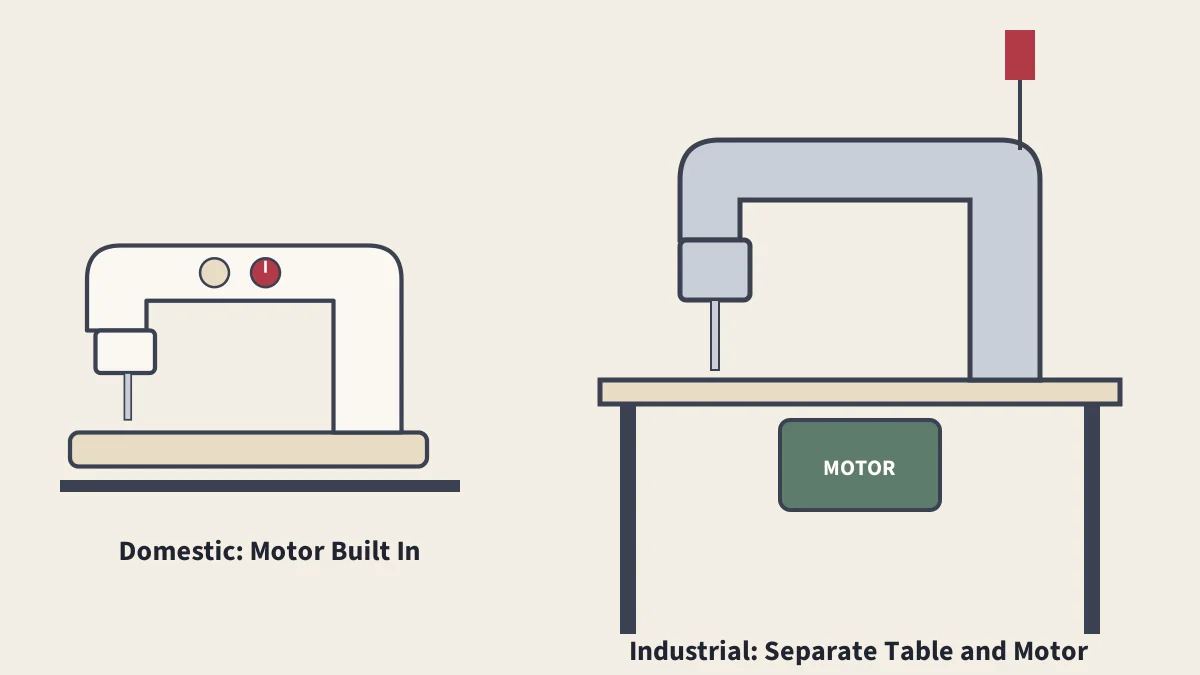
- Motor: separate motor under the table (clutch or servo) vs. built-in
- Duty: industrial machines are built to run all day
- Setup: industrial heads sit in a dedicated table
The first sewing machines were industrial: Thimonnier's chain stitch machines sewed army uniforms, and Singer's early machines went to tailors and factories before families. Home machines came later, scaled down and made versatile. Today the two lines have diverged so far that an industrial machine and a home machine are really different tools, even though both may sew the same lockstitch.
One Job vs. Many Jobs
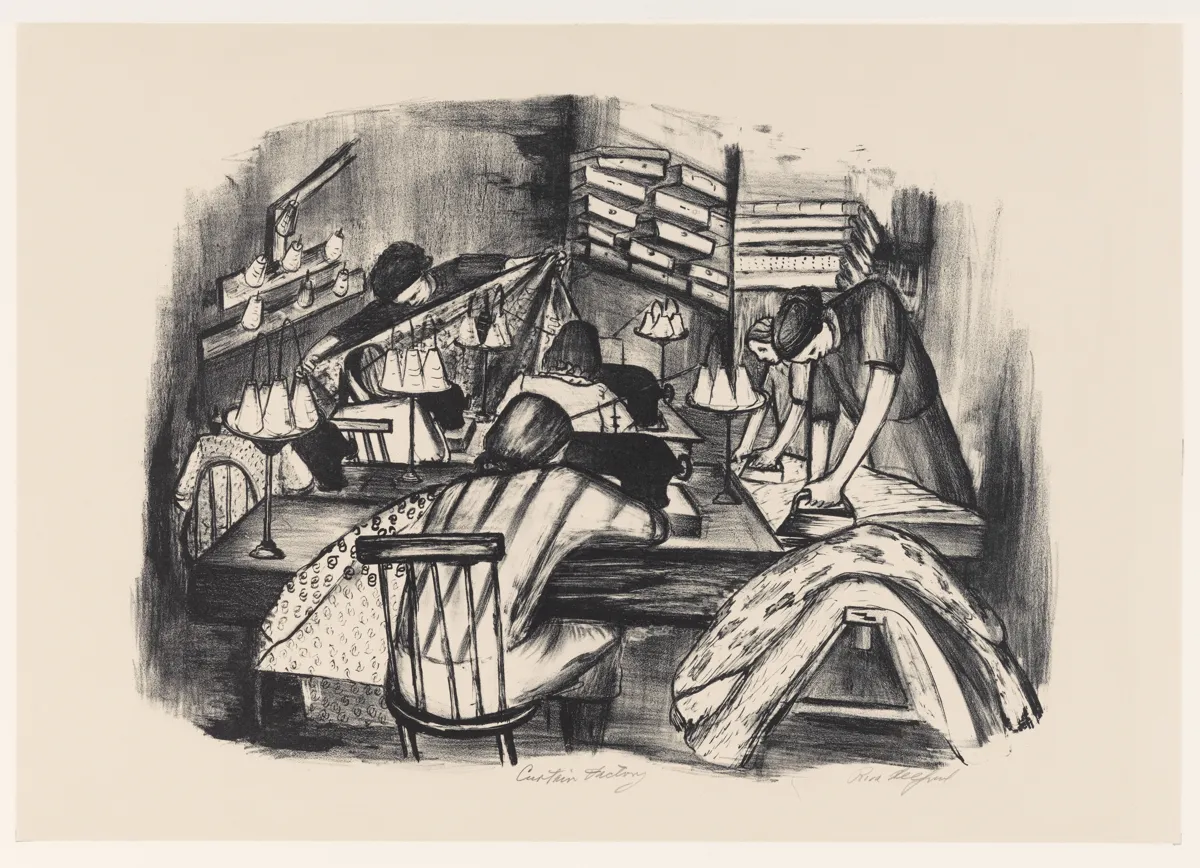
Industrial machines are larger and faster, and they usually perform a single dedicated task, such as straight stitching, overlocking, buttonholes, bar tacks or blind hems. A garment factory might send a shirt through a dozen different machines, each doing one operation at high speed. A domestic machine combines many stitches in one body so one person can make a whole garment at the kitchen table.
Side-by-Side Comparison
| Feature | Domestic Machine | Industrial Machine |
|---|---|---|
| Functions | Many stitches in one machine | Usually one dedicated function |
| Speed | Typically up to around 1,000 stitches per minute or so | Typically several thousand stitches per minute |
| Motor | Built in | Separate, mounted under the table |
| Duty cycle | Hobby use | Designed for long, continuous production shifts |
| Size | Portable, sits on any table | Machine head built into a dedicated table and stand |
| Feed | Drop feed, sometimes a walking foot | Drop feed, needle feed, walking foot, cylinder or post bed types |
| Lubrication | Little or occasional oiling | Often an oil reservoir that must be kept topped up |
| Features | Buttonholes, decorative stitches, free arm | Speed, strength, automatic thread trimming on many models |
Clutch Motors vs. Servo Motors
Industrial machines are driven by a separate motor under the table, connected by a belt.
- Clutch motors run continuously once switched on. Pressing the treadle engages a clutch, delivering full power almost instantly. They are powerful but noisy, use electricity even when idle and are hard to control at slow speeds.
- Servo motors run only when the pedal is pressed. They offer smooth speed control, quiet operation and lower energy use, and they have become the usual choice for new machines and for home users of industrial machines.
- Direct-drive motors are built into the machine head itself, eliminating the belt.
Types of Industrial Machines
| Machine | What It Does |
|---|---|
| Single-needle lockstitch | Straight seams; the workhorse of garment factories |
| Walking foot (compound feed) | Leather, upholstery, canvas and many layers |
| Overlock and safety stitch | Edge finishing and knit seams at high speed |
| Coverstitch and flatlock | Hems and flat seams on knitwear |
| Cylinder bed and post bed | Tubular items, bags, shoes and hard-to-reach seams |
| Bar tack, buttonhole and button sewing | Automated single operations |
| Blind stitch | Invisible hems on trousers and skirts |
For the stitches these machines make, see lockstitch vs. chain stitch and how a serger works.
Should You Buy an Industrial Machine for Home?
Good Reasons
- You regularly sew leather, canvas, upholstery, sails or many layers of denim.
- You sew the same item in volume, for example for a small business.
- You want a dedicated straight-stitch machine with excellent stitch quality.
Reasons to Think Twice
- Most industrial machines do only one stitch: no zigzag, buttonholes or decorative stitches.
- They need a dedicated table and floor space.
- Their speed takes practice to control, though a servo motor helps a lot.
- Oil reservoirs and adjustments need more maintenance.
Semi-Industrial and Heavy-Duty Home Machines
Between the two sit "heavy-duty" and "semi-industrial" home machines with stronger motors and metal frames, often marketed for denim and canvas. They are more capable than standard home machines but are still domestic machines at heart, without the speed, duty cycle or specialized feeds of true industrial machines. Our overview of types of sewing machines compares every category.
Sources
- Sewing machine, Wikipedia
- Riva Helfond, Curtain Factory, The Metropolitan Museum of Art
Frequently Asked Questions
What is the main difference between industrial and domestic sewing machines?
Industrial machines are larger, much faster and usually built to perform one dedicated task, such as straight stitching or overlocking, for long periods. Domestic machines are smaller and slower but can do many jobs, with built-in motors and features such as zigzag and buttonholes.
How fast is an industrial sewing machine?
Industrial lockstitch machines typically run at several thousand stitches per minute, while home machines usually top out at around a thousand or so. Exact speeds vary by machine.
What is the difference between a clutch motor and a servo motor?
A clutch motor runs continuously once switched on, and pressing the treadle engages a clutch to drive the machine, which makes it powerful but hard to control at slow speeds. A servo motor runs only when you press the pedal and gives finer speed control, quieter operation and lower power use.
Should a home sewist buy an industrial machine?
Only for specific needs, such as sewing heavy materials like leather or canvas regularly, or producing items in volume. Most home sewists are better served by a good domestic machine, because an industrial straight-stitch machine cannot zigzag, make buttonholes or do decorative stitches.
Keep Reading
Types of Sewing Machines
Every type of sewing machine explained, from mechanical to industrial.
How a Sewing Machine Works
The lockstitch step by step: needle, hook, bobbin and feed dogs.
History of Ready-to-Wear Clothing
How slop shops, war uniforms and sewing machines created off-the-rack clothes.
Longarm Quilting Machines
Frames, throat space, stitch regulation and computerized quilting.