How to Clean and Oil a Sewing Machine the Safe Way (2026)
Most sewing machine problems start with lint, old oil or a worn needle. Five minutes of care after each project prevents a surprising number of them. Here is a safe routine, plus the mistakes that do more harm than good.
In This Article
Maintenance in Brief
- Unplug first, then remove only the parts your manual allows
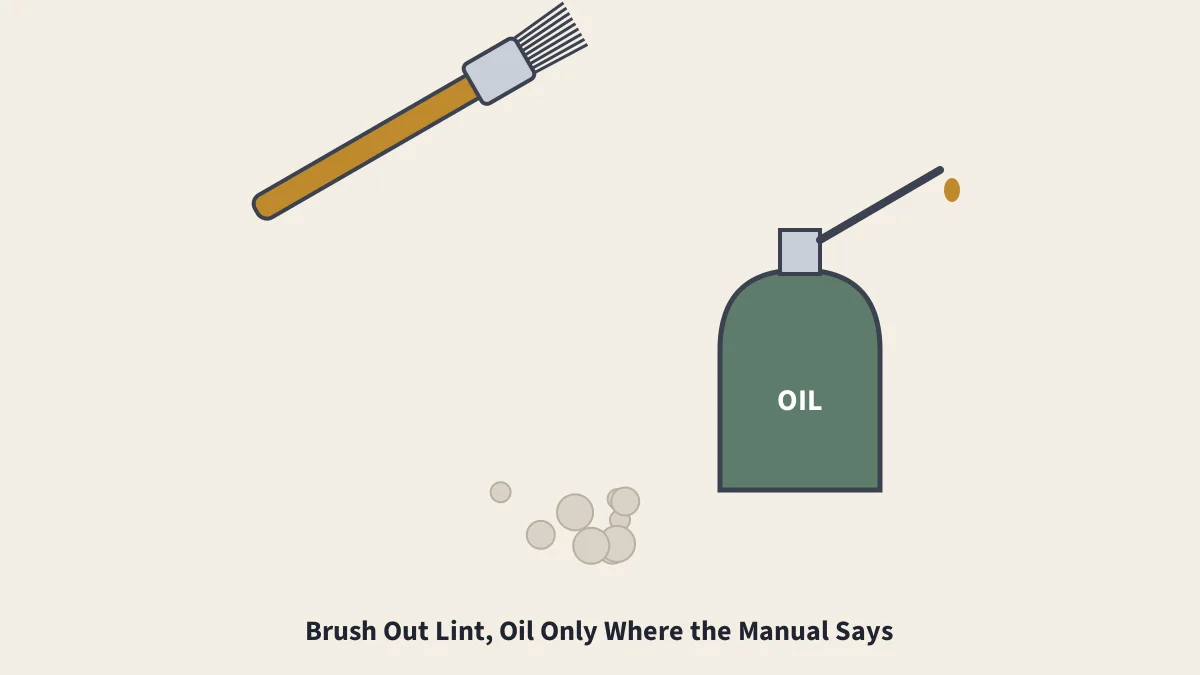
- Brush out lint from the bobbin area and feed dogs regularly
- Skip canned air: it pushes lint deeper
- Oil only where the manual says, with sewing machine oil
- Change the needle often and book a professional service when needed
A sewing machine is a fast-moving mechanism with dozens of parts working within fractions of a millimeter of each other. Every seam sheds tiny fibers, and over time they pack into the bobbin area and between the feed dogs. Add dried oil or a dull needle and stitches start to skip, loop or jam. Regular cleaning keeps your machine running smoothly, and it costs nothing but a few minutes.
What You Need
- Your machine's manual. It shows which covers you may remove, where to clean and whether, where and how often to oil.
- A soft lint brush. Most machines come with one; a small, clean paintbrush works too.
- Tweezers for pulling out thread ends and packed lint.
- The screwdriver that came with the machine, for the needle plate.
- A soft, lint-free cloth for wiping the outside.
- Sewing machine oil, if your manual calls for it.
- Optional: a small vacuum attachment to lift loosened lint out.
How to Clean a Sewing Machine Step by Step
- Turn off and unplug the machine. This prevents accidental starts while your fingers are near the needle.
- Remove the thread, needle and presser foot. Raise the needle first, then take them out. It is a good moment to fit a fresh needle at the end.
- Remove the needle plate. Unscrew or unclip it as your manual shows.
- Take out the bobbin and bobbin case. On drop-in machines, lift out the bobbin and, if your manual allows, the plastic bobbin holder.
- Brush out the lint. Brush around the hook area, under the feed dogs and inside the bobbin case. Use tweezers for packed lint and stray threads. Brush lint toward you and out of the machine, not further in.
- Clean the bobbin case. Brush or wipe out lint, paying attention to the tension spring, where lint can hide and change the bobbin tension.
- Clean the upper thread path. Run a folded piece of fabric or a strip of unwaxed floss gently between the tension discs, with the presser foot raised so the discs are open, to dislodge lint.
- Wipe the outside with a dry or barely damp cloth.
- Oil if your manual says so (see below), then reassemble.
- Sew a test seam on a scrap to absorb any excess oil before you go back to your project.
Oiling: When, Where and How
Whether your machine needs oil, and where, depends entirely on the model. Many older mechanical and vintage machines have metal-to-metal moving parts with marked oiling points, and they need regular oil. Many modern computerized machines are designed to need little or no oiling by the owner; the few points that need it are usually serviced by a technician. Your manual is the only reliable guide.
- Use only sewing machine oil. It is clear and very light. Household oils, cooking oils and general-purpose lubricants are too heavy and can gum up the mechanism.
- Clean before you oil. Oil on top of lint makes a sticky paste.
- Use a drop, not a pour. One drop at each marked point is usually enough.
- Run the machine briefly afterward to spread the oil, then wipe away any excess.
- Test on a scrap before sewing a project, so stray oil does not mark your fabric.
A Simple Maintenance Schedule
| When | What to Do |
|---|---|
| Every session | Check the needle is straight and sharp; cover the machine when you finish |
| Every project or few hours of sewing | Brush out the bobbin area and feed dogs |
| After linty fabrics (fleece, flannel, batting, minky) | Clean straight away, even mid-project |
| As the manual specifies | Oil marked points (if your model needs it) |
| Every new project, or when stitches skip | Change the needle |
| Periodically, or when problems persist | Book a professional service |
Other Habits That Protect Your Machine
- Change needles regularly. A dull or bent needle stresses the machine and causes skipped stitches. See sewing machine needles.
- Use good-quality thread. Cheap thread can shed more lint and break more often.
- Avoid waxed or glazed hand-sewing thread in the machine; coatings can build up on the tension discs.
- Keep it covered. A dust cover keeps out dust and pet hair between sessions.
- Use the correct bobbins. The wrong class can damage the bobbin area; see bobbin types.
- Never force it. If the handwheel will not turn, stop and look for a thread jam instead of pushing harder.
When to Call a Technician
Home cleaning does not replace a professional service. Book one if the machine is noisy or clunking after cleaning, the handwheel feels stiff, stitches still skip after a new needle and rethreading, the timing seems off, or a computerized machine shows error messages your manual does not explain. Technicians can clean and lubricate areas behind covers that owners should not open, and adjust timing and tension precisely. For help diagnosing first, see common sewing machine problems.
Sources
- Sewing machine, Wikipedia
Frequently Asked Questions
How often should I clean my sewing machine?
Brush out the bobbin area and feed dogs after every project or every few hours of sewing, and more often with linty fabrics such as fleece, flannel, cotton batting and minky. Clean it straight away if stitches start to look wrong or the machine sounds different.
Should I use compressed air to clean a sewing machine?
Most machine makers and technicians advise against it. Canned air tends to push lint deeper into the machine, where you cannot reach it, and some products leave moisture that turns lint into gummy clumps. Use a soft brush, tweezers or a small vacuum attachment instead.
Does my sewing machine need oil?
It depends on the model. Many vintage and mechanical machines need regular oiling at points shown in the manual, while many modern computerized machines are designed to need little or no oiling by the owner. Only oil where and when your manual says.
What oil should I use on a sewing machine?
Use only clear, light sewing machine oil. Household oils, cooking oils and general-purpose lubricants are too heavy, can gum up the mechanism and can stain fabric.
Keep Reading
Common Sewing Machine Problems
Thread nests, skipped stitches, broken needles and feeding faults fixed.
Parts of a Sewing Machine
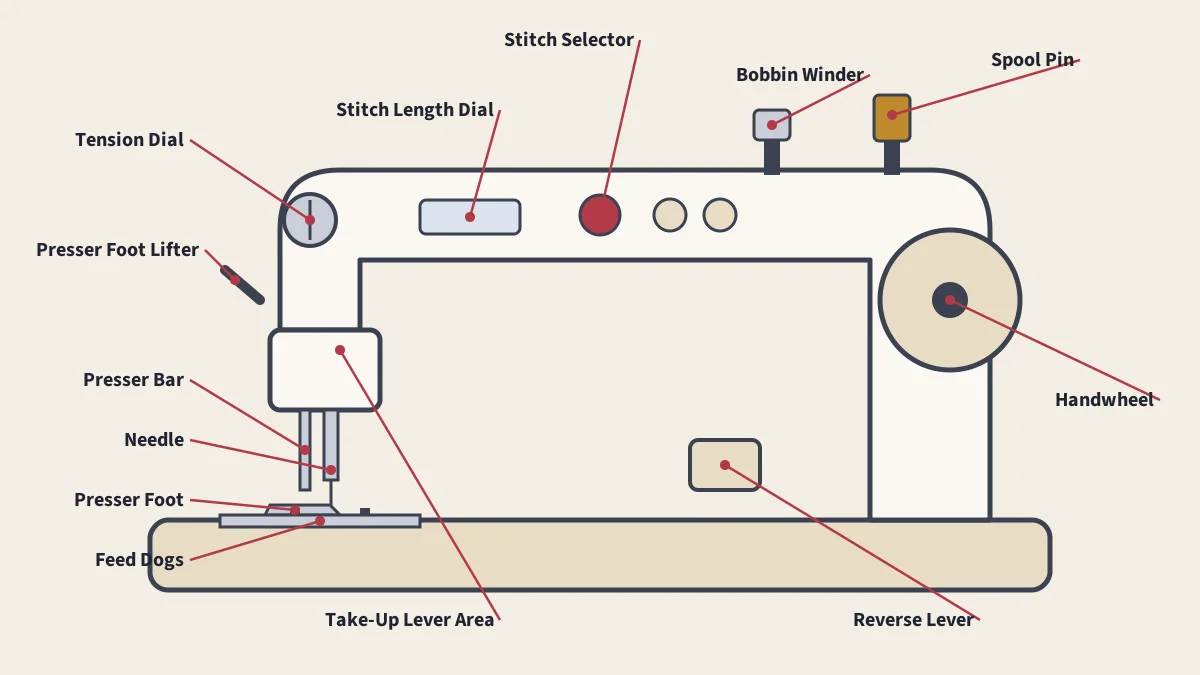
A labeled diagram and what every part of the machine does.
Sewing Machine Needle Sizes and Types
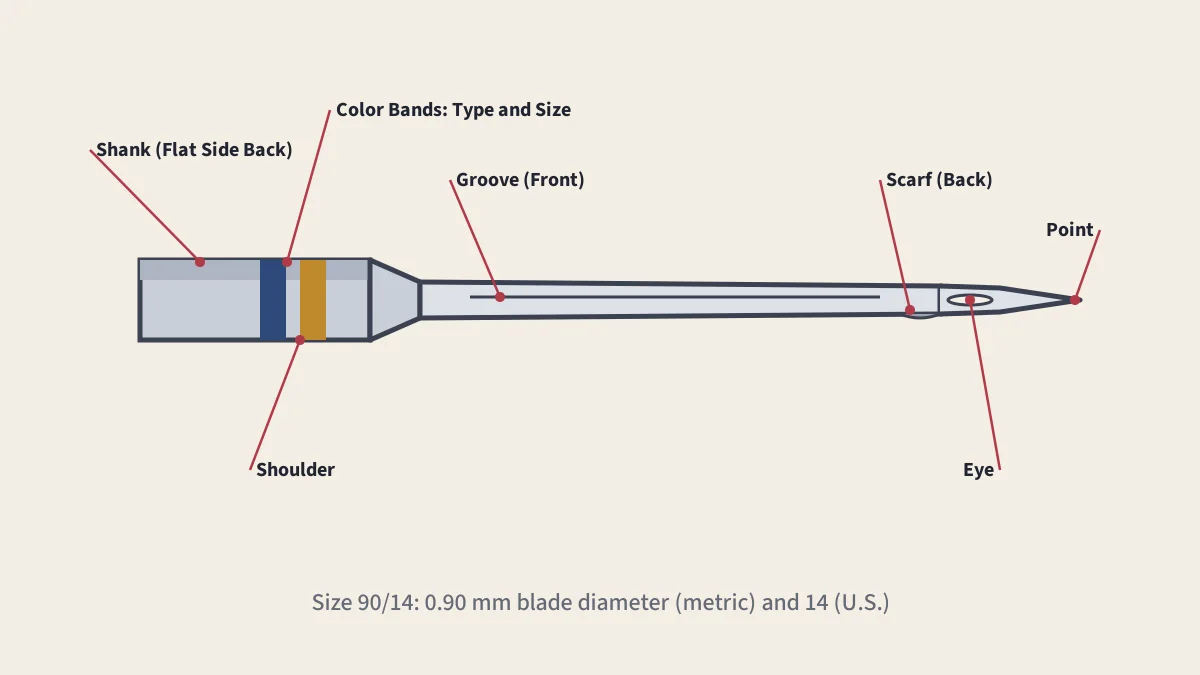
Needle sizes, types, color codes and when to change them.
Types of Sewing Machines
Every type of sewing machine explained, from mechanical to industrial.