Singer Decals Identification Guide: Names, Models and Dates (2026)
The gold and colored decorations on old Singer machines are more than pretty. Each pattern was used on particular models during particular years, so a decal set can help identify and date a machine.
In This Article
Decals in Brief
- Purpose: decoration, and today a clue to model and era
- Names: most were given by collectors, not by Singer
- Best known: Sphinx (Memphis), Tiffany (Gingerbread), Red Eye, Lotus
- Use with: the serial number for a firmer date
For most of its first century, Singer finished its machines in glossy black japanning, then applied decorative transfers, or decals, in gold leaf and colors. They turned a piece of household machinery into something attractive enough to sit in a parlor. Today, those decal sets are one of the most loved features of vintage Singers, and one of the most useful for identification.
Who Named the Decals?
The names attributed to decal sets are not necessarily Singer's. Singer certainly named some of them, and all had a number; by the 1920s the numbers had reached three figures. Many names were invented by enthusiastic collectors, but because they are now so widely used, they have stuck. In the descriptions below, "officially" marks a name known to come from Singer.
Well-Known Singer Decal Sets
| Decal Name | Models | Approximate Period | Notes |
|---|---|---|---|
| Acanthus Leaves | Class 12 "New Family"; 13 "Medium" | Late 19th century | Gold leaf designs with occasional red and green |
| Persian | 27 | Late 1890s | Ornate, rich pattern |
| Sphinx, or Memphis | Improved Family, 15, 27, 127 | Recorded use 1891–1959 | Officially No. 15 (Sphinx); Egyptian-style motifs |
| Tiffany, or Gingerbread | 15, 27, 28, 66, 115 | About 1898–1930 | Intricate gold tracery; a variant marked Queen Victoria's Diamond Jubilee in 1897 |
| Red Eye, or Red Head | 66-1 | 1902 to about 1920 | Officially "Scroll (red)"; red and green highlights |
| Lotus, or Egyptian | 66-1, 66-4, 66K | Recorded use 1902–1925 | Lotus and Egyptian-style motifs |
| Rococo | 128 | About 1910 to 1960 | Used for decades on the 128 |
| Indian Sphinx | Full-size domestic bed | 1956 | Officially "Singer Transfer No. 23 – Indian Sphinx," in Indian national colors with the Indian Star on the bed |
Dates are periods of use reported in collector archives and vary slightly between sources and factories.
How to Identify a Decal Set
- Clean gently first. Grime hides patterns. Use a soft cloth and sewing machine oil; never solvents or abrasives, which can lift gold leaf.
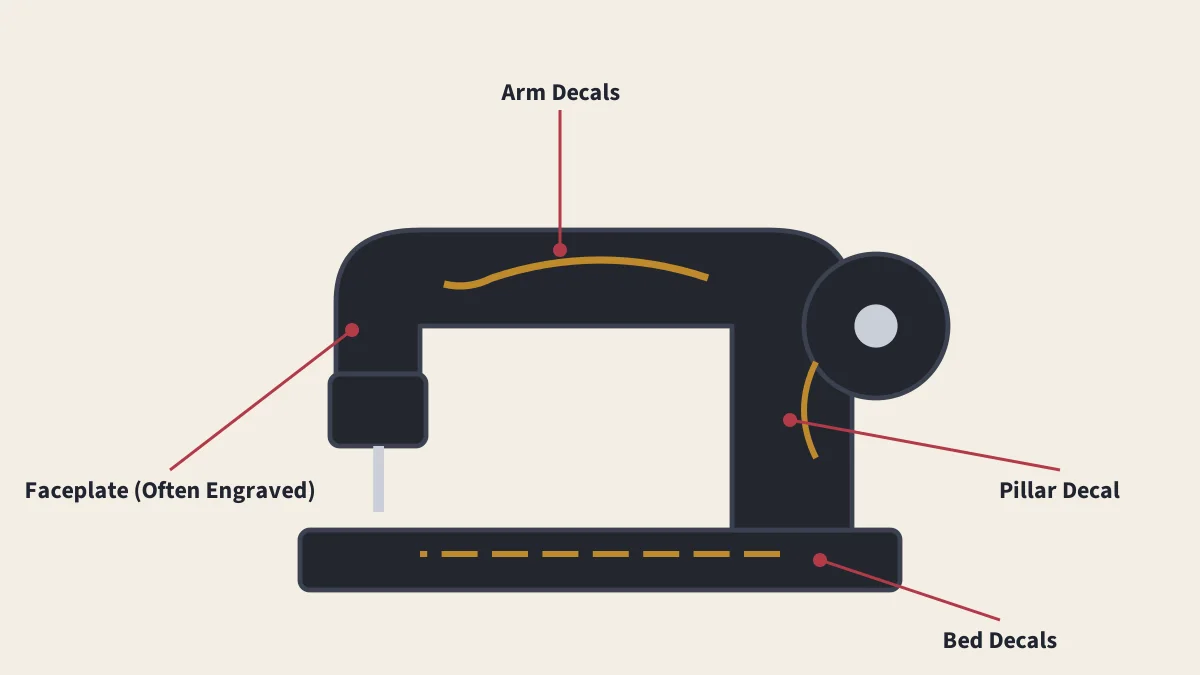
- Look at the bed. The bed often carries the most distinctive part of the set.
- Compare the arm and pillar. Some sets look alike on the arm but differ on the bed.
- Check the model. A Red Eye only appears on the 66, for example. If the decal and model do not match the usual pairing, look again.
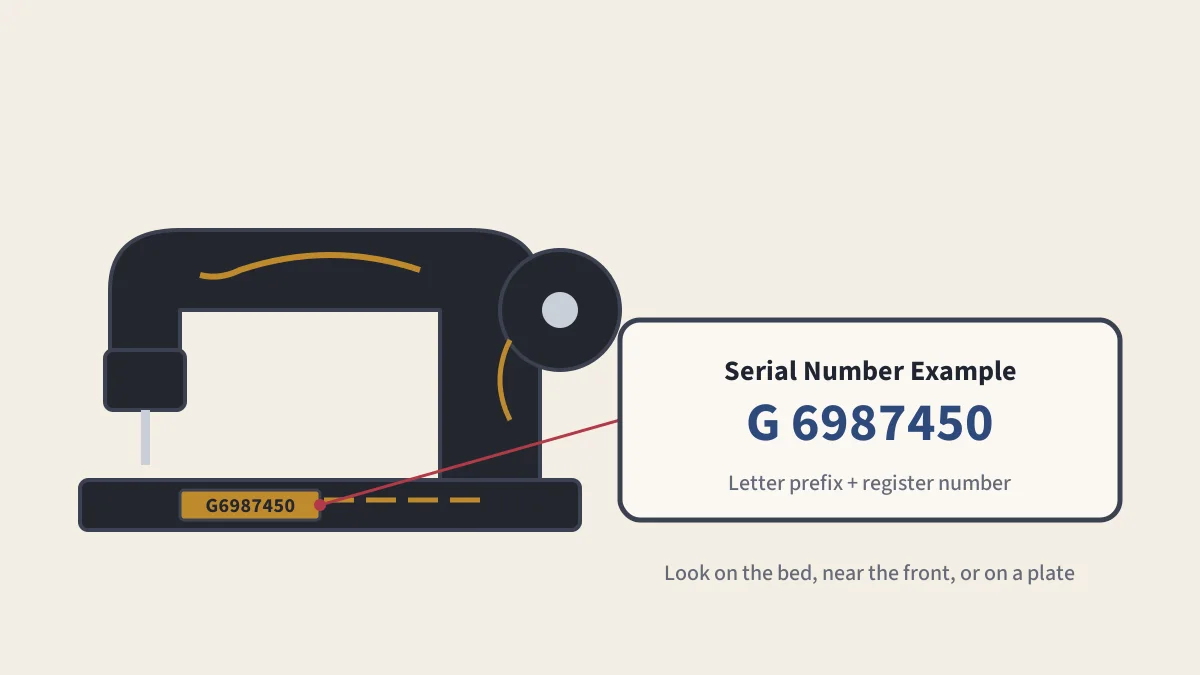
- Confirm with the serial number. See Singer serial numbers.
After the Decal Era
Over the 20th century, decoration on many models grew simpler. By the 1950s, painted and crinkle finishes, beige and two-tone colors and aluminum bodies replaced the classic black-and-gold look on many new designs, such as the Singer 301 and the Slant-o-Matics.
Decals and Value
Bright, complete decals make a vintage machine more attractive to collectors, while worn or "silvered" decals, where the gold has rubbed away, reduce appeal. Rare sets interest specialist collectors. Restored or reproduction decals exist; they can look lovely but are not original, and honest sellers say so. See what an old Singer is worth.
Caring for Old Decals
- Clean with a soft cloth and a little sewing machine oil.
- Avoid household cleaners, alcohol and abrasive pads.
- Test any wax or polish on a hidden area first.
- Keep machines out of strong sunlight and damp, which damage finishes.
Sources
- Singer Corporation, Wikipedia
Frequently Asked Questions
What are Singer decals?
Decorative transfers applied to the black japanned finish of Singer machines, usually in gold with touches of color. They decorated the arm, bed and pillar and changed with model and period.
Did Singer name its decal patterns?
Not usually in public. Singer numbered its decal sets, and only some names are known to be official. Most popular names, such as Red Eye and Tiffany, were given by collectors and are now used widely.
What is a Singer Red Eye?
A model 66 with a red-and-gold scroll decal set, used from about 1902 to around 1920. Collectors call it Red Eye or Red Head; Singer's official name was 'Scroll (red).'
Can a decal date my Singer?
It helps. Each decal set was used during a known period on certain models, so the decal narrows the date range. The serial number gives a more precise allotment date.
Keep Reading
Singer Serial Numbers
Find the serial number, read the prefix and understand allotment dates.
Vintage Sewing Machine Identification
Serial numbers, bobbins, decals, badges and factory codes explained.

What Is an Old Singer Worth?
Model, condition, completeness and demand: what decides value.
Isaac Singer and the Singer Company
An actor, a lawyer and a payment plan built sewing's most famous brand.