Hand-Crank Sewing Machines: Portable Power Before Electricity (2026)
A hand-crank sewing machine runs on a turning handle, with no pedal and no plug. Common in homes before electricity, and popular in Britain and Europe for decades, they are still loved for travel, power cuts and slow, controlled sewing.
In This Article
Hand Cranks in Brief
- Power: one hand turns a handle on the handwheel
- Control: excellent at slow speeds
- Portable: often sold in carrying cases
- Singer examples: the 66-3 and 15-89
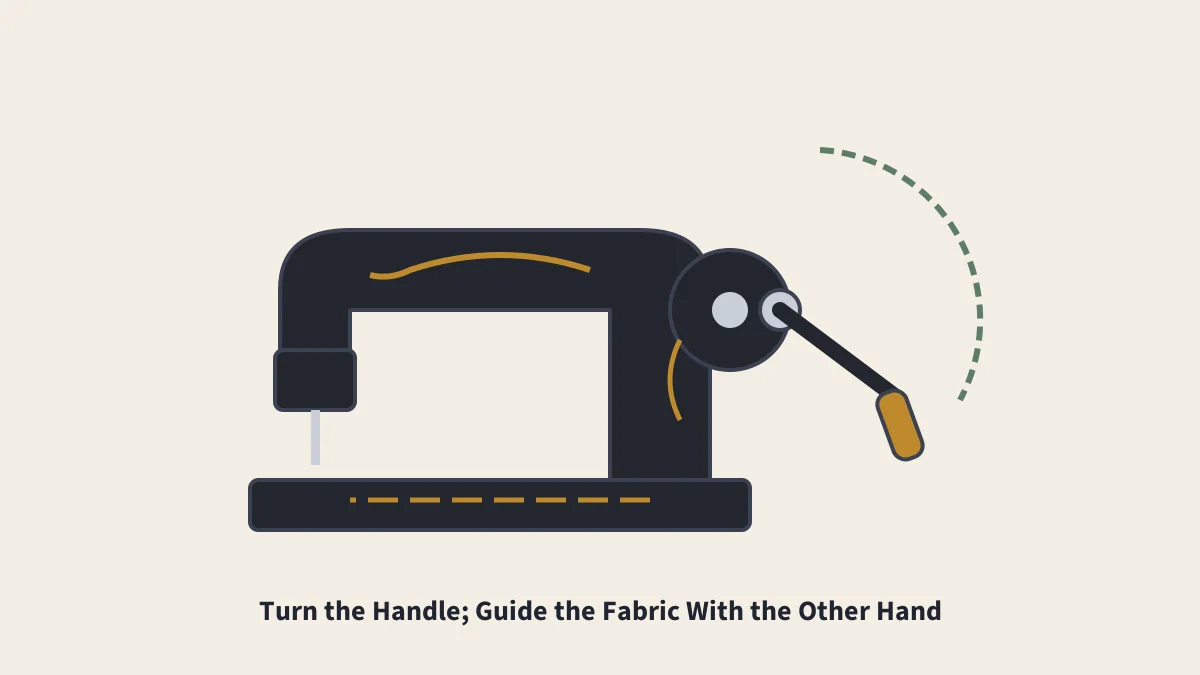
Not every home had room for a treadle stand, and many had no electricity. The answer was the hand crank: a handle attached to the sewing machine's handwheel that the sewist turned with one hand while guiding the fabric with the other. Hand-crank machines were often sold in portable wooden cases.
How a Hand Crank Works
There are two main designs:
- Direct crank: a handle fixed to the handwheel, so one turn of the handle equals one turn of the wheel.
- Geared ("spoked") crank: a separate crank unit bolted to the machine, with a small gear driving teeth on the handwheel; this lets the sewist turn more easily and gives finer control.
Either way, the handwheel drives the machine exactly as a motor or treadle belt would; see how a sewing machine works.
Which Machines Had Hand Cranks?
| Singer Model | Hand-Crank Version |
|---|---|
| 27, 28, 127, 128 (vibrating shuttle) | Sold as treadle or hand-crank machines |
| 66 | 66-3 |
| 15 | 15-89 |
Many other makers sold hand-crank machines too.
How to Sew With a Hand Crank
- Turn in the right direction. The handwheel should turn toward you; check that the crank does the same.
- Start slowly with the needle down in the fabric.
- Guide with one hand. Let the feed dogs move the fabric; your hand steers rather than pushes.
- Pin or baste more than usual, since you have only one hand free.
- Stop with the needle down to pivot at corners.
Caring for a Hand-Crank Machine
- Oil the crank's pivot and gears as well as the machine itself.
- Check that the crank is tight on its mounting and that gear teeth are not worn.
- Keep the case clean and dry; wooden cases can warp in damp conditions.
- Follow the general guide in sewing machine maintenance.
Hand Crank or Treadle?
| Feature | Hand Crank | Treadle |
|---|---|---|
| Hands free | One | Two |
| Portability | High | Low (stand or cabinet) |
| Speed | Slower | Faster, steadier |
| Best for | Small projects, travel, teaching | Longer seams and regular sewing |
See treadle sewing machines for the foot-powered alternative.
Sources
- Sewing machine, Wikipedia
- Crank (mechanism), Wikipedia
Frequently Asked Questions
How does a hand-crank sewing machine work?
A handle attached to the handwheel, either directly or through small gears on a 'spoked' crank, turns the machine as you rotate it. One hand turns the crank while the other guides the fabric.
Is it hard to sew with a hand-crank machine?
It takes some practice to guide the fabric with one hand, but hand cranks offer excellent slow-speed control, which many beginners and children find reassuring.
Can a hand-crank be added to an electric sewing machine?
On many vintage machines, yes. Hand-crank units were made to fit common Singer and similar machines in place of a motor, though they must match the machine's handwheel and mounting.
Which vintage Singers came with hand cranks?
Many models were offered with hand cranks, including the 66-3 and the 15-89, and Singer's vibrating shuttle machines were also sold in hand-crank form.
Keep Reading
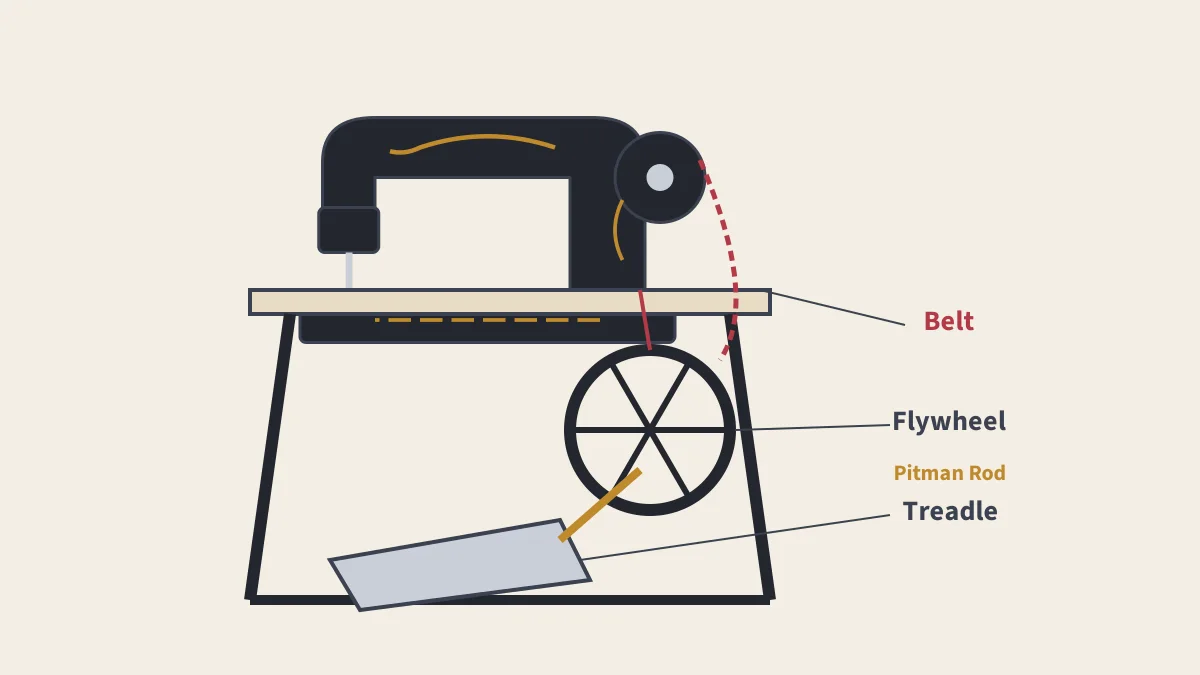
Treadle Sewing Machines
How foot power drives the machine, and how to treadle smoothly.
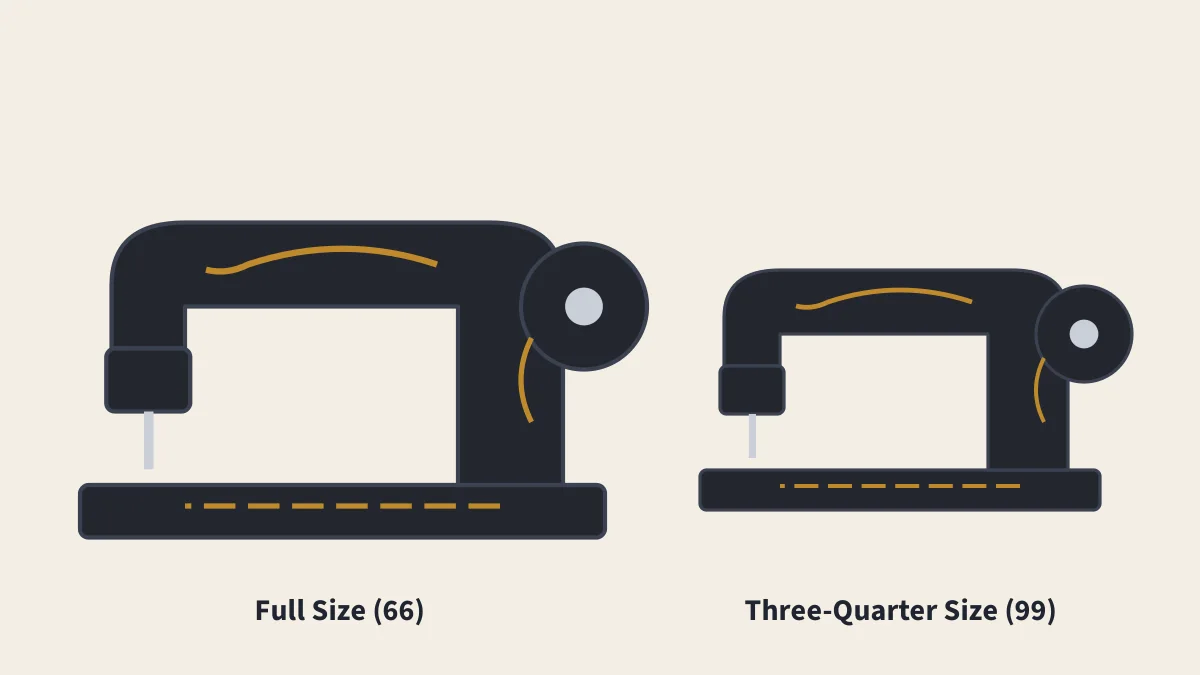
Singer 99
The 1911 three-quarter-size 99 and how it differs from the 66.
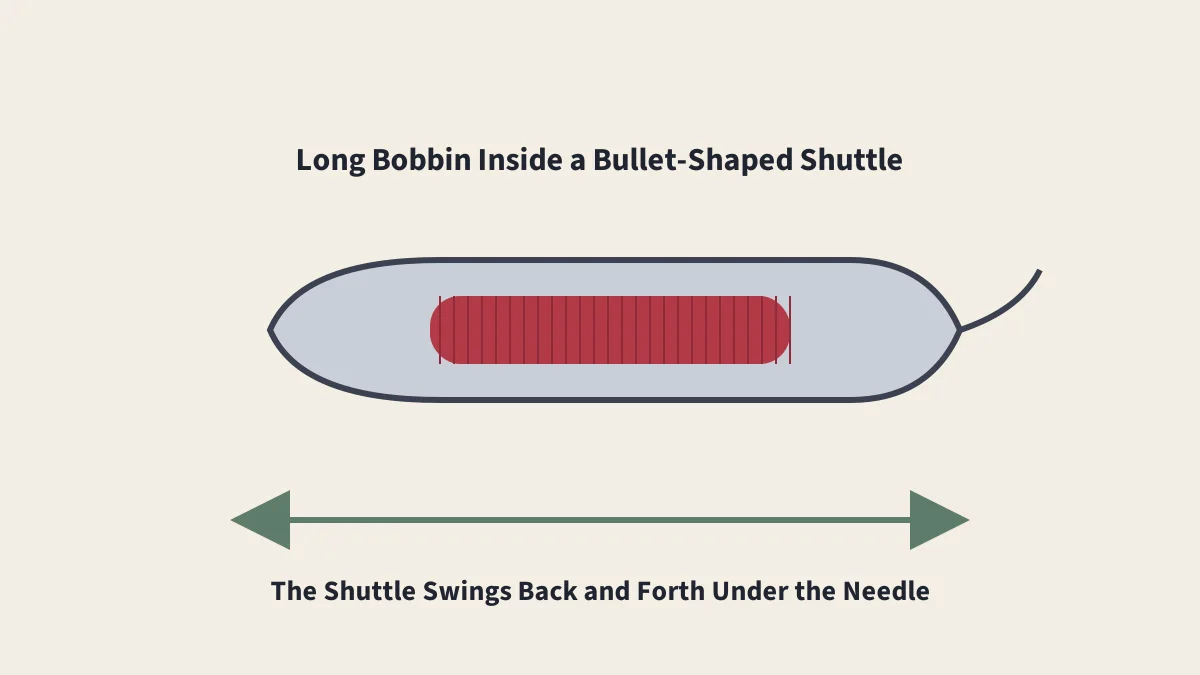
Singer 27, 28, 127 and 128
The VS-1 to 128 family, the long shuttle and how to tell models apart.
Vintage Sewing Machine Identification
Serial numbers, bobbins, decals, badges and factory codes explained.