The Singer 201: Why Collectors Call It Singer's Finest (2026)
Introduced in the mid-1930s as Singer's top domestic machine, the 201 is a straight-stitch machine with a gear-driven horizontal rotary hook. Many enthusiasts still consider it one of the best home sewing machines ever built.
In This Article
Singer 201 Facts
- Introduced: mid-1930s (sources give 1934 or 1935)
- Stitch: straight stitch with reverse
- Hook: horizontal rotary hook, drop-in Class 66 bobbin
- Drive: gears rather than belts inside the machine
- Variants: 201-1 treadle, 201-2 potted motor, 201-3 belt motor, 201-4 hand crank
Ask vintage sewing machine enthusiasts to name Singer's best home machine and many will say the 201. It was introduced in the mid-1930s and was, in the words of one long-standing collector reference, the Singer Manufacturing Company's finest domestic sewing machine. Many enthusiasts say there is still no sewing machine that stitches better than a 201, an opinion, but one shared widely.
What Makes the 201 Special
Horizontal Rotary Hook
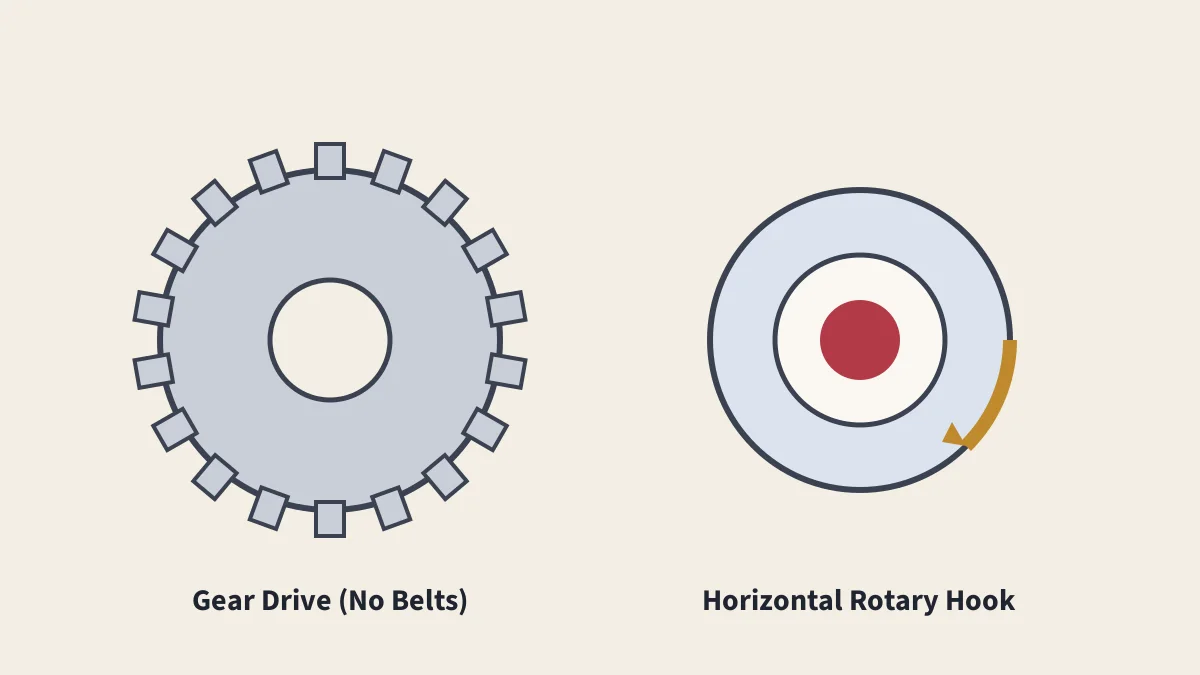
Many Singer machines of the time used oscillating hooks or shuttles that swung back and forth. The 201 has a horizontal rotary hook that spins continuously in one direction, which runs smoothly and quietly. The bobbin drops in from the top under a cover plate; see how a sewing machine works for how rotary hooks form stitches.
Gear Drive
Inside, the 201 uses gears and shafts rather than belts and cranks to drive the hook and feed. Gear drive keeps the timing precise and transmits power efficiently, part of why the machine feels so smooth.
The Potted Motor
The best-known version, the 201-2, has a "potted" motor mounted at the back of the machine that drives it directly through gears, with no belt. It needs special motor lubricant in two grease cups, as Singer's own manual instructs.
The 201 Variants
| Model | Power | Notes |
|---|---|---|
| 201-1 (201K1 in the UK) | Treadle | Human-powered; often found in treadle cabinets |
| 201-2 (201K2) | Potted motor with direct gear drive | The most famous version |
| 201-3 (201K3) | External motor with belt drive | Motor mounted behind the machine |
| 201-4 (201K4) | Hand crank | More common in the UK |
The K versions were made at Singer's Kilbowie factory in Scotland; versions without a letter came from Elizabethport, New Jersey. See Singer serial numbers for what the suffix letters mean.
Using a 201 Today
- Needles: standard 15x1 (130/705 H) needles; see sewing machine needles.
- Bobbins: Class 66, the drop-in style; see bobbin types.
- Presser feet: low-shank feet and attachments, widely available.
- Features: reverse and a calibrated stitch length; many can lower or cover the feed dogs for darning.
- Maintenance: oil all metal-to-metal moving parts as the manual's oiling diagram shows, and grease the potted motor's grease cups with motor lubricant, not oil.
201 vs. Other Vintage Singers
| Feature | Singer 201 | Featherweight 221 | Singer 301 |
|---|---|---|---|
| Body | Mostly cast iron | Aluminum | Aluminum |
| Hook | Horizontal rotary | Vertical rotary | Vertical rotary |
| Needle | Straight | Straight | Slanted |
| Shank | Low shank | Low shank | Slant shank |
| Best for | A full-size home workhorse | Portability | A lighter full-size machine |
What to Check When Buying a 201
- Turn the handwheel by hand. A 201 should turn smoothly and quietly. Stiffness often means old lubricant; it usually frees up with cleaning and fresh oil.
- Identify the version: treadle, potted motor or belt motor. On a 201-2, check that the motor runs smoothly and that its grease cups have been serviced.
- Check the bobbin area. The drop-in rotary hook should be clean, with the correct bobbin case and Class 66 bobbins.
- Look at the finish and decals. Originality and condition affect appeal; see Singer decals.
- Inspect the wiring and foot control on electric machines.
- Look for accessories: presser feet, attachments, the manual and a cabinet or case.
Finding and Valuing a 201
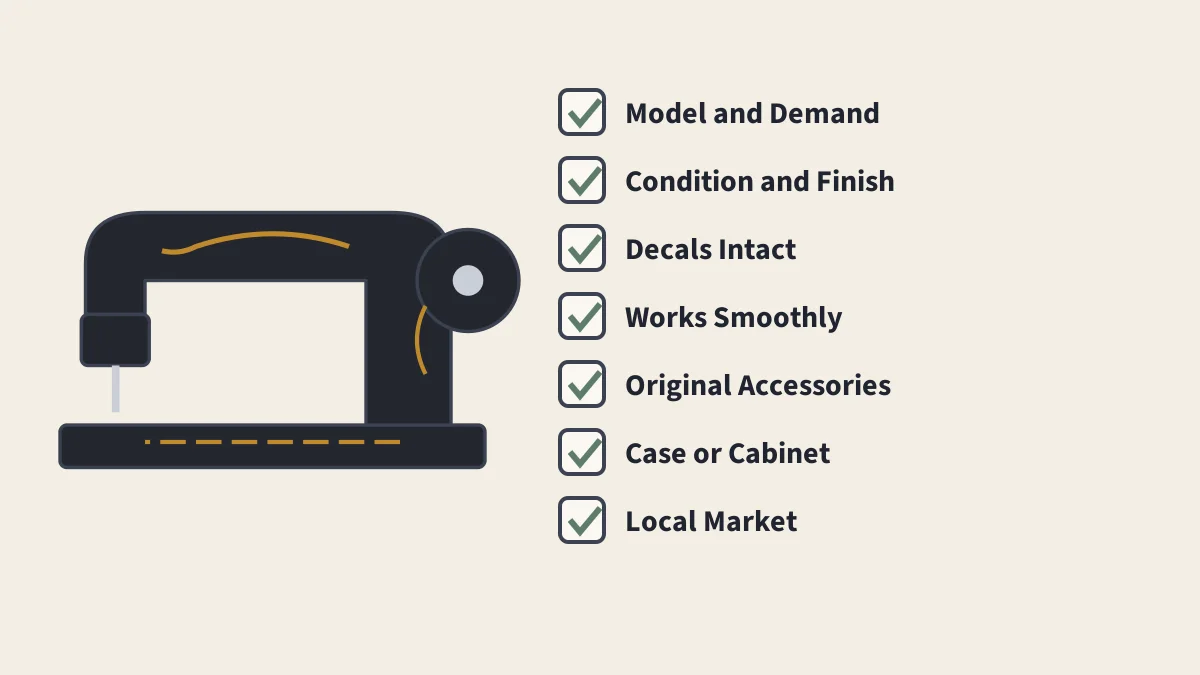
201s are still found in cabinets, in treadle stands and on their own. Value depends on the version, condition, working order and completeness. See what an old Singer is worth for the factors that matter.
Sources
- Singer Corporation, Wikipedia
Frequently Asked Questions
When was the Singer 201 made?
The 201 was introduced in the mid-1930s; sources give 1934 or 1935. American production ran into the late 1950s, and Kilbowie in Scotland made the 201K into the 1960s.
What is the difference between the Singer 201-1, 201-2 and 201-3?
They differ in power. The 201-1 is a treadle machine, the 201-2 has a 'potted' motor that drives the machine directly through gears, and the 201-3 has an external motor driving the handwheel by a belt. A 201-4 hand-crank version was more common in the UK.
Why is the Singer 201 so highly regarded?
It combines a horizontal rotary hook, which runs smoothly and quietly, with gear drive and precise construction. It sews a very even straight stitch and handles a wide range of fabrics. One respected collector reference calls it Singer's finest domestic machine.
What bobbins and needles does the Singer 201 use?
It uses Class 66 bobbins in a drop-in horizontal rotary hook, and standard 15x1 needles.
Keep Reading
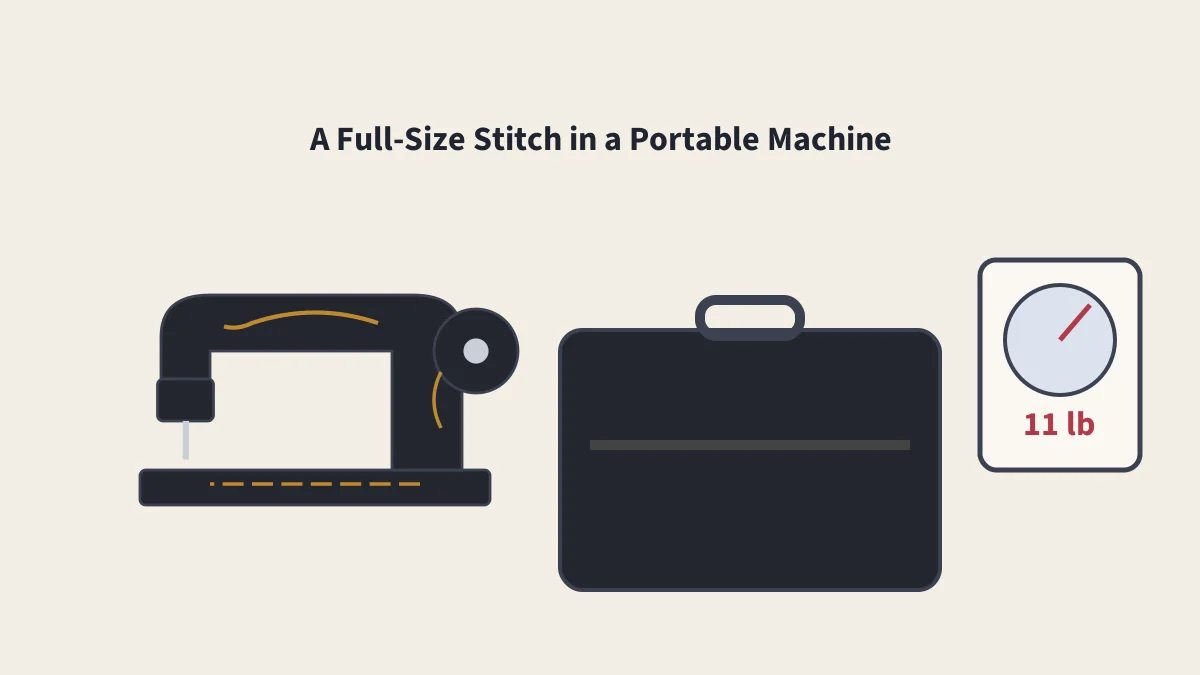
Singer Featherweight 221 and 222
History of the 11-pound 221 and free-arm 222K, and why it endures.
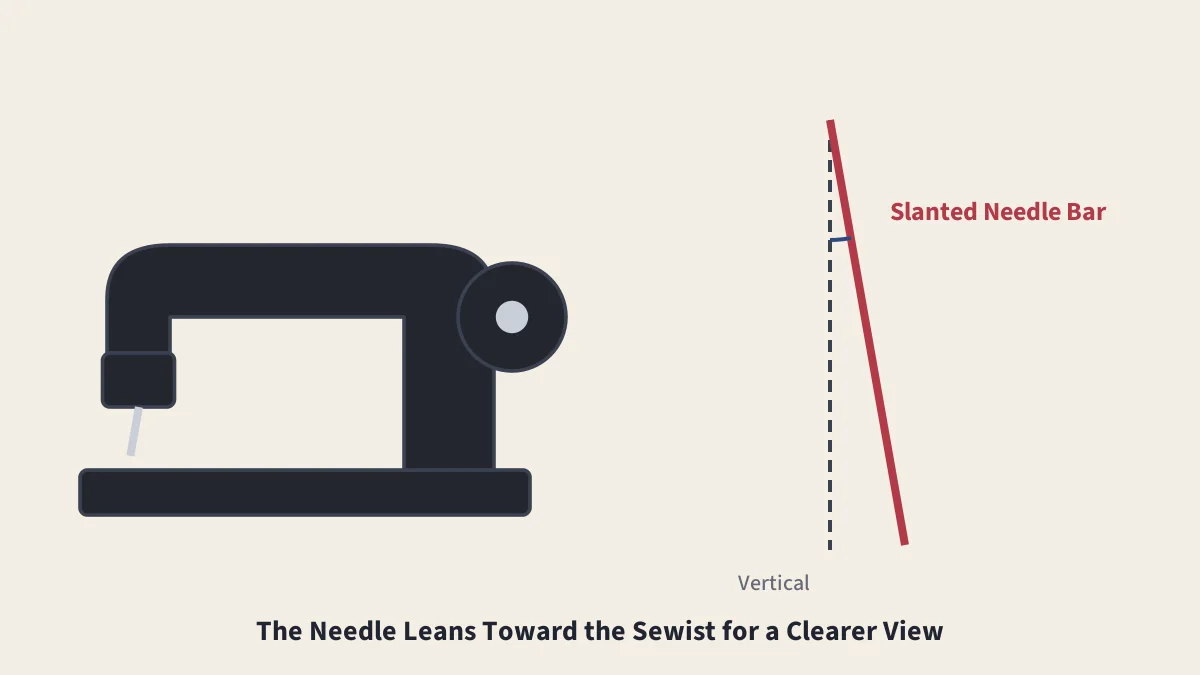
Singer 301
Singer's first slant-needle machine: history, versions and features.
How a Sewing Machine Works
The lockstitch step by step: needle, hook, bobbin and feed dogs.
What Is an Old Singer Worth?
Model, condition, completeness and demand: what decides value.