The Singer 66: Red Eyes, Back Clamps and the Drop-In Bobbin (2026)
Introduced in 1902, the Singer 66 was a full-size home machine with a horizontal drop-in bobbin, a design still used on many modern machines. Its early Red Eye decals have made it a collectors' favorite.
In This Article
Singer 66 Facts
- Introduced: 1902
- Bobbin: Class 66, dropped in from the top
- Hook: horizontal oscillating hook
- Size: full-size home machine
- Famous decals: the collectors' "Red Eye"
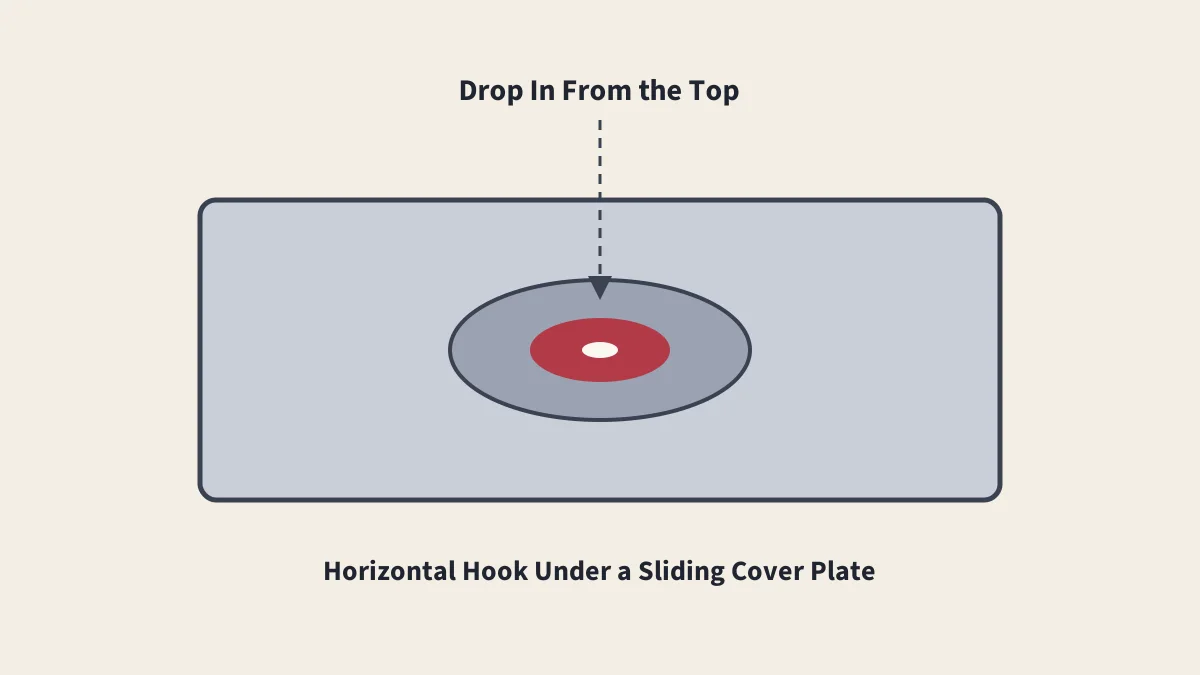
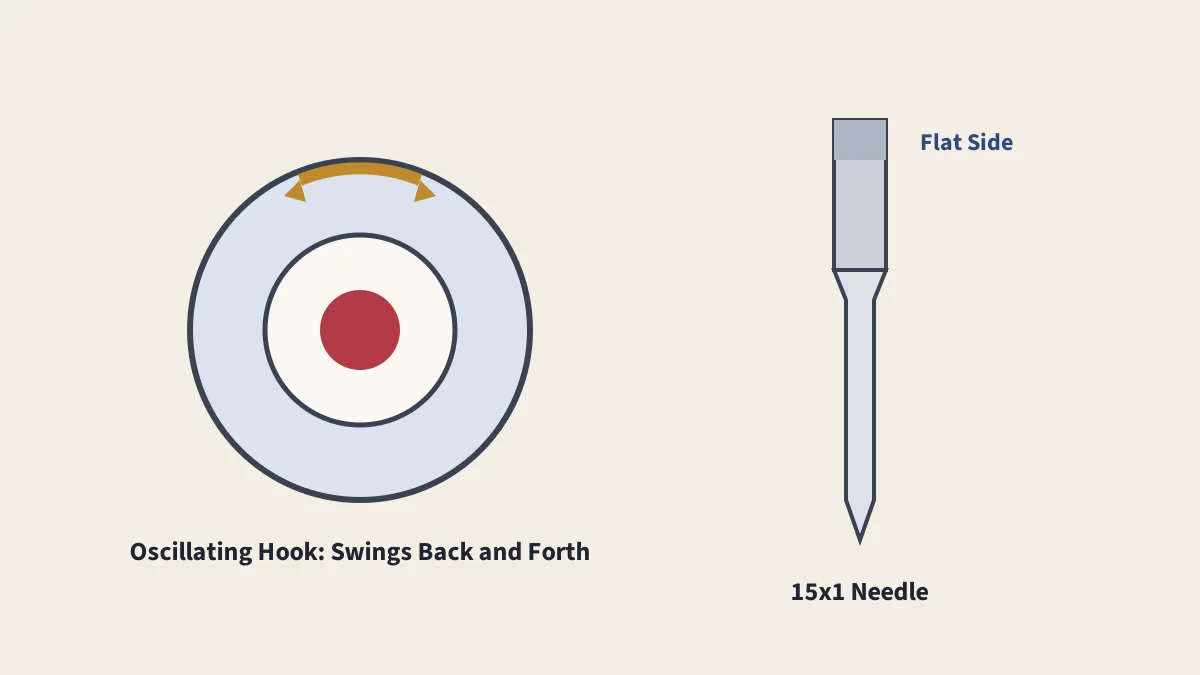
The Singer 66 was a machine for a new century. Its round bobbin dropped in from the top, under a sliding cover, rather than being threaded into a long shuttle, and its horizontal oscillating hook made it smooth and dependable. One collector reference describes the class 66 models as heavy-duty home machines that set the standard for several decades, noting that the Class 66 bobbin and the 66-style horizontal oscillating hook are still in use on many new machines.
A New Kind of Bobbin
Before the 66, many Singer home machines used vibrating shuttles: a long, bullet-shaped shuttle carrying a long bobbin, swinging back and forth under the needle; see Singer 27 and 127. The 66 replaced that with a round bobbin lying flat in a horizontal hook. Changing the bobbin meant simply sliding back the cover plate and dropping the new one in. Today's "drop-in" bobbins follow the same idea; see bobbin types.
Red Eyes and Other Decals
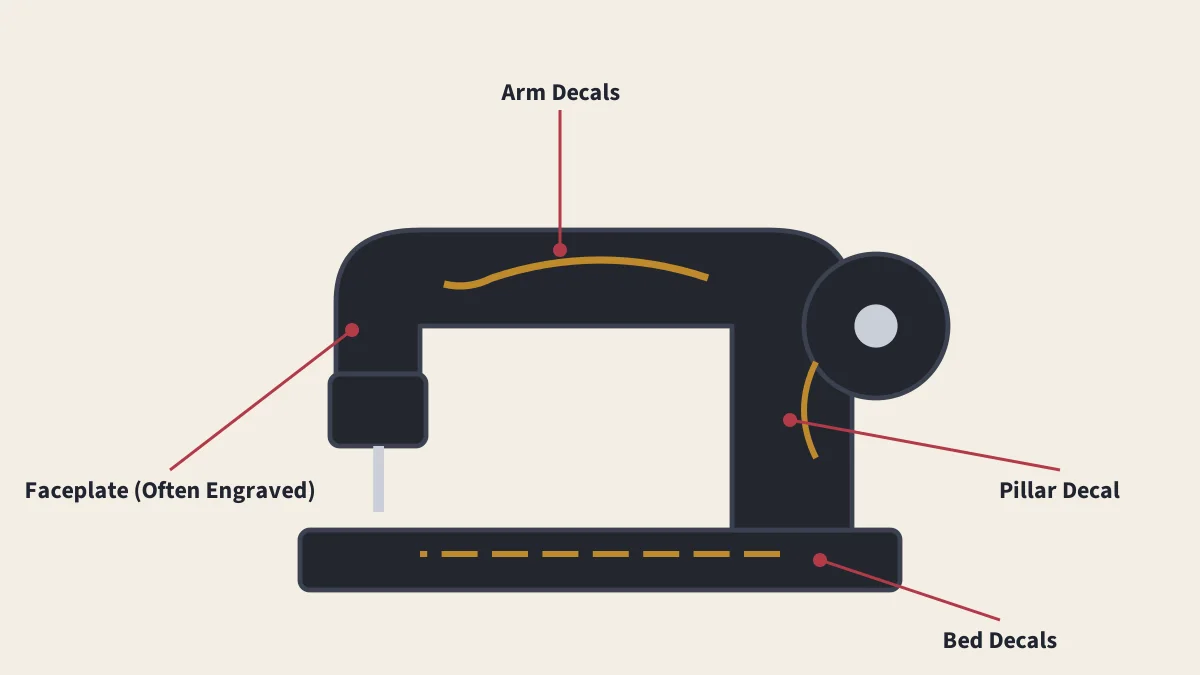
The early 66-1 is famous for its decal set, a gold design with red accents that collectors call the "Red Eye." Later 66s carried other decal sets as styles changed. See our Singer decals identification guide.
Back Clamp vs. Side Clamp
The earliest 66 machines attached the presser foot to the back of the presser bar, a "back clamp" arrangement found on the 66-1 (treadle) and 66-3 (hand crank). Later versions switched to side-clamp feet, which take the standard low-shank feet still sold today. If your 66 has a back clamp, you will need back-clamp feet and attachments, or a replacement side-clamp presser bar.
Main Versions
| Model | Main Features |
|---|---|
| 66-1 | Treadle; back-clamping presser feet |
| 66-3 | As 66-1 but hand crank |
| 66-4 | Electric, with a belt motor and side-clamping presser feet |
| 66-6 | As 66-4 but with a solid handwheel |
| 66-16, 66-18 | Later versions |
| 66K | Made at Kilbowie, Scotland |
The 66 and the 99
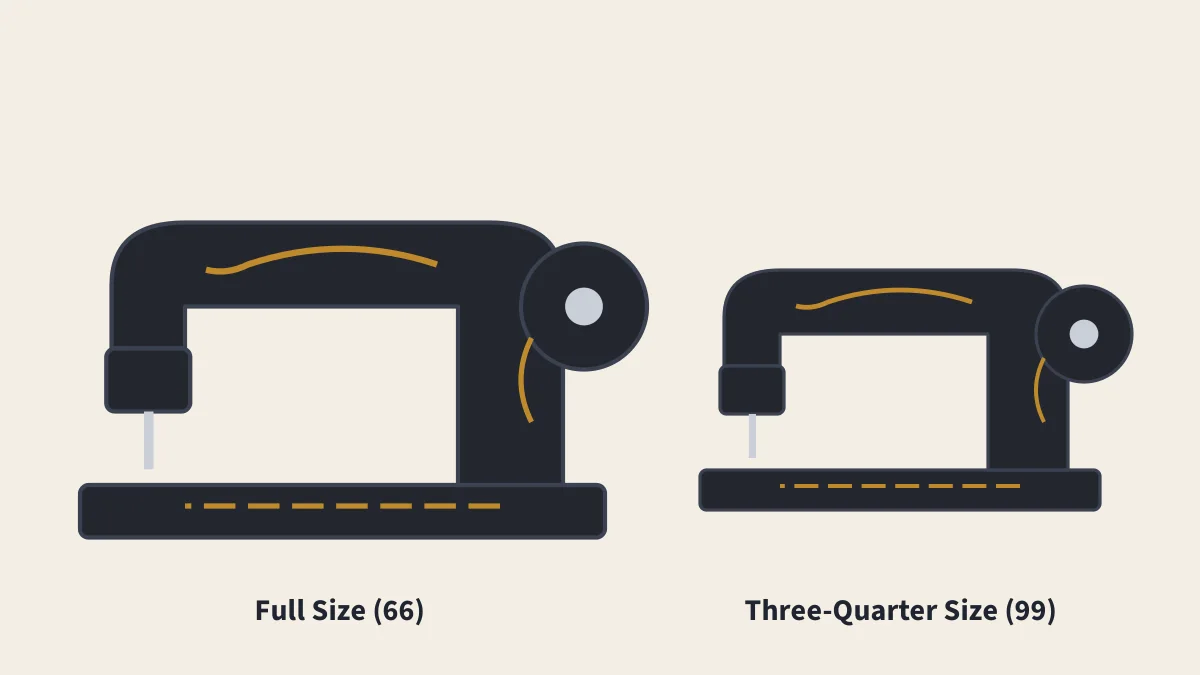
In 1911 Singer introduced the Singer 99, a three-quarter-size version of the 66 using the same mechanism. If you are unsure which you have, compare the bed length: the 99 is noticeably smaller.
Using a 66 Today
- Standard 15x1 needles; see sewing machine needles.
- Class 66 bobbins; check the fit, because Class 15 bobbins are not a substitute.
- Side-clamp models take low-shank feet; back-clamp models need their own feet.
- Straight stitch only; check your version's manual for features such as reverse.
- Clean, oil and check wiring before use; see maintenance.
To date your 66, see Singer serial numbers; a G-series example from 1919 is worked through there.
Sources
- Singer Corporation, Wikipedia
Frequently Asked Questions
When was the Singer 66 introduced?
In 1902. The 66 was produced for decades in the United States and at Kilbowie in Scotland, with many versions differing mainly in power source and details.
Why is the Singer 66 called the Red Eye?
Because of its decal set. Early 66 machines carried a gold decal with red accents that collectors call the 'Red Eye.' The nickname is a collectors' term rather than an official Singer name.
What is a back-clamp Singer 66?
The earliest 66s attached the presser foot to the back of the presser bar instead of the side. These back-clamp machines need special feet; later 66s use standard side-clamp low-shank feet.
What bobbin does a Singer 66 use?
Class 66 bobbins, which drop in from the top into a horizontal oscillating hook. The Class 66 bobbin and the 66-style hook are still used on many sewing machines.
Keep Reading
Singer 99
The 1911 three-quarter-size 99 and how it differs from the 66.
Singer 15 Class
The long-lived 15 class and its versions, from 15-30 to 15-91.
Singer Decals Identification Guide
Sphinx, Red Eye, Tiffany, Lotus and other decal sets, with models and dates.
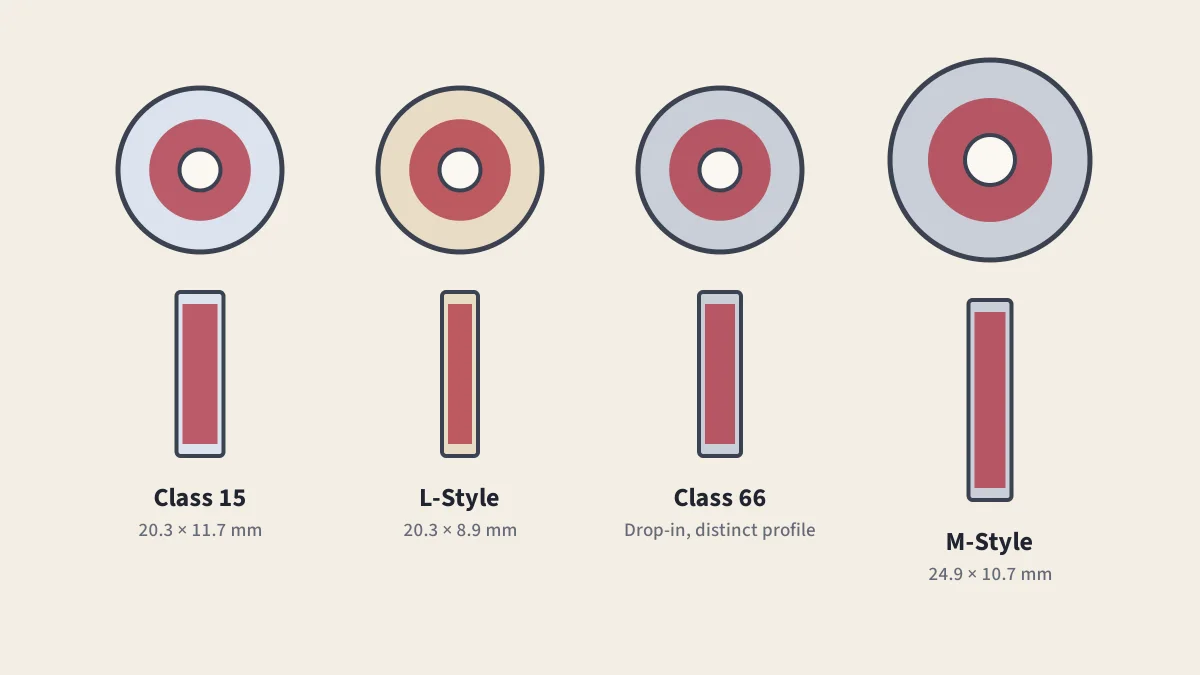
Bobbin Types and Classes
Class 15, 15J, 66, L and M bobbins compared, with sizes.