What Is an Old Singer Worth? The Factors That Really Decide (2026)
Almost everyone with an old Singer wonders if it is valuable. The honest answer is that most are worth more as working machines than as antiques. But model, condition and completeness can make a big difference. Here is how to judge yours.
In This Article
Value in Brief
- Most old Singers are common, made in the millions
- Demand matters more than age
- Condition, decals and working order make the biggest difference
- Accessories, case or cabinet add appeal
- Check completed sales, not asking prices
Singer was the world's biggest sewing machine maker for much of its history, and that is the key to understanding value. A machine can be a century old and still be common, because so many were made and so many survived. Wikipedia's article on the Featherweight notes that Singer machines are often worth relatively little, with the Featherweight a notable exception. What makes one machine worth more than another is rarely its age. It is demand, condition and completeness.
This guide does not give prices, which change constantly and vary by country and region. Instead, it explains the factors so you can judge any particular machine.
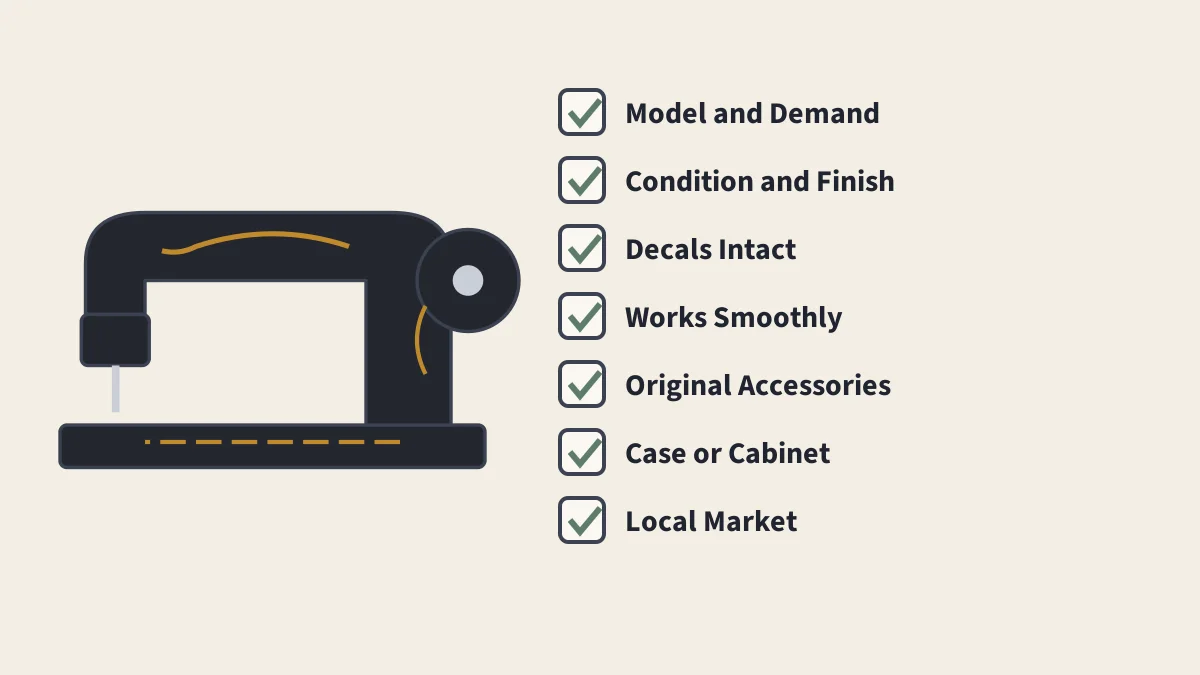
1. Model and Demand
The model has the biggest effect on interest. Some models are sought after by sewists who want to use them, and that steady demand supports value:
- Featherweight 221 and 222K: portable, beloved by quilters, and the best-known collectible Singer.
- Singer 201: admired for its stitch quality and gear drive.
- Singer 301: a lightweight slant-needle straight stitcher.
- Slant-o-Matic 401A, 403A, 404 and 500A: all-metal mid-century machines with zigzag and cams (except the 404).
Very common models, such as many 15, 66 and 27 class machines, are widely available. Rare variants, early examples, unusual factory versions or commemorative badges can interest specialist collectors.
2. Condition and Finish
- Paint: deep, glossy original finish versus chips, rust and wear.
- Chrome and bright parts: pitting and rust reduce appeal.
- Decals: complete, bright gold decals are a big plus; worn or "silvered" decals reduce appeal. See Singer decals.
- Originality: collectors generally prefer original finishes to repainting.
3. Working Order
A machine that turns freely and sews a good straight stitch is worth far more to most buyers than one that is seized or missing parts. Electric machines should have their wiring checked, because old wiring can be unsafe. A cleaned, oiled and serviced machine is easier to sell. See sewing machine maintenance.
4. Completeness
- Bobbin case and bobbins
- Presser feet and attachments, such as buttonholers and rufflers
- Original manual
- Foot pedal or knee control and power cord
- Carrying case or cabinet, with the key if it locks
5. Case, Cabinet or Treadle Base
A matching carrying case suits portable models such as the Featherweight. Cabinets and treadle bases can add or subtract: some buyers love a decorative cabinet, but large furniture is hard to ship and many buyers want only the machine.
6. Location and Shipping
Heavy cast-iron machines and cabinets are expensive to ship, so many sell locally, where prices depend on local demand. Light, portable machines are easier to sell across a whole country.
Value Factors at a Glance
| Factor | Adds Value | Reduces Value |
|---|---|---|
| Model | Sought-after models; rare variants | Very common models |
| Finish | Original, glossy, clean | Rust, chips, repainting |
| Decals | Bright and complete | Worn, silvered, missing |
| Function | Sews smoothly, recently serviced | Seized, unsafe wiring, missing parts |
| Extras | Manual, attachments, matching case | Missing bobbin case or pedal |
| Logistics | Light and easy to ship | Heavy cabinet, remote location |
How to Research Your Machine
- Identify the model and date using the serial number; see Singer serial numbers.
- Check it sews, or note honestly what does not work.
- List what is included: accessories, manual, case.
- Look at recently completed sales of the same model in similar condition.
- Ask local sewing machine repair shops or collector groups if you need an informed opinion.
Sources
- Singer Featherweight, Wikipedia
- Singer Corporation, Wikipedia
Frequently Asked Questions
Are old Singer sewing machines valuable?
Most are not rare. Singer made machines in the millions, so common models are plentiful and are valued mainly as usable machines. A few models, such as the Featherweight, are consistently in demand, and exceptional condition or rare variants can add value.
Does age make a Singer sewing machine valuable?
Not on its own. A 100-year-old Singer is not necessarily rare, because so many were made. Demand from collectors and sewists, condition and completeness matter more than age.
How can I find out what my Singer is worth?
Identify the model and date from the serial number, assess condition honestly, then look at recently completed sales of the same model in similar condition in your area. Asking prices are not the same as selling prices.
Should I restore an old Singer before selling it?
Cleaning, oiling and getting it sewing smoothly usually help. Heavy restoration, repainting or replacing decals can reduce value to collectors, who generally prefer original finishes.
Keep Reading
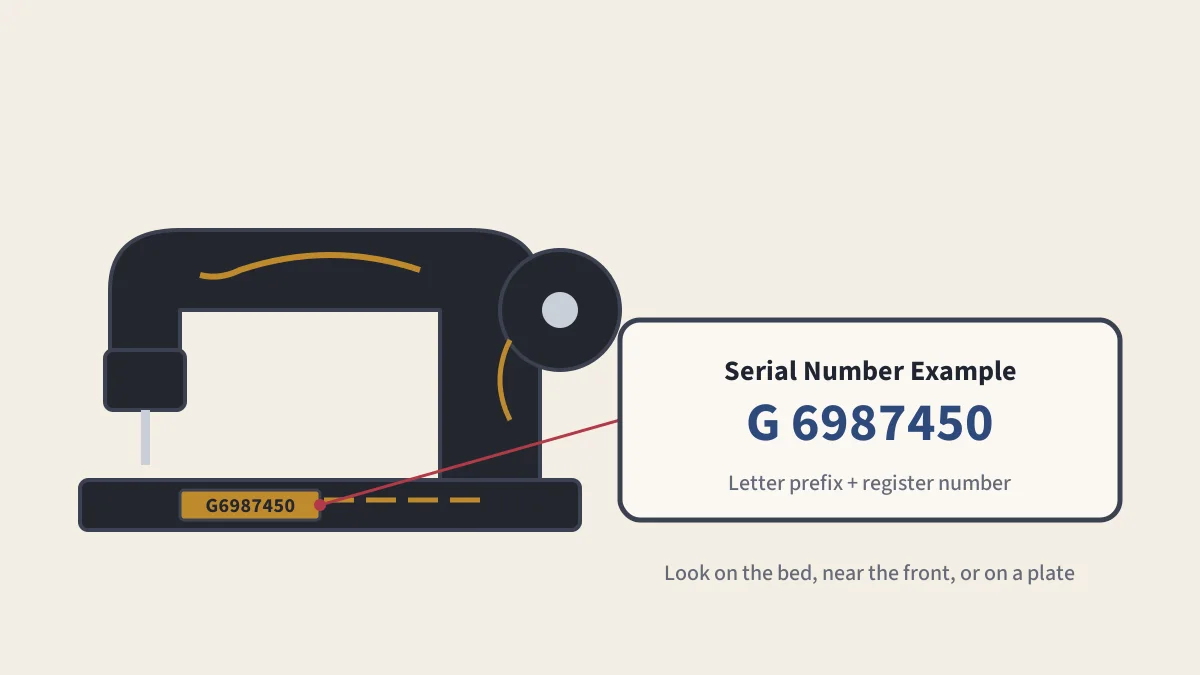
Singer Serial Numbers
Find the serial number, read the prefix and understand allotment dates.
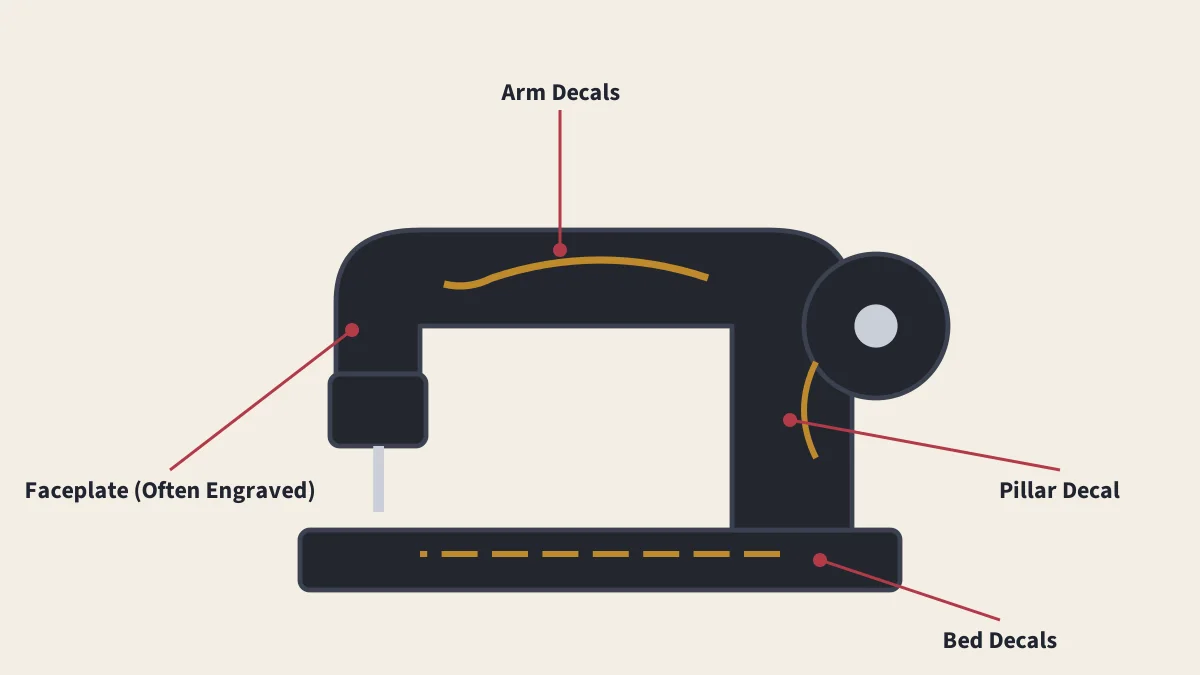
Singer Decals Identification Guide
Sphinx, Red Eye, Tiffany, Lotus and other decal sets, with models and dates.
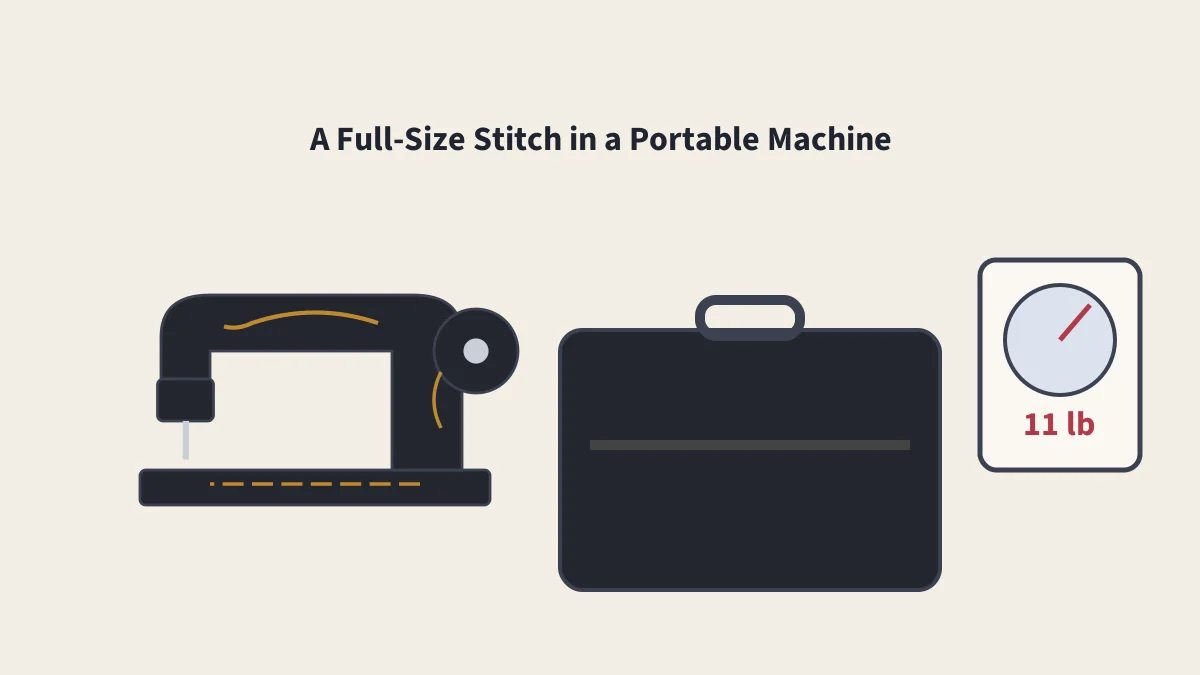
Singer Featherweight 221 and 222
History of the 11-pound 221 and free-arm 222K, and why it endures.
Vintage Sewing Machine Identification
Serial numbers, bobbins, decals, badges and factory codes explained.