Juki History: The Industrial Giant That Also Sews at Home (2026)
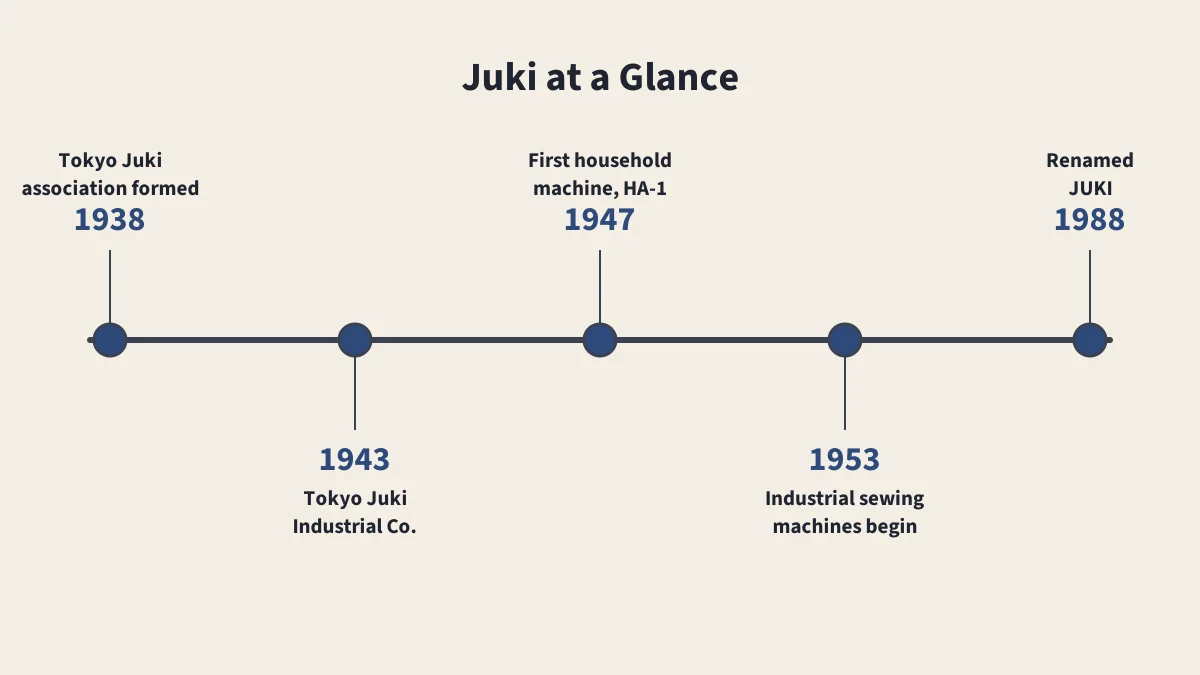
Most clothes in shops have passed under an industrial sewing machine, and many of those machines carry the Juki name. The company began as a Tokyo machinery association in 1938 and built its first household sewing machine in 1947.
In This Article
Juki in Brief
- Founded: December 1938, Tokyo
- Origin: an association of Tokyo machinery makers
- First household machine: HA-1, 1947
- Industrial machines: from 1953
- Headquarters: Tama, Tokyo
Juki is a household name in garment factories. Its single-needle lockstitch machines, overlockers and specialist machines are used to sew clothing around the world, and it also sells machines for home sewists. Unlike Singer or Brother, Juki did not start with one founder or one workshop. It began as a joint venture of an entire industry.
A Tokyo Machinery Association
In December 1938, Tokyo machinery manufacturers invested together to form the Tokyo Juki Manufacturers Association. In 1943 the association became a joint-stock company, Tokyo Juki Industrial Co., Ltd., a name it would keep until 1988.
The First Household Machine
According to Juki's own history, sewing machine manufacturing was permitted in 1945, and the company completed its first household machine, the HA-1, in 1947. Juki also dates the start of its exports of household machines to the United States to that period.
This is one reason so many postwar Japanese machines look alike: they followed common designs, many based on the Singer 15. See our guide to vintage sewing machine brands and the Singer 15.
Into Industrial Sewing
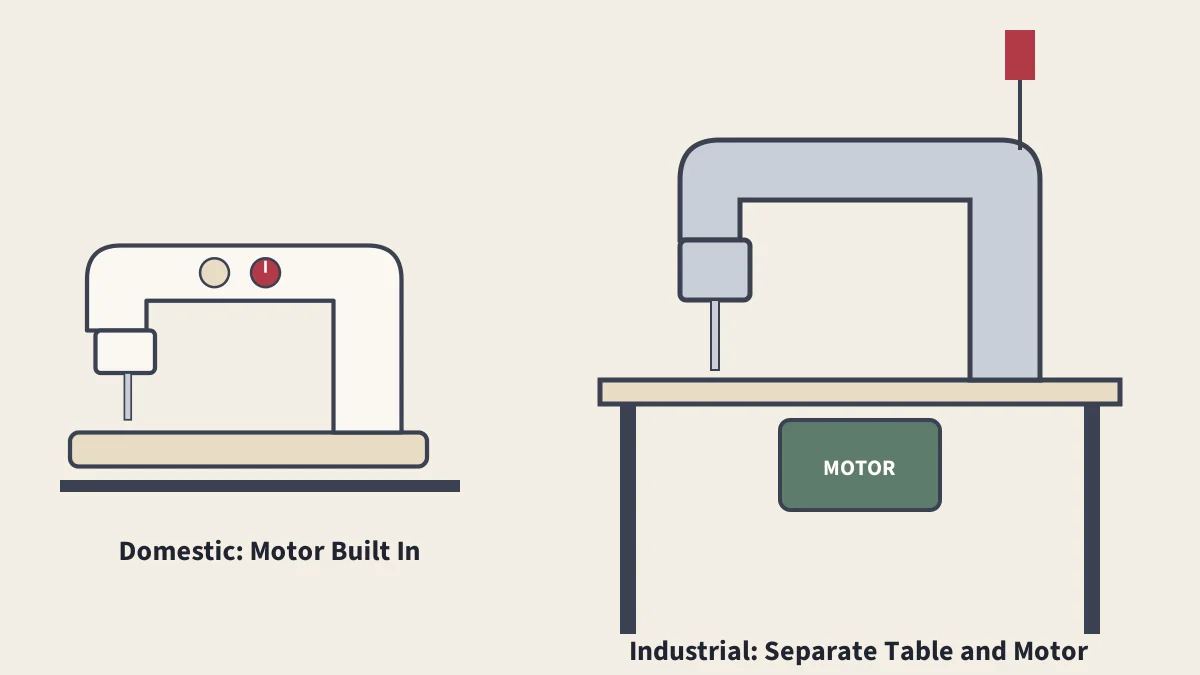
In 1953 Juki began making industrial sewing machines, the business it is best known for today. Industrial machines are built to run all day at high speed, usually doing one job, such as straight stitching, overlocking or buttonholing; see industrial vs. domestic sewing machines.
Juki grew into one of the leading industrial machine manufacturers. Wikipedia says it used to rank as the largest industrial sewing machine maker in the world, and Juki itself claims the world's largest share of the industrial sewing machine market.
Timeline
| Year | Event |
|---|---|
| 1938 | Tokyo Juki Manufacturers Association formed |
| 1943 | Becomes Tokyo Juki Industrial Co., Ltd. |
| 1945 | Sewing machine manufacturing permitted |
| 1947 | First household machine, the HA-1 |
| 1953 | Enters the industrial sewing machine business |
| 1988 | Adopts the JUKI name and current logo |
Juki Today
Juki makes industrial and household sewing machines, as well as electronics assembly equipment. Its products are made in Japan, China and Vietnam and sold in around 170 countries. The company is headquartered in Tama, Tokyo.
For home sewists, Juki is known for straight-stitch machines and sergers that borrow from its industrial designs. See serger vs. sewing machine and coverstitch machines.
Vintage Juki Machines
Older Juki household machines and Juki-made machines sold under other names turn up regularly on the secondhand market. As with any vintage machine, check the bobbin type, presser foot shank and wiring before use; see bobbin types and maintenance.
Sources
- Juki, Wikipedia
- White Sewing Machine Company, Wikipedia
Frequently Asked Questions
When was Juki founded?
Juki dates its founding to December 1938, when Tokyo machinery manufacturers formed the Tokyo Juki Manufacturers Association. It became Tokyo Juki Industrial Co., Ltd. in 1943 and adopted the JUKI name in 1988.
When did Juki start making sewing machines?
Juki's history says sewing machine manufacturing was permitted in 1945, its first household machine, the HA-1, was completed in 1947, and it entered the industrial sewing machine business in 1953.
Is Juki an industrial sewing machine company?
Mainly, yes. Juki is one of the leading industrial sewing machine makers and describes itself as having the world's largest share of the industrial sewing machine market. It also makes household machines.
Did Juki make machines for other brands?
Yes. Wikipedia notes, for example, that White Rotary machines of the 1950s and 1960s (model 659) were made by Juki.
Keep Reading
Industrial vs. Domestic Machines
Speed, motors, tables and single-purpose design compared.
Brother History
The Yasui brothers, the straw-hat machine and the computerized Opus 8.
Janome History
The Pine factory, the snake's eye bobbin and the Memory 7.
Vintage Sewing Machine Brands
American, European and Japanese makers, plus badge-engineered machines.