Husqvarna Viking History: How a Rifle Factory Learned to Sew (2026)
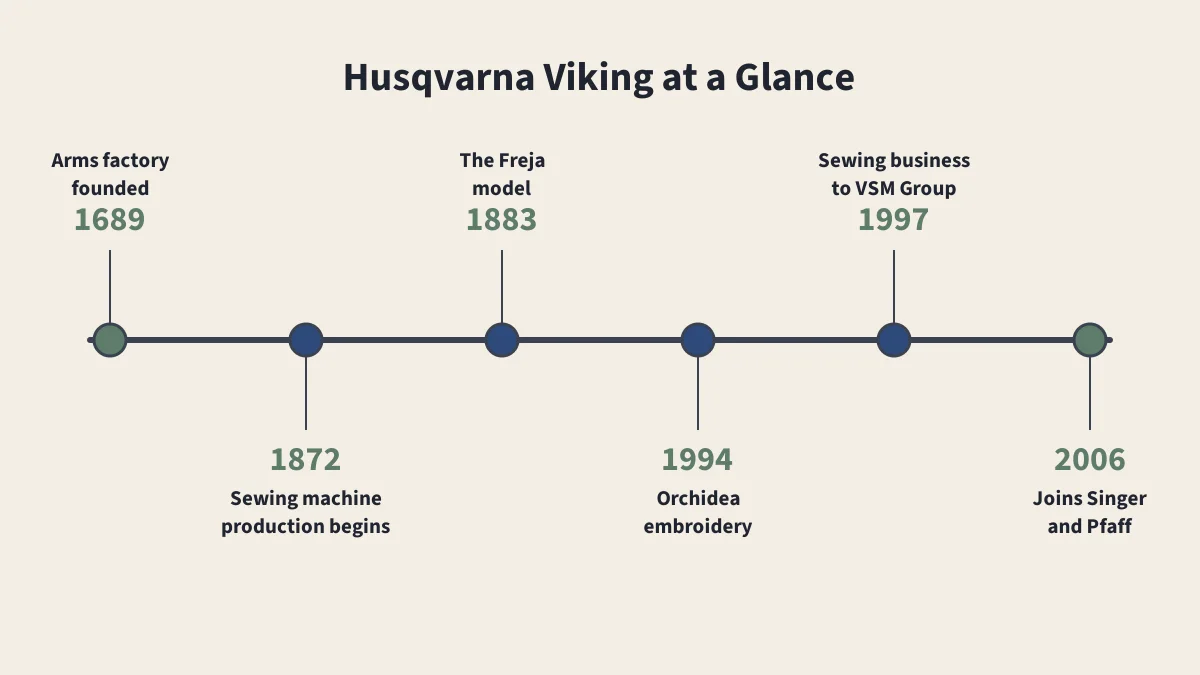
Husqvarna began as a weapons factory in 1689. When rifle demand fell in the 1870s, its precision machinery turned to sewing machines, and the company became one of Europe's best-known sewing brands.
In This Article
Husqvarna Viking in Brief
- Origins: a firearms factory founded in 1689
- Home: Huskvarna, Sweden
- Sewing machines since: 1872
- Sewing business sold: to VSM Group, 1997
- Today: part of SVP, alongside Singer and Pfaff
Several sewing machine makers have roots in metalworking, but few began with muskets. Husqvarna was founded as a firearms manufacturer in 1689 in Sweden. By the 1870s, its machinery would be making something entirely different.
From Rifles to Sewing Machines
In the 19th century, the factory acquired new machinery to make rifles for the army. By 1872, however, demand for rifles had declined. The machinery for producing rifles was well suited to producing sewing machines, and Husqvarna converted the factory. In 1874 it started a foundry for sewing machine parts.
Husqvarna Viking's own history says the board decided on February 5, 1872, to begin manufacturing sewing machines, and that the first model was named Nordstjernan, the Northern Star. The company also points to the Freja model of 1883 as an early success.
The Viking Name
Husqvarna's sewing machines are sold today under the Husqvarna Viking brand. The sewing machine company itself, previously named Husqvarna Sewing Machines, became VSM Group, short for Viking Sewing Machines.
Computers and Embroidery
Husqvarna Viking moved early into computerized and embroidery machines. The company says its first computerized sewing machine dates from 1979 and its first embroidery machine, the Orchidea, from 1994. Embroidery machines stitch designs from digital files by moving the fabric in a hoop under the needle; see how embroidery machines work and mechanical vs. computerized machines.
Ownership Changes
| Year | Event |
|---|---|
| 1978 | Electrolux acquires Husqvarna |
| 1997 | Husqvarna-branded sewing machines sold to VSM Group |
| 1999 | VSM Group takes over Pfaff sewing machines |
| 2006 | VSM Group bought by Kohlberg & Company, owner of Singer, forming SVP Worldwide |
| 2006 | The White sewing line is folded into Husqvarna Viking |
The name SVP stands for the three brands brought together: Singer, Viking and Pfaff. Husqvarna the outdoor power products company, meanwhile, was spun off by Electrolux in 2006 and continues separately.
Vintage Husqvarnas
Older Husqvarna and Viking machines from the mid-20th century are admired for their solid construction. Many use their own presser feet and accessories, so check compatibility before buying parts; see the presser feet guide. For other European makers, see Bernina, Elna and Necchi.
Sources
- Husqvarna Group, Wikipedia
- VSM Group, Wikipedia
Frequently Asked Questions
When did Husqvarna start making sewing machines?
In 1872. Husqvarna had been founded as a firearms manufacturer in 1689; when demand for rifles declined, its rifle-making machinery proved well suited to producing sewing machines.
Is Husqvarna Viking the same company as Husqvarna chainsaws?
They share a history but are now separate. The Husqvarna-branded sewing machine business was sold to the VSM Group in 1997, and later became part of SVP Worldwide, while the Husqvarna Group continued with outdoor power products.
Who owns Husqvarna Viking now?
Husqvarna Viking is part of the group that also owns Singer and Pfaff. VSM Group, which owned Husqvarna Viking and Pfaff, was bought in 2006 by Kohlberg & Company, which also owned Singer, forming SVP Worldwide.
What was the first Husqvarna sewing machine?
Husqvarna Viking's own history names its first model, from 1872, as the Nordstjernan (Northern Star).
Keep Reading
Pfaff History
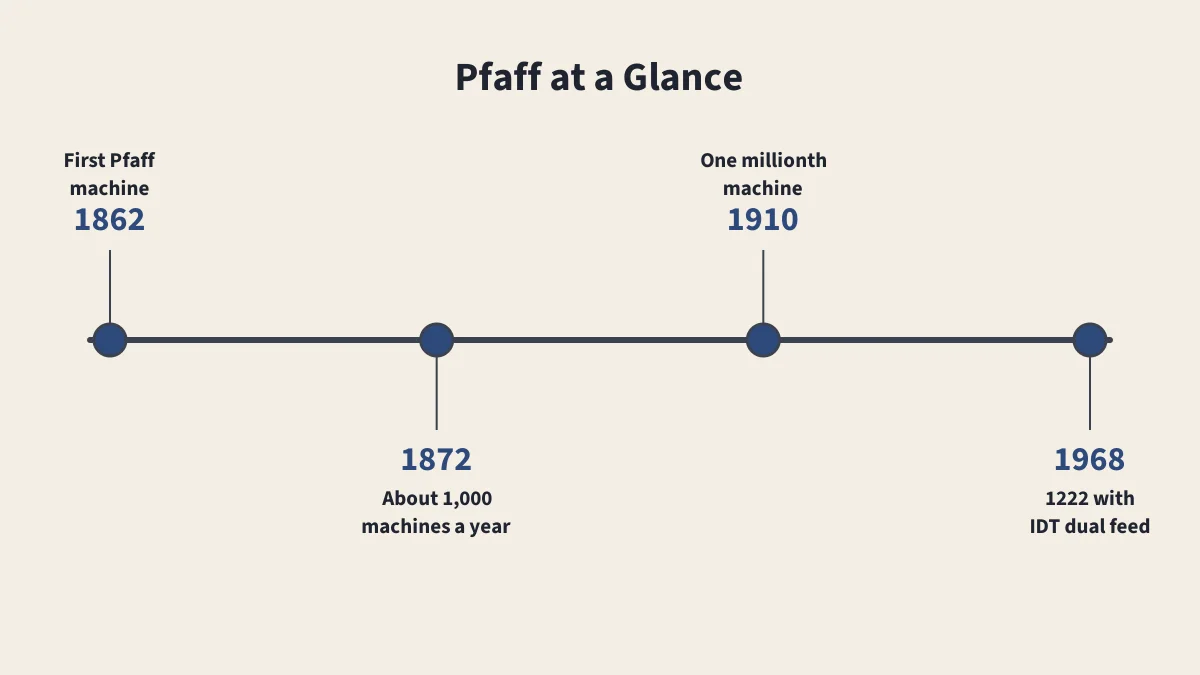
Georg Michael Pfaff, Lina Pfaff's leadership and the IDT dual feed.
White Sewing Machine History
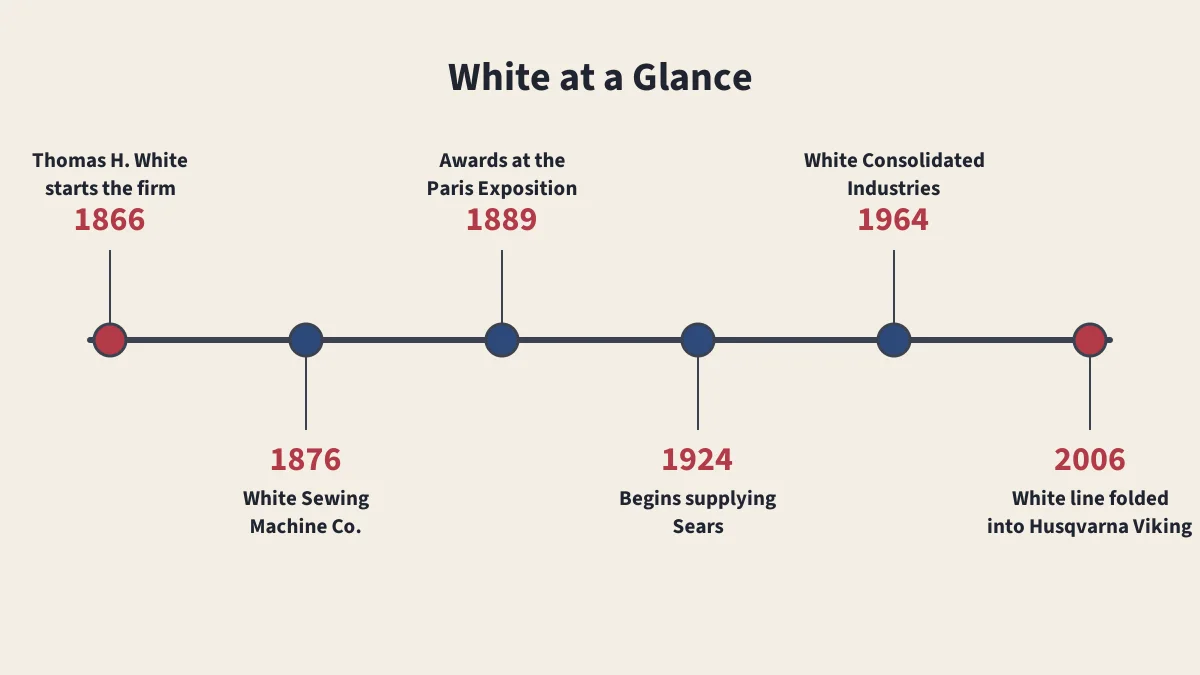
Thomas White's company, the White Rotary and the Sears connection.
Elna History
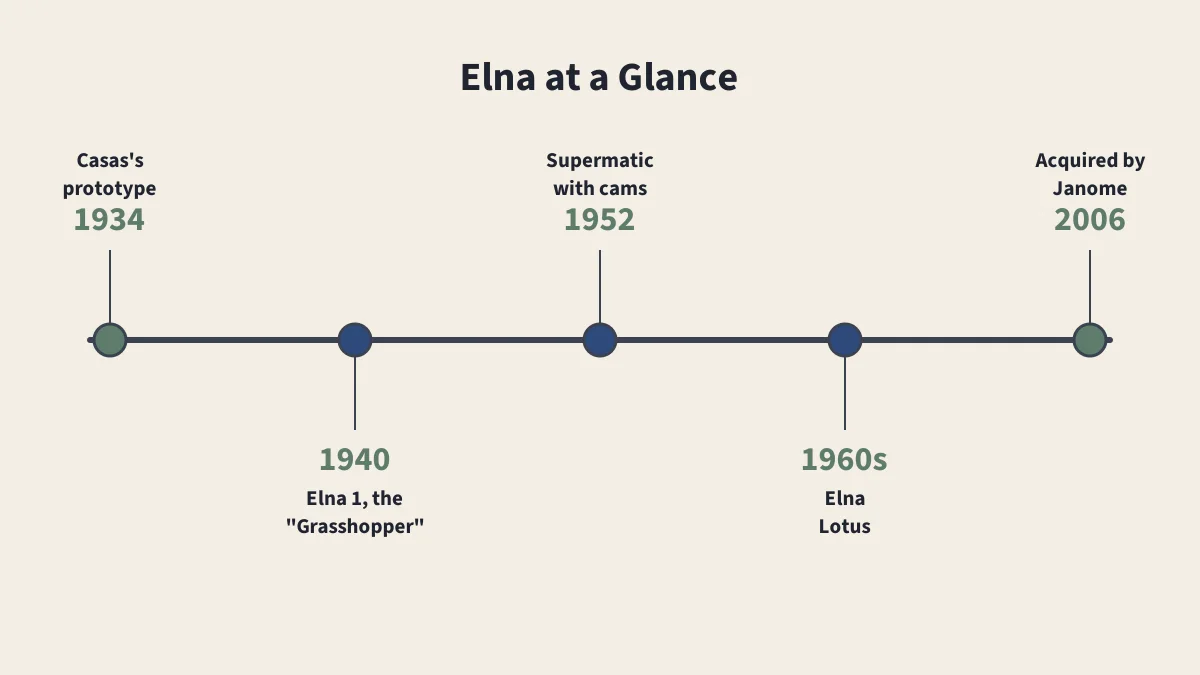
Ramon Casas, the Elna 1 Grasshopper and the Supermatic.
Vintage Sewing Machine Brands
American, European and Japanese makers, plus badge-engineered machines.