The Singer 301: The Lightweight Slant-Needle Classic (2026)
Launched for Singer's 100th anniversary in 1951, the 301 introduced the slanted needle and an aluminum body in a full-size machine. It was built at a new factory in South Carolina and became the starting point for the Slant-o-Matic family.
In This Article
Singer 301 Facts
- Introduced: 1951, Singer's centennial year
- Factory: a new plant at Anderson, South Carolina
- Body: aluminum, lighter than cast-iron full-size machines
- Needle: slanted, with a slant-shank presser bar
- Stitch: straight stitch with reverse
- Finishes: black or beige
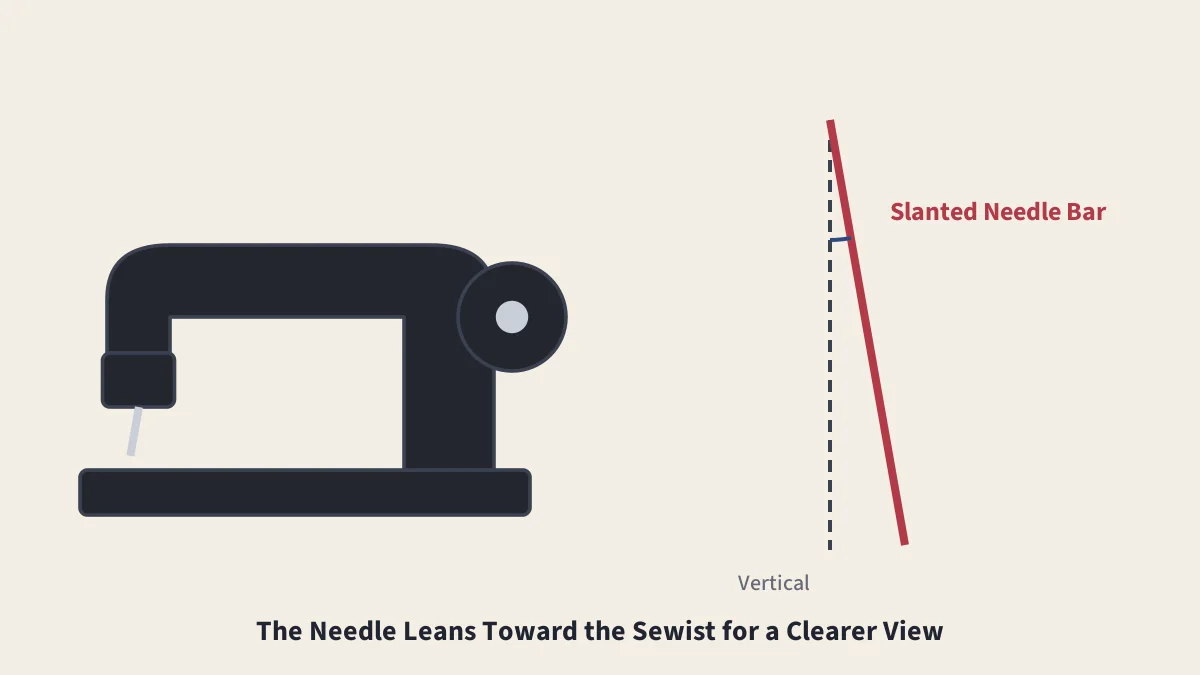
Singer marked its 100th anniversary in 1951 with a genuinely new design. The 301 was the first slant-shank model Singer made: its needle bar leans toward the sewist, giving a clearer view of the needle and the work. It was built from aluminum, making it much lighter than a cast-iron full-size machine, and it was produced at a new Singer factory in Anderson, South Carolina, in black or beige.
The Slanted Needle
On most sewing machines, the needle moves straight up and down. On the 301, the needle bar is angled forward, toward the person sewing. Singer promoted this as a way to see the stitching more easily without leaning over the machine. The slant also required a new kind of presser bar, the slant shank, so the 301 uses its own family of slant-shank feet and attachments. Low-shank feet from machines such as the 201 and Featherweight do not fit; see the presser feet guide for shank types.
Design and Features
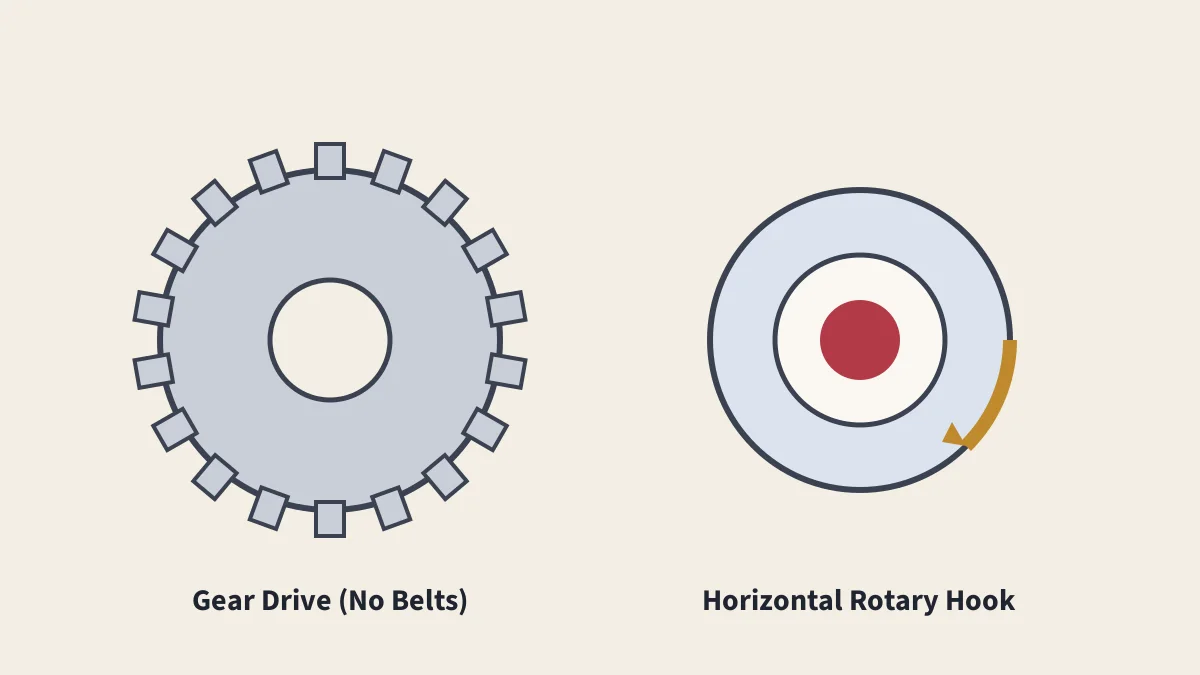
- Gear-driven mechanism and built-in motor.
- Vertical, side-loading rotary hook, a design related to the Featherweight's.
- Drop feed that can be lowered for darning and embroidery.
- Marked needle plate with seam guides.
- Two body styles: a "long bed" version for cabinets and a "short bed" version for portable cases, as collectors describe them.
- Standard 15x1 needles.
Versions
| Model | Years | Notes |
|---|---|---|
| 301 | First production years, from 1951 | Includes early centennial-year machines |
| 301A | Later 1950s | Made at Anderson with the "A" suffix |
The original models produced at the Anderson plant were the 301/301A, 401A/403A and 500A/503A. To date a specific machine, see Singer serial numbers; note that production records for Anderson slant-needle machines are incomplete, so collectors' research fills some gaps.
From the 301 to the Slant-o-Matics
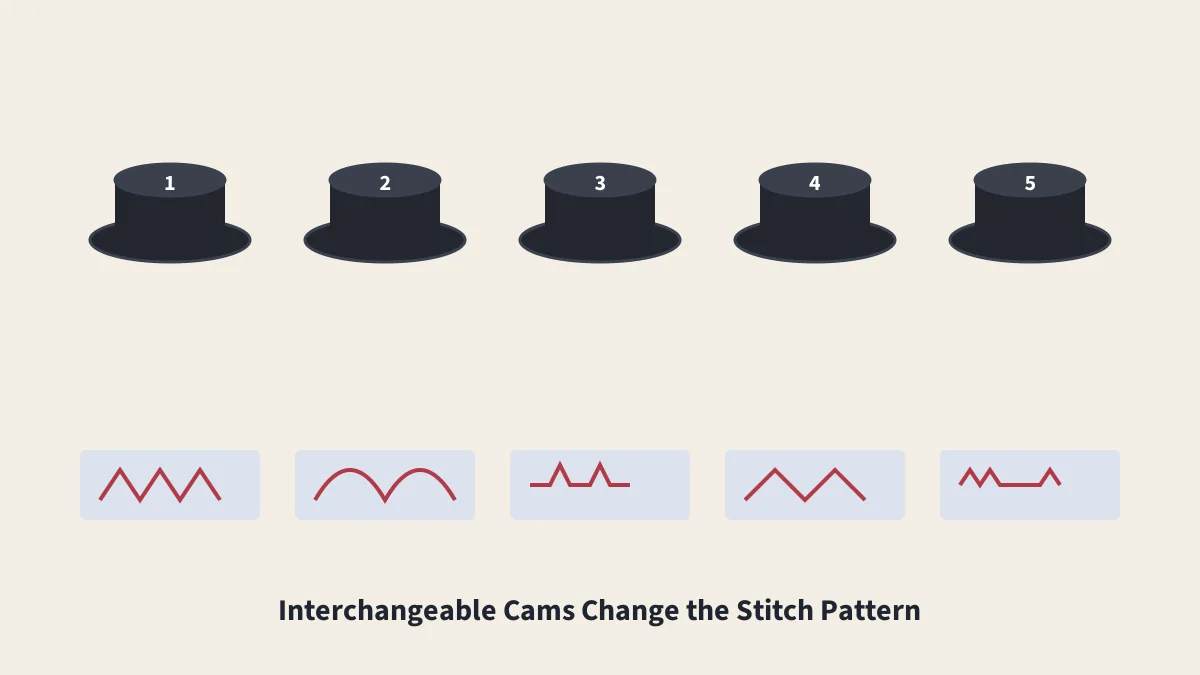
The 301's slant-needle architecture became the basis for Singer's top machines of the later 1950s and early 1960s, the Slant-o-Matic 401A, 403A, 404 and 500A. These added zigzag and decorative stitches using cams, while keeping the slant shank. See our guide to the Singer Slant-o-Matic.
A Centennial Machine
Singer dates its own beginning to Isaac Singer's first sewing machine patent, issued on August 12, 1851. The 301 arrived exactly a century later, and it was designed to look forward rather than back: a lighter aluminum body, a new needle geometry and a new factory in the American South rather than the company's historic plant at Elizabethport, New Jersey. For the story of that first century, read our history of the Singer Company.
What to Check When Buying a 301
- Turn the handwheel by hand. It should turn smoothly; stiffness usually means old, dried oil rather than damage, but grinding sounds need a technician.
- Check the model plate and serial number to confirm whether you have a 301 or 301A.
- Look for the slant-shank feet and attachments, which are not interchangeable with low-shank feet.
- Inspect the wiring, foot control and plug. Original cords are often brittle.
- Check the bobbin case and bobbins. Missing bobbin cases are a common problem with vintage machines.
- Look at the bed and case. Portable short-bed machines often came in carrying cases; long-bed machines usually lived in cabinets.
Using a 301 Today
- Use slant-shank feet and attachments.
- Use standard 15x1 needles; see sewing machine needles.
- Oil according to the manual, and grease gears where it specifies.
- Have the wiring checked on any machine that has been stored for decades.
The 301 sits between the Featherweight and the 201: lighter than a cast-iron machine, larger than a Featherweight, with a precise straight stitch that quilters and garment sewists still enjoy.
Sources
- Singer Corporation, Wikipedia
Frequently Asked Questions
When was the Singer 301 made?
The 301 was introduced in 1951, Singer's centennial year, and production of the 301 and 301A ran through most of the 1950s.
What is the difference between the Singer 301 and 301A?
Machines from the first two years of production are designated 301. Later machines from the Anderson, South Carolina, factory carry an 'A' suffix, giving 301A.
What presser feet does the Singer 301 use?
Slant-shank feet. The 301 was Singer's first slant-shank model, so low-shank feet from machines such as the 201 and Featherweight do not fit.
Is the Singer 301 a zigzag machine?
No. The 301 is a straight-stitch machine with reverse. Zigzag slant-needle machines, the Slant-o-Matics, followed later in the 1950s.
Keep Reading
Singer Slant-o-Matic
The 401A, 403A, 404 and 500A Rocketeer compared, with cams explained.
Singer 201
The gear-driven, rotary-hook 201 and its variants explained.
Singer Featherweight 221 and 222
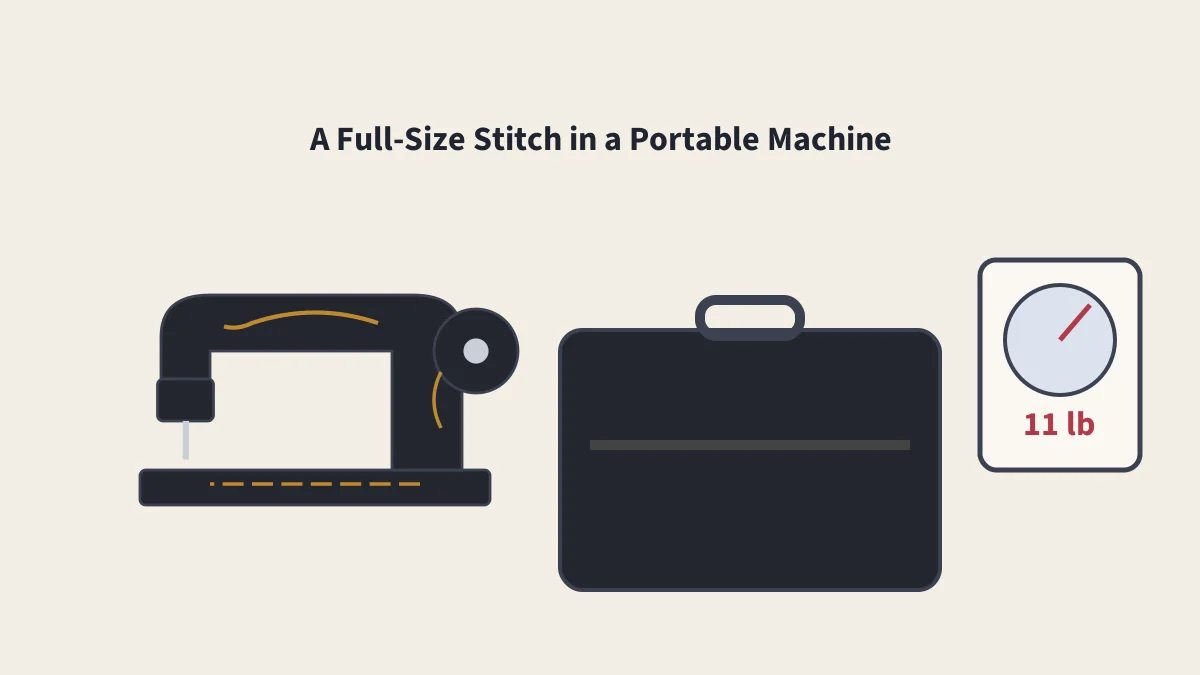
History of the 11-pound 221 and free-arm 222K, and why it endures.
Presser Feet Guide
What each presser foot does and how to check it fits your machine.