The Singer Featherweight 221 and 222K: The Little Machine Quilters Love (2026)
Introduced in the depths of the Depression, the Singer Featherweight weighed about 11 pounds yet sewed a full-size straight stitch. Decades after production ended, it is still carried to quilting classes and retreats.
In This Article
Featherweight Facts
- Weight: about 11 pounds (5 kg)
- Debut: Chicago World's Fair, A Century of Progress
- Stitch: straight stitch only, with reverse
- Models: 221 (with variants 221K, 221J) and the free-arm 222K
- Estimated total: about 3.0 to 3.5 million made
Before the Featherweight, a "portable" sewing machine was a cast-iron head in a wooden case that strained the meaning of the word. Singer's model 221 changed that. Built largely of aluminum, it weighed about 11 pounds but sewed with the precision of a full-size machine. It has never really gone out of use: Featherweights are carried to quilting classes and retreats around the world, and the machine has its own community of collectors, restorers and enthusiasts.
Origins: The Sewhandy
The Featherweight had a predecessor. In 1928, Raymond Plumley and Richard Hohmann, engineers for the Frederick Osann Company, designed a portable sewing machine with a fully enclosed movement and a cast aluminum body. Osann subcontracted manufacturing to the Standard Sewing Machine Company of Cleveland, Ohio, which sold the machine under the Osann, Standard and General Electric names. Standard acquired Osann, and Singer later acquired Standard. Singer kept making the Sewhandy under the Standard name into the early 1930s while working on an improved design.
Launch at the World's Fair
That improved design was the model 221, introduced at the Chicago World's Fair, A Century of Progress, which ran in 1933 and 1934. Sources differ on the exact year: the International Sewing Machine Collectors' Society says 1933, while Wikipedia says 1934. Some machines sold at the fair carry a special commemorative badge, which makes them prized by collectors. Launching a new machine in the middle of the Depression was a gamble, but the little 221 became one of Singer's great successes.
Design and Features
- Aluminum body with a fold-up bed extension that swings up for storage.
- Straight lockstitch with a vertical, side-facing rotary hook and a reverse lever.
- Standard 15x1 needles, the same system as most home machines today.
- External motor and light built onto the machine.
- Attachments including hemmers, binder, edge-stitcher, gatherer and ruffler.
- Carrying case sized to hold the machine and accessories.
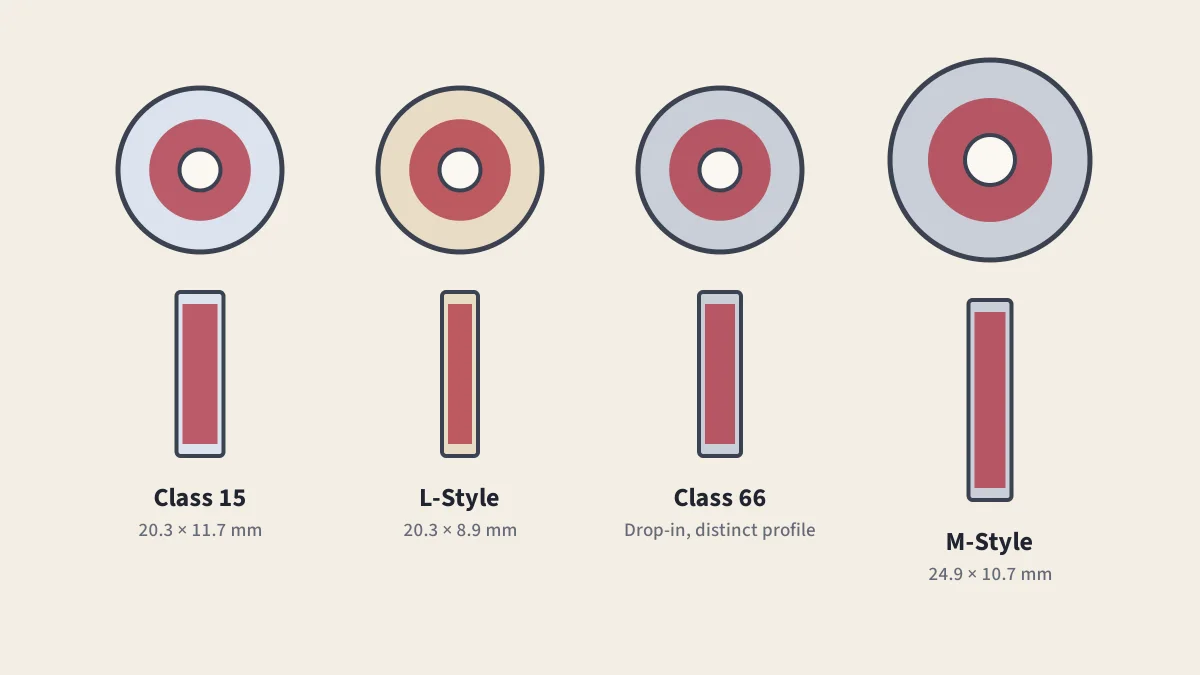
Featherweights use their own small bobbins, which are not interchangeable with Class 15 or Class 66 bobbins; see bobbin types and classes.
The 222K Free-Arm Featherweight
In 1953 Singer introduced the 222K, made only at its Kilbowie factory in Scotland. Production ran from 1953 to 1961, with about 100,000 machines made, and it was sold only outside the United States. A section of the flat bed could be removed to reveal a tiny free arm for sewing cuffs and sleeves, and the feed dogs could be lowered for darning and embroidery. Its rarity and extra features make it especially sought after.
Factories and Variants
| Model | Factory | Notes |
|---|---|---|
| 221 | Elizabethport, New Jersey, USA | The original black Featherweight |
| 221K | Kilbowie (Clydebank), Scotland | Several generations, including later white versions |
| 221J | St. John's (Saint-Jean-sur-Richelieu), Quebec, Canada | Including tan machines made around 1960–1962 |
| 222K | Kilbowie, Scotland | Free-arm model, 1953–1961 |
Accounts of when production ended differ. Wikipedia states that production of the original Featherweight ended in 1961 but continued at Singer factories in Quebec and Scotland until 1969. White Featherweights were sold, but not made, in the United States between 1968 and 1970.
Why the Featherweight Endures
- Portability: light enough to carry to classes and retreats.
- Stitch quality: a precise straight stitch, ideal for quilt piecing with a quarter-inch foot.
- Simplicity: easy to clean, oil and maintain at home.
- Community: books, clubs, parts suppliers and repair specialists keep the machines running.
- Nostalgia: many were family machines passed down through generations.
Buying and Caring for a Featherweight
- Check that it turns freely and sews a balanced straight stitch.
- Check the wiring and motor; old wiring may need replacing for safety.
- Look for the correct bobbin case and bobbins.
- Check the bed extension hinge and the case.
- Keep it oiled as the manual directs, and clean lint regularly; see sewing machine maintenance.
To date a Featherweight, see Singer serial numbers; for what affects value, see what an old Singer is worth.
Sources
- Singer Featherweight, Wikipedia
- Century of Progress, Wikipedia
Frequently Asked Questions
How much does a Singer Featherweight weigh?
About 11 pounds (5 kg); the International Sewing Machine Collectors' Society gives the 221 as 11 lb 1 oz.
When was the Singer Featherweight made?
The model 221 was introduced at the Chicago World's Fair (A Century of Progress) in the 1930s and was made until the late 1960s. Sources give slightly different start and end dates.
What is the difference between the Featherweight 221 and 222K?
The 222K, made only at Singer's Kilbowie factory in Scotland from 1953 to 1961, has a removable bed section that reveals a small free arm, and feed dogs that can be lowered for darning and free-motion work. The 221 has neither.
Why do quilters love Featherweights?
They are light enough to carry to classes, sew a precise straight stitch suited to piecing, are simple to maintain, and have a devoted following with plenty of parts and knowledge available.
Keep Reading
Singer 201
The gear-driven, rotary-hook 201 and its variants explained.
Singer 301
Singer's first slant-needle machine: history, versions and features.
What Is an Old Singer Worth?
Model, condition, completeness and demand: what decides value.
Bobbin Types and Classes
Class 15, 15J, 66, L and M bobbins compared, with sizes.