The Singer 15: The Sewing Machine Everyone Copied (2026)
Few machines have shaped sewing like the Singer 15. Its needle and bobbin case became industry standards, it stayed in production for more than a century, and factories around the world built machines based on it.
In This Article
Singer 15 Facts
- Ancestor: the Improved Family, launched in 1879
- Hook: oscillating hook with a removable bobbin case
- Needle: introduced the flat-shank 15x1 needle
- Bobbin: Class 15, still the most common home bobbin
- Lifespan: produced in many versions for over a century
If one vintage sewing machine deserves to be called the template for all the rest, it is the Singer 15. One long-standing collector reference calls it the most successful sewing machine design ever, in production for more than 100 years with a series of improvements along the way. Look inside most modern home machines with a front-loading bobbin and you will find its descendants.
From the Improved Family to the 15
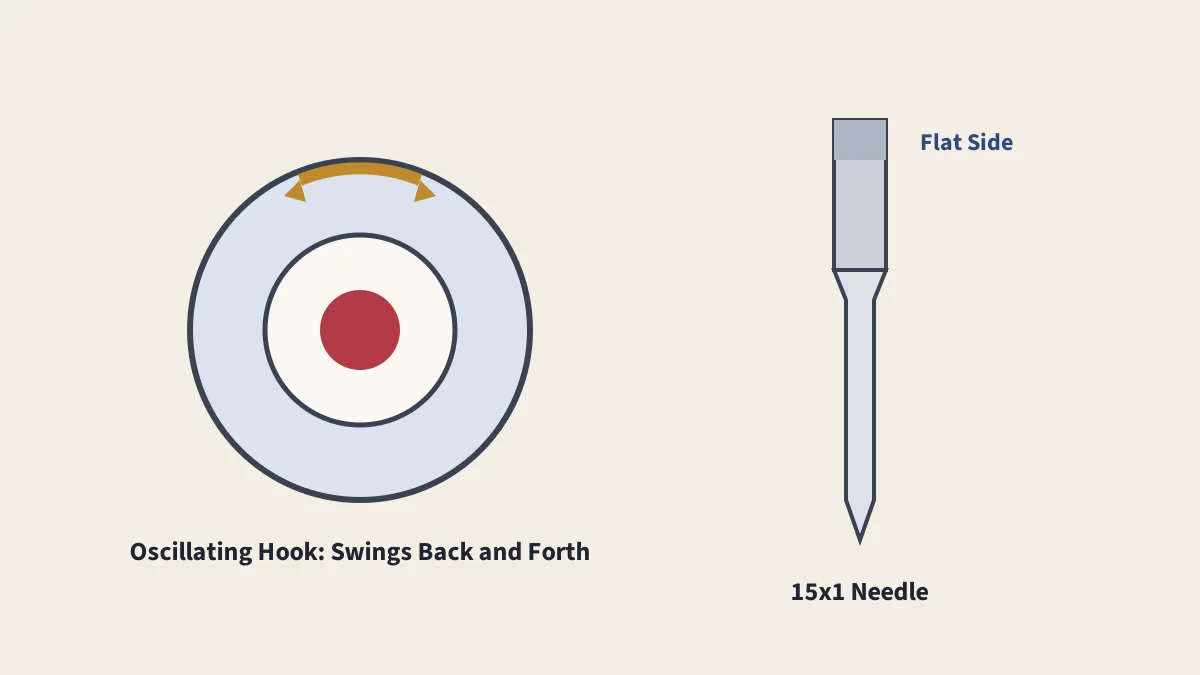
Singer began producing its oscillating-shuttle, high-arm Improved Family machine in 1879. It brought new standards of quietness and smoothness to home sewing machines. In 1895 the Improved Family was replaced by the very similar Model 15. Early versions used an oscillating "long beak" shuttle; later versions used an oscillating hook with a separate bobbin case, which is the system most people associate with the 15 today.
Two Standards That Spread Worldwide
The 15x1 Needle
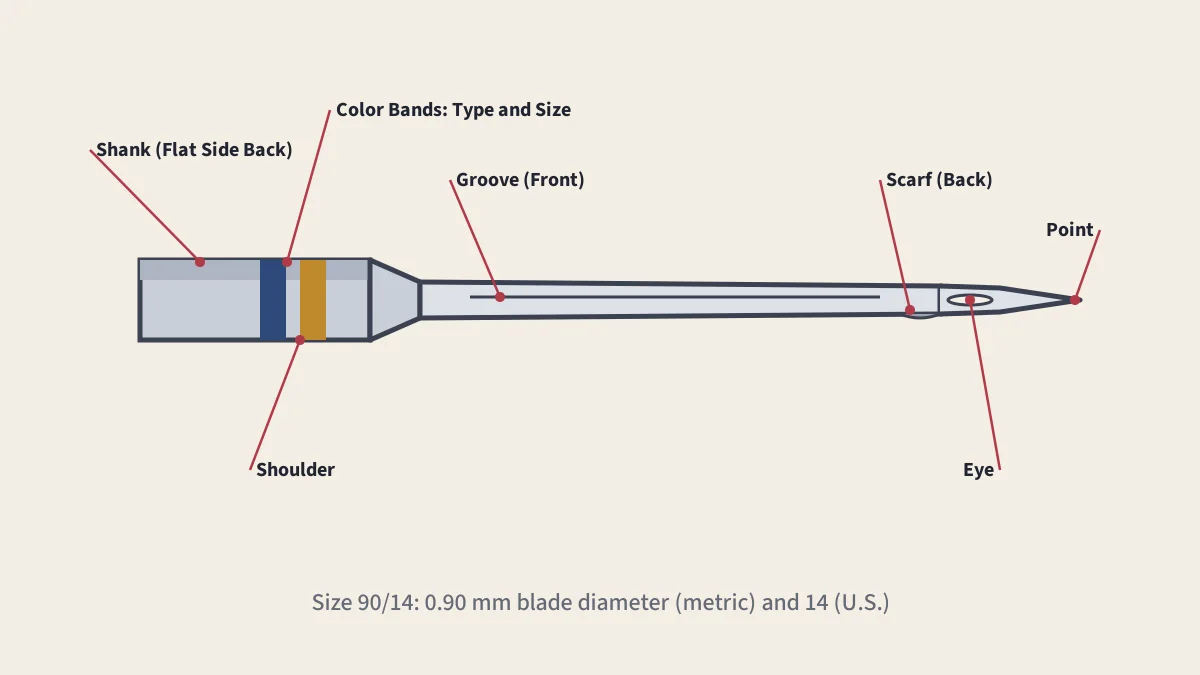
With the class 15, Singer introduced a needle with a flat side on its shank, designated 15x1. This needle became the standard for most later Singer home machines and for the machines of almost every other maker. Today's household needle system, 130/705 H, follows the same idea; see sewing machine needles.
The Class 15 Bobbin and Case
The class 15 bobbin case and hook system became the standard design used by almost all sewing machine makers. The bobbin case also includes a screw for adjusting lower thread tension. That is why the Class 15 bobbin is still the most common bobbin for home machines; see bobbin types and classes.
The Main Versions
| Model | Power | Notes |
|---|---|---|
| 15-88 | Treadle | Foot-powered version |
| 15-89 | Hand crank | Hand-powered version |
| 15-90 | Belt-driven motor | Motor mounted on the back, driving a belt |
| 15-91 | Gear-driven "potted" motor | The best-known electric 15 |
| 15K | Various | Made at Singer's Kilbowie factory in Scotland |
The numbers after the dash usually indicate a change, most often the power source. For what the "K" means, see Singer serial numbers.
The Most Copied Machine
The 15's simple, reliable design was widely imitated. European makers built machines on the same pattern, and after World War II Japanese factories produced large numbers of Singer 15-style machines, many practically indistinguishable from a Singer and with interchangeable parts. They were sold under many different brand names, often by retailers who fitted their own badges. Collectors call them "15 clones," but many are well made, and Japanese makers often improved on the original. See our guide to vintage sewing machine brands.
How to Identify a Singer 15
- Bobbin: a round Class 15 bobbin in a removable case, inserted from the left side under a slide plate.
- Shape: full-size, low-shank, straight stitch.
- Serial number: on the bed; see Singer serial numbers.
- Decals: class 15 machines carried different decal sets over the years; see Singer decals.
Using a Singer 15 Today
A well-serviced 15 sews an excellent straight stitch on a wide range of fabrics. It uses widely available low-shank feet, standard needles and Class 15 bobbins, which makes it one of the easiest vintage machines to keep running. Clean and oil it as the manual directs (see sewing machine maintenance), and have old wiring checked on electric models.
Sources
- Singer Improved Family, Wikipedia
- Singer Corporation, Wikipedia
Frequently Asked Questions
When was the Singer 15 made?
The class 15 replaced Singer's Improved Family machine in 1895 and, counting its many versions, the design stayed in production for more than a century.
What bobbins does a Singer 15 use?
Class 15 bobbins in a removable bobbin case. The class 15 bobbin case and hook system became the standard design used by almost all sewing machine makers.
What is the difference between a Singer 15-88, 15-89, 15-90 and 15-91?
They share the same basic mechanism but differ in power: the 15-88 is a treadle machine, the 15-89 a hand crank, the 15-90 has a belt-driven motor and the 15-91 has a gear-driven 'potted' motor.
What is a Singer 15 clone?
A machine built by another manufacturer to the Singer 15 design. After World War II, Japanese factories made large numbers of them, often sold under many different brand names.
Keep Reading
Singer 66 Red Eye
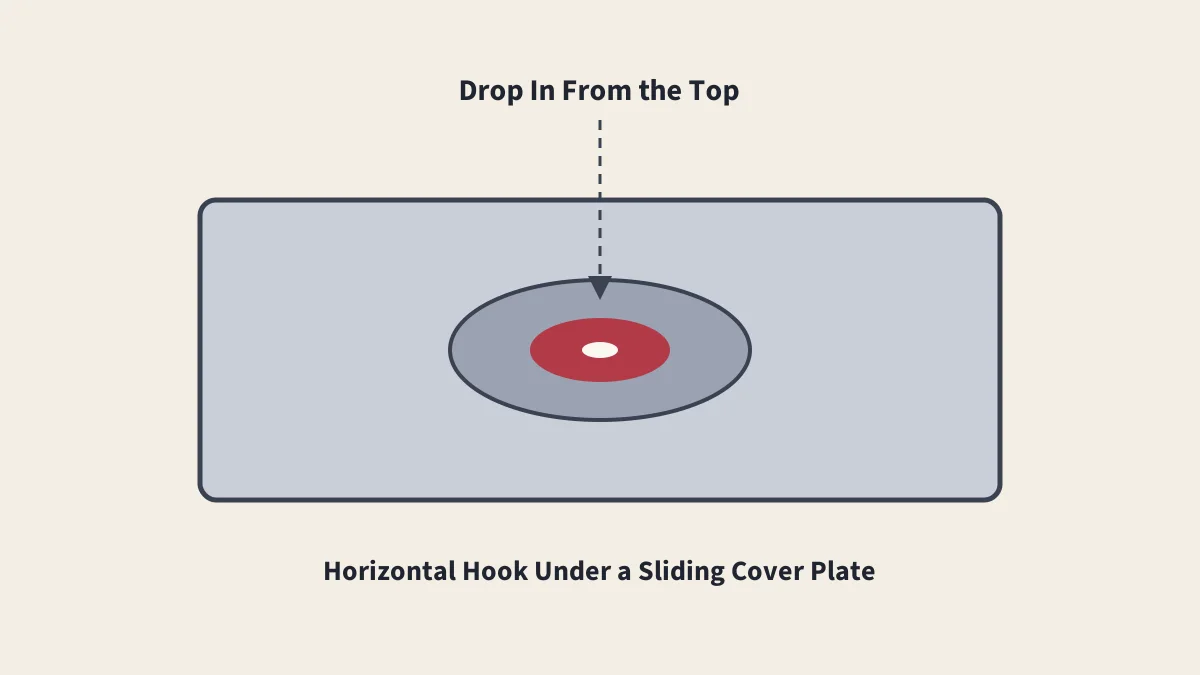
The 1902 drop-in-bobbin 66, Red Eye decals and back-clamp feet.
Singer 201
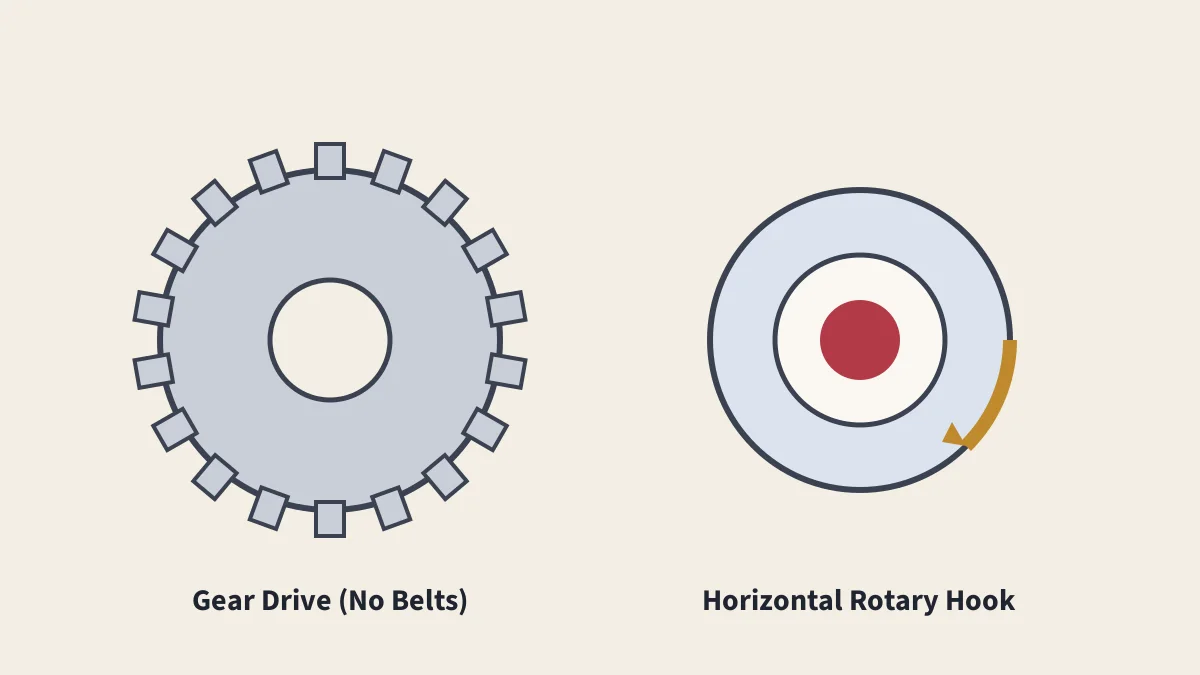
The gear-driven, rotary-hook 201 and its variants explained.
Bobbin Types and Classes
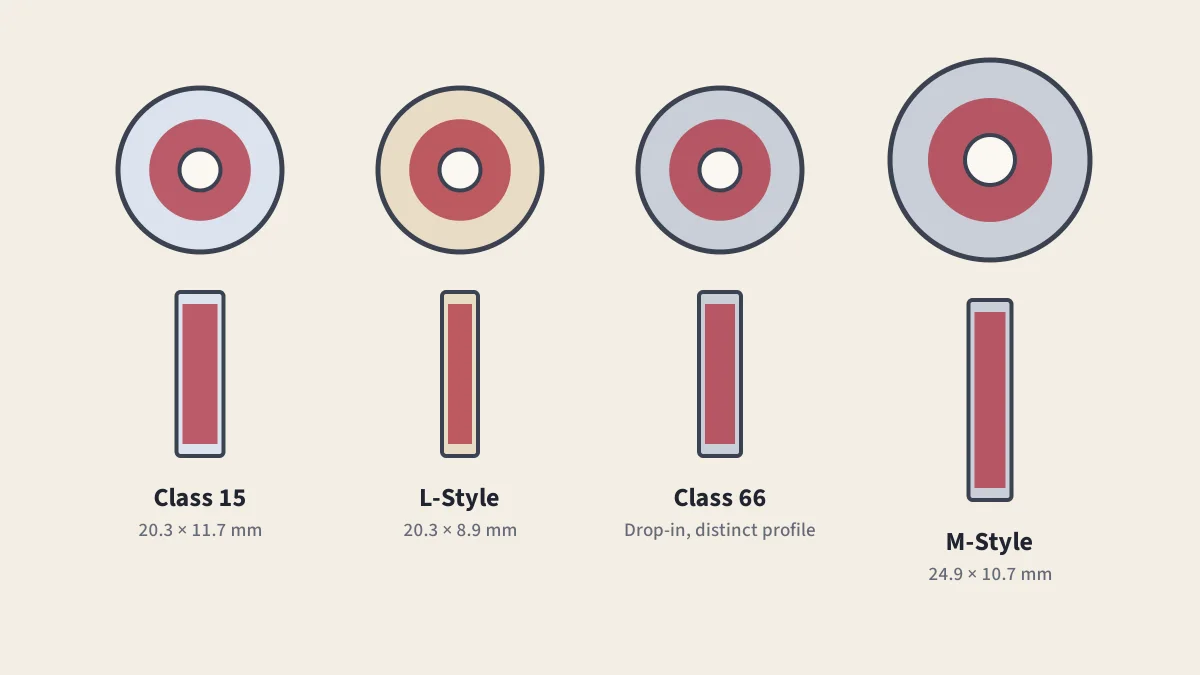
Class 15, 15J, 66, L and M bobbins compared, with sizes.
Sewing Machine Needle Sizes and Types
Needle sizes, types, color codes and when to change them.