Vintage Sewing Machine Brands: Who Made What (2026)
Singer dominated, but it was never alone. American, European and Japanese makers built millions of machines, and many were sold under store names. Here is a guide to the major brands and how to recognize them.
In This Article
Brands in Brief
- American: Singer, White, New Home, Wheeler & Wilson, Willcox & Gibbs and others
- European: Pfaff, Bernina, Necchi, Husqvarna, Elna, Frister & Rossmann and others
- Japanese: Brother, Janome, Juki, Riccar, Toyota and many more
- Store brands: machines sold under retailers' names, such as Sears's Kenmore
By the late 19th century, sewing machines were made by dozens of companies on both sides of the Atlantic. In the 20th century, European makers developed distinctive designs, and after World War II Japan became a sewing machine powerhouse. Knowing the major brands helps you identify a machine, find a manual and judge whether parts are likely to be available.
American Brands
| Brand | Notes |
|---|---|
| Singer | The giant of the industry; see our Singer history and model guides below |
| Wheeler & Wilson | A major 19th-century rival; Allen B. Wilson's inventions included the rotary hook |
| Willcox & Gibbs | Known for single-thread chain stitch machines |
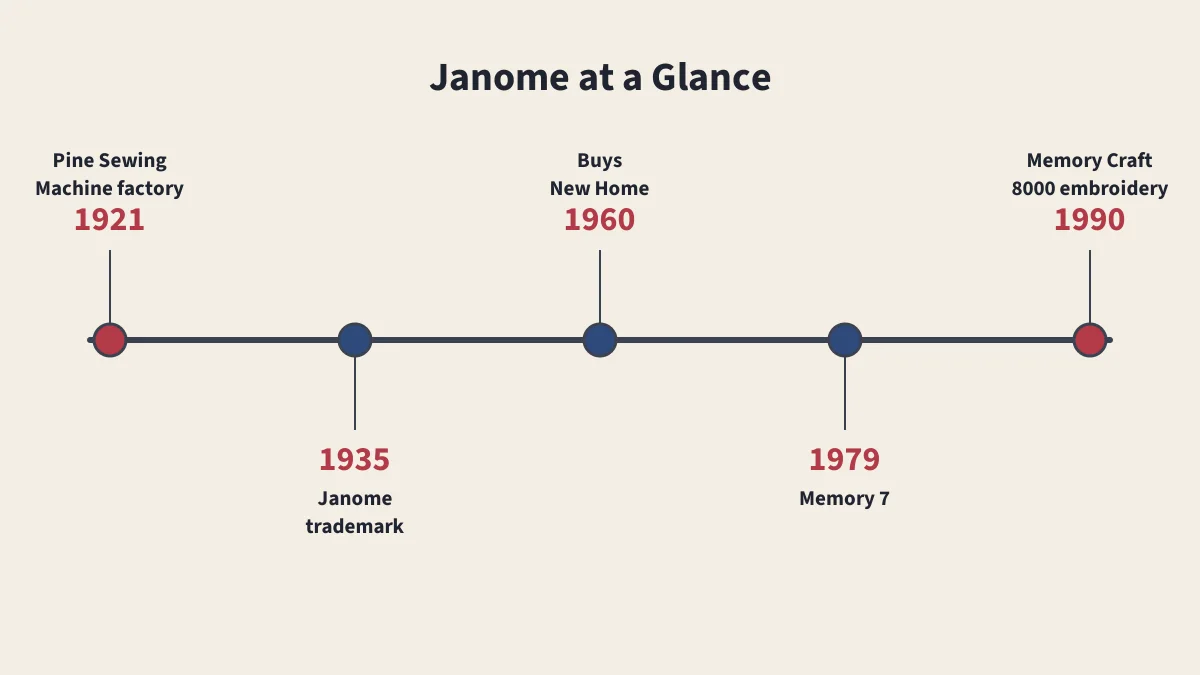
| New Home | Traces its origins to around 1862 and the "Pride of the West" machine; bought by Janome in 1960 |
| White | A major Cleveland maker whose machines were also sold by Sears under the Kenmore name |
| Standard, Domestic, Free and others | Many smaller makers, some later absorbed by larger companies |
European Brands
| Brand | Country | Notes |
|---|---|---|
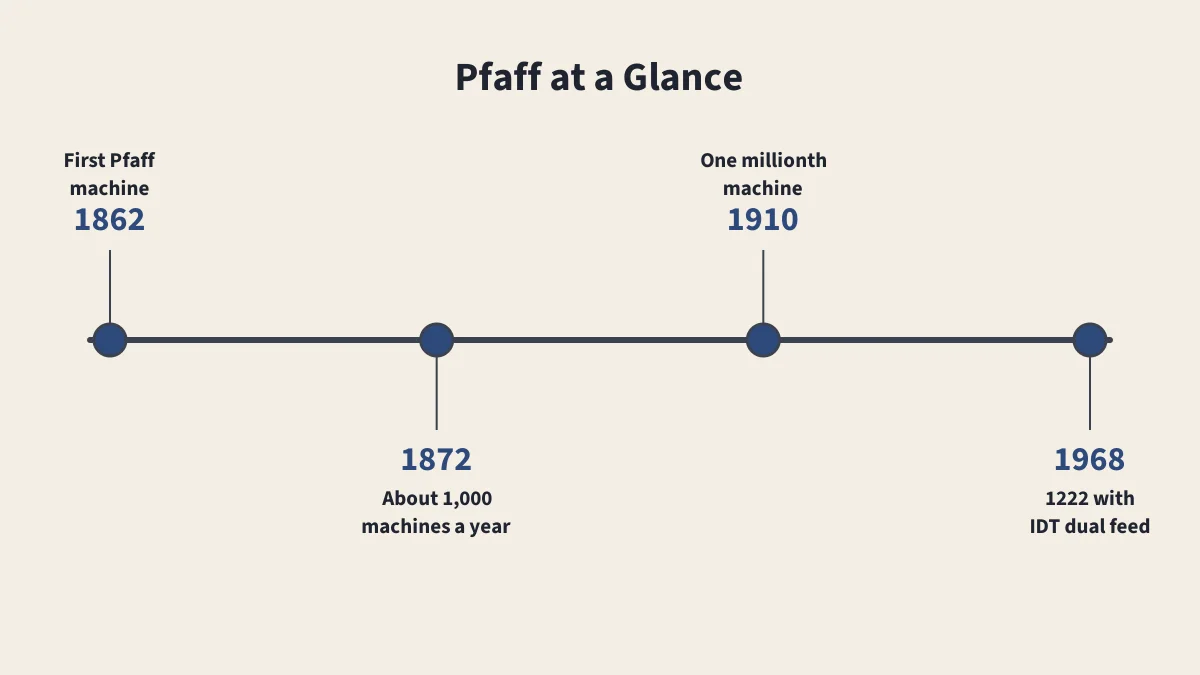
| Pfaff | Germany | Founded 1862 in Kaiserslautern; later known for its IDT dual feed |
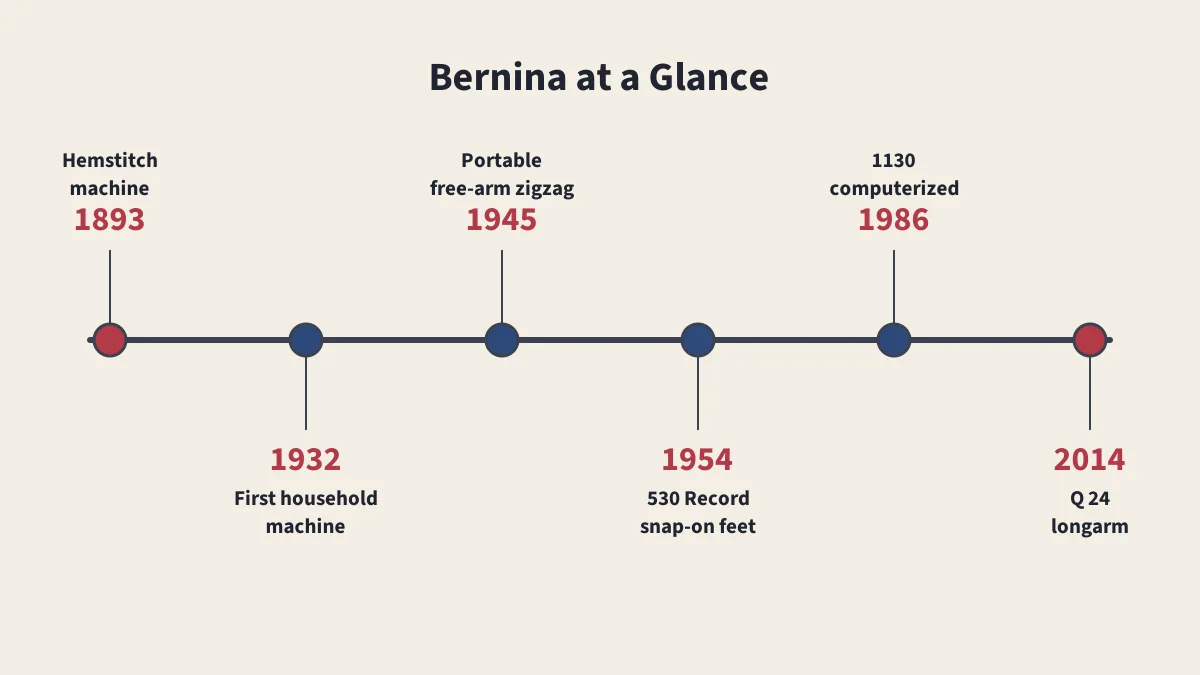
| Bernina | Switzerland | Began with an 1893 hemstitch machine; first household machine in 1932 |
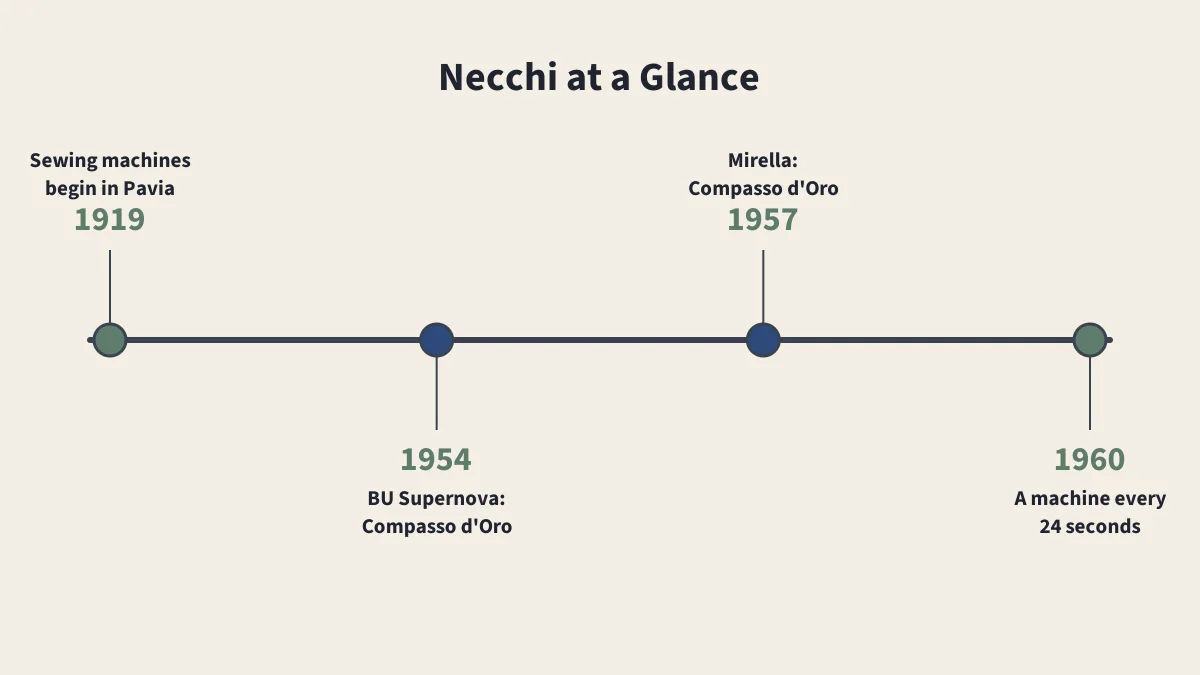
| Necchi | Italy | Pavia foundry family; famous for award-winning design in the 1950s |
| Husqvarna | Sweden | A former arms factory that began making sewing machines in 1872; now Husqvarna Viking |
| Elna | Switzerland | Its 1940 Elna 1 brought the free arm to home sewing |
| Frister & Rossmann, Jones, Bradbury and others | Germany and Britain | Many made machines on Singer-style patterns |
Japanese Brands and "Clones"
After World War II, Japan manufactured a large number of sewing machines, most commonly based on the Singer 15, with some based on the Singer 99. Many are practically indistinguishable from a Singer and use interchangeable parts. By the late 1950s, more than 300 Japanese companies were involved in the industry, 125 of them manufacturing sewing machines, and by 1969 Japan supplied over 50% of all sewing machine sales in the United States.
Major makers included Brother, Janome, Juki, Riccar, Toyota and many others. Collectors call the Singer 15-style machines "clones," but the word does not mean poor quality: Japanese makers frequently improved on the original design.
Badge Engineering and Store Brands
Many machines were sold under names that were not their makers'. Retailers, department stores and catalog companies fitted their own badges, often when fitting motors and cases. Sears sold machines under the Kenmore name, made by various manufacturers over the years; see who made Kenmore sewing machines. The name on the front of a machine therefore tells you who sold it, not necessarily who built it.
How to Identify a Brand
- Read every marking: the arm, bed, faceplate, badge, motor label and the underside.
- Look for country markings such as "Made in Japan."
- Check the bobbin system and compare with known designs; see the identification guide.
- Note serial numbers; Singer's are well documented, others less so.
- Compare with photos of known models in collector archives and museum collections.
Which Brands Are Easiest to Own?
Machines built on widely copied designs, especially Singer 15 and 66 types, are easiest to find parts, needles, bobbins and feet for. Unusual European machines may need specific parts. Before buying, check the bobbin type and presser foot shank; see bobbin types and the presser feet guide.
Sources
- Sewing machine, Wikipedia
- Janome, Wikipedia
- Singer Corporation, Wikipedia
Frequently Asked Questions
What are the best vintage sewing machine brands?
It depends on what you want. Singer, White, Pfaff, Bernina, Necchi, Elna, Husqvarna and many Japanese makers all built durable machines. The most important factors are the specific model, its condition and whether parts are available.
What is a badged sewing machine?
A machine sold under a brand name that is not the manufacturer's, often a department store or retailer's name. Many Japanese machines of the 1950s and 1960s were badged this way.
How can I tell where an unbranded vintage machine was made?
Look for 'Made in Japan' or other country markings, JA or JC codes on the underside of some Japanese machines, motor labels, and design features. Comparing with known models helps.
Who made Kenmore sewing machines?
Kenmore was a Sears brand, not a manufacturer. Different factories made Kenmore machines at different times, including Japanese makers.
Keep Reading
Bernina History
The Gegauf family, the first Bernina zigzag and the 530 Record.
Pfaff History
Georg Michael Pfaff, Lina Pfaff's leadership and the IDT dual feed.
Necchi History
The Pavia foundry, Nizzoli's Supernova and the prize-winning Mirella.
Janome History
The Pine factory, the snake's eye bobbin and the Memory 7.