Types of Cotton Fabric: From Muslin to Denim (2026)
Cotton is woven and knitted into dozens of named fabrics, many of them named for the places they came from. Here is how to tell the common ones apart and what each is good for.
In This Article
Cotton Fabrics in Brief
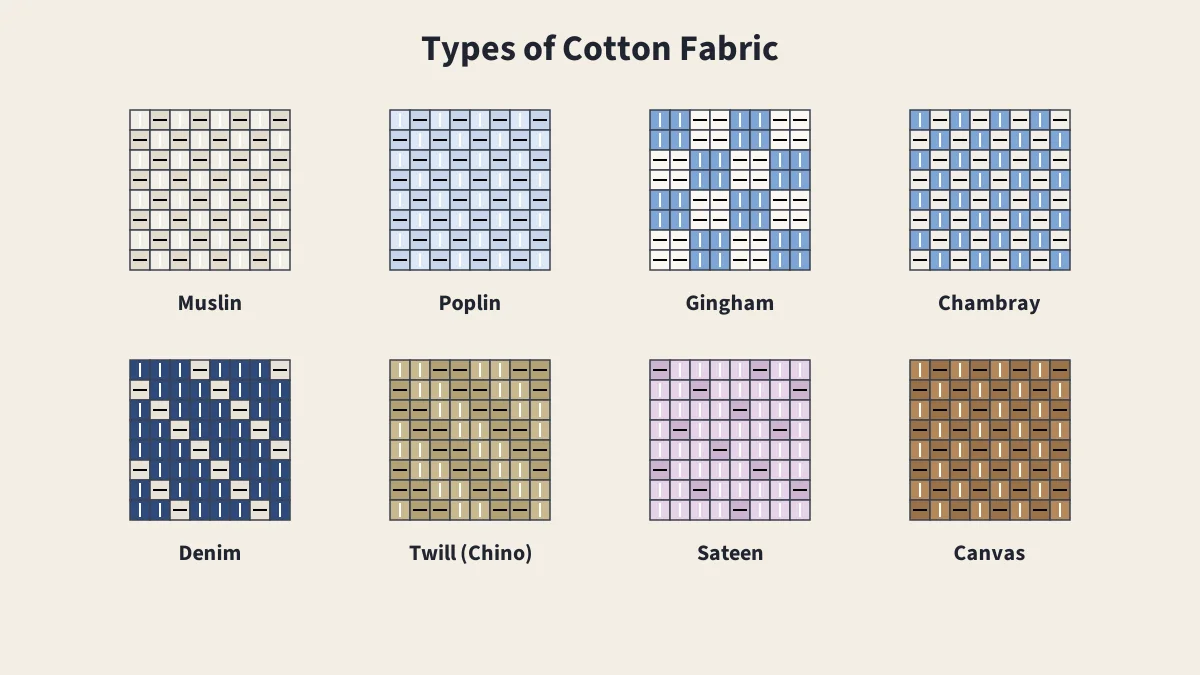
- Plain weaves: muslin, calico, poplin, lawn, voile, gingham, chambray
- Twills: denim, chino, drill, gabardine
- Satin weave: sateen
- Pile: corduroy, velveteen, terry
- Knits: jersey, interlock, rib, French terry
The same fiber, cotton, becomes very different fabrics depending on how it is spun, woven and finished. Fine yarns in a plain weave make crisp poplin or sheer lawn; heavy yarns in a twill make denim; extra yarns cut into pile make corduroy. For the weaves themselves, see fabric weaves.
Plain-Weave Cottons
| Fabric | Description | Typical Uses |
|---|---|---|
| Muslin | Plain weave from very sheer to coarse | Test garments, linings, crafts |
| Calico | Inexpensive plain weave; often printed in the US, unbleached in the UK | Quilting, dresses, crafts |
| Broadcloth and poplin | Tightly woven with fine crosswise ribs | Shirts, blouses, dresses |
| Lawn | Fine, lightweight and crisp | Blouses, handkerchiefs, baby clothes |
| Voile | Lightweight and semi-sheer | Summer tops, curtains |
| Gingham | Checks or stripes woven from pre-dyed yarn | Shirts, dresses, tablecloths |
| Chambray | Colored warp and white weft | Shirts and summer dresses |
| Oxford cloth | Basket-weave variation | Button-down shirts |
| Canvas and duck | Heavy, tightly woven | Bags, aprons, upholstery |
Fabrics With Stories
Muslin
Muslin is commonly said to take its name from Mosul in Iraq, though some scholars suggest Masulipatnam, a port in India. In the 17th and 18th centuries, Mughal Bengal was the leading muslin exporter, with Dhaka at the center of the trade, and its finest muslins were famously thin and transparent. In the US, "muslin" also means a test garment made to check fit, which in Britain was traditionally called a toile.
Gingham
Gingham is woven from yarns dyed before weaving, so its pattern runs right through the cloth. Some sources trace its name to the Malay word for "striped," and when it first reached Europe in the 17th century, gingham was a striped fabric; checks became common later.
Seersucker
Seersucker's name comes from Persian words meaning "milk and sugar," a reference to its smooth and bumpy stripes. The puckers come from a slack-tension weave, in which some warp threads are fed in faster than others. It reached Europe from India in the 1600s and became a classic of hot American summers.
Twills and Other Cottons
| Fabric | Description | Typical Uses |
|---|---|---|
| Denim | Twill with a dyed warp and white weft | Jeans, jackets |
| Chino and drill | Sturdy twills | Trousers, work wear |
| Sateen | Satin weave in cotton; smooth with a sheen | Bed linen, dresses |
| Flannel | Brushed for a soft, fuzzy surface | Shirts, pajamas, sheets |
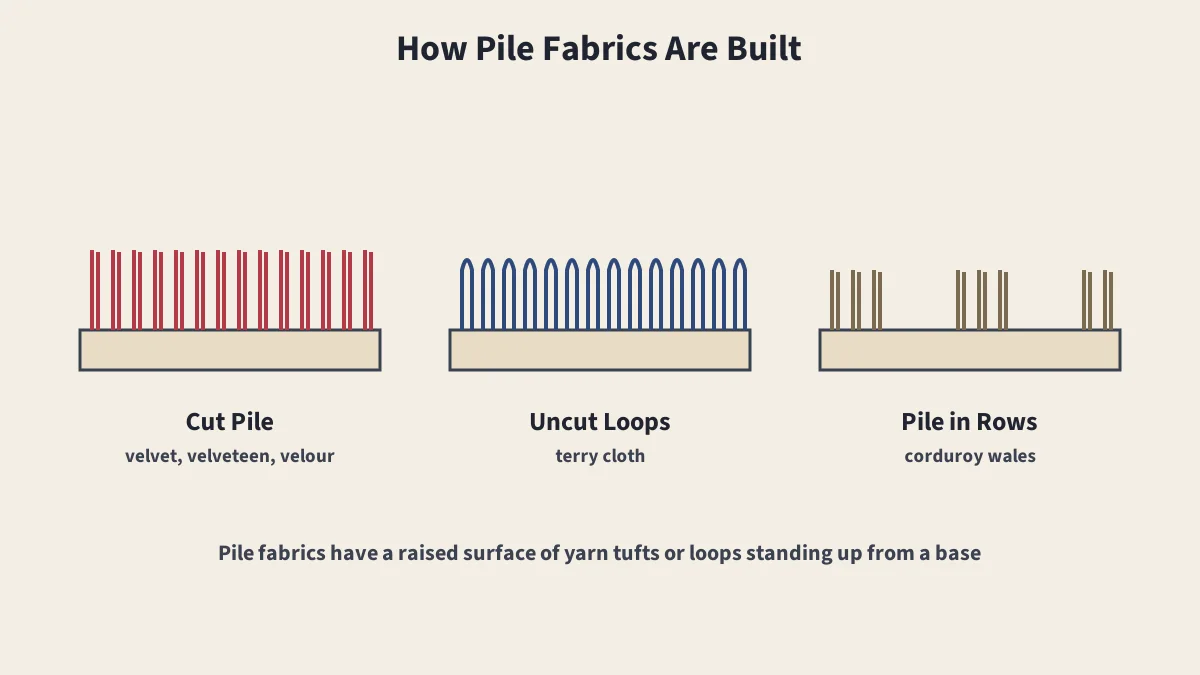
| Corduroy | Cut pile in ridges called wales | Trousers, jackets |
| Terry cloth | Uncut loops that absorb water | Towels, robes |
| Jersey | Single knit | T-shirts |
See pile fabrics for corduroy and terry, and types of knit fabric for jersey.
Quilting Cotton
Quilting cotton is a medium-weight plain weave, usually printed, made to be cut accurately, pressed crisply and pieced. It is also popular for simple garments, though apparel cottons like lawn and voile drape more softly.
Choosing a Cotton
- For shirts: poplin, broadcloth, oxford, chambray.
- For summer dresses: lawn, voile, seersucker, gingham.
- For trousers: denim, chino, twill, corduroy.
- For bags and home decor: canvas and duck.
- For practice: muslin.
For the story of the most famous cotton twill, see the history of denim, and for plaid and check names, see fabric pattern names.
Sources
- Muslin, Wikipedia
- Gingham, Wikipedia
- Seersucker, Wikipedia
- Denim, Wikipedia
Frequently Asked Questions
What is the most common cotton fabric?
There is no single answer, but plain-weave cottons such as muslin, broadcloth and poplin, twill fabrics such as denim and chino, and knits such as jersey are among the most widely used.
What is the difference between muslin and calico?
Both are plain-weave cottons. Muslin ranges from very sheer to coarse and in the US also means a test garment. Calico in the US usually means a cheap, printed cotton, while in Britain it means unbleached cotton, the fabric Americans often call muslin.
What is seersucker?
A thin cotton fabric with puckered stripes, made by a slack-tension weave: some warp threads are fed in faster than others, so they bunch up. Its name comes from Persian words meaning 'milk and sugar.'
What is chambray?
A plain-weave fabric with a colored warp, usually blue, and a white weft, which gives it a soft, slightly heathered look. It resembles lightweight denim, but denim is a twill.
Keep Reading
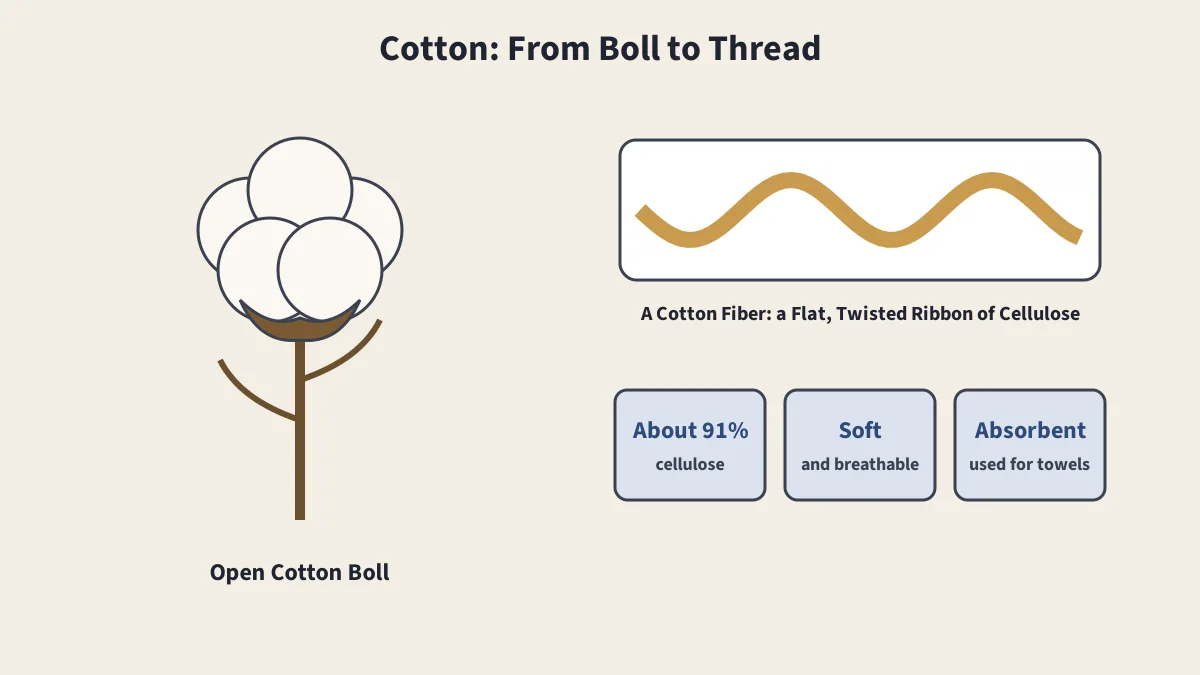
Cotton
Where cotton comes from, its history and how it behaves.
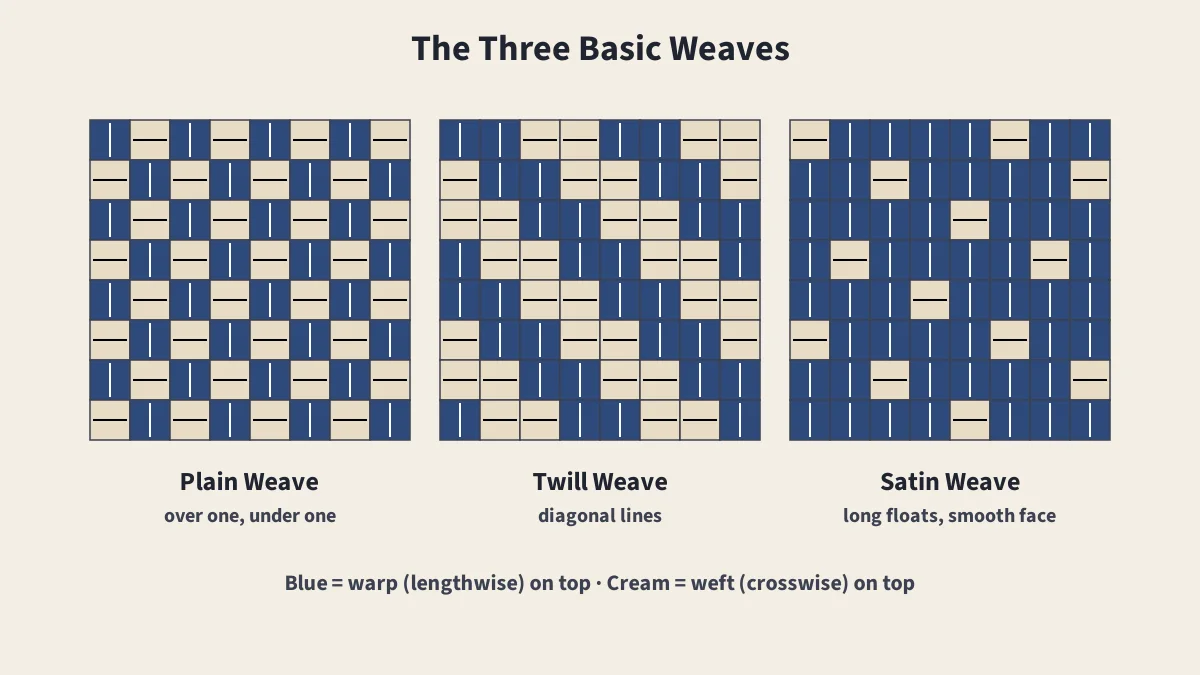
Fabric Weaves
Plain, twill and satin weaves, plus dobby and jacquard.
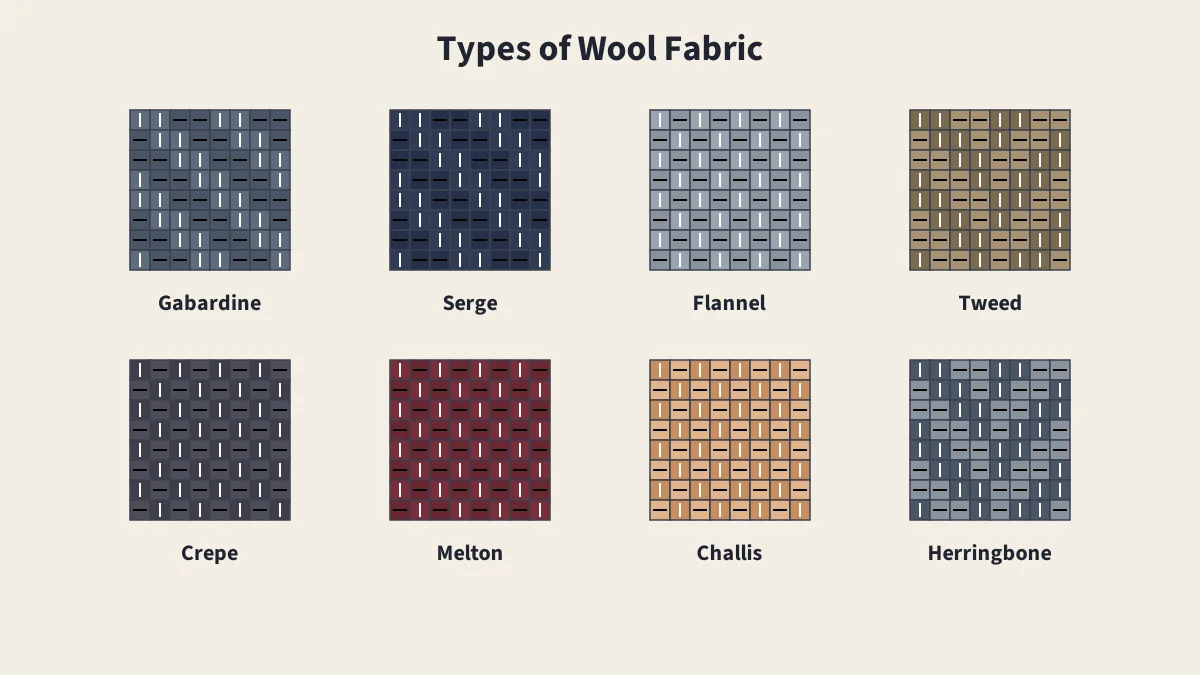
Types of Wool Fabric
Worsted vs. woolen, plus gabardine, tweed, flannel and more.
Pile Fabrics
Velvet, velveteen, velour, corduroy, chenille and terry compared.