Gathering, Ruching and Shirring: Adding Fullness to Fabric (2026)
Gathers puff a skirt from a waistband, shirring makes a stretchy bodice, and ruching gives a soft rippled texture. All three start from the same idea: drawing up a long piece of fabric to fit a shorter one.
In This Article
Fullness in Brief
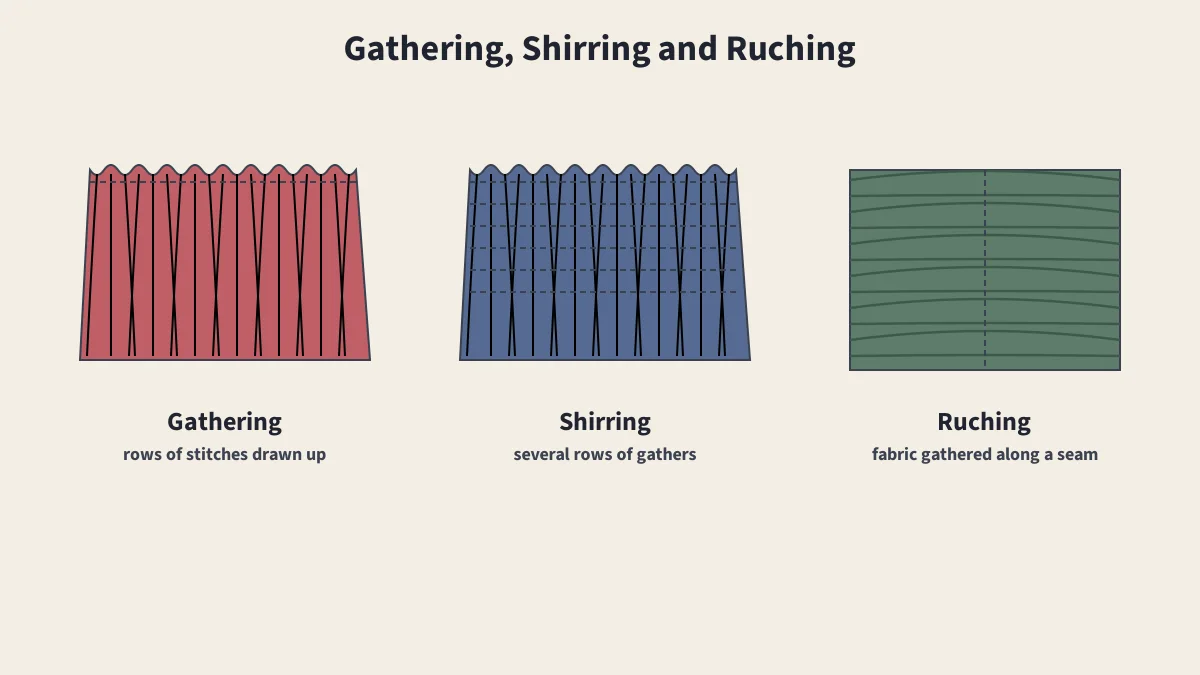
- Gathering: fabric drawn up on rows of stitches
- Shirring: two or more rows of gathers, often elasticated
- Ruching: fabric gathered along a seam for ripples
- Smocking: embroidery that holds gathers so they stretch
- Usual ratio: gathering often uses 1.5 to 3 times the finished length
Gathering shapes a fabric edge into small folds by stitching near the edge and drawing the thread tight. The stitched edge becomes shorter, while the rest of the fabric flares out. It is how full skirts meet waistbands, sleeves puff at the shoulder and ruffles form along hems.
Gathering by Machine
- Set a long stitch and loosen the upper tension slightly; see stitch length and tension.
- Sew two parallel rows within the seam allowance, for example at 1 cm and 1.3 cm from the edge, leaving long thread tails. Do not backstitch.
- Divide and mark the gathered piece and the piece it joins into halves and quarters, and pin the marks together.
- Pull the bobbin threads from both ends to draw up the fabric, sliding the gathers evenly between pins.
- Stitch the seam with the gathered side up, so you can keep folds from catching.
- Remove any visible gathering stitches and press the seam allowance, not the gathers.
Gathering by Hand
Before machines, gathers were made with parallel rows of hand running stitches, which could be slow on heavy fabric but gave very fine, controlled gathers. The method is still useful for small areas and delicate fabrics; see the hand stitches guide.
Shirring
Shirring is two or more rows of gathers used to decorate parts of a garment, usually the sleeves, bodice or yoke. It reduces the size of the fabric while adding texture. In home sewing, shirring is usually done with elastic thread, which makes the area stretch:
- Hand-wind elastic thread onto the bobbin, without stretching it.
- Use regular thread on top and a longer stitch length.
- Sew rows on the right side, parallel and evenly spaced, holding the fabric flat as you go.
- Knot the thread ends securely.
- Steam the shirring lightly to tighten the elastic.
Light fabrics such as cotton lawn, voile and rayon shirr best; see sheer fabrics and types of elastic.
Ruching
In sewing, ruching usually means gathering fabric along a seam or on both sides of a panel so it forms soft, rippling folds. It is used on fitted dresses, swimwear and the sides of tops, often over a stable lining. Stretch fabrics such as jersey ruche especially well, because the gathered fabric can still move.
Smocking
Smocking is an embroidery technique used to gather fabric so it can stretch. Fabric is first gathered in regular rows, then decorative stitches are worked over the folds. It developed in England, has been practiced since the Middle Ages, and was used most widely in the 1700s and 1800s, on the smock frocks worn by agricultural laborers.
For neater, more controlled fullness, see types of pleats.
For smocking stitches, pleaters and history in depth, see smocking.
Sources
- Gather (sewing), Wikipedia
- Shirring, Wikipedia
- Smocking, Wikipedia
Frequently Asked Questions
How do you gather fabric on a sewing machine?
Sew two parallel rows of long straight stitches within the seam allowance, leaving long thread tails. Pull the bobbin threads to draw up the fabric, distribute the gathers evenly, then stitch the seam between or just below the rows.
What is the difference between gathering and shirring?
Gathering is usually a single band of gathers along an edge. Shirring is two or more rows of gathers used decoratively across part of a garment, such as a bodice, sleeve or yoke.
How do you shirr with elastic thread?
Hand-wind elastic thread onto the bobbin with light tension, use regular thread on top and a longer stitch, and sew parallel rows on the right side. The elastic draws the fabric up, and a shot of steam tightens it further.
What is smocking?
An embroidery technique worked over gathered fabric so that it can stretch. It developed in England and was most widely used in the 1700s and 1800s, notably on laborers' smock frocks.
Keep Reading
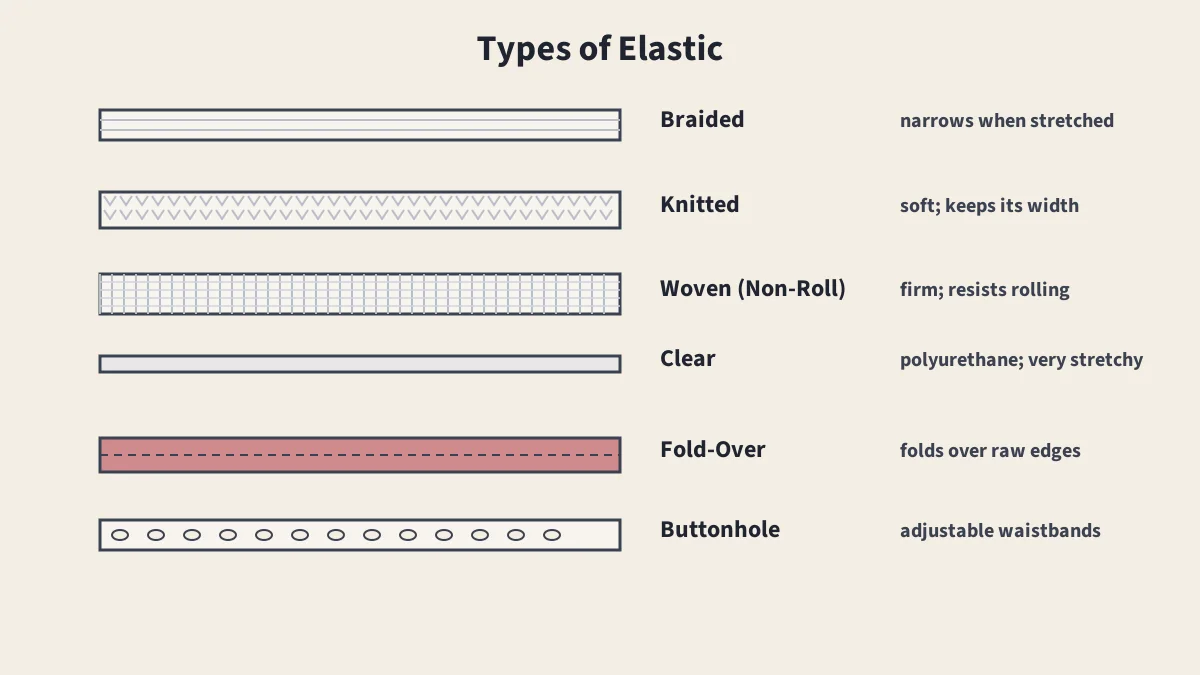
Types of Elastic
Braided, knit, woven, clear and fold-over elastic compared.
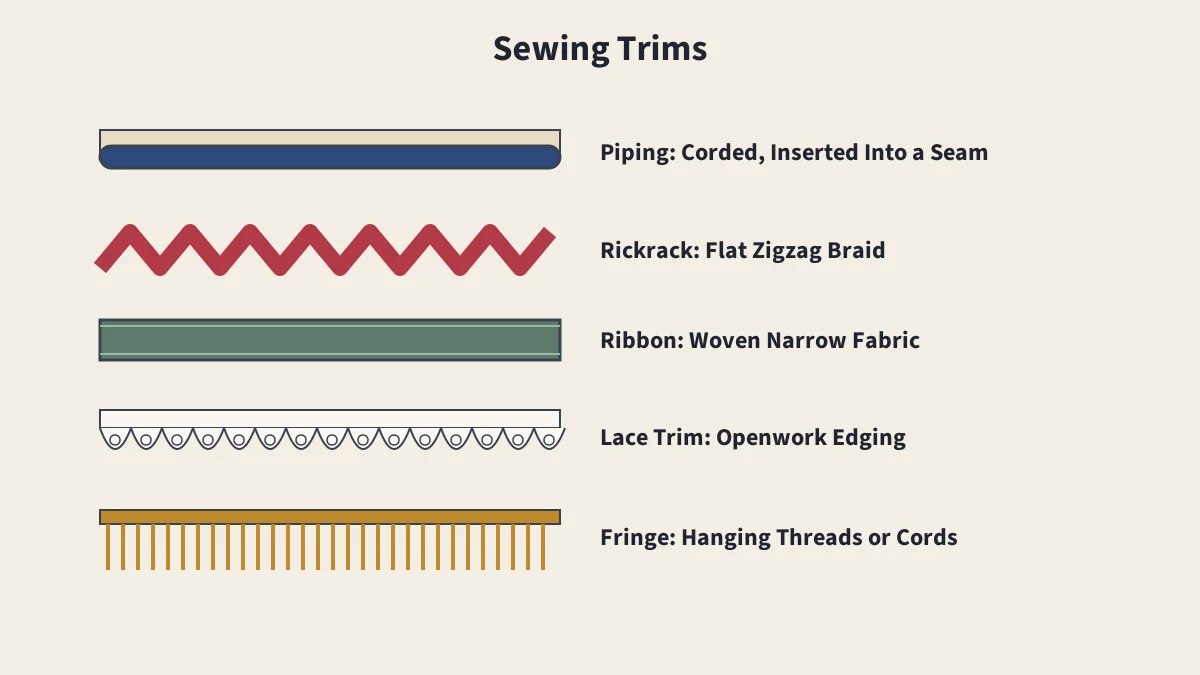
Sewing Trims
Piping, rickrack, ribbon, lace trim and fringe explained.
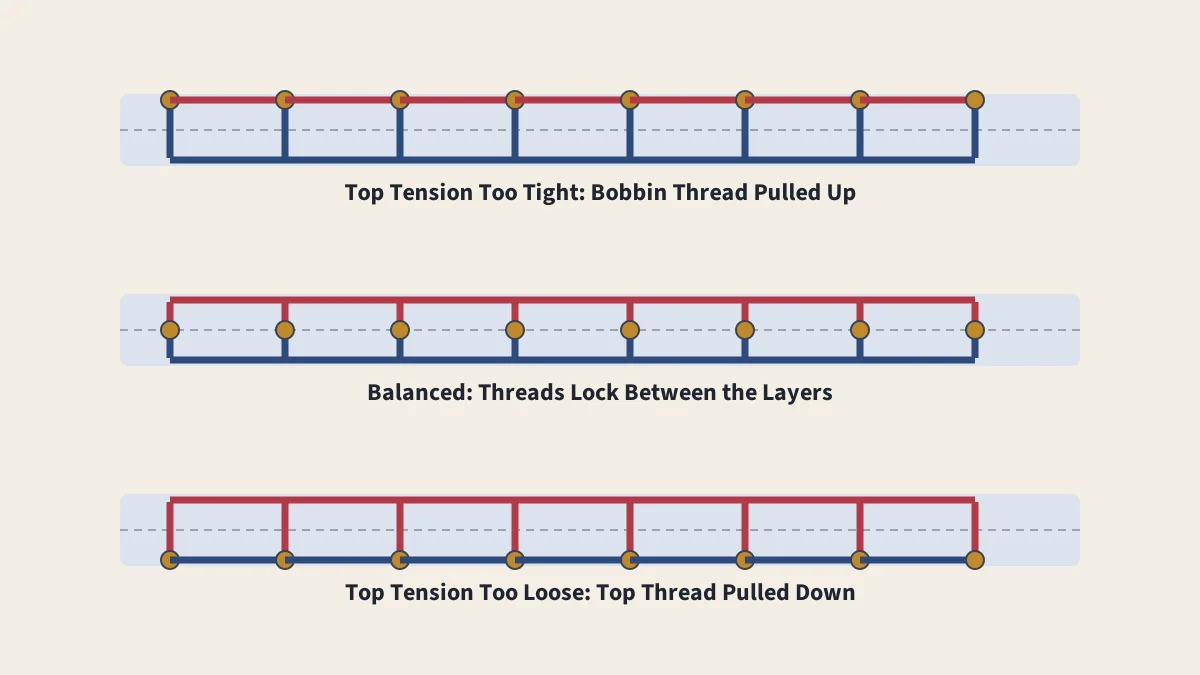
Stitch Length and Tension Explained
What the dials mean, common settings, and how to balance tension.
Types of Seams
Plain, French, flat-felled, lapped, bound and other seams compared.