Godets, Gores and Gussets: Shaped Pieces That Add Room (2026)
Three small words for three shaped pieces of fabric. Gores shape a skirt, godets add flare, and gussets add room where the body needs to move.
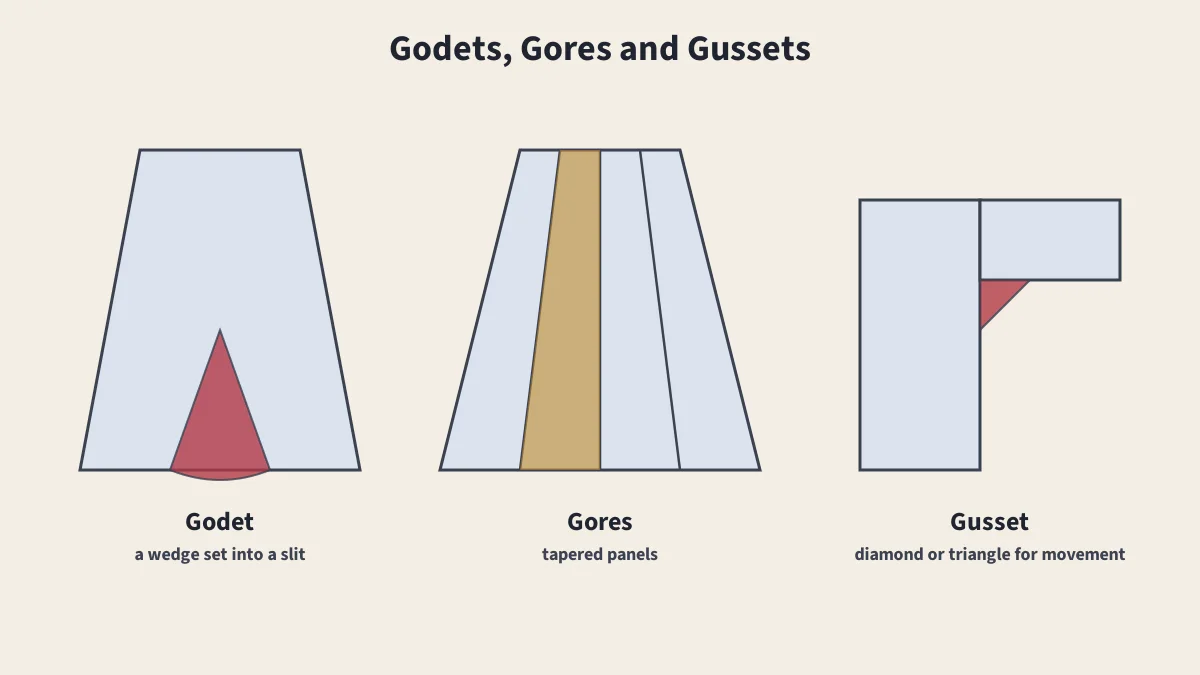
In Brief
- Gore: a tapered panel in a skirt or garment
- Godet: a wedge set in to add flare
- Gusset: an inset for room and movement
- Gores date to: 14th-century skirts
- Gussets today: tights, bags, pillows
Gores, godets and gussets are all shaped pieces of fabric, and they are easily confused. The difference is what each piece does: a gore shapes, a godet adds flare, and a gusset adds room.
At a Glance
| Piece | Shape | Purpose | Typical Use |
|---|---|---|---|
| Gore | Triangular or trapezoidal panel | Shapes a garment to the body | Gored skirts, bra centers, glove thumbs |
| Godet | A sector of a circle | Adds flare and volume | Skirt hems, petticoats, sleeves |
| Gusset | Triangle or diamond | Adds room, reduces strain | Underarms, crotch of tights, bags, pillows |
Gores
A gore is a triangular or trapezoidal piece of fabric used to shape a garment to the body's contours. Joined side by side, gores create a fuller, three-dimensional shape. The word comes from the Old English gār, a spear, after its tapering shape. Gored skirts, fitted at the waist and flared at the hem, date from the 14th century; see types of skirts. In knitted gloves, a thumb gore allows for the hand's widening, and in bras, the center gore joins the two cups.
Godets
A godet is an extra piece of fabric shaped like a slice of a circle and set into a garment, usually a skirt or dress, to make it flare. It adds width and volume and gives the wearer more freedom of movement. Godets are set into a seam, or into a slit cut in a panel, with the point at the top.
- Stitch each side of the godet from the hem up to the point, then pivot carefully.
- Reinforce the point of a slit with a small square of interfacing.
- Let the skirt hang for a day before hemming, as the bias edges of a godet may drop.
Gussets
A gusset is a triangular or diamond-shaped piece inserted into a seam to add breadth or reduce stress on close-fitting clothing. Traditional shirts and chemises, cut from rectangles of linen, relied on gussets at the underarm and shoulder to fit the body; see types of sleeves, since early sleeves used underarm gussets before shaped sleeve caps appeared.
- Tights and pantyhose: a crotch gusset, often of breathable cotton, adds room.
- Bags: a long, wide gusset forms the sides and bottom of a three-piece bag.
- Pillows: a gusset strip lets a cushion hold more filling without bulging.
Sources
- Gore (fabrics), Wikipedia
- Godet (sewing), Wikipedia
- Gusset, Wikipedia
Frequently Asked Questions
What is the difference between a godet and a gore?
A gore is one of the tapered panels that make up a skirt, narrow at the waist and wider at the hem. A godet is an extra wedge, shaped like a slice of a circle, set into a seam or slit to add flare.
What is a gusset in clothing?
A triangular or diamond-shaped piece of fabric inserted into a seam to add room or reduce strain, such as at the underarm of a shirt or the crotch of tights.
Where does the word gore come from?
From the Old English gār, meaning spear, after the tapering shape. It came to mean a shaped piece of cloth used in making clothes.
How many gores does a gored skirt have?
Commonly four, six or eight, though any number works. More gores give a smoother fit at the hips and more flare at the hem.
Keep Reading
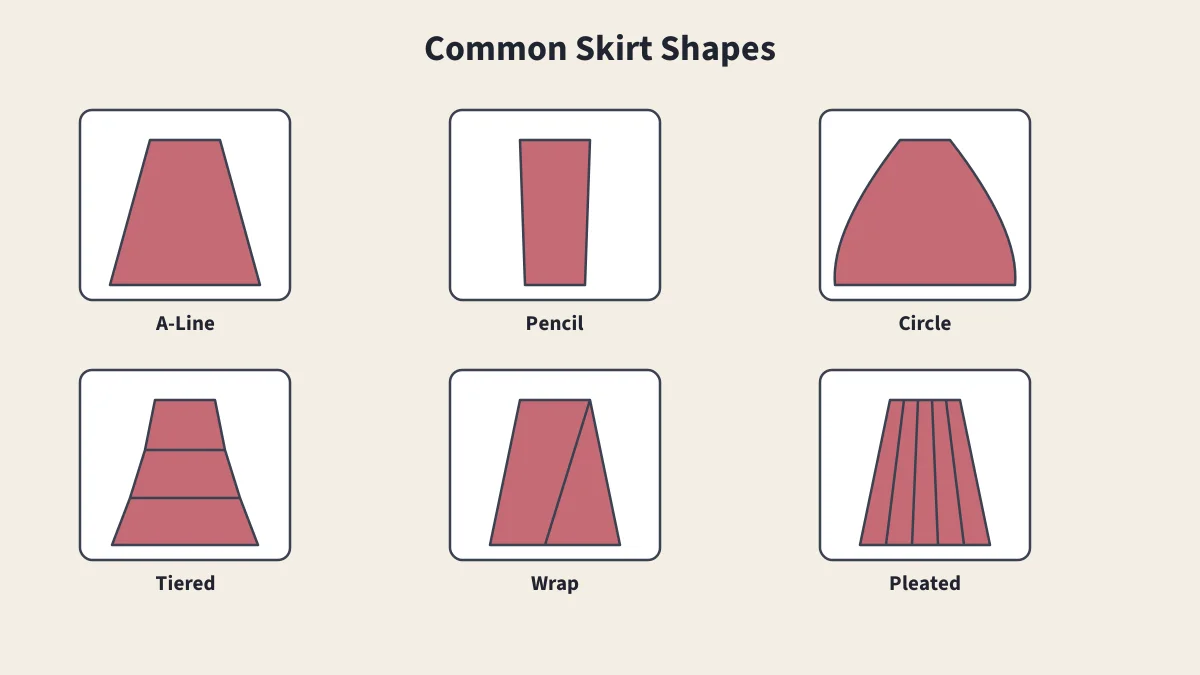
Types of Skirts
A-line, pencil, circle, gored, tiered, wrap and more.
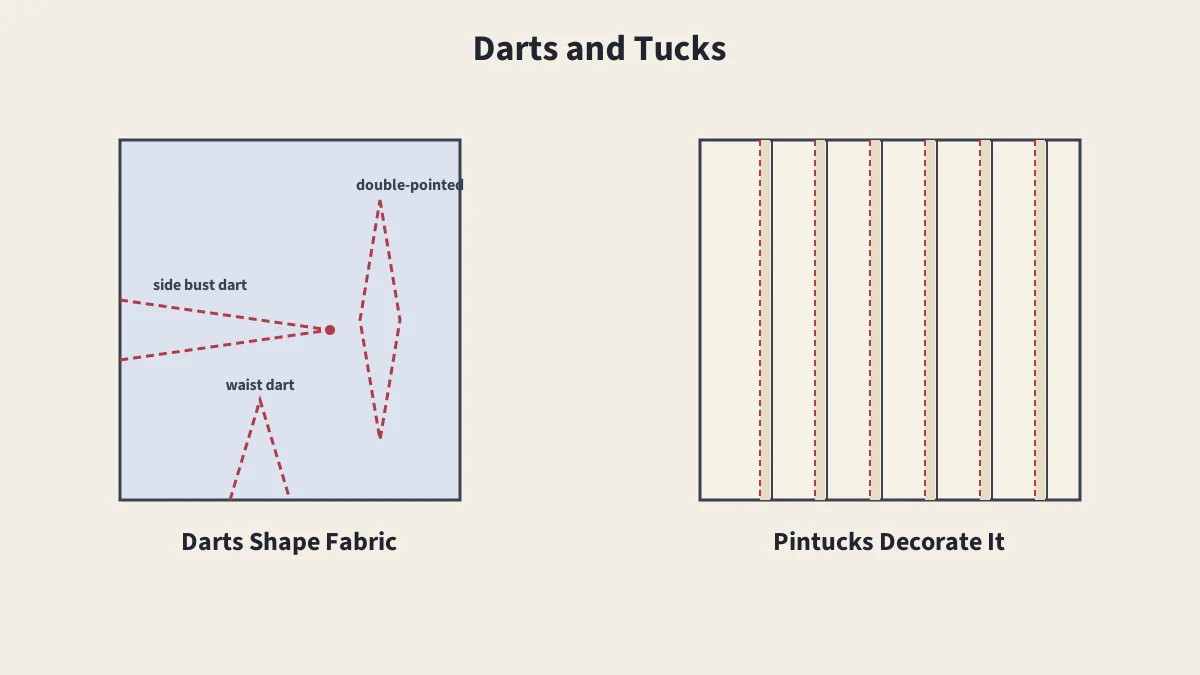
Darts and Tucks
Bust, waist and double-pointed darts, and decorative tucks.
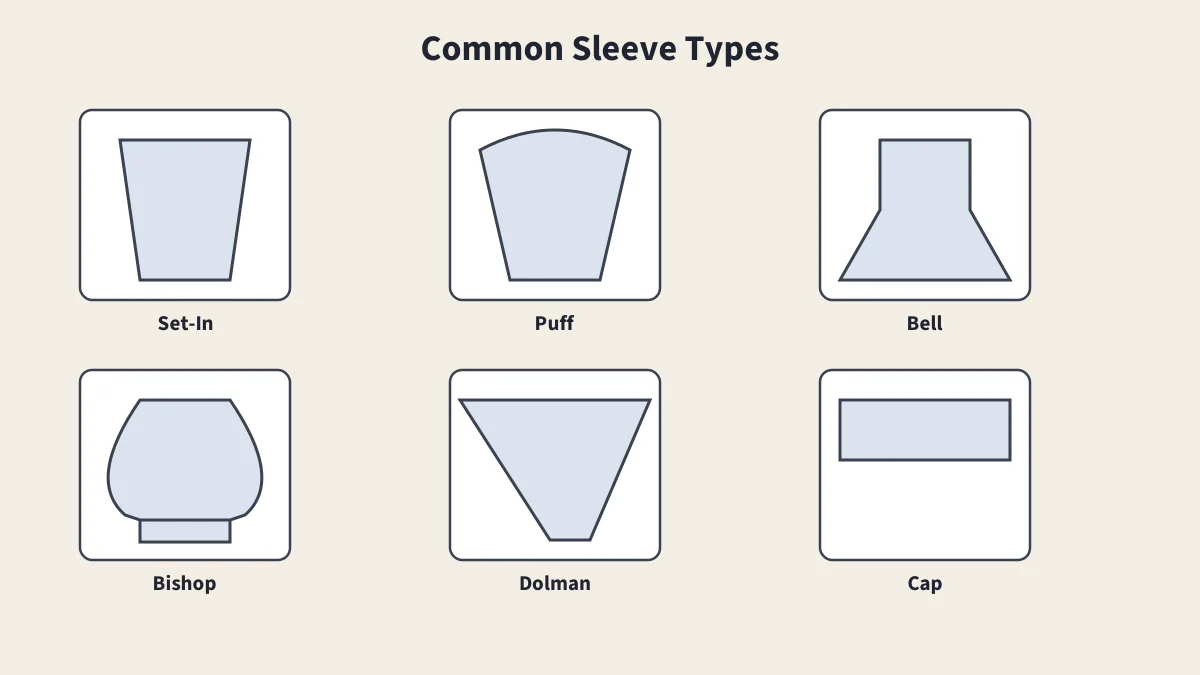
Types of Sleeves
Set-in, raglan, kimono, puff, bishop, bell and more.
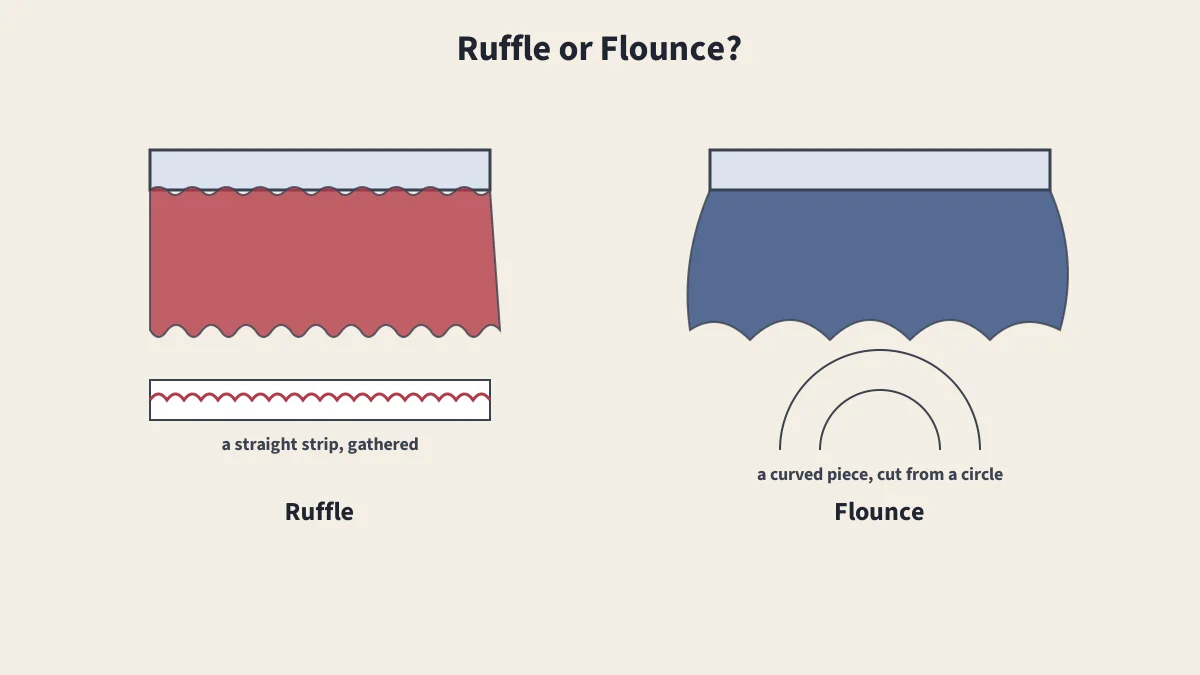
Ruffles and Flounces
Gathered ruffles, circular flounces and how to make them.