Jeans Styles and Fits: Skinny to Wide-Leg Explained (2026)
Since Jacob Davis and Levi Strauss patented riveted work pants in 1873, jeans have come in almost every cut. Fits differ by leg shape and rise, and styles return to fashion in cycles.
In This Article
Jeans in Brief
- Patent: May 20, 1873, for riveted pants
- Five pockets: standard since 1901
- Leg fits: skinny to wide-leg
- Rise: low, mid or high
- Fabric: denim; see history of denim
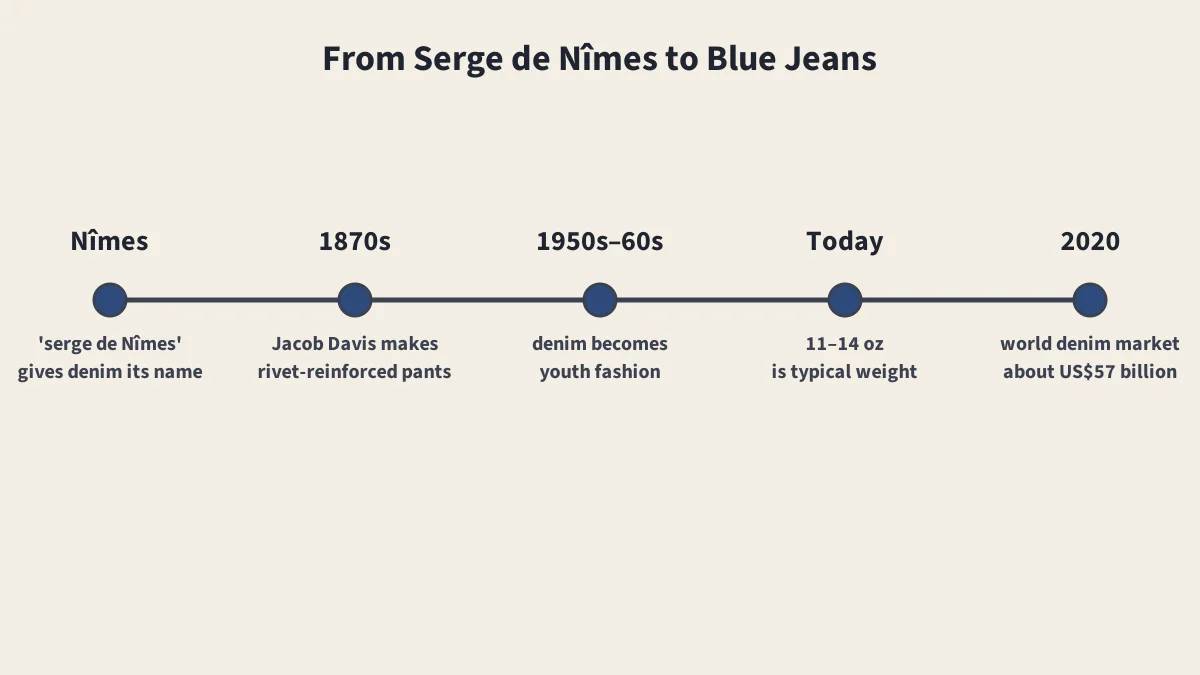
Jeans began as work trousers. In 1872, tailor Jacob Davis proposed that Levi Strauss help him patent and sell pants reinforced with copper rivets at points of strain, such as pocket corners and the base of the fly. They received US patent No. 139,121 on May 20, 1873. For the fabric's story, see history of denim.
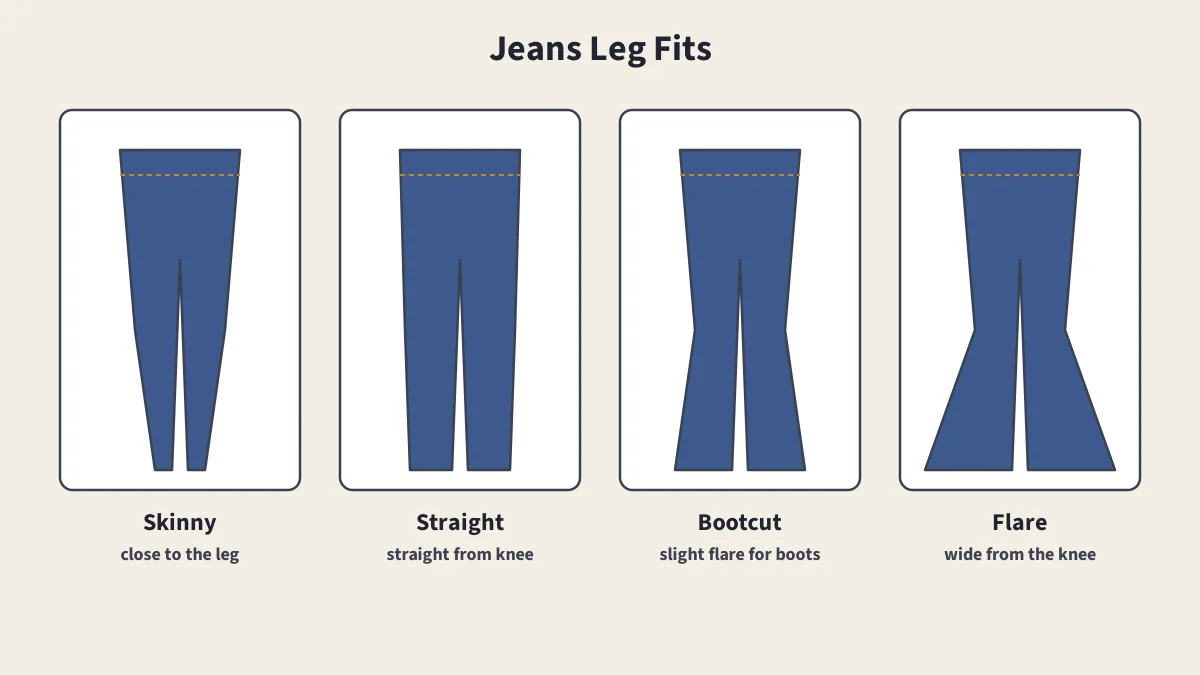
Leg Fits
| Fit | Shape |
|---|---|
| Skinny | Close to the leg all the way down |
| Slim | Narrow, but less tight than skinny |
| Cigarette | Close at the thigh, a little looser at the calf |
| Straight | The same width from knee to hem |
| Bootcut | A slight flare from the knee to fit over boots |
| Flared (bell-bottom) | Fitted through the thigh, widening markedly from the knee |
| Wide-leg | Often high-waisted, falling straight and away from the body |
| Relaxed | Looser throughout |
| Boyfriend | Mid-low waist, baggy and loose |
| Mom | High-waisted, loose through the thighs, somewhat tapered |
| Cropped | Ending above the ankle |
Rise
- High-rise: sits above the navel; popular in the 1970s and again in recent years.
- Mid-rise: sits just below the navel.
- Low-rise: usually 5–8 cm (2–3 in) or more below the navel; famous in the 1990s and 2000s, with Y2K-inspired comebacks.
Anatomy of a Pair of Jeans
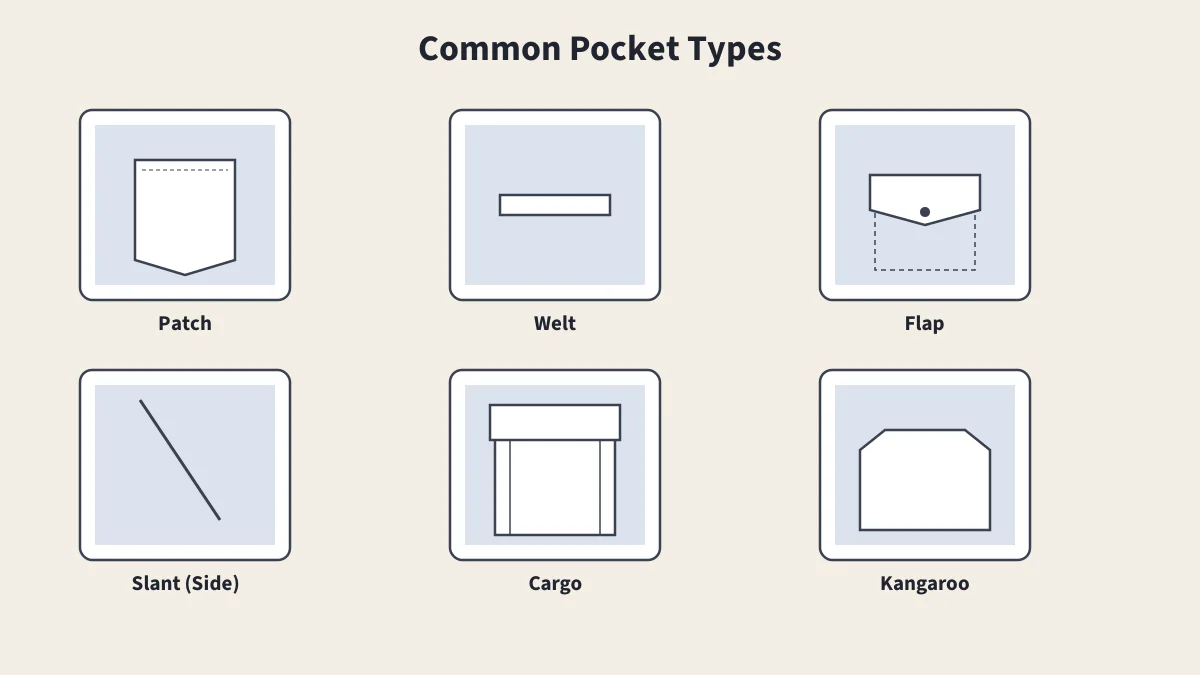
- Five pockets: two front, two back and a small watch pocket; the five-pocket layout became standard after a back left pocket was added to the Levi's 501 in 1901. See types of pockets.
- Back yoke: shapes the seat in place of darts; see yokes.
- Rivets and bar tacks: reinforce stress points.
- Fly: button or zipper.
- Flat-felled seams: strong and enclosed; see types of seams.
Sewing and Altering Jeans
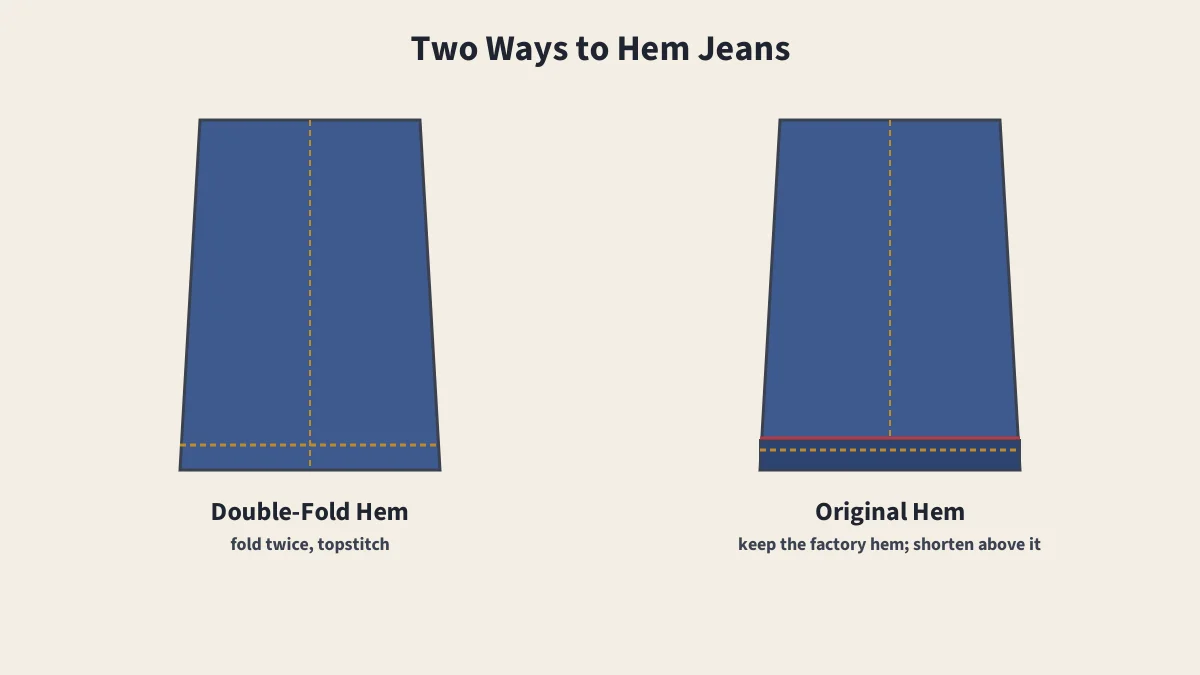
Jeans need a denim needle, strong thread and patience over thick seams. For shortening them while keeping the original hem, see hemming pants and jeans; for repairs, see patching and visible mending.
Sources
- Jeans, Wikipedia
Frequently Asked Questions
What are the main types of jeans fits?
Common fits include skinny, slim, straight, bootcut, flared (bell-bottom), wide-leg, relaxed, boyfriend, mom and cropped.
What is the difference between bootcut and flare jeans?
Bootcut jeans widen slightly from the knee, enough to fit over boots. Flared or bell-bottom jeans widen much more dramatically from the knee down.
What are mom jeans?
High-waisted jeans that are loose through the hips and thighs, with a somewhat tapered leg.
When were jeans invented?
Jacob Davis and Levi Strauss received US patent No. 139,121 on May 20, 1873, for using copper rivets to reinforce work pants. The five-pocket layout became standard after a back left pocket was added to the 501 in 1901.
Keep Reading
History of Denim
Nîmes, Genoa, the 1873 rivet patent and denim's rise.
Pant Styles
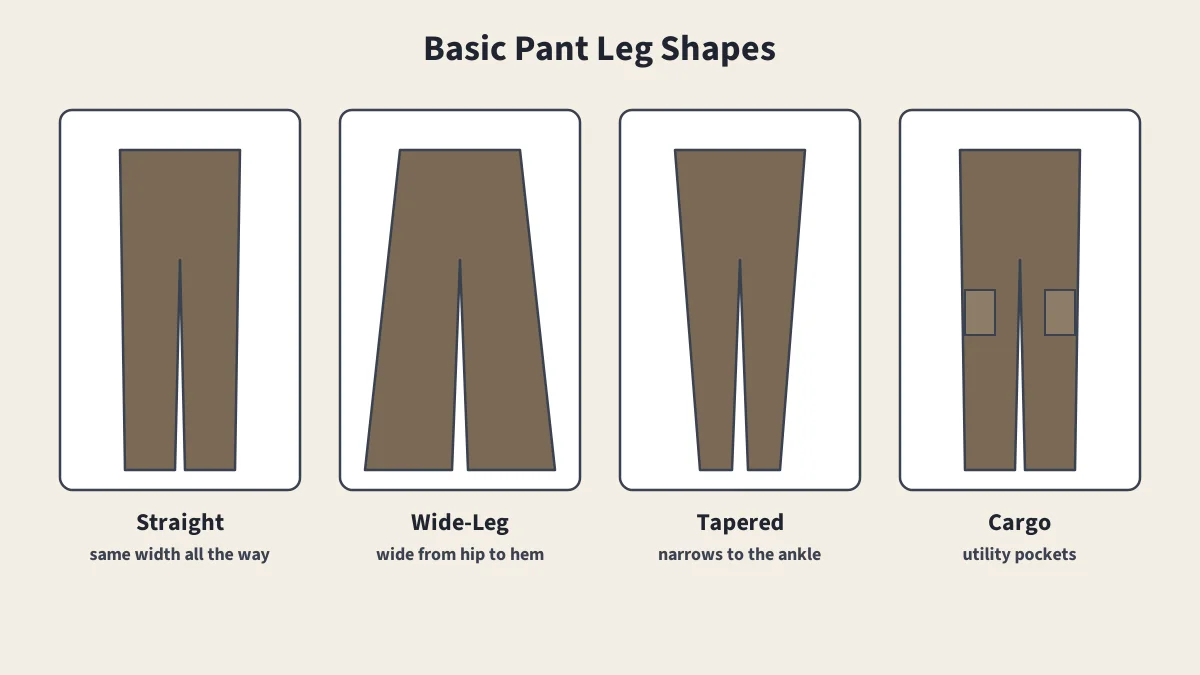
Leg shapes, pleats, rises and the history of trousers.
Hemming Pants and Jeans
Measuring, blind hems and keeping the original jeans hem.
Types of Pockets
Patch, welt, flap, cargo and watch pockets, and their history.