Types of Skirts: An Illustrated Guide to Skirt Styles (2026)
The skirt may be the oldest garment still worn: a straw skirt from about 3900 BCE survives in Armenia. Today's styles differ mainly in how the fabric is cut and shaped between waist and hem.
In This Article
Skirts in Brief
- Oldest: a straw skirt from about 3900 BCE
- Fitted: pencil, sheath, hobble
- Flared: A-line, gored, circle
- Full: dirndl, tiered, bubble, pleated
- Wrapped: wrap, sarong, kilt, tulip
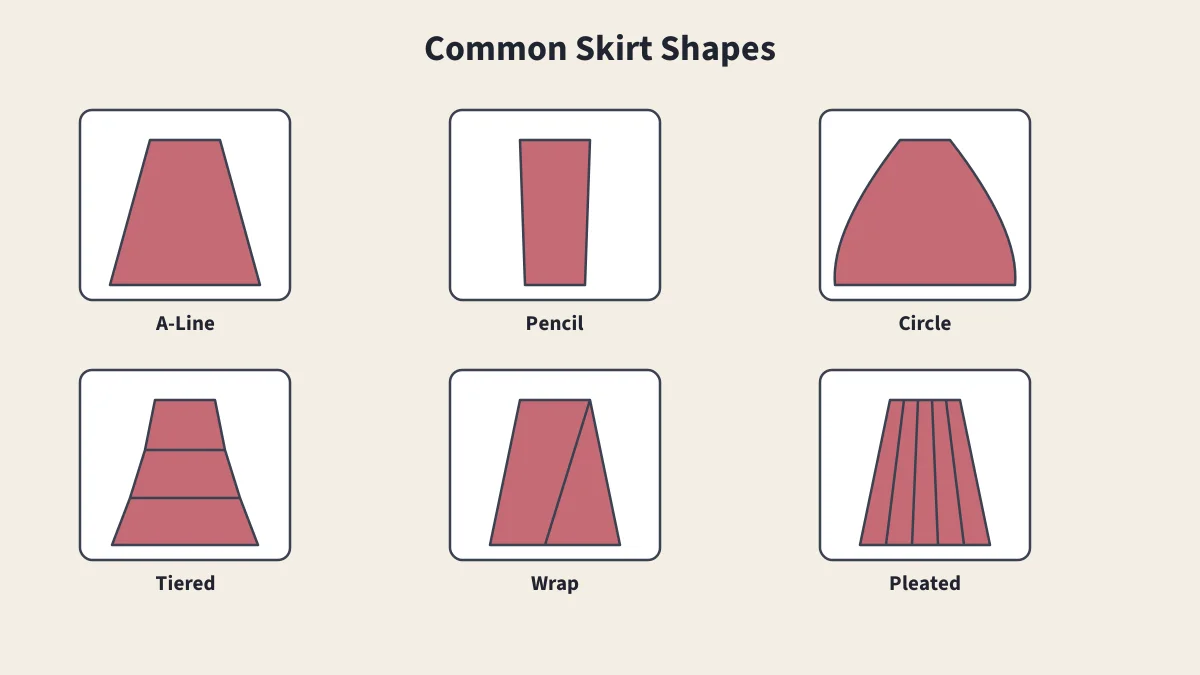
A skirt hangs from the waist or hips and covers part or all of the legs. Skirts are classified mainly by their shape, which depends on how the fabric between waist and hem is cut, and by their length.
Skirt Styles
| Skirt | Shape and Construction |
|---|---|
| A-line | Fitted at the hips, widening toward the hem |
| Pencil | Slim and straight, hem at or just below the knee |
| Circle | Cut from a circle with a waist opening; full but smooth at the waist, with no darts or gathers |
| Gored | Shaped panels that fit the waist and flare at the hem; see gores |
| Tiered | Horizontal layers, each wider than the one above |
| Wrap | Wraps around the waist with an overlap |
| Pleated | Regular folds, stitched flat at the hip or free-hanging; see pleats |
| Dirndl | A straight length of fabric gathered at the waist, from Bavarian and Austrian dress |
| Yoke skirt | Hangs from a fitted hip yoke; see yokes |
| Tulip | Wrapped over at the front with angled ends forming a tulip shape |
| Bubble | Voluminous, with the hem tucked under to puff |
| Hobble | A narrow hem that restricts the stride |
| Prairie | Flared, with one or more flounces or tiers |
| Mini | Hem well above the knee, around mid-thigh |
| Kilt | Pleated wrap skirt of Scottish national dress, worn by men |
| Sarong | Fabric wrapped around the body and tied at one hip, worn by men and women |
A Short History of the Skirt
| Date | Milestone |
|---|---|
| c. 5700–4500 BCE | Vinča figurines show women in skirt-like garments |
| c. 3900 BCE | Straw skirt from the Areni-1 cave, Armenia |
| c. 3000 BCE | Sumerians wear the kaunakes, a fur skirt tied to a belt |
| c. 2130 BCE | Egyptian men wear the shendyt, a wraparound kilt |
| 14th century | Gored skirts appear |
| 1890s | The "rainy daisy" skirt brings shorter hems for walking and sport |
| 1908–1914 | The hobble skirt at its peak |
| 1947 | Juli Lynne Charlot creates the poodle skirt |
| 1960s | The miniskirt; 1967–1970 sees the shortest skirts |
Sewing Skirts
- Choose the waistband first, since it affects the closure and fit.
- Let circle and bias-cut skirts hang for a day before hemming, as the bias stretches.
- Add a zipper or a placket for fitted styles; elastic for pull-on styles.
- Line light or clingy fabrics; see lining a garment.
For the supports that shaped historical skirts, see crinolines and bustles.
Sources
Frequently Asked Questions
What are the main types of skirts?
Common types include A-line, pencil, circle, gored, tiered, wrap, pleated, dirndl, tulip, bubble and mini skirts, along with traditional styles such as the kilt and sarong.
What is the oldest known skirt?
A straw-woven skirt from about 3900 BCE, found in the Areni-1 cave in Armenia.
What is the easiest skirt to sew?
A gathered dirndl or elastic-waist skirt is usually the easiest, since it is made from a straight length of fabric. A circle skirt is also simple to construct, though it uses more fabric.
What is a gored skirt?
A skirt made from several tapered panels, called gores, that fit at the waist and flare at the hem. Gored skirts date from the 14th century.
Keep Reading
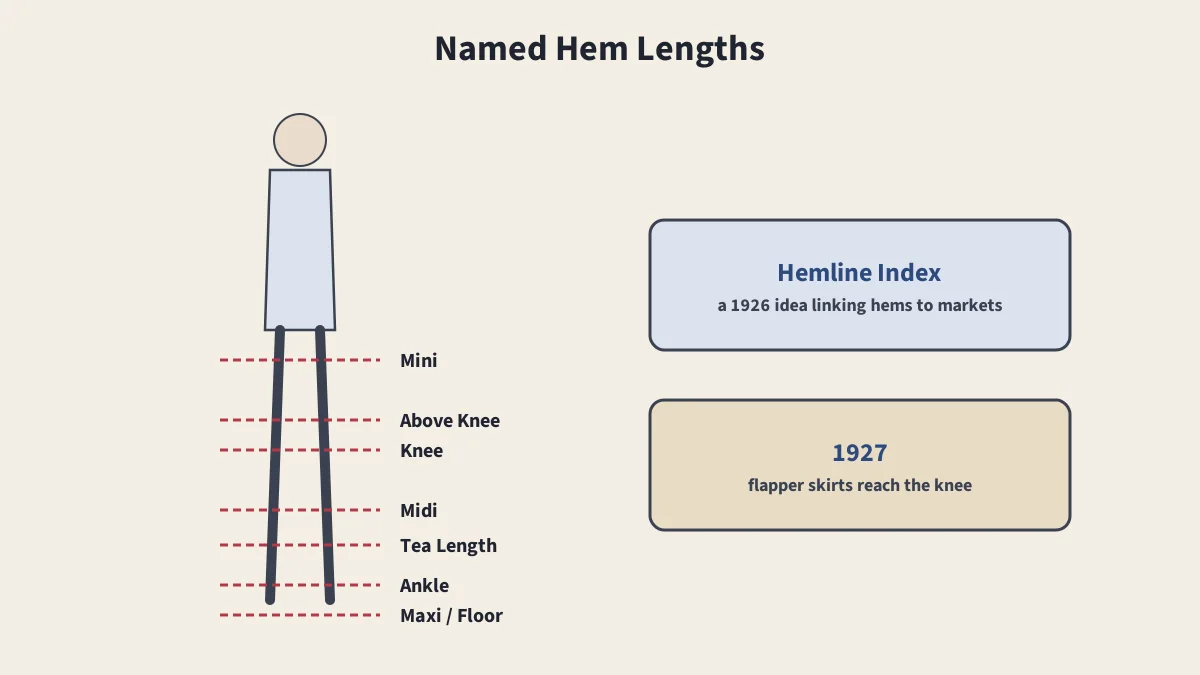
Hem Lengths
Mini, midi, maxi and every length in between.
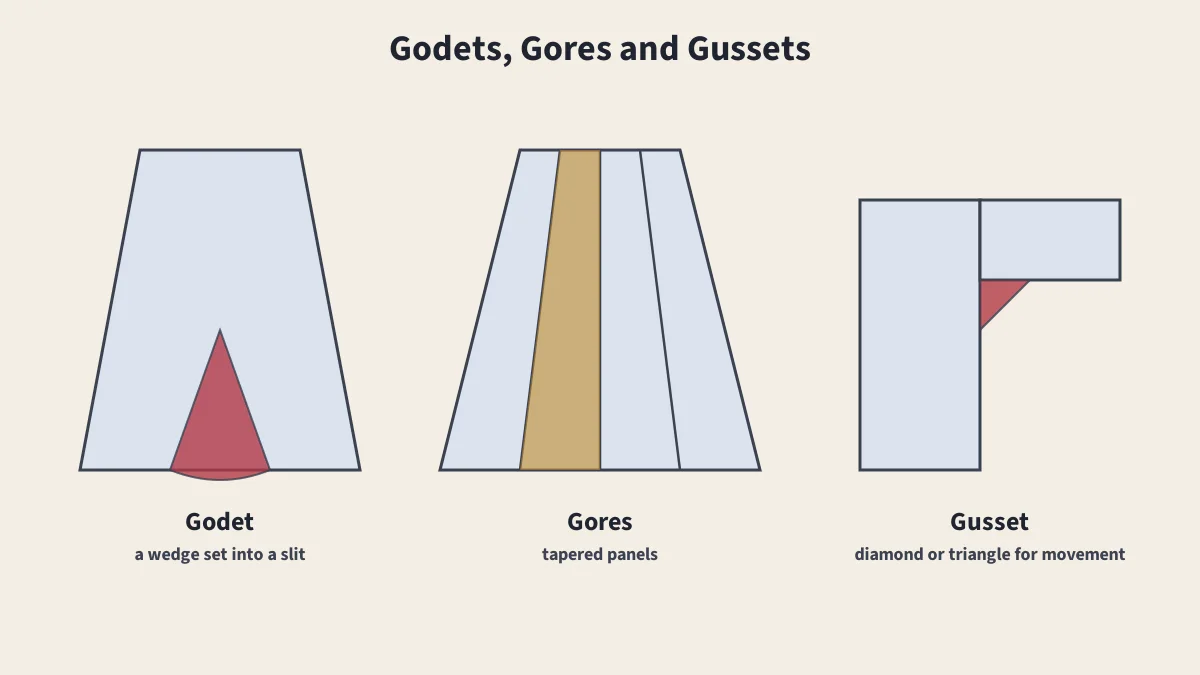
Godets, Gores and Gussets
Shaped insets for flare, fit and movement.
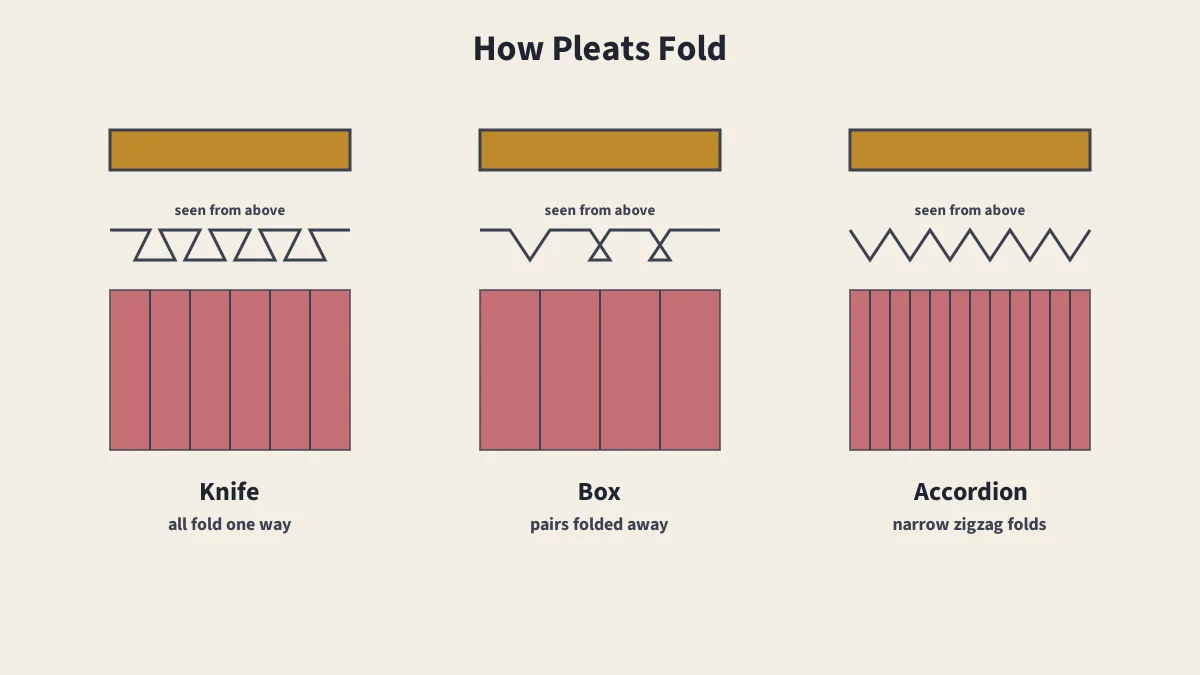
Types of Pleats
Knife, box, accordion, kick and historical pleats.
Dress Silhouettes
A-line, sheath, shift, empire and New Look shapes.