Types of Lapels: Notch, Peak and Shawl Explained (2026)
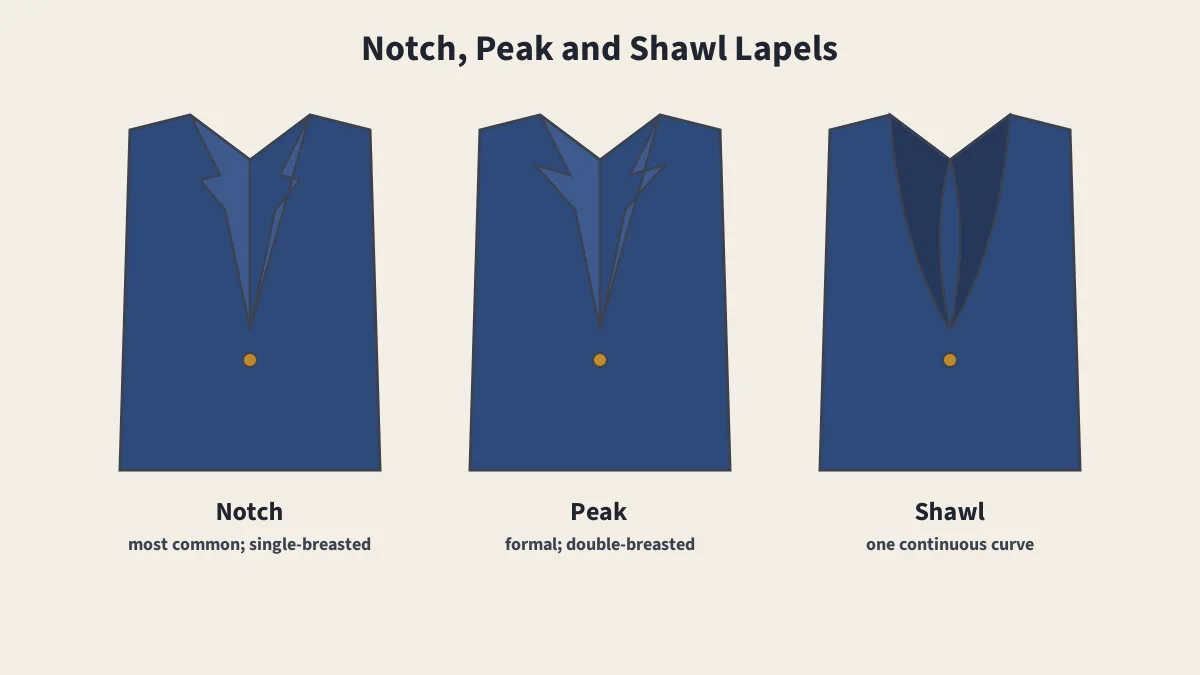
The lapel is the folded flap on the front of a jacket or coat. There are three main types, each with its own level of formality, and modern lapels look much like those of the 1930s.
In This Article
Lapels in Brief
- Notch: most common; single-breasted suits and blazers
- Peak: most formal; double-breasted, tailcoats
- Shawl: continuous curve; dinner jackets
- Buttonhole: for a boutonnière
- Modern form: largely set by the 1930s
A lapel is the folded flap of fabric on the front of a jacket or coat, usually formed by folding back the front edges and joining them to the collar. Lapels are a mainstay of tailored menswear and of women's suits and coats.
The Three Main Types
| Lapel | Look | Typical Garments |
|---|---|---|
| Notch | Sewn to the collar at an angle, creating a step; a small notch is sometimes called a fishmouth | Single-breasted suits, blazers, sport jackets |
| Peak | Edges point upward toward the shoulders | Double-breasted jackets, tailcoats, morning coats, many tuxedos |
| Shawl | One continuous curve with no step | Dinner jackets, tuxedos, mess jackets, cardigans |
The shawl lapel first appeared on Victorian smoking jackets. Cutting peak lapels on a single-breasted jacket is considered one of the most challenging tailoring tasks.
Lapel Buttonholes
Single-breasted jackets usually have a buttonhole on the left lapel for a boutonnière, often with a small loop behind it to hold the stem; double-breasted jackets often have one on each lapel. In fine tailoring this buttonhole is often hand-worked; see types of buttonholes.
How the Lapel Developed
- The notched lapel grew out of older jackets buttoned to the neck, whose top closure was folded back at an angle.
- Regency-era tailcoats had long, folded-down lapels.
- Victorian coats used elaborate three-part constructions, later replaced by single-piece lapels.
- Edwardian jackets buttoned almost to the neck, then lengthened into the classic three-button shape; the two-button jacket was an American innovation.
- Modern lapels are largely identical in form to those of the 1930s, though their width has risen and fallen with fashion.
How Lapels Are Shaped
A tailored lapel is supported by interfacing or a canvas layer and shaped with rows of small hand stitches called pad stitches, which give it a soft, natural roll. The roll line, where the lapel turns back, is often stabilized with tape so it doesn't stretch. See interfacing.
For the jackets and coats these lapels appear on, see jacket and coat styles.
For London's famous street of bespoke tailors, see Savile Row and bespoke tailoring.
Sources
- Lapel, Wikipedia
Frequently Asked Questions
What are the three types of lapel?
Notch, peak and shawl. Notch lapels are the most common, peak lapels the most formal, and shawl lapels are mostly found on dinner jackets and tuxedos.
Which lapel is most formal?
The peak lapel. It is used on double-breasted jackets, tailcoats, morning coats and often tuxedos.
What is the buttonhole on a lapel for?
It is for a boutonnière (a flower). Single-breasted jackets usually have one on the left lapel, often with a loop behind it to hold the stem.
How wide should a lapel be?
Lapel width has changed a lot over the decades. Some designers suggest a lapel should reach just short of halfway between the collar and the shoulder line.
Keep Reading
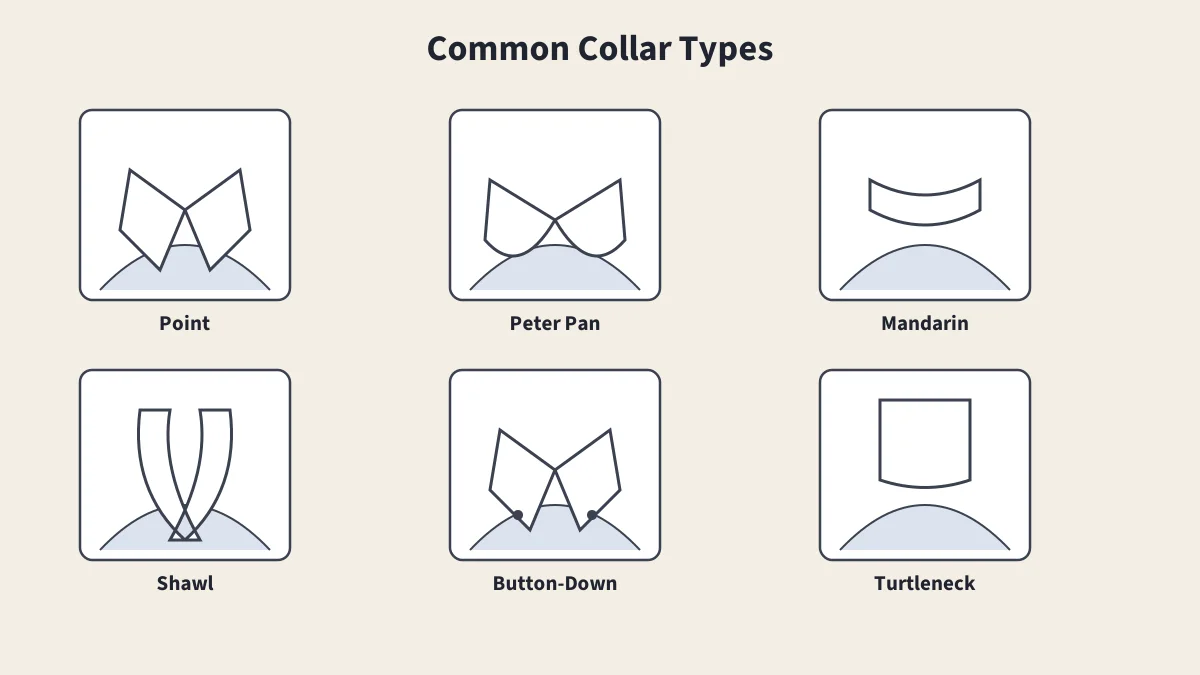
Types of Collars
Shirt, dress and historical collars explained.
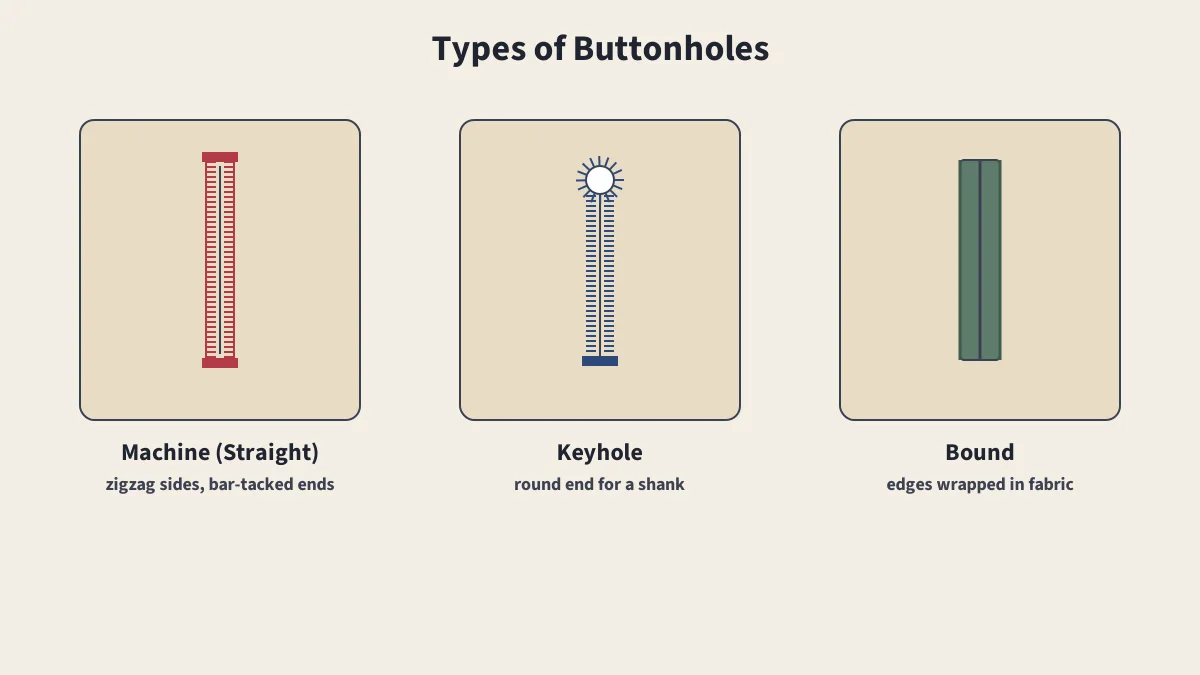
Types of Buttonholes
Machine, keyhole, bound and hand-worked buttonholes explained.
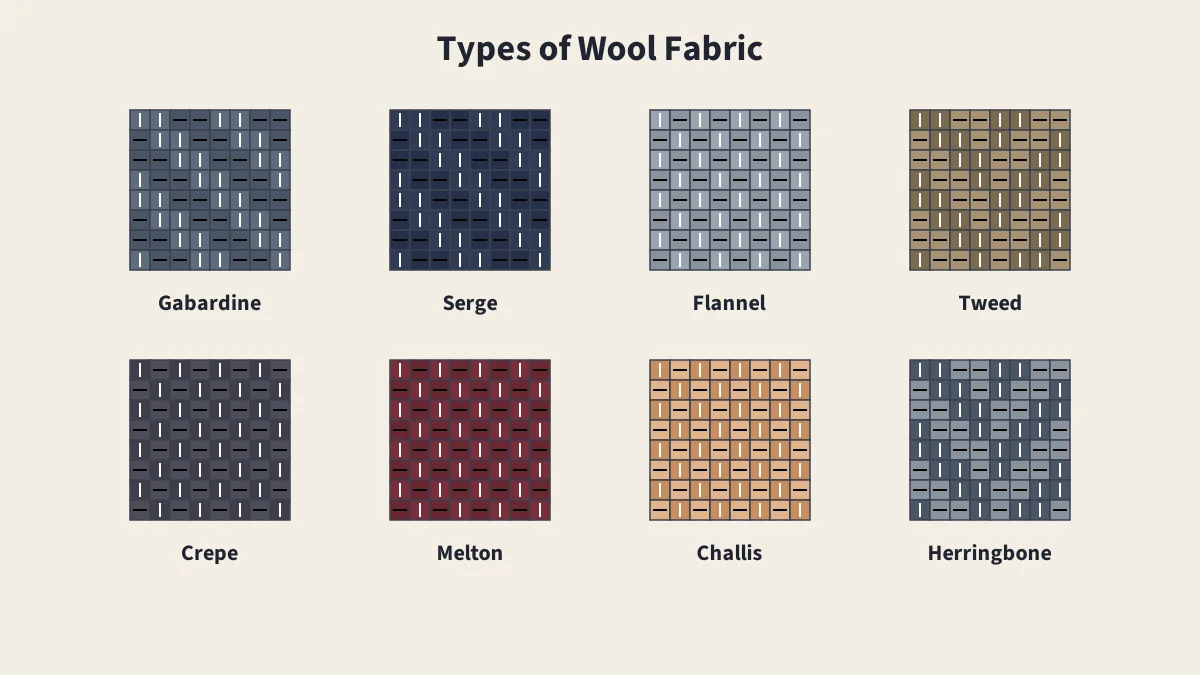
Types of Wool Fabric
Worsted vs. woolen, plus gabardine, tweed, flannel and more.
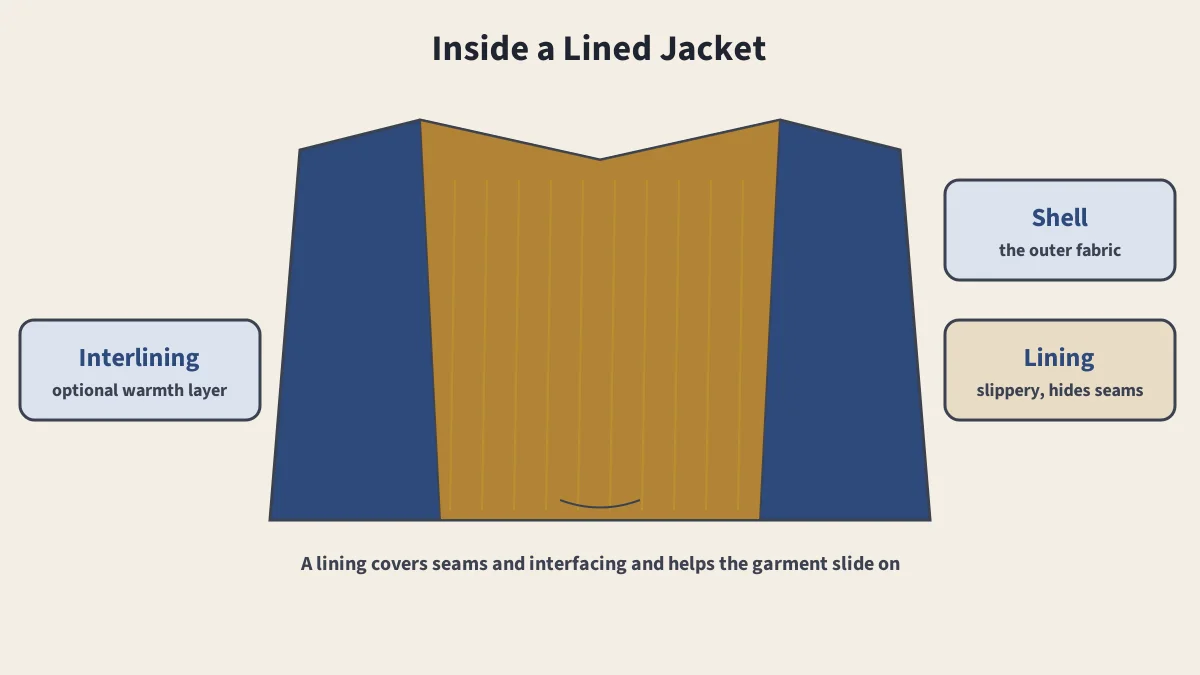
Lining a Garment
Lining fabrics, interlining and lining a skirt or jacket.