Pant and Trouser Styles: Leg Shapes, Pleats and History (2026)
The oldest known trousers are about 3,000 years old and were made for riding horses. Today's pants vary by leg shape, rise, pleats and fabric, and even by what they are called.
In This Article
Pants in Brief
- Oldest: about 3,000 years old, from Xinjiang
- Leg shapes: straight, wide, tapered, flared
- Front: pleated or flat
- Word: from Gaelic triubhas
- US vs. UK: pants vs. trousers
"Trousers" is the usual British word; in North America and Australia, "pants" is the general term, with "trousers" for tailored styles with a waistband, belt loops and a fly. The word trousers comes from the Scottish Gaelic triubhas, through the Scots trews.
By Leg Shape
| Style | Shape |
|---|---|
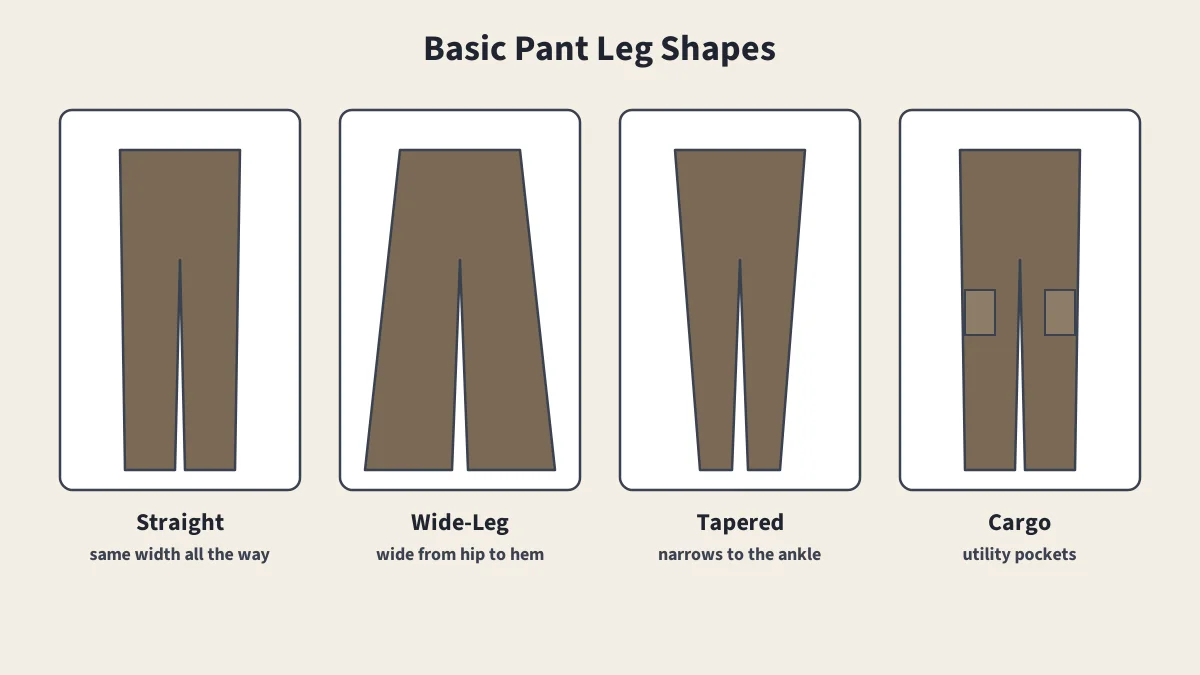
| Straight | The same width from knee to hem |
| Wide-leg / palazzo | Wide from hip to hem |
| Tapered / cigarette | Narrowing toward the ankle |
| Flared / bell-bottom | Widening from the knee |
| Harem | Loose and full, gathered at the ankle; Paul Poiret designed women's harem pants in 1913 |
| Cropped / capri | Ending above the ankle |
| Culottes | Wide, short legs that look like a skirt |
By Type
- Dress trousers: tailored, often with pleats and a crease.
- Chinos and khakis: cotton twill, casual and tailored.
- Jeans: denim, with five pockets; see jeans styles and fits.
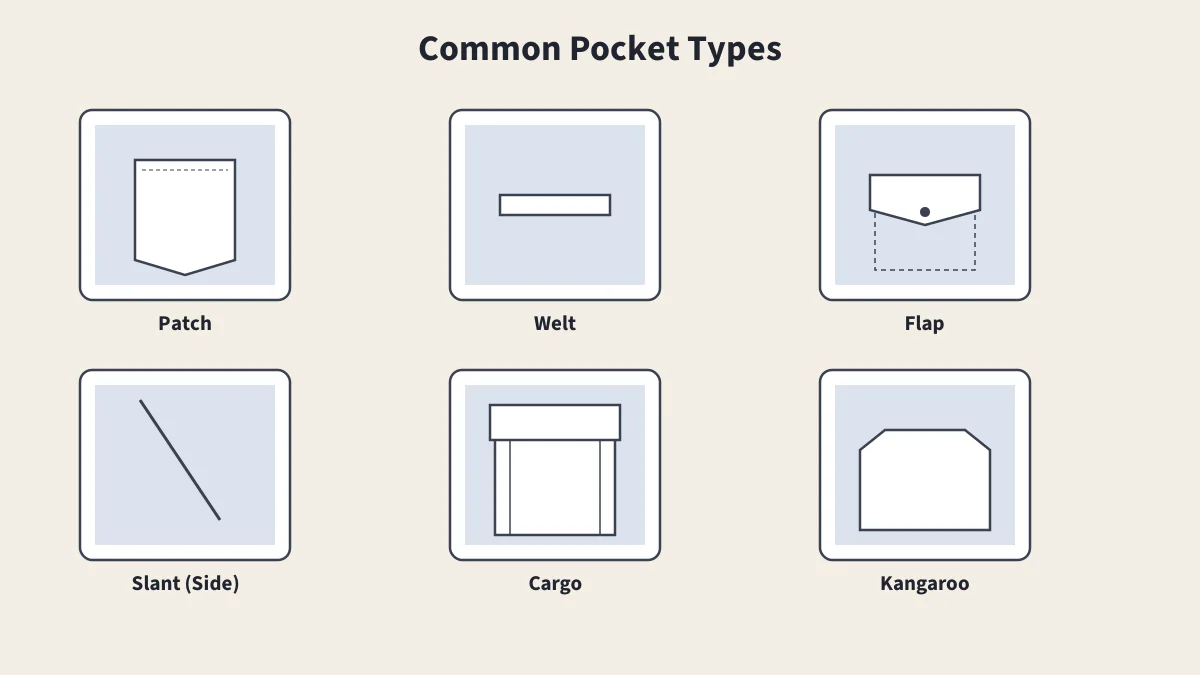
- Cargo pants: large patch pockets on the thighs; see types of pockets.
- Breeches: ending at or below the knee; survive in riding, fencing and baseball, and as plus-fours.
- Sweatpants and leggings: knit, usually with an elastic waist.
Pleats and Rise
Suit trousers and khakis may have one, two, three or no pleats below the waistband. Forward pleats open toward the fly; reverse pleats open toward the pockets. The rise is the distance from crotch to waistband: low-rise sits below the waist, high-rise at or above it. For hem finishes, see trouser turn-ups.
A Short History of Trousers
| Date | Milestone |
|---|---|
| 3350–3105 BCE | Ötzi the Iceman wears leggings |
| 13th–10th century BCE | Oldest known trousers, Yanghai cemetery, Xinjiang |
| 6th century BCE | Trousers appear in art at Persepolis |
| Classical era | Greeks mock Persian trousers as "sacks"; Rome later adopts them in colder provinces |
| 1701 | Peter the Great orders most Russian men to wear trousers |
| Mid-19th century | Wigan pit-brow women work in trousers |
| 1969 | Charlotte Reid is the first woman to wear trousers in the US Congress |
| 1993 | The US Senate lifts its ban on women wearing trousers on the floor |
Sources
- Trousers, Wikipedia
Frequently Asked Questions
What is the difference between pants and trousers?
In British English, trousers are the outer garment and pants usually means underwear. In North America and Australia, pants is the general word, and trousers usually means tailored pants with a waistband, belt loops and a fly.
What are the oldest known trousers?
Wool trousers found at the Yanghai cemetery in Turpan, Xinjiang, dated to between the 13th and 10th centuries BCE. They have straight legs and a wide crotch, and were probably made for horseback riding.
What is the difference between pleated and flat-front trousers?
Pleated trousers have one or more folds below the waistband for extra room at the hips; flat-front trousers have none. Forward pleats open toward the fly; reverse pleats open toward the pockets.
Where does the word trousers come from?
From the Scottish Gaelic triubhas, through the Scots word trews.
Keep Reading
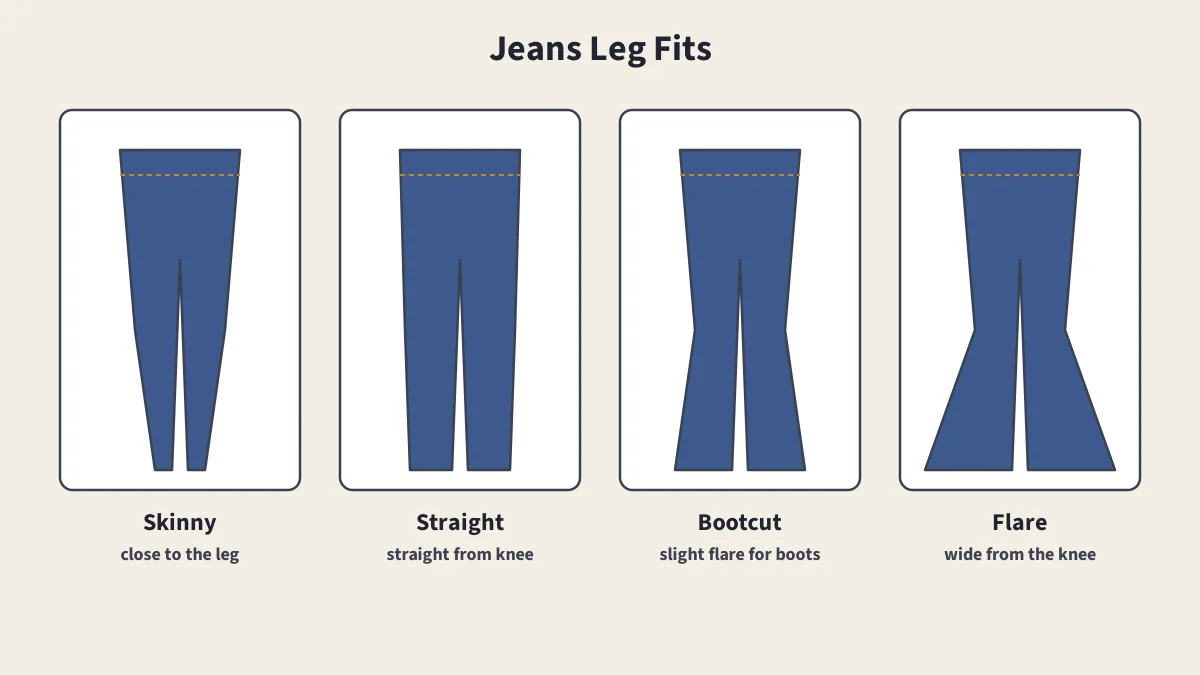
Jeans Styles and Fits
Skinny, straight, bootcut, flare, mom and more.
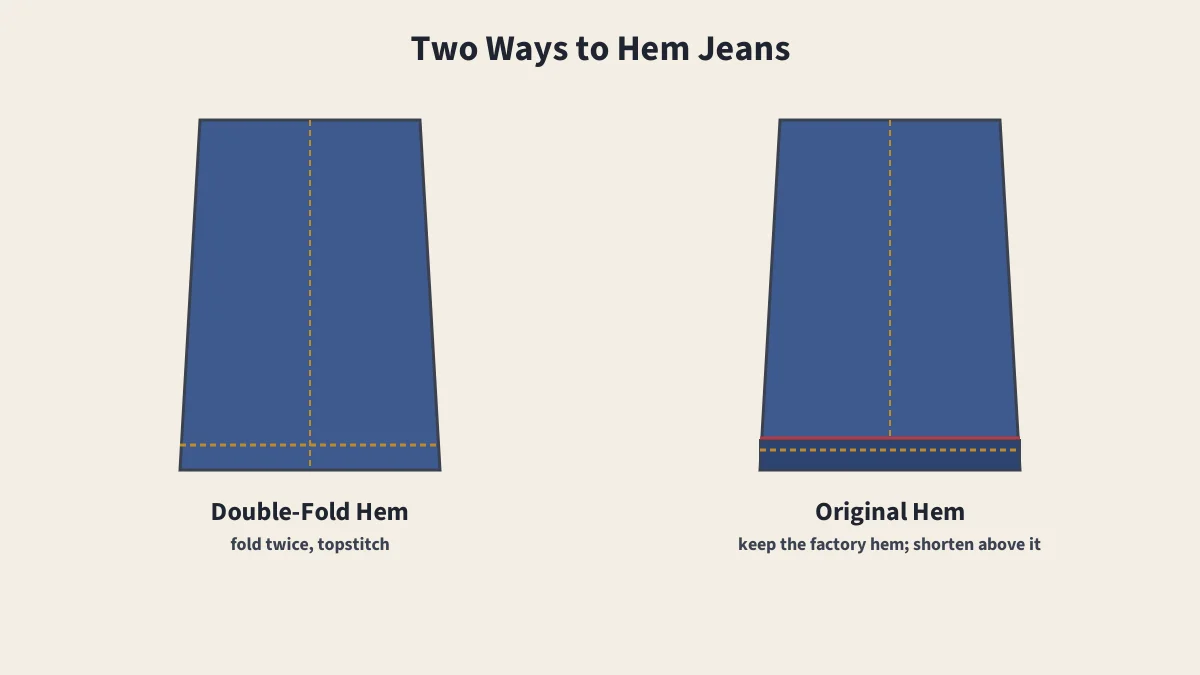
Hemming Pants and Jeans
Measuring, blind hems and keeping the original jeans hem.
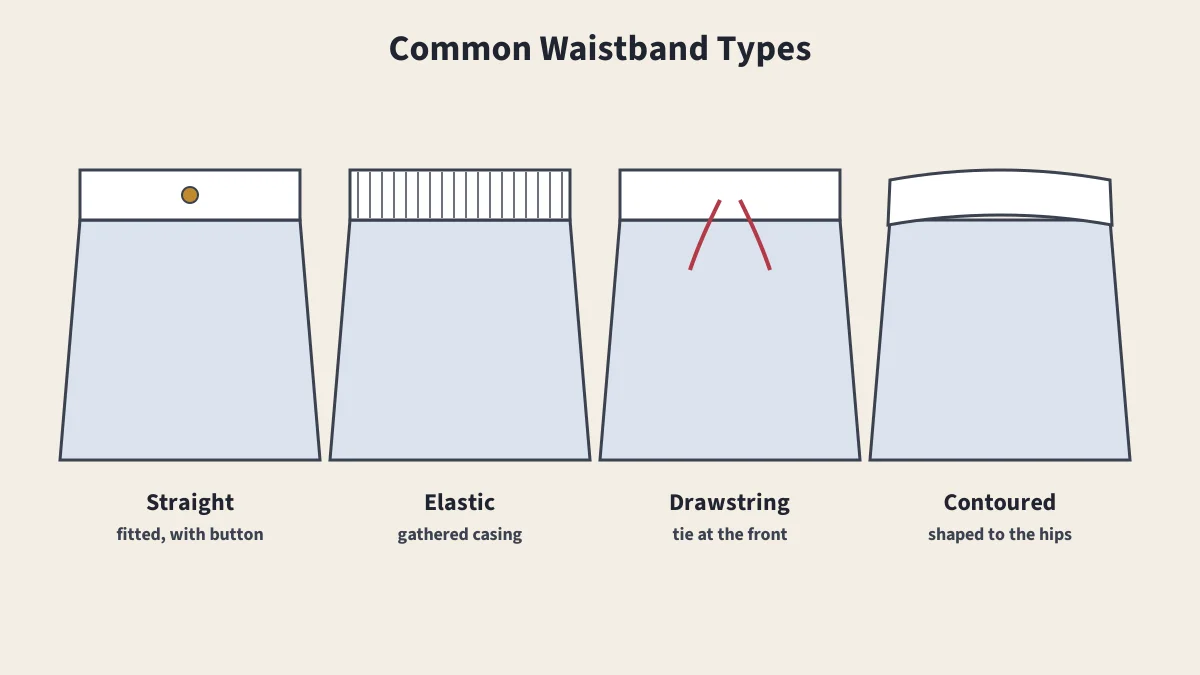
Types of Waistbands
Straight, elastic, drawstring and contoured waists.
Types of Pockets
Patch, welt, flap, cargo and watch pockets, and their history.