Types of Waistbands: Straight, Elastic, Contoured and More (2026)
The waistband holds up a skirt or trousers and finishes the top edge. It can be crisp and fitted, stretchy and comfortable, or replaced by a facing for a clean, band-free look.
In This Article
Waistbands in Brief
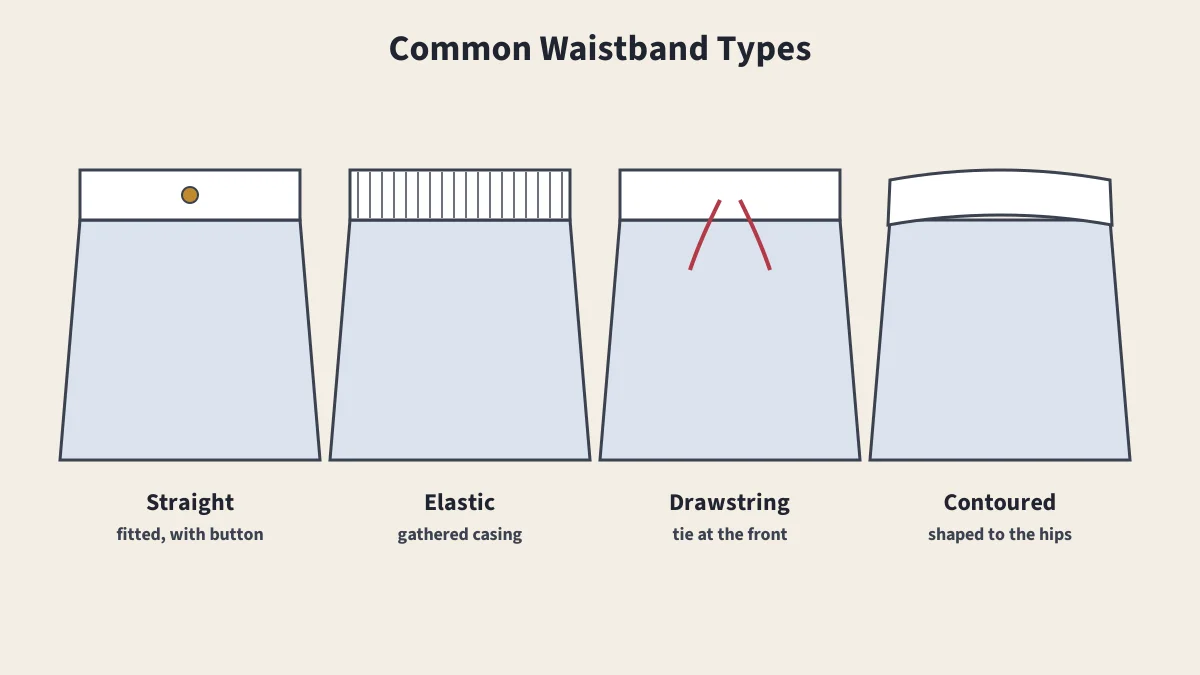
- Straight: fitted band with a fastening
- Contoured: curved to the hips
- Elastic: stretchy casing
- Drawstring: cord through a casing
- Faced: no visible band
A waistband is a strip of fabric or elastic that goes around the waist and finishes the top of skirts, trousers, shorts, swimwear and underwear. Some waistbands include belt loops, which let a belt take up small variations in fit.
Main Types
| Waistband | Construction | Best For |
|---|---|---|
| Straight | A rectangle folded in half lengthwise and interfaced, closed with a button, hook or snap | Fitted skirts and trousers at the natural waist |
| Contoured | Curved pieces with a facing, shaped to the body | Low-rise and high-waisted styles |
| Elastic | Elastic in a casing, or sewn directly to the fabric | Pull-on skirts, trousers and children's clothing |
| Drawstring | A cord threaded through a casing with openings | Loungewear, sportswear, casual trousers |
| Partial elastic | Flat at the front, elastic at the back | Comfortable trousers that look tailored |
| Paperbag | Fabric gathered above an elastic or tie, forming a ruffle | Fashion trousers and skirts |
| Faced (no band) | A facing finishes the inside | A clean, minimal waistline |
| Knit / fold-over | A stretchy band folded double | Leggings, yoga pants, maternity wear |
Choosing Elastic
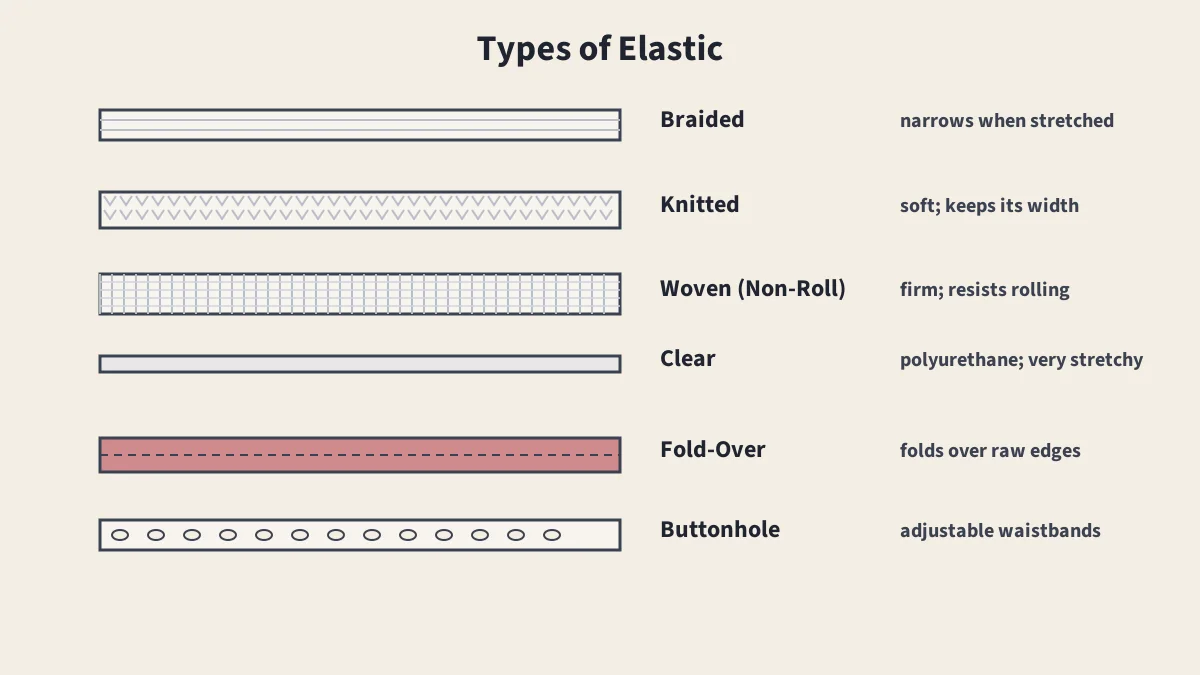
For an elastic waistband, choose a firm, non-roll elastic for casings and soft knitted elastic where it touches the skin. Cut it shorter than the waist measurement so it holds the garment up; patterns specify how much. See types of elastic.
Fastenings
- Buttons and buttonholes; see types of buttonholes.
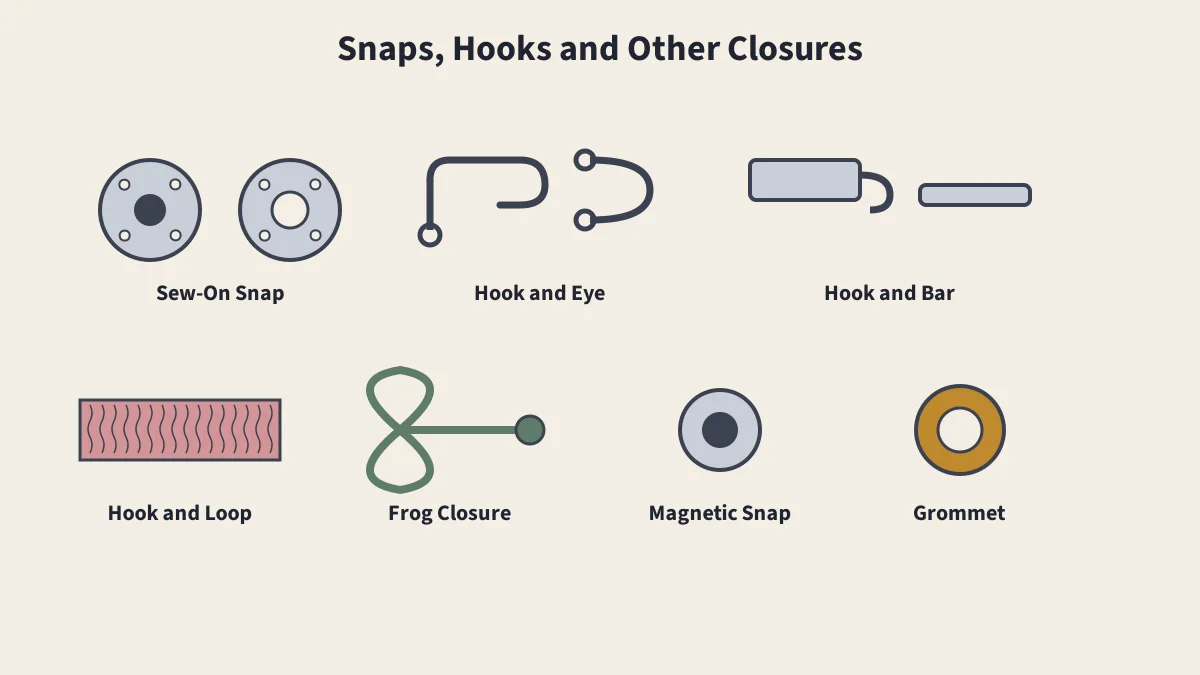
- Trouser hooks and bars, which lie flat under strain; see snaps, hooks and closures.
- A zipper below the band; see inserting a zipper.
A Little History
Waistbands have served many purposes: in northern India they fastened items such as knives to the body, and in the ancient southern Levant ornaments on waistbands could signal status. In the 19th-century West, braces (suspenders) held up trousers, so waistbands didn't need to grip tightly.
Sources
- Waistband, Wikipedia
Frequently Asked Questions
What are the main types of waistband?
Straight (fitted) waistbands, contoured waistbands shaped to the hips, elastic waistbands, drawstring waistbands, and faced waistlines with no band at all.
What is a contoured waistband?
A curved waistband cut in two or more pieces so it follows the shape of the body. It suits low-rise and high-waisted styles where a straight band would gape or dig in.
What is a faced waistline?
A waistline finished with a facing on the inside instead of a separate band, giving a smooth, band-free look on skirts and trousers.
Why do waistbands have belt loops?
Belt loops let a belt hold the garment, which helps adjust for small differences in size or for changes in the wearer's weight.
Keep Reading
Types of Elastic
Braided, knit, woven, clear and fold-over elastic compared.
Yokes
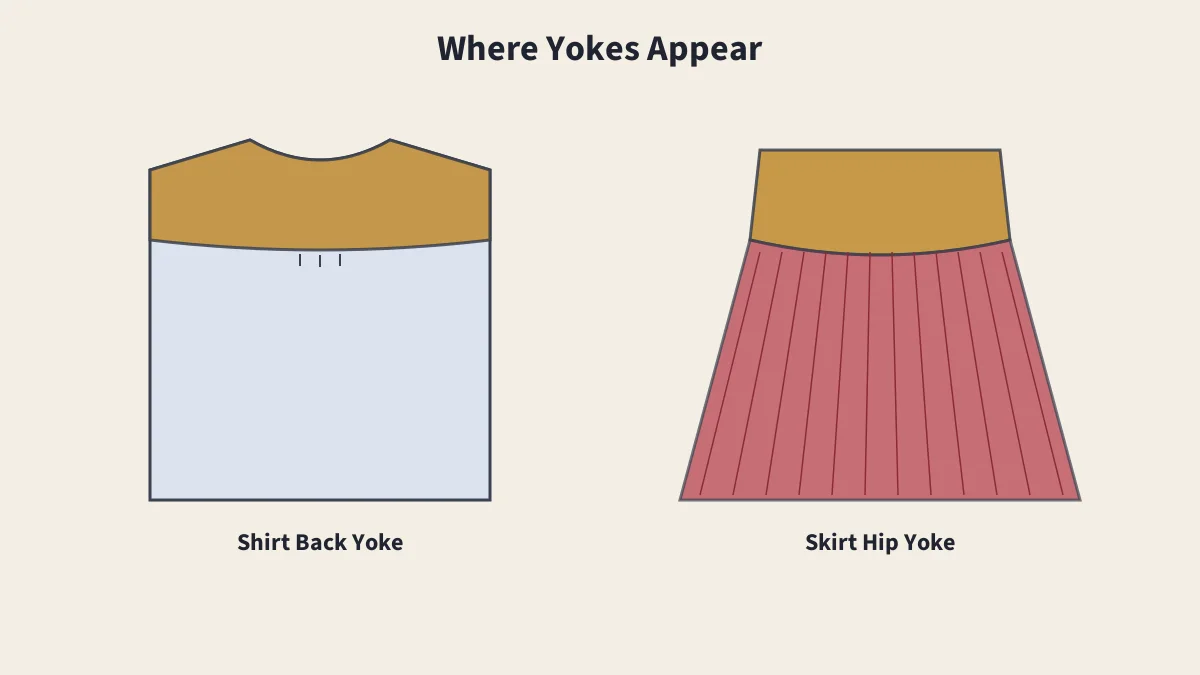
Shirt, bodice, skirt and jeans yokes explained.
Snaps, Hooks and Closures
Snaps, hooks and eyes, hook and bar, frogs, magnets and grommets.
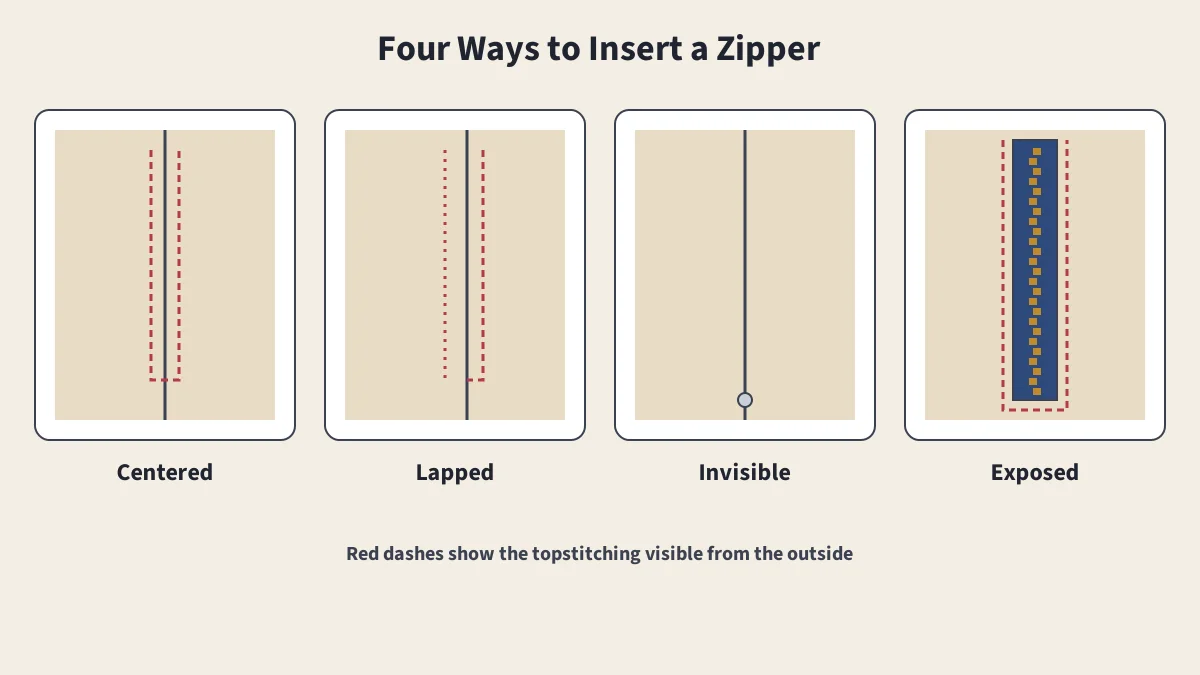
How to Insert a Zipper
Centered, lapped, invisible and exposed zippers, step by step.