What Is a Placket? Shirt, Sleeve and Fly-Front Plackets (2026)
A placket is the finished opening that lets you get into a garment, usually the double layer of fabric that holds the buttons. Shirts, sleeves, polos and skirts all have them.
In This Article
Plackets in Brief
- Definition: a finished opening in a garment
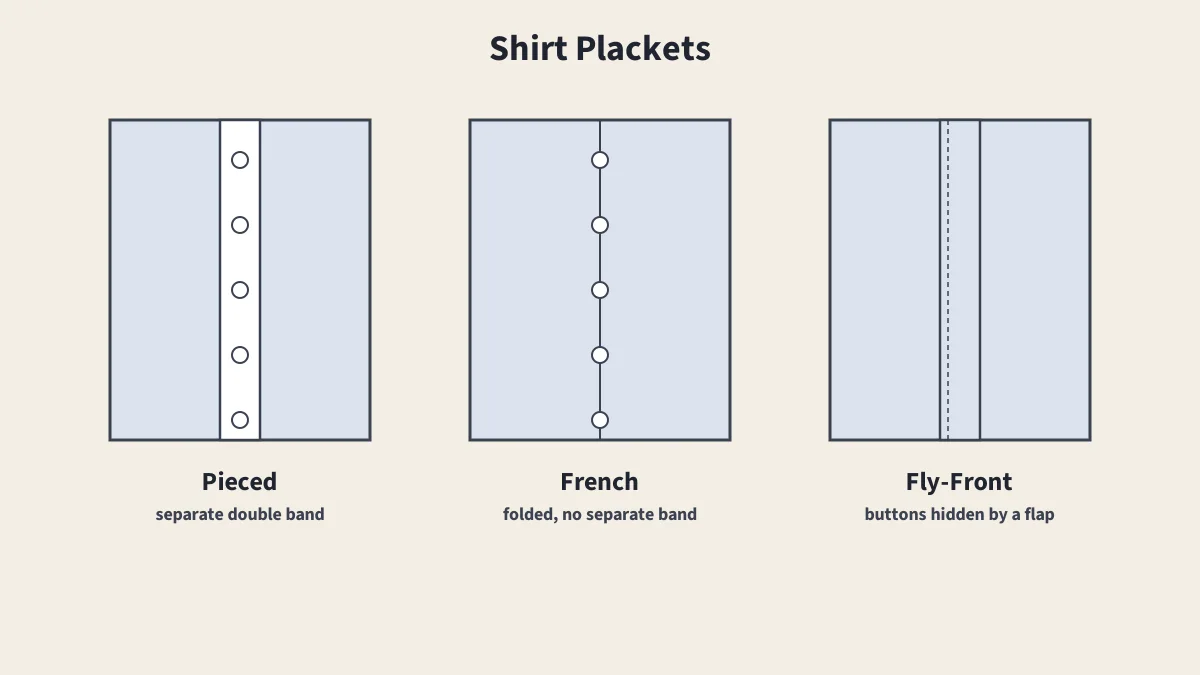
- Pieced: separate double band; the modern standard
- French: no separate band
- Fly-front: buttons hidden by a flap
- Locations: front, neck, sleeve, waist
A placket (once also spelled placquet) is a finished opening in the upper part of trousers or skirts, or at the neck, front, waist or sleeve of a garment. In modern use, the word usually means the double layer of fabric that holds the buttons, snaps or other fasteners. Its layers, often with interfacing, support the fasteners and keep them from rubbing the skin.
Shirt Front Plackets
| Placket | Construction | Look |
|---|---|---|
| Pieced (standard) | A separate double layer of fabric sewn to the front | A visible band down the front; more symmetrical |
| French | No separate piece; the front edge is folded under and held by the buttonhole stitching | Clean and smooth; traditional on stiff-fronted formal shirts |
| Fly-front (concealed) | A flap of shirting fabric covers the buttons | Buttons hidden |
Other Plackets
- Sleeve placket: a short opening above a shirt cuff; see types of cuffs. A tower placket has a pointed top; a simpler continuous placket is a single bound strip.
- Polo placket: a short front opening with two or three buttons on a knit shirt.
- Skirt and dress plackets: openings at the waist or side, often closed with a zipper; see inserting a zipper.
- Trouser fly: the front opening of trousers, closed by buttons or a zipper.
A Little History
"Placket" has had several meanings. It once described a decorative front panel on a doublet or gown, later called a stomacher, and a decorative panel attached to a woman's petticoat. It could also mean a slit in a skirt or petticoat giving access to a hanging pocket, or the pocket itself; see types of pockets.
Sewing a Placket
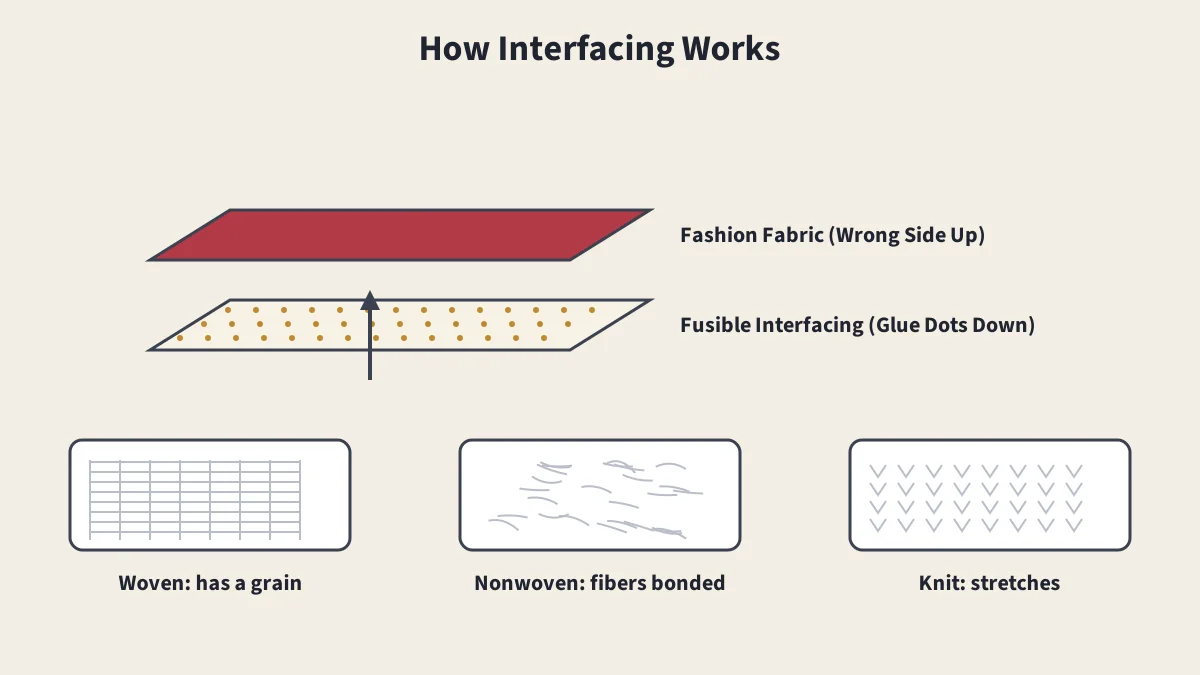
- Interface the button and buttonhole layers so they don't stretch.
- Mark the center front carefully; buttons sit on it.
- Space buttonholes evenly, with one at the point of most strain; see types of buttonholes.
- On women's shirts, buttonholes are traditionally on the right; on men's, on the left.
Sources
- Placket, Wikipedia
Frequently Asked Questions
What is a placket?
A finished opening in a garment, at the neck, front, waist or sleeve, that lets it be put on and taken off. Today the word usually means the double layer of fabric that holds the buttons or other fasteners.
What is a French placket?
A shirt front with no separate placket band: the fabric is folded over and held by the buttonhole stitching. It was traditionally used on formal evening shirts and gives a clean look.
What is a fly-front placket?
A placket where a flap of fabric covers the buttons, hiding them from view.
Why do shirt sleeves have plackets?
A sleeve placket is a short opening above the cuff that lets the cuff open wide enough for the hand and makes it easy to roll up the sleeves.
Keep Reading
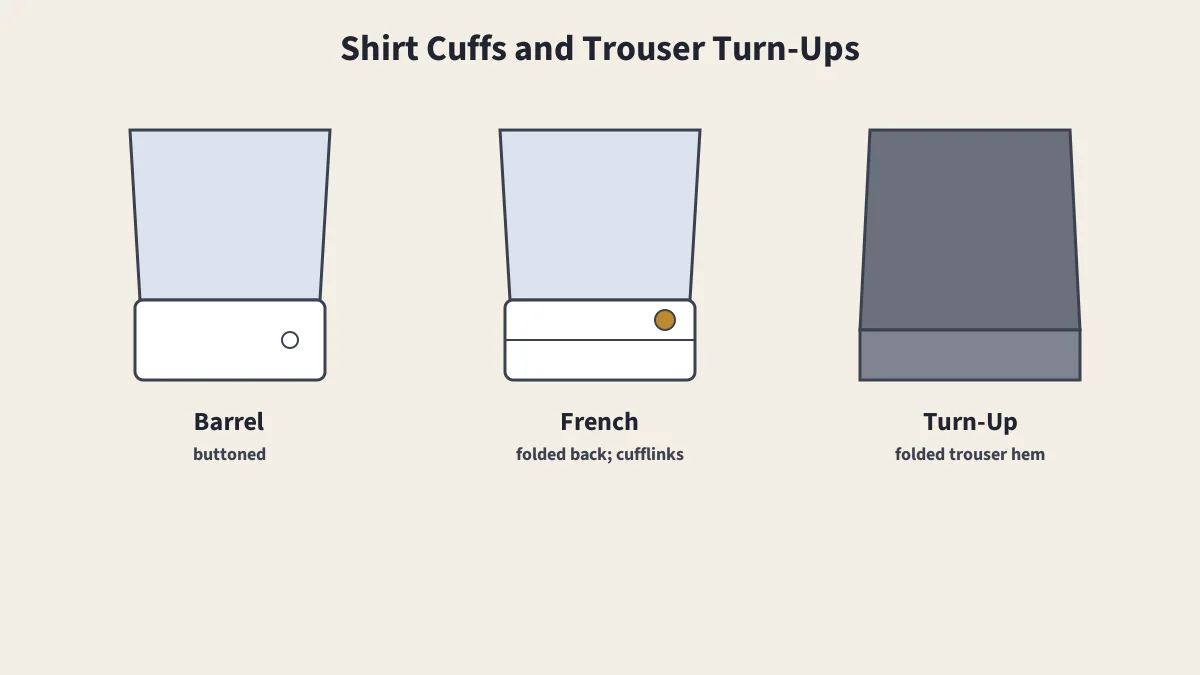
Types of Cuffs
Barrel, French and convertible cuffs, and turn-ups.
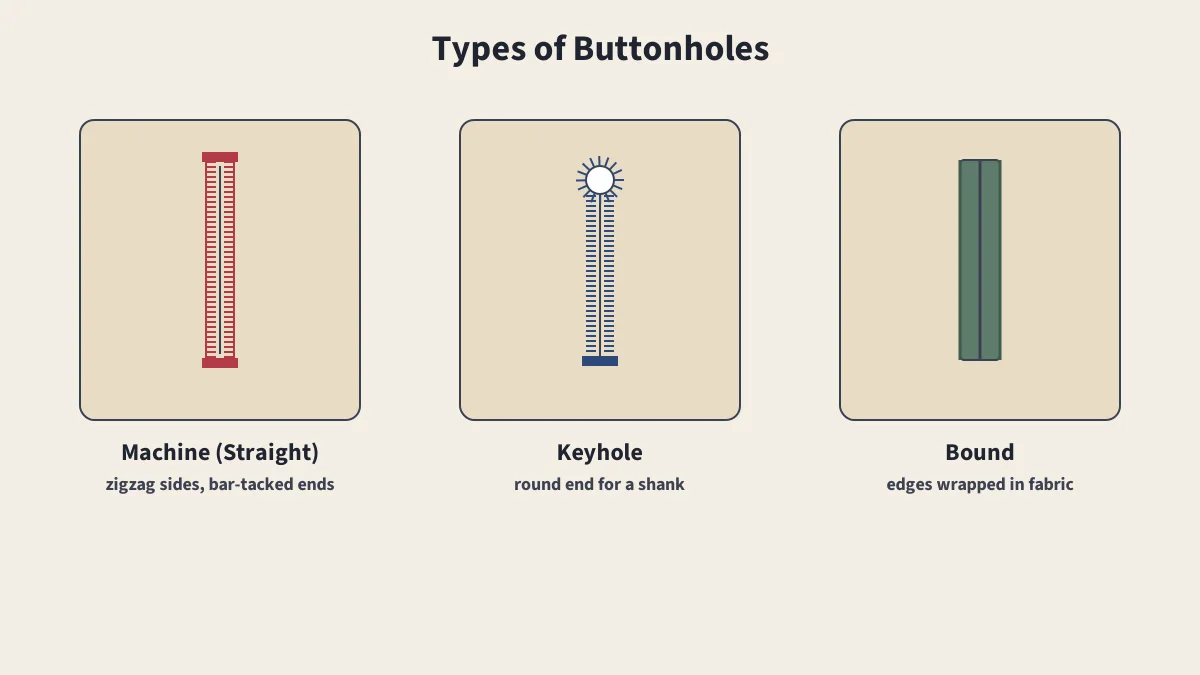
Types of Buttonholes
Machine, keyhole, bound and hand-worked buttonholes explained.
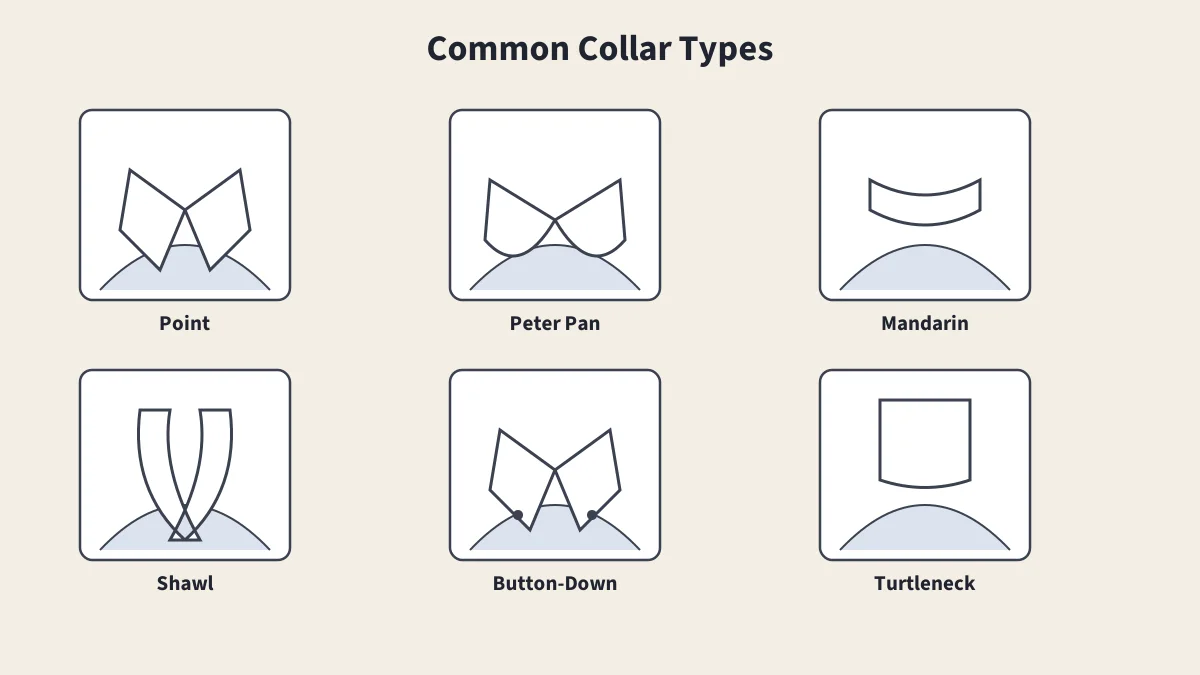
Types of Collars
Shirt, dress and historical collars explained.
Interfacing Types
Fusible vs. sew-in, woven vs. nonwoven vs. knit, and how to apply it.