Types of Buttonholes: Machine, Keyhole, Bound and Hand-Worked (2026)
Buttonholes were a medieval innovation that changed how clothes fit. Today they range from a quick machine buttonhole to a hand-worked keyhole on a tailored coat. Here is how each kind is made.
In This Article
Buttonholes in Brief
- First appeared: 13th-century Germany
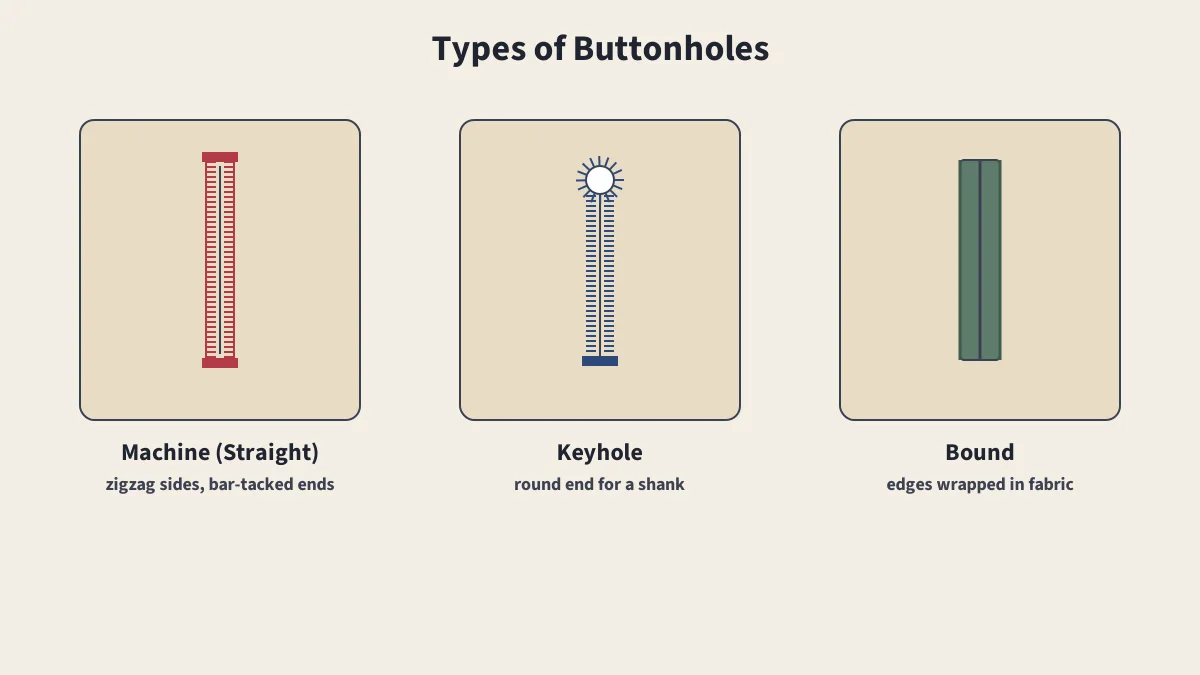
- Machine: zigzag sides with bar-tacked ends
- Keyhole: round end for shank buttons
- Bound: edges wrapped in fabric
- Hand-worked: finished with buttonhole stitch
Buttons were decorations for thousands of years before anyone used them to fasten clothes. Buttonholes first appeared in 13th-century Germany and spread with the fitted garments of medieval Europe; see buttons. Today, the choice of buttonhole depends on the fabric, the garment and the look you want.
The Main Types
| Type | How It Is Made | Typical Use |
|---|---|---|
| Machine (straight) | Two rows of narrow zigzag with bar-tacked ends; slit opened after stitching | Shirts, blouses, most garments |
| Hand-worked | Slit cut first, then edges finished with closely spaced buttonhole stitches | Fine garments, tailoring, delicate fabrics |
| Keyhole | Round end with fan-shaped stitching; usually machine-made | Coats, jackets, jeans |
| Bound | Raw edges encased in fabric strips | Coats and couture garments |
| Corded (Milanese) | Stitched over a gimp cord for strength or decoration | Tailored menswear, lapel buttonholes |
Making a Machine Buttonhole
- Interface the buttonhole area so it does not stretch; see interfacing.
- Mark the position and length of each buttonhole.
- Test on a scrap of the same fabric and interfacing.
- Stitch using the machine's buttonhole setting and buttonhole foot.
- Protect the ends by placing a pin across each bar tack.
- Cut open with a seam ripper or buttonhole chisel, working from the ends toward the middle.
- Seal with a little fray-stopping liquid if needed.
Sizing and Spacing
- Length: a common rule is the button's diameter plus its thickness. Test, because domed and shank buttons need more room.
- Direction: horizontal buttonholes hold under strain, such as on waistbands and coats; vertical buttonholes suit narrow plackets, such as on shirts.
- Spacing: place one at the point of most strain, such as the bust or waist, and space the rest evenly.
- Position: horizontal buttonholes usually start slightly past the center line, so the button sits on center.
Bound Buttonholes
A bound buttonhole is built like a miniature welt pocket. A patch or strips of fabric are stitched around a marked rectangle, the center is slashed with small triangles at each end, and the strips are turned through to form two neat lips. A facing is then finished behind it. It takes time but gives a durable, elegant result on coats and jackets.
Hand-Worked Buttonholes
For a hand-worked buttonhole, the slit is cut first, then the raw edges are covered with closely spaced buttonhole stitches, each one knotted at the edge. Tailors often work over a cord for strength and finish the ends with a bar or fan of stitches.
Sources
- Buttonhole, Wikipedia
- Button, Wikipedia
Frequently Asked Questions
When were buttonholes invented?
Buttonholes for fastening clothing first appeared in Germany in the 13th century and became widespread with snug-fitting garments in 13th- and 14th-century Europe.
How long should a buttonhole be?
A common rule is the button's diameter plus its thickness, so the button passes through without straining. Always test on a scrap of the same fabric and interfacing first.
What is a keyhole buttonhole?
A buttonhole with a round end, reinforced with fan-shaped stitching, that makes room for a button's shank without distorting the fabric. It is common on coats and jackets.
What is a bound buttonhole?
A buttonhole whose raw edges are encased in strips of fabric, like tiny welt pockets, instead of stitches. It is a traditional couture and tailoring finish.
Keep Reading
Sewing on Buttons and Snaps
Flat and shank buttons, thread shanks and sew-on snaps.
Buttons
Button types, ligne sizes, materials and history.
Interfacing Types
Fusible vs. sew-in, woven vs. nonwoven vs. knit, and how to apply it.
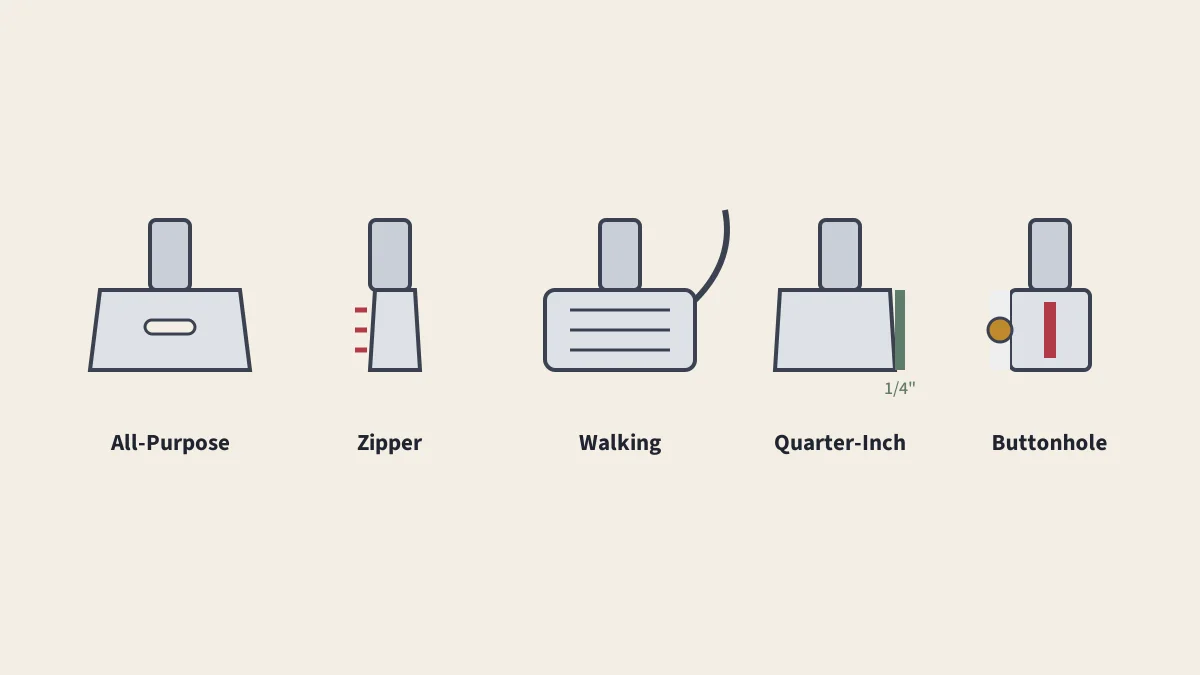
Presser Feet Guide
What each presser foot does and how to check it fits your machine.