How to Line a Garment: Choosing and Sewing a Lining (2026)
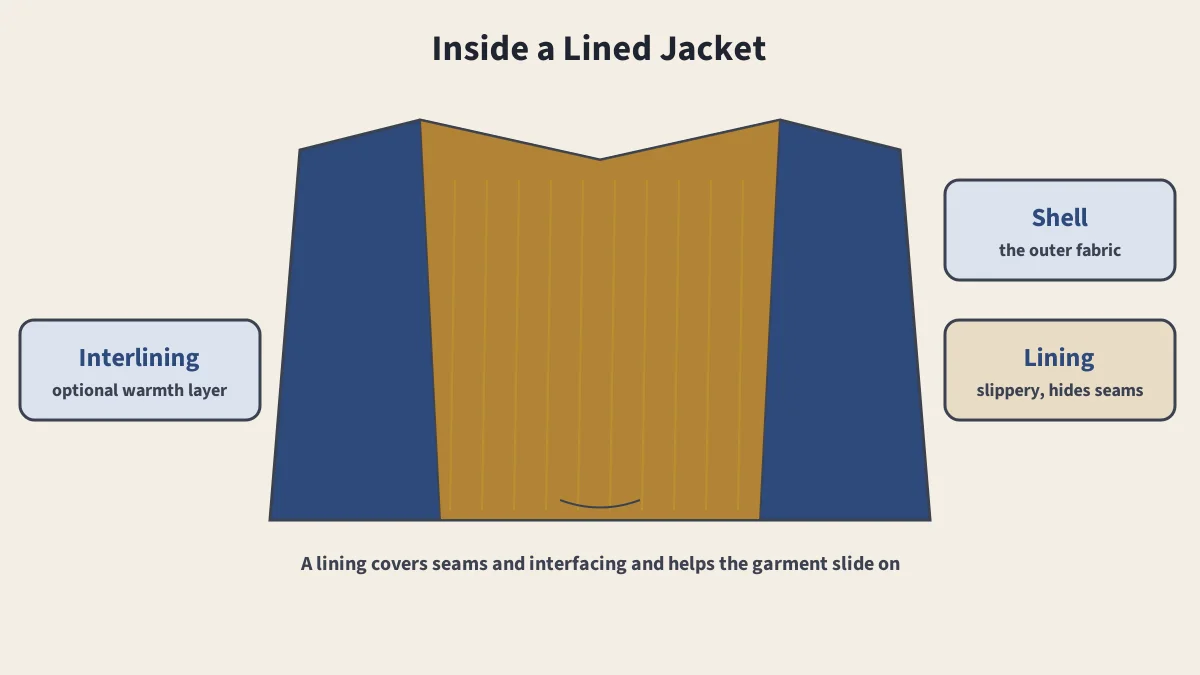
A lining hides the inside of a garment, helps it slide on, makes it last longer and can add warmth. Most linings are built as a second garment and joined to the outer shell at the edges.
In This Article
Linings in Brief
- Purpose: neat inside, less wear, easy on, warmth
- Fabrics: rayon, cupro, silk, acetate, polyester
- Interlining: extra warmth layer
- Underlining: backs each outer piece
- Method: lining assembled first, then joined
A lining is an inner layer of fabric that covers the inside of a garment. It hides seam allowances, interfacing, padding and other construction, reduces wear on the outer fabric, lets a coat or jacket slip on over other clothes, and adds warmth. In tailoring, home sewing and ready-to-wear, the lining is usually completed as a separate unit before being fitted into the shell; in haute couture, the sleeves and body may be lined separately before assembly.
Choosing a Lining Fabric
| Fabric | Qualities | Typical Use |
|---|---|---|
| Rayon / viscose, cupro | Smooth, breathable, drapes well | Jackets, coats, dresses |
| Silk (habotai, charmeuse, crepe de chine) | Light, luxurious, breathable | Fine dresses and jackets |
| Acetate | Shiny, smooth | Traditional coat and suit linings |
| Polyester | Durable, inexpensive, less breathable | Everyday garments, bags |
| Cotton lawn or voile | Breathable, not slippery | Casual summer cottons |
Linings are usually a solid color that coordinates with the outer fabric, though contrasting and patterned linings are common in jackets. Some designers, such as Madeleine Vionnet, lined a coat in the same fabric as the dress worn with it, an idea still seen in Chanel suits. See rayon and cupro and types of silk fabric.
Lining, Underlining and Interlining
| Layer | What It Is |
|---|---|
| Lining | The inner layer facing the body, built as a separate unit |
| Underlining | Cut like each outer piece and sewn as one with it, for body or opacity |
| Interlining | Extra layer between lining and shell, usually for warmth |
| Interfacing | Stiffens specific areas such as collars and fronts; see interfacing |
Lining a Skirt
- Sew the outer skirt, leaving the waist unfinished.
- Sew the lining the same way, leaving an opening for the zipper.
- Place the lining inside the skirt, wrong sides together, and baste at the waist.
- Hand-stitch the lining to the zipper tape.
- Apply the waistband or facing through both layers.
- Hem the lining separately, about 2–3 cm shorter than the skirt, so it doesn't show.
Lining a Jacket
- Construct the jacket shell, including facings.
- Construct the lining, often with a pleat at center back for movement.
- Sew the lining to the front and neck facings, right sides together.
- Join the lining hem to the jacket hem and the sleeve linings to the sleeve hems.
- Turn the jacket through a gap left in a sleeve lining seam, then close the gap.
This all-machine method, often called bagging a lining, is common in ready-to-wear; tailored jackets may instead be finished by hand. Lining hems are usually attached with a small fold of extra length, so the lining doesn't pull on the outer fabric.
Sources
- Lining (sewing), Wikipedia
Frequently Asked Questions
Why are garments lined?
A lining gives a neat inside finish, hides seams, interfacing and padding, reduces wear on the garment, lets a coat or jacket slip on more easily and can add warmth.
What fabric is best for lining?
Smooth, lightweight fabrics such as rayon (viscose or Bemberg cupro), silk habotai or charmeuse, acetate, and polyester. Breathable fibers such as rayon and silk are often preferred for comfort; cotton lawn or voile suits casual cotton garments.
What is the difference between lining and interlining?
A lining is the inner layer that faces the body. An interlining is an extra layer between lining and shell, usually for warmth in winter garments, and is normally sewn to the lining pieces before the lining is assembled.
Is underlining the same as lining?
No. Underlining is a layer cut to the same shape as each outer piece and handled as one with it, to add body or opacity. A lining is constructed separately and hangs inside.
Keep Reading
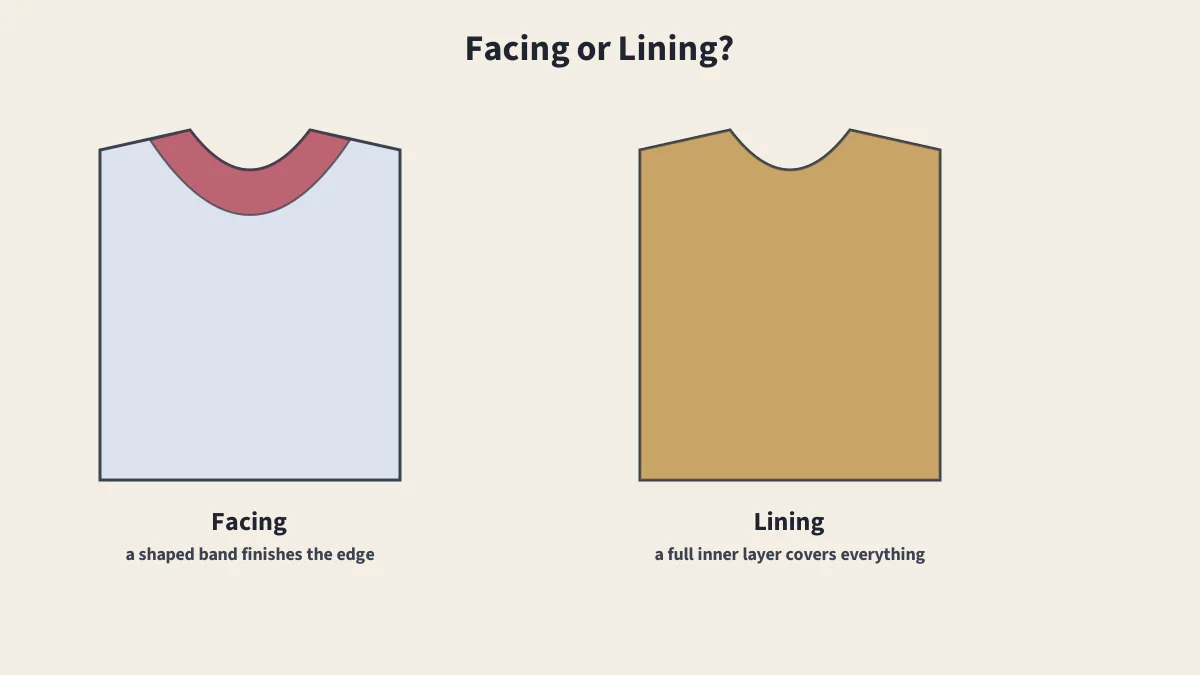
Facings vs. Linings
Shaped, extended, bias and all-in-one facings compared.
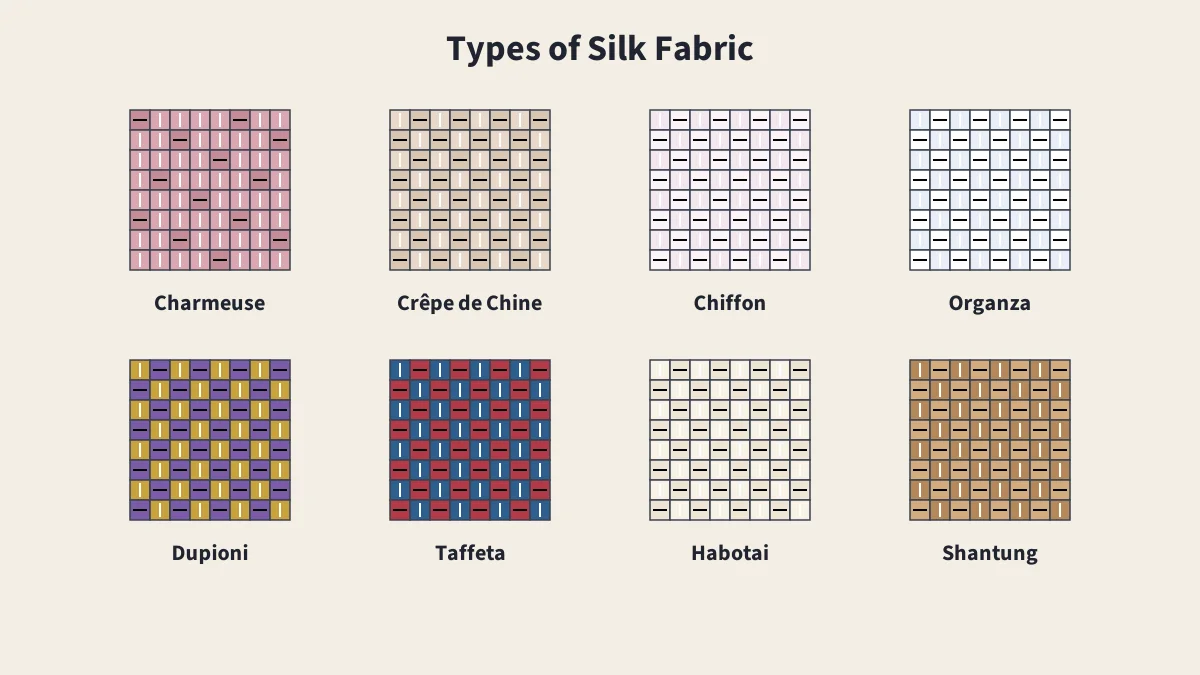
Types of Silk Fabric
Charmeuse, crêpe de chine, organza, dupioni, taffeta and more.
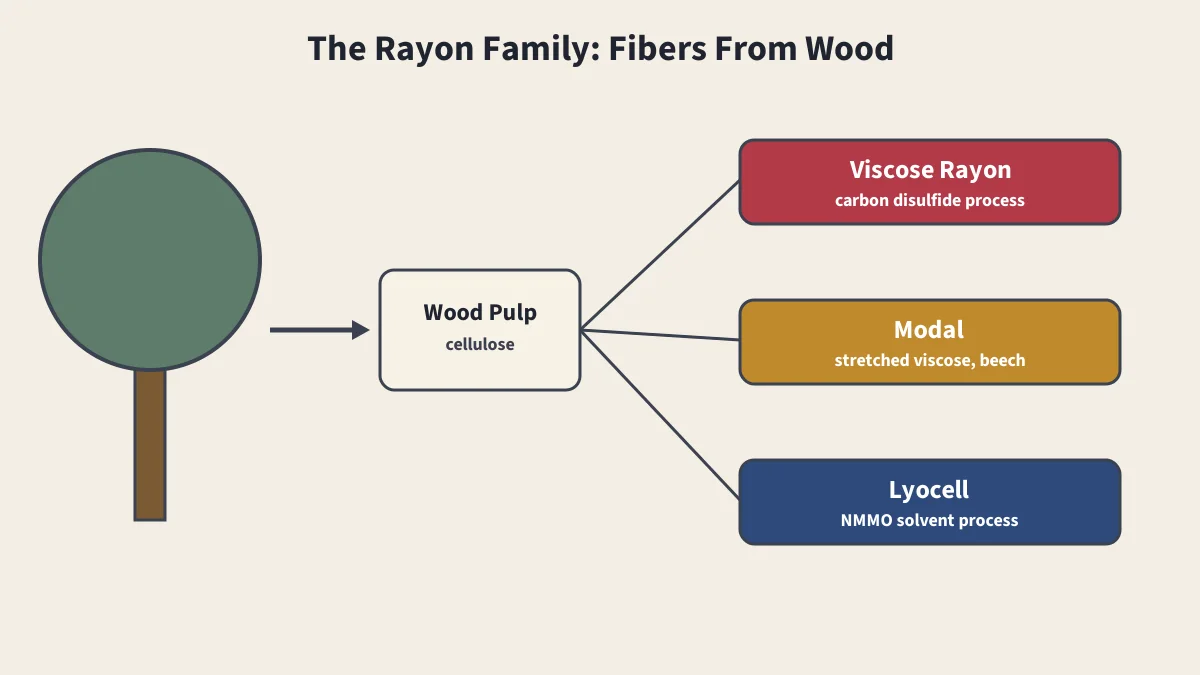
Rayon, Viscose, Modal and Lyocell
How the wood-based fibers are made, and how they differ.
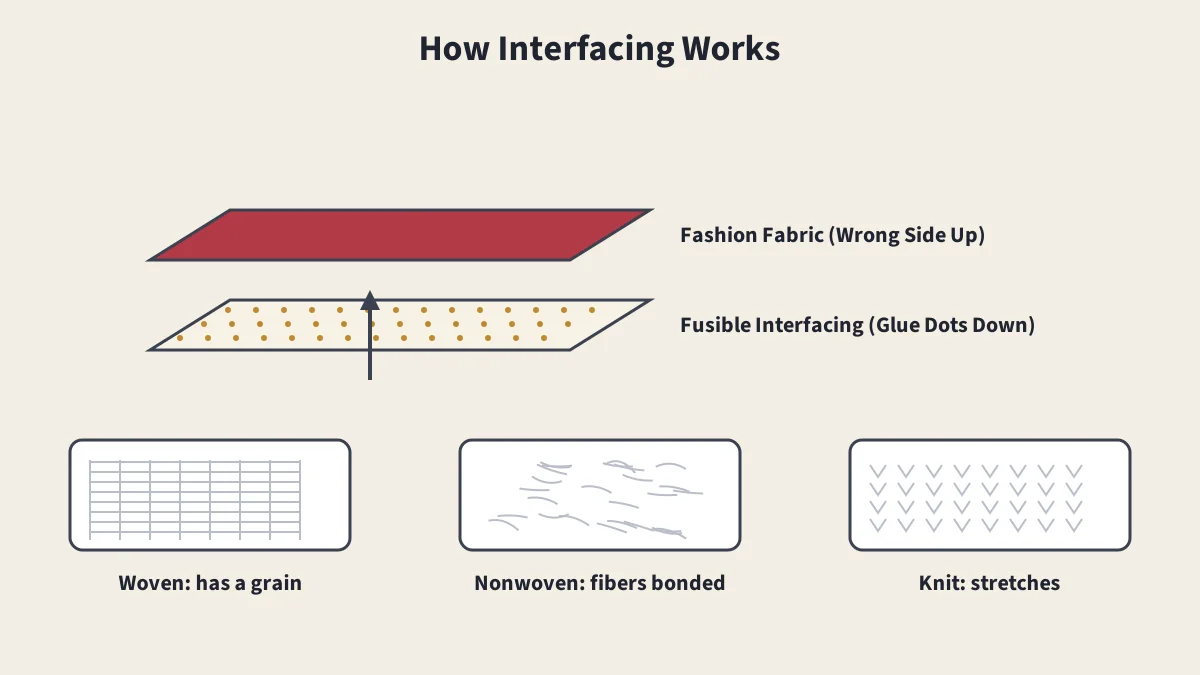
Interfacing Types
Fusible vs. sew-in, woven vs. nonwoven vs. knit, and how to apply it.