Textile Waste and Sustainable Fabrics: What the Numbers Say (2026)
Clothing is cheaper and more plentiful than ever, and much of it ends up as waste. Here are sourced figures on textile waste, how recycling works, and practical ways sewists can make their fabric go further.
In This Article
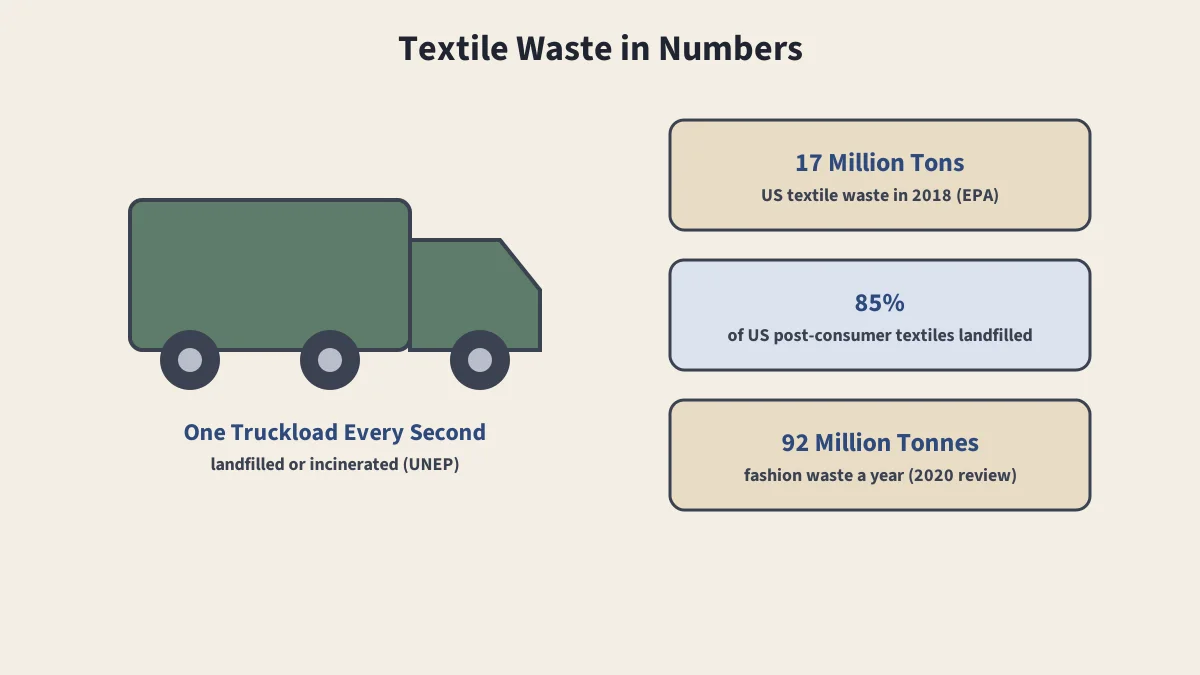
Textile Waste in Brief
- US, 2018: 17 million tons of textile waste (EPA)
- US landfill share: 85% of post-consumer textile waste
- Global: over 92 million tonnes of fashion waste a year (2020 review)
- Disposal rate: one truckload landfilled or burned every second (UNEP)
- Buying habits: about 60% more clothing, kept half as long (UNEP)
Every fabric has an environmental cost, from growing or making the fiber to dyeing, finishing and, eventually, disposal. This page sticks to sourced figures, because claims about sustainability are often exaggerated. For how individual fibers compare, see natural vs. synthetic fibers.
The Scale of the Problem
| Figure | Original Source |
|---|---|
| 17 million tons of textile municipal solid waste in the US in 2018 | US Environmental Protection Agency |
| 85% of US post-consumer textile waste ends up in landfill | Cited in Wikipedia's textile recycling article |
| More than 92 million tonnes of waste and about 79 trillion liters of water used a year by the fashion industry | Niinimäki et al., 2020 review |
| One truckload of textiles landfilled or incinerated every second | UN Environment Programme |
| Consumers buy about 60% more clothing and keep it about half as long | UN Environment Programme |
| 200,000 to 500,000 tonnes of textile microplastics enter the ocean each year | European Environment Agency |
How Textile Recycling Works
- Mechanical recycling: fabric is shredded back into fibers, which are carded and spun into new yarn, usually blended with new fiber. Fiber quality drops with each cycle, which limits how often it can be repeated.
- Chemical recycling: synthetic fibers such as polyester are broken down to the molecular level, which also removes dyes and unwanted fibers; the output can approach the quality of the original fiber.
- Blends are hard: mixed fibers are difficult to separate, and even small amounts of spandex can make fabric unsuitable for mechanical recycling; see spandex.
Every Fiber Has Trade-Offs
| Fiber | Concern |
|---|---|
| Cotton | High water use: on average 8,000 to 10,000 liters per kilogram of fiber |
| Polyester and other synthetics | Made from fossil fuels; shed microfibers; do not biodegrade |
| Viscose rayon | Traditional production uses toxic carbon disulfide |
| Hemp | Often described as low-water and low-pesticide |
| Bamboo rayon | Processed like viscose; eco claims often unsupported |
Regulation
Governments are starting to act. The European Union's 2022 Strategy for Sustainable and Circular Textiles aims to make textiles longer-lasting, more recycled and easier to recycle, and California's 2024 Responsible Textile Recovery Act makes producers responsible for managing textile waste across a product's life cycle.
What Sewists Can Do
- Buy fabric for a plan, not just a stash.
- Cut efficiently, nesting pattern pieces to reduce scraps.
- Use scraps for patchwork, quilts, small items and stuffing.
- Sew to last, with good seam finishes; see seam finishes.
- Mend and alter rather than replace.
- Wash thoughtfully: full loads and lower temperatures reduce wear and microfiber shedding.
For practical ways to give old clothes a new life, see upcycling clothes.
For how the global garment industry grew, see the history of the garment industry.
Sources
- Textile recycling, Wikipedia
- Fast fashion, Wikipedia
- Textile industry, Wikipedia
Frequently Asked Questions
How much textile waste is there?
The US Environmental Protection Agency reported 17 million tons of textile municipal solid waste in the United States in 2018. Globally, a 2020 scientific review estimated the fashion industry produces more than 92 million tonnes of waste a year.
How much clothing is thrown away?
According to the United Nations Environment Programme, one truckload of discarded textiles is landfilled or incinerated every second.
How are textiles recycled?
Mechanically, by shredding fabric into fibers and spinning them into new yarn, which lowers fiber quality each time; or chemically, by breaking synthetic fibers such as polyester down to the molecular level, which can approach the original quality.
What is the most sustainable fabric?
There is no single answer. Every fiber has trade-offs: cotton uses a lot of water, synthetics shed microplastics and do not biodegrade, and viscose production uses toxic chemicals. Using fabric well and making garments last are among the most effective choices.
Keep Reading
Natural vs. Synthetic Fibers
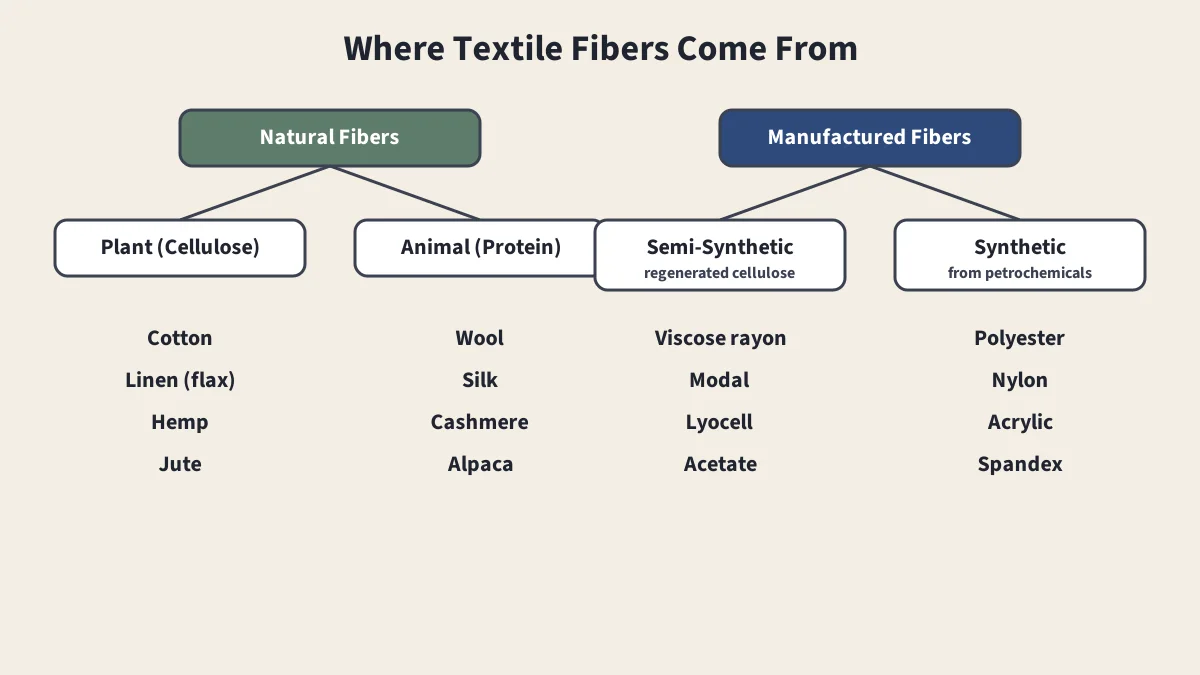
Plant, animal, semi-synthetic and synthetic fibers compared.
Polyester
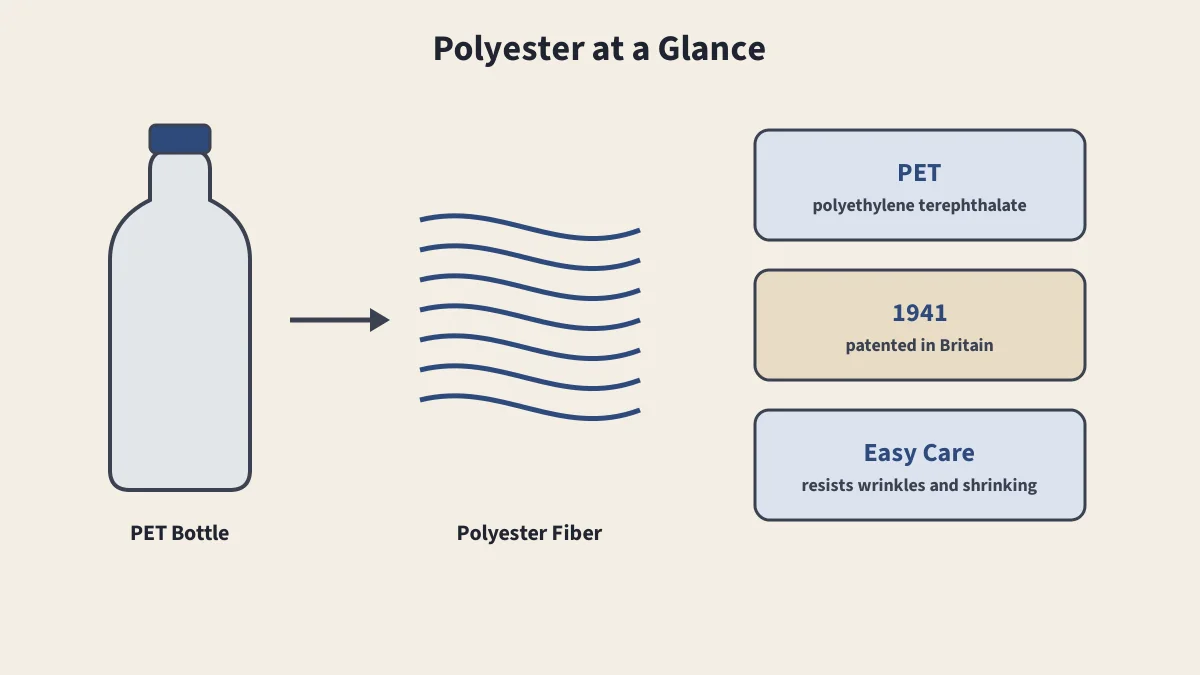
What polyester is, its history, its pros and cons and how to sew it.
Cotton
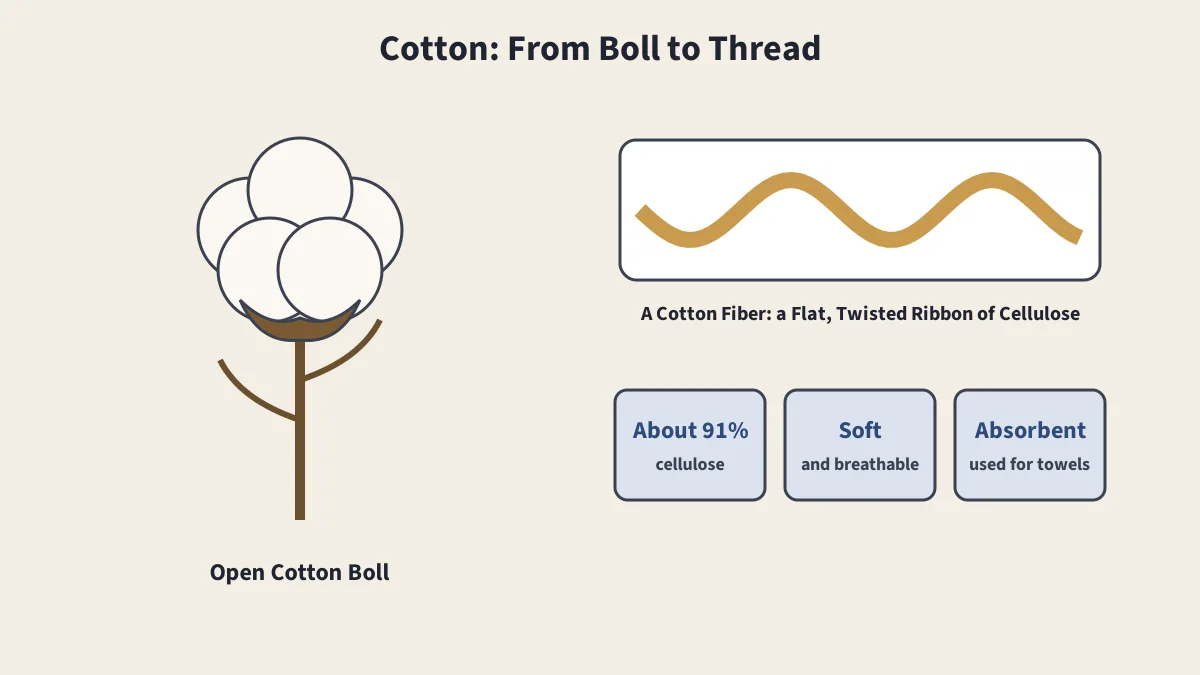
Where cotton comes from, its history and how it behaves.
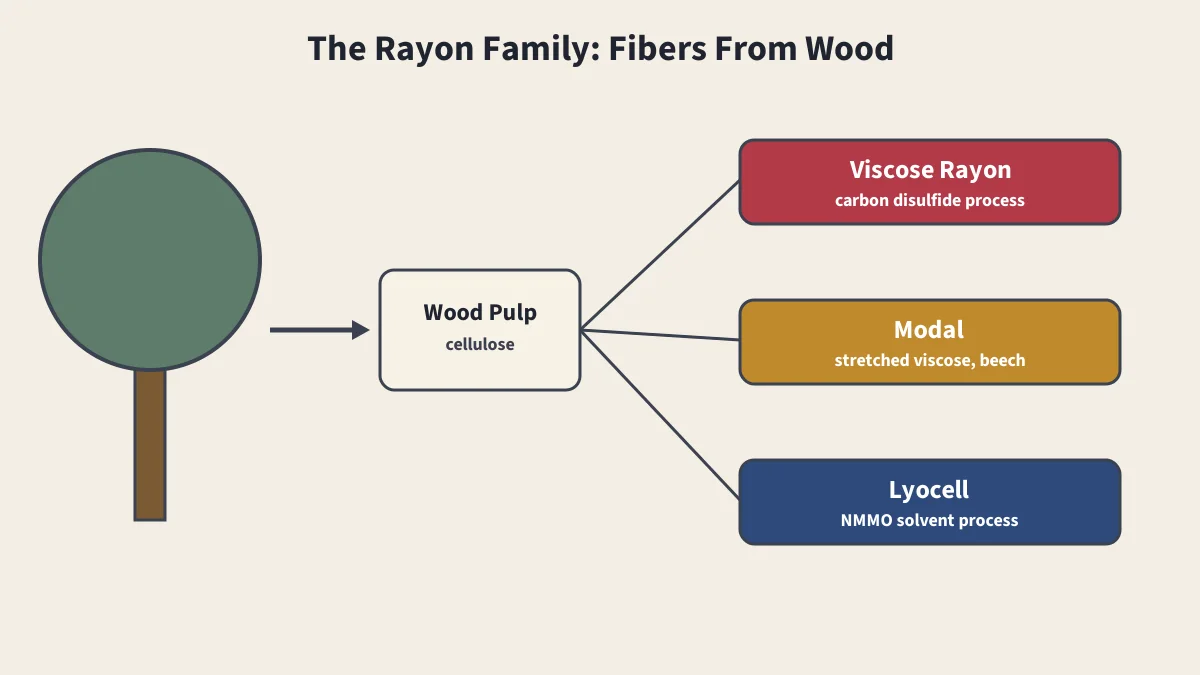
Rayon, Viscose, Modal and Lyocell
How the wood-based fibers are made, and how they differ.