Natural vs. Synthetic Fibers: Where Fabric Comes From (2026)
Some fibers grow in fields or on animals; others are made in chemical plants; and some, like rayon, sit in between. Here is how the fiber families differ, and what that means for comfort, care and the environment.
In This Article
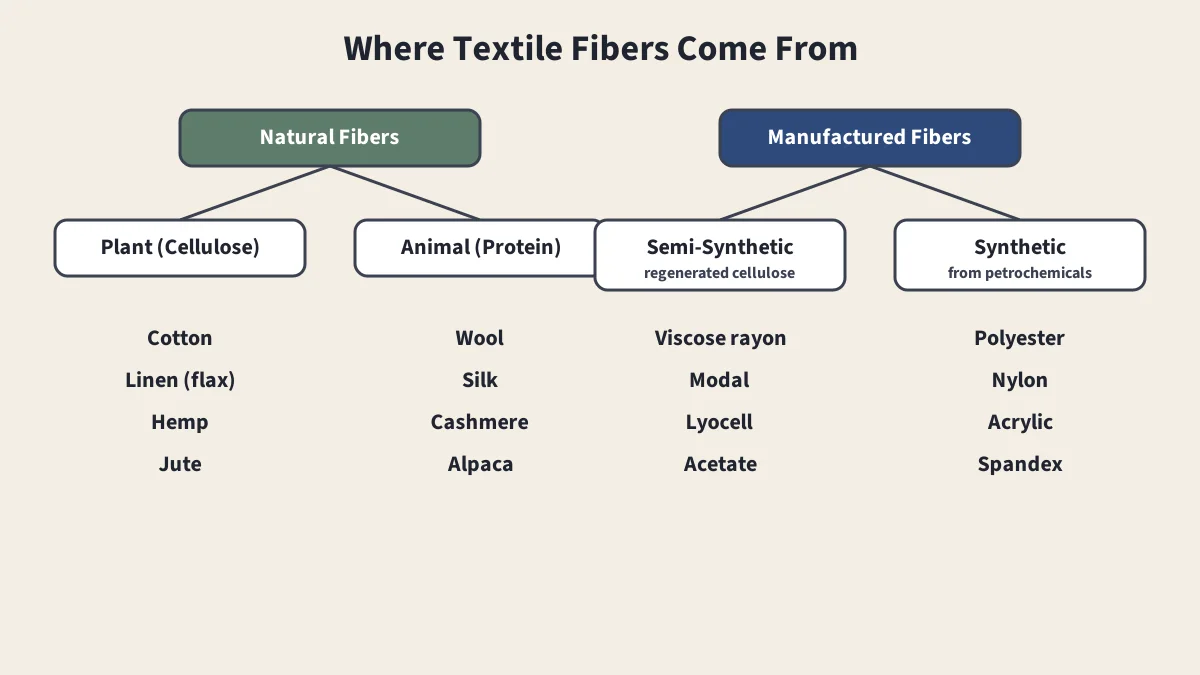
Fiber Families in Brief
- Plant fibers: cellulose; cotton, linen, hemp, jute
- Animal fibers: protein; wool, silk, cashmere, alpaca
- Semi-synthetic: regenerated cellulose; viscose, modal, lyocell
- Synthetic: made by chemical synthesis; polyester, nylon, acrylic, spandex
- Share: about half of all fibers are synthetic
Every fabric starts as a fiber, and fibers come from three broad places: plants, animals and factories. Knowing the family tells you a lot about how a fabric will feel, breathe, wrinkle, wash and age.
Natural Fibers
Natural fibers are produced by geological processes or obtained from plants and animals. Among them, cotton is dominant in the scale of its production and use for textiles.
Plant Fibers
Plant fibers are made mainly of cellulose. They come from different parts of the plant: seeds (cotton), stems or "bast" (linen from flax, hemp, jute), and leaves (sisal). Plant fibers are generally absorbent, breathable and comfortable in heat, and they tolerate high ironing temperatures.
Animal Fibers
Animal fibers are made of proteins such as keratin and fibroin. Wool and hair fibers like cashmere, mohair and alpaca come from animal coats; silk comes from silkworm cocoons. Protein fibers are warm, resilient and often luxurious, but they need gentler care and can be damaged by heat, alkali and moths.
Manufactured Fibers
Semi-Synthetic (Regenerated) Fibers
Rayon and cellulose acetate are made from wood, so they are not fully synthetic. Natural cellulose is dissolved and then regenerated into new fibers. This family includes viscose rayon, modal and lyocell; see rayon, viscose, modal and lyocell.
Synthetic Fibers
Synthetic fibers are made through chemical synthesis; see polyester, nylon, spandex and acrylic. Nylon was the first fully synthetic fiber: Wallace Carothers's team at DuPont synthesized it on February 28, 1935. Today about half of all fibers are synthetic. Nylon, polyester, acrylic and polyolefin make up about 98% of synthetic fiber output by volume, and polyester alone accounts for around 60%.
Comparing the Families
| Plant | Animal | Semi-Synthetic | Synthetic | |
|---|---|---|---|---|
| Made of | Cellulose | Protein | Regenerated cellulose | Polymers from chemicals |
| Absorbency | High | High | High | Usually low |
| Heat tolerance | High | Moderate | Moderate | Low; can melt |
| Wrinkling | Often wrinkles | Resists | Often wrinkles | Resists |
| Biodegradable | Yes | Yes | Largely, e.g. lyocell | No |
These are general tendencies; blends and finishes can change them.
Blends
Many fabrics combine fibers to get the best of each: polyester-cotton for easy-care shirts, wool with a little nylon for durable socks, or a few percent of spandex for stretch. The fiber content label lists each fiber by percentage.
Environmental Trade-Offs
- Synthetics: non-biodegradable, can take 200 years or more to decompose, shed microplastics, and are carbon-intensive to produce.
- Cotton: needs on average 8,000 to 10,000 liters of water per kilogram of fiber.
- Viscose: traditional production uses toxic carbon disulfide.
- All fibers: the longest-lasting garment is usually the most sustainable one.
To identify an unlabeled fabric, see the fabric burn test.
Sources
- Natural fiber, Wikipedia
- Synthetic fiber, Wikipedia
- Cotton, Wikipedia
- Rayon, Wikipedia
Frequently Asked Questions
What is the difference between natural and synthetic fibers?
Natural fibers come directly from plants, animals or minerals, such as cotton, wool and silk. Synthetic fibers are made by chemical synthesis, usually from petrochemicals, such as polyester and nylon.
Is rayon natural or synthetic?
Neither, strictly. Rayon is a semi-synthetic fiber: it is made from natural cellulose, usually wood pulp, that is dissolved and regenerated into fiber. Lyocell and modal are in the same family.
What was the first synthetic fiber?
Nylon, developed by Wallace Carothers at DuPont. The first nylon was synthesized on February 28, 1935, and it was the first synthetic fiber in the fully synthetic sense.
Are synthetic fibers bad for the environment?
They have drawbacks: they are not biodegradable, they can take 200 years or more to decompose, and washing synthetic garments releases microplastic fibers. Natural fibers have their own impacts, such as cotton's high water use.
Keep Reading
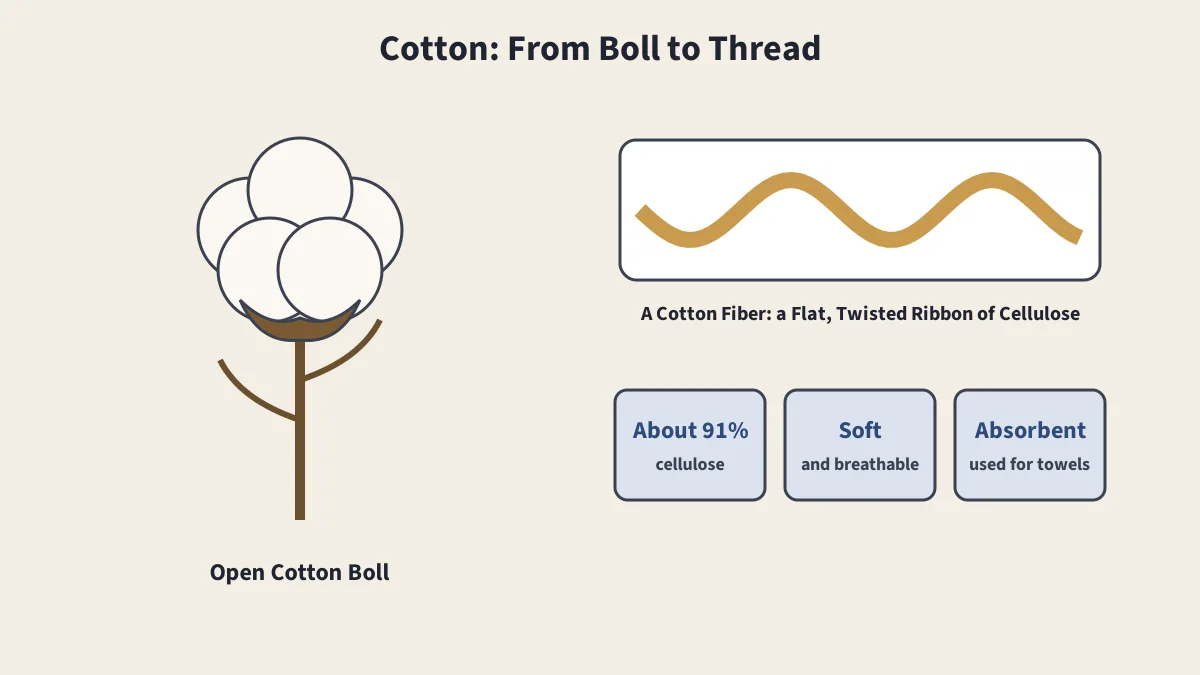
Cotton
Where cotton comes from, its history and how it behaves.
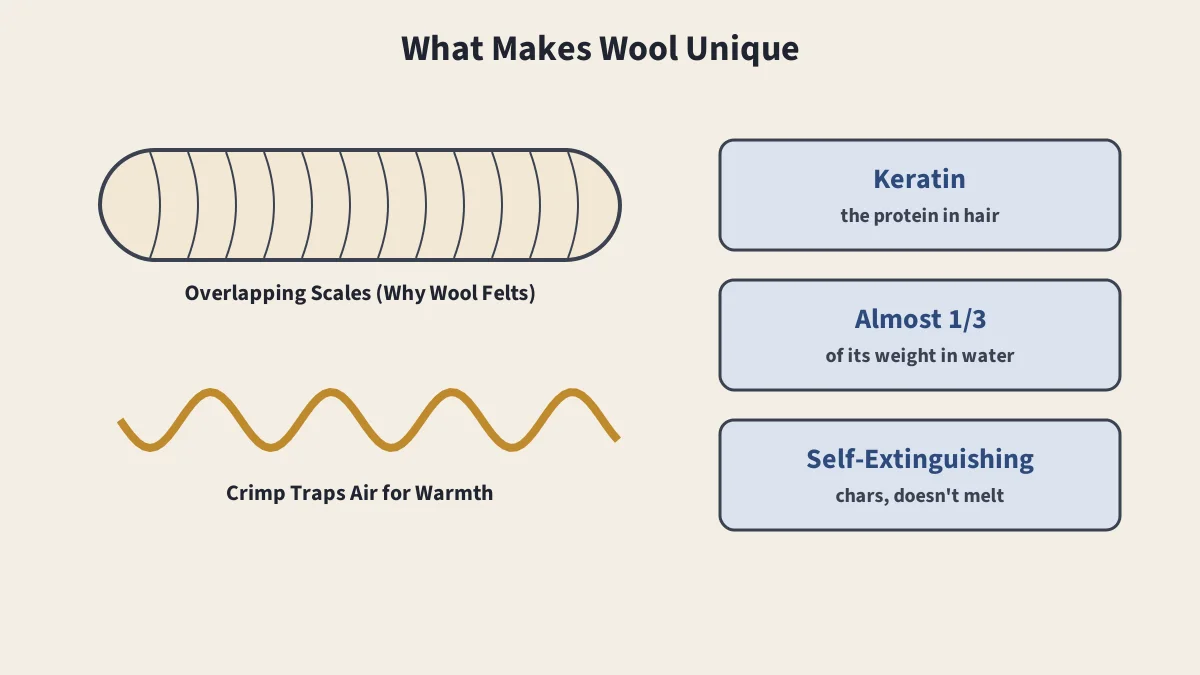
Wool
What wool is, why it is warm and felts, and how to sew it.
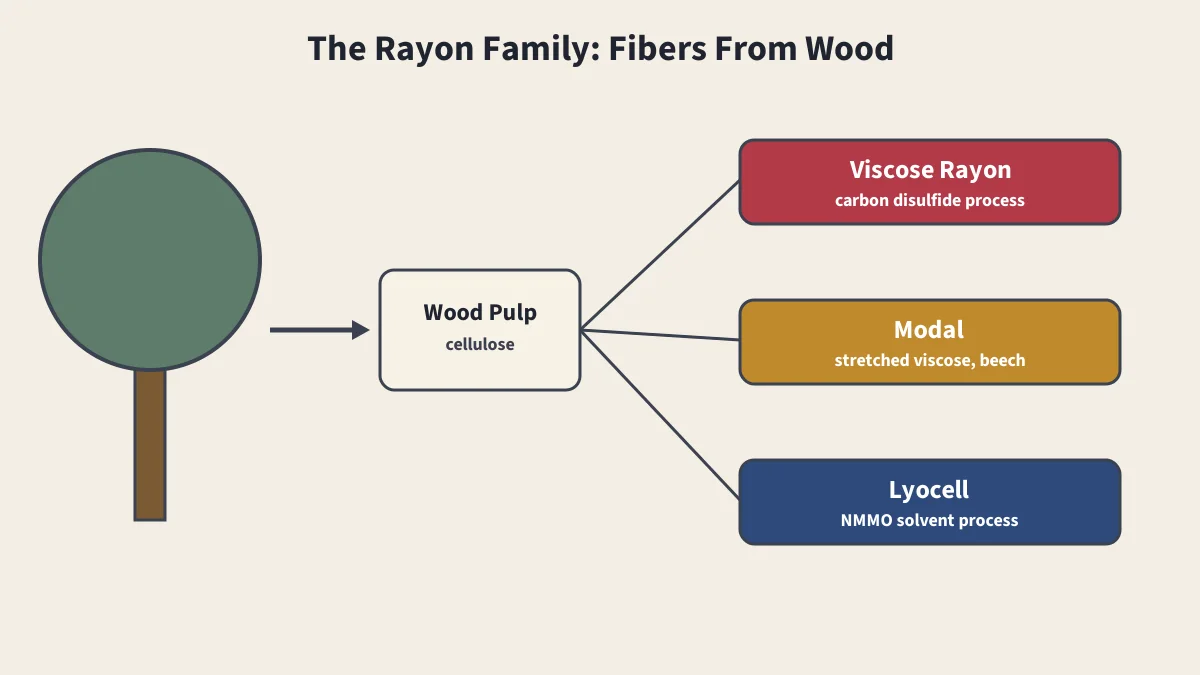
Rayon, Viscose, Modal and Lyocell
How the wood-based fibers are made, and how they differ.
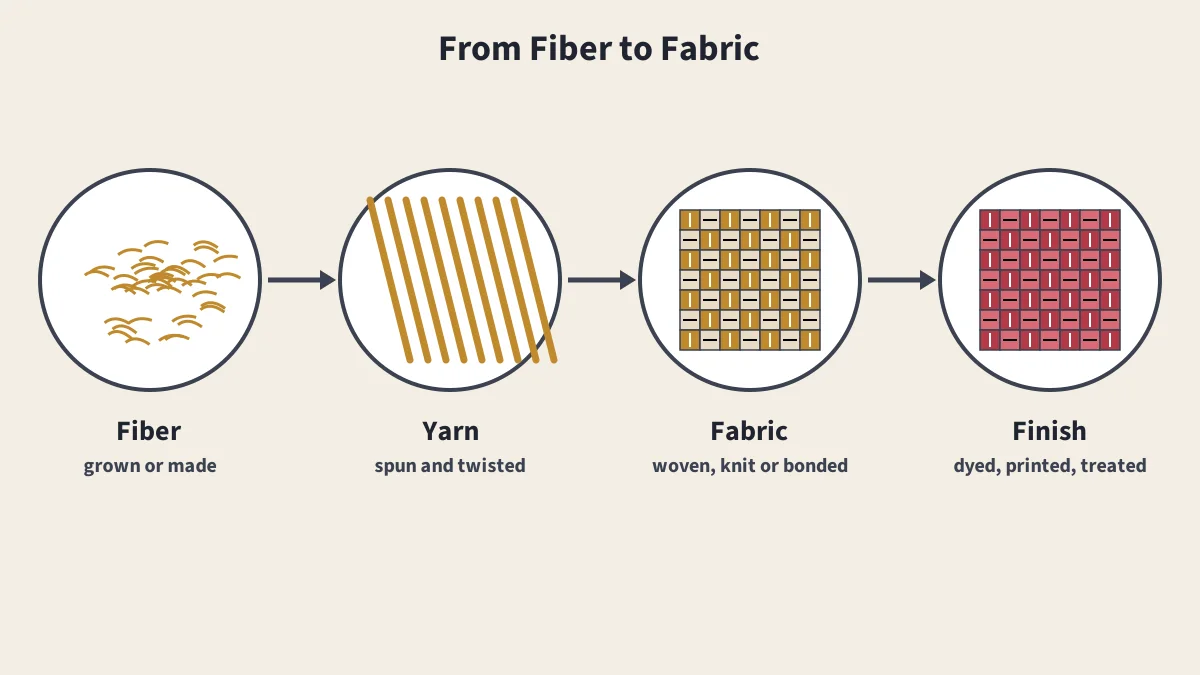
How Fabric Is Made
The four stages: fiber, yarn, fabric construction and finishing.