Fabric Shrinkage and Pre-Washing: Why and How (2026)
Few sewing disappointments compare with a finished garment that shrinks in its first wash. Here is why fabric shrinks, what labels like sanforized and pre-shrunk mean, and how to pre-wash fabric before cutting.
In This Article
Shrinkage in Brief
- Cause: manufacturing stresses released by water and heat
- Natural fibers: shrink more than synthetics
- Wool: can also felt and shrink dramatically
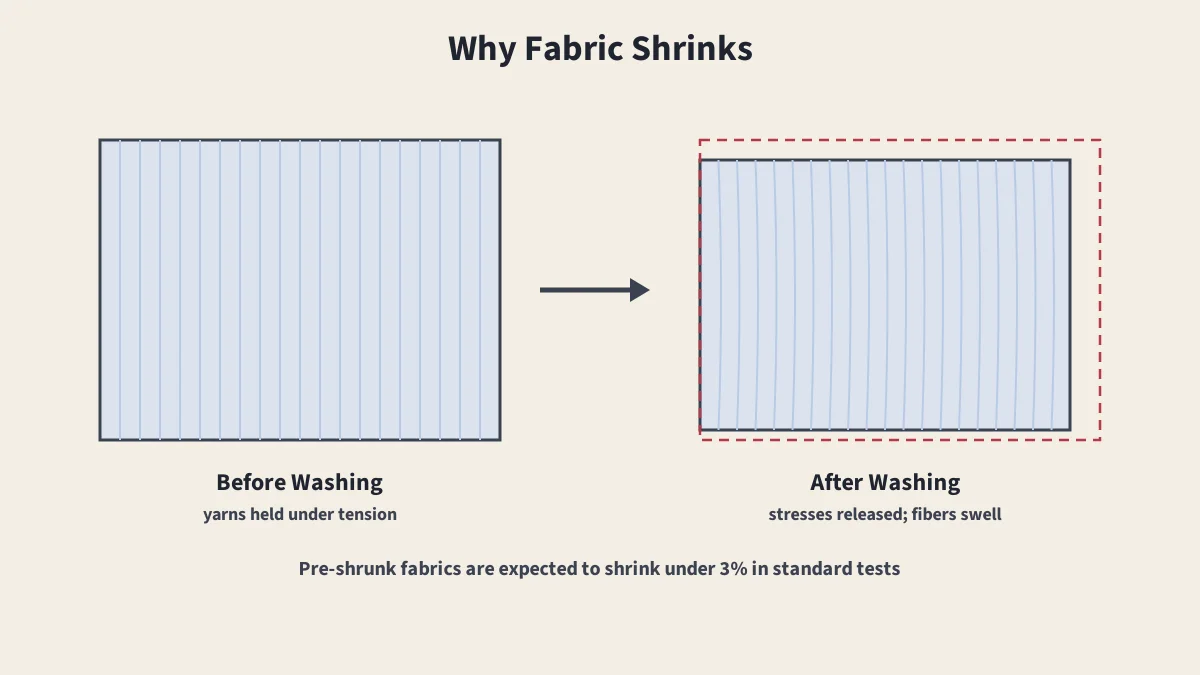
- Pre-shrunk: expected to shrink under 3% in standard tests
- Best defense: pre-wash before cutting
Shrinkage is the change in a fabric's dimensions after washing or relaxing, measured as a percentage of its original size. A fabric's ability to keep its size and shape through wear and care is called dimensional stability. Shrinkage can happen lengthwise, crosswise, or both, and fabric can also twist off-grain, which is called skew.
Why Fabric Shrinks
- Released tension: spinning, weaving and knitting put stresses and strains into yarns and fabric. Wetting or heating lets them relax, and the fabric draws in.
- Swelling fibers: natural fibers absorb water in their amorphous regions and swell, so they shrink more than synthetic fibers.
- Felting: wool fibers have scales that lock together with heat, moisture and agitation; see wool.
- Residual shrinkage: some fabrics keep shrinking a little over the first few washes.
How Manufacturers Reduce Shrinkage
| Method | How It Works |
|---|---|
| Sanforization | Moistened fabric is compressed between a rubber sleeve and a heated cylinder, shrinking it before sale |
| Mercerization | A chemical treatment of cotton that improves stability |
| Heat setting | Synthetic and blended fabrics are heat-set to fix their dimensions |
| Resin finishes | Applied to woven cotton to improve stability |
| London shrinking | A process for woolen fabrics used since the 18th century |
Sanforization was patented by Sanford Lockwood Cluett in 1930. Fabrics labeled pre-shrunk are expected to shrink less than 3% in either direction in standard wash tests.
How to Pre-Wash Fabric
- Check the fiber and care instructions on the bolt or listing.
- Finish the cut edges with a zigzag, serging or pinking to limit fraying; see seam finishes.
- Wash and dry as you will wash the finished item. If you plan to tumble-dry the garment, tumble-dry the fabric.
- Wash dark and bright colors separately the first time, in case dye runs.
- Press and check the grain before cutting; see grain, bias and selvage.
Fabric by Fabric
| Fabric | Pre-Wash? |
|---|---|
| Cotton and linen | Yes, as you will launder the finished item |
| Rayon and viscose | Yes, gently; it can shrink noticeably |
| Wool | Steam-shrink or have it professionally preshrunk; avoid hot washing |
| Silk | Hand-wash a test piece first, or dry-clean |
| Polyester and nylon | Optional; they shrink little, but washing removes finishes |
| Quilting cotton | A matter of choice; some quilters like the crinkled look of unwashed fabric after quilting |
Sources
- Shrinkage (fabric), Wikipedia
- Sanforization, Wikipedia
Frequently Asked Questions
Why does fabric shrink?
Spinning, weaving and knitting put stresses and strains into the yarns. Wetting or heating the fabric releases them. Natural fibers also absorb water and swell, which contributes to shrinkage.
Do natural fibers shrink more than synthetics?
Generally, yes. Natural fibers have more amorphous regions that absorb water and swell, so they tend to shrink more than synthetic fibers.
What does sanforized mean?
Sanforization is a mechanical preshrinking process patented by Sanford Lockwood Cluett in 1930. Fabric is moistened and compressed between a rubber sleeve and a heated cylinder so that it shrinks before it is sold.
Should I pre-wash fabric before sewing?
Usually, yes, for washable fabrics: wash and dry the fabric the same way you plan to wash the finished item, so any shrinkage happens before you cut. Dry-clean-only fabrics can be preshrunk with steam or by a professional.
Keep Reading
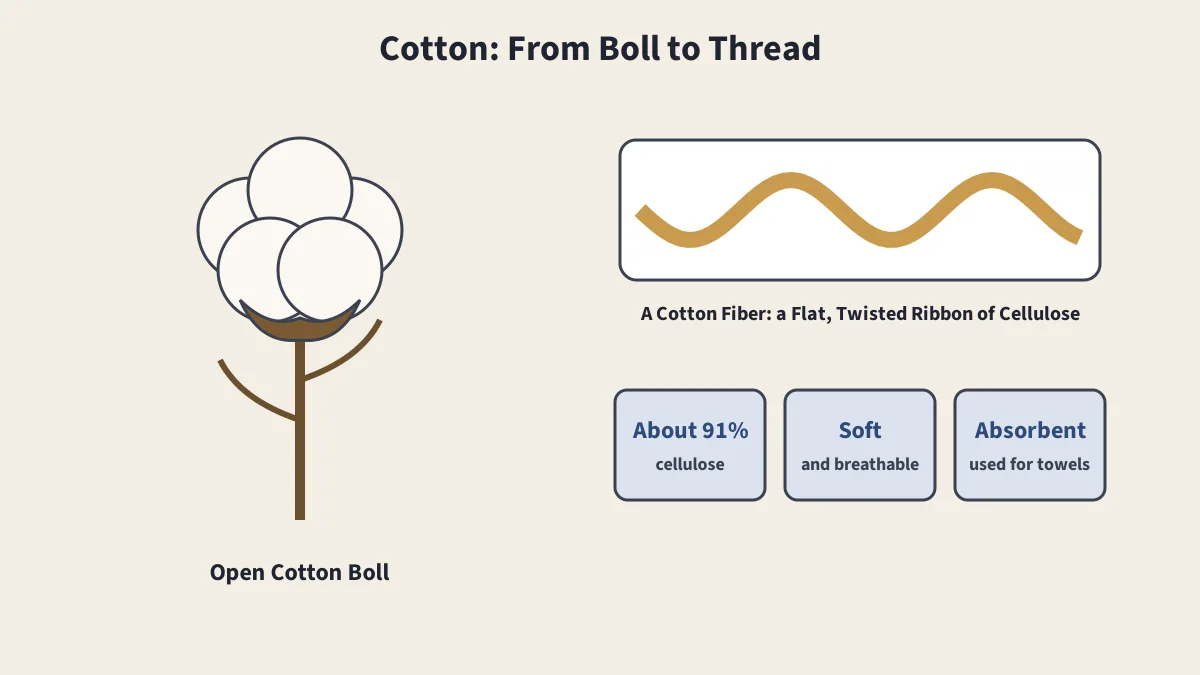
Cotton
Where cotton comes from, its history and how it behaves.
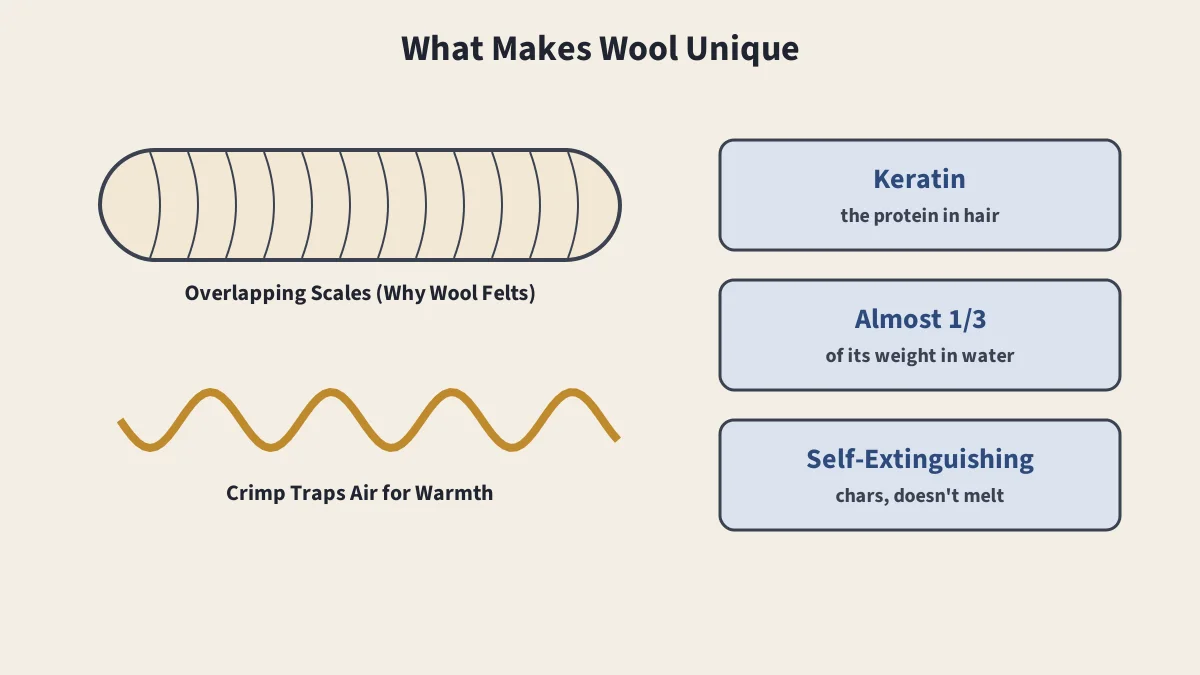
Wool
What wool is, why it is warm and felts, and how to sew it.
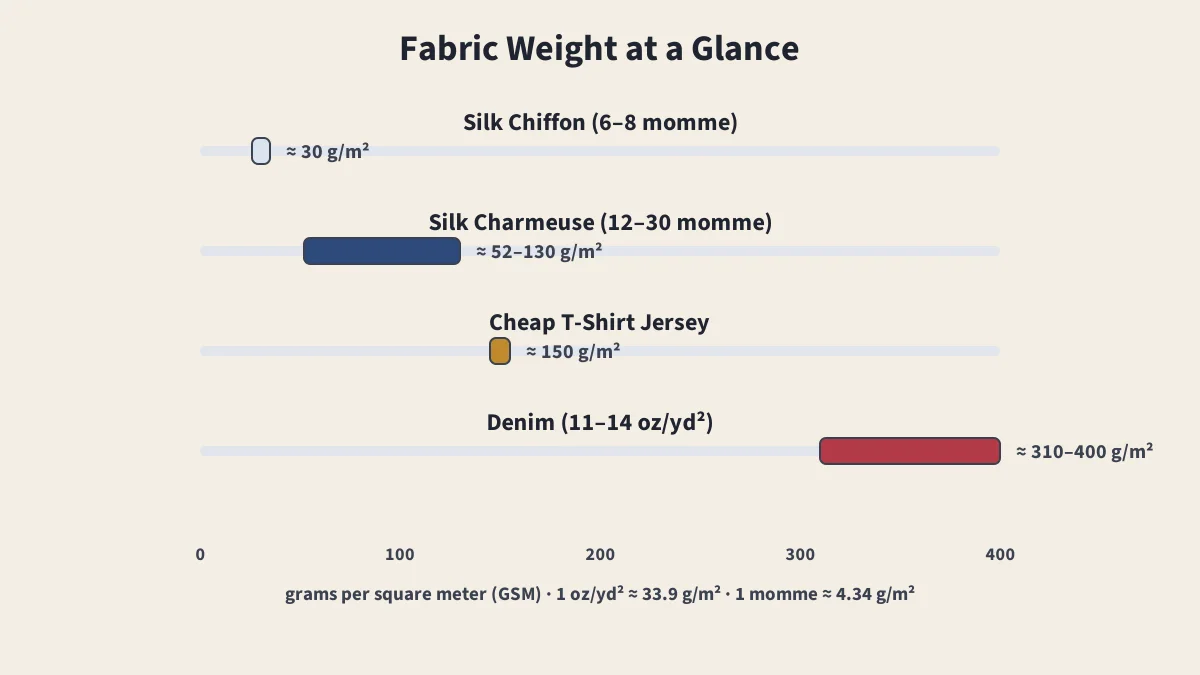
Fabric Weight (GSM and Oz)
GSM, oz/yd² and momme explained, with a converter.
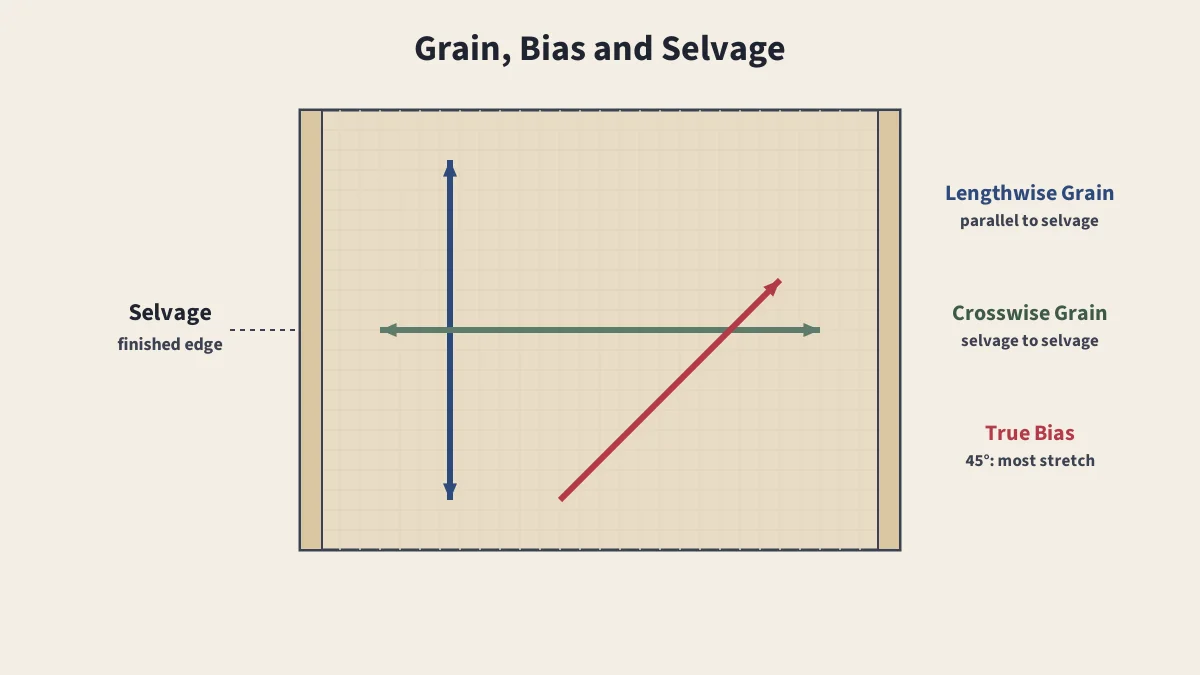
Grain, Bias and Selvage
Lengthwise grain, crosswise grain, true bias and selvage.