Types of Knit Fabric: From T-Shirt Jersey to Tricot (2026)
Knit fabrics are made of loops, not crossing threads, and that is why they stretch. From T-shirt jersey to sweatshirt fleece to lingerie tricot, here are the main knits and how to recognize and sew them.
In This Article
Knits in Brief
- Weft knits: jersey, rib, interlock, ponte, fleece
- Warp knits: tricot, raschel, milanese
- Wales: vertical columns of loops
- Courses: horizontal rows of loops
- Sewing: ballpoint needles and stretch stitches
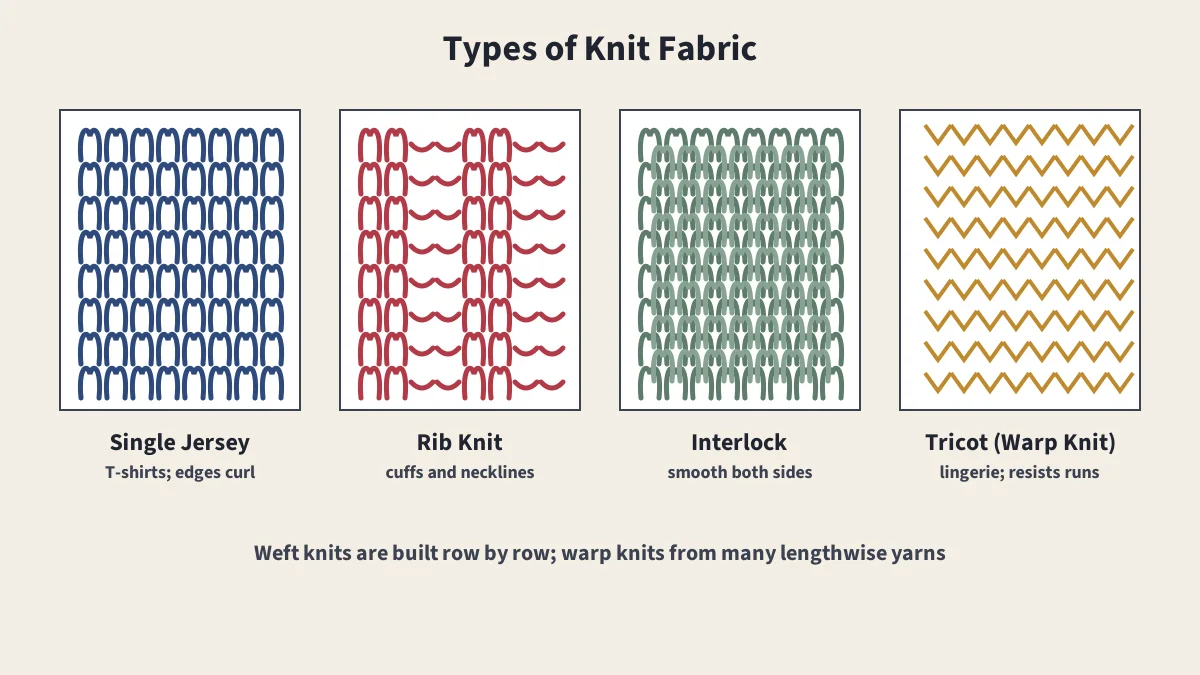
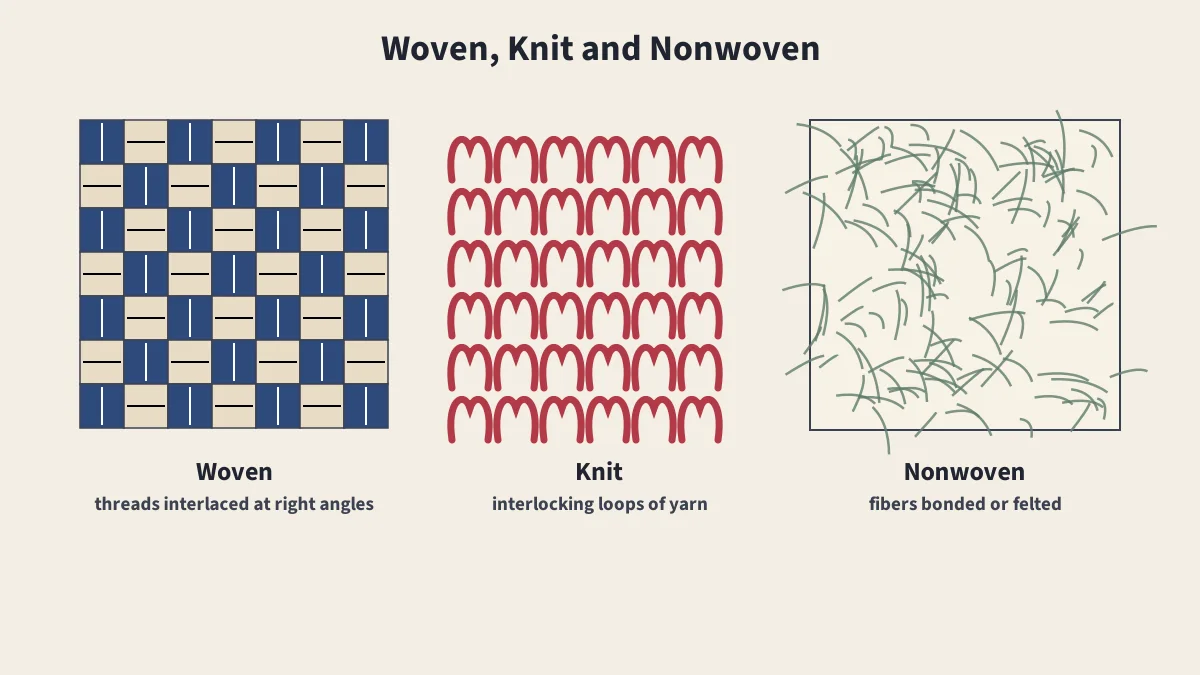
Knitted fabric is made by pulling loops of yarn through other loops. Because loops can open and close, knits are far more flexible than woven fabric. In a knit, a vertical column of stitches is called a wale and a horizontal row a course. For how knits compare with other fabrics, see woven vs. knit vs. nonwoven.
Weft Knits and Warp Knits
There are two basic varieties. Weft knits are built from yarn running across the fabric, row by row, like hand knitting. They are easier to make and more common, but when cut they can run unless secured. Warp knits are made from many yarns running lengthwise, each looped into its neighbors. They resist runs and are relatively easy to sew; tricot and milanese are examples, often used for lingerie, and raschel lace is also a warp knit.
Common Knit Fabrics
| Knit | Structure | Character | Uses |
|---|---|---|---|
| Single jersey | Weft knit, one set of loops | Light, stretchy; edges curl | T-shirts, dresses |
| Rib knit | Alternating knit and purl columns | Very stretchy crosswise; recovers well | Cuffs, necklines, fitted tops |
| Interlock | Two layers of loops knitted together | Smooth on both sides; stable; does not curl | Baby clothes, polo shirts |
| Ponte (double knit) | Firm double-layer knit | Thick, stable, moderate stretch | Trousers, skirts, jackets |
| French terry | Jersey face with loops on the back | Soft, absorbent | Sweatshirts, loungewear |
| Fleece | Knit with a brushed, napped back | Warm and soft | Sweatshirts, blankets |
| Tricot | Warp knit | Smooth, run-resistant | Lingerie, linings |
| Raschel | Warp knit | Open, lacy textures | Lace, nets |
Why Some Knits Curl
Single knits like jersey have all their loops facing the same way, which makes them unbalanced. Stockinette curls toward the front at the top and bottom edges and toward the back at the sides. Knits with knit and purl stitches arranged symmetrically, such as garter and rib, lie flat and drape well. Garter stitch stretches more lengthwise, while ribbing stretches more crosswise.
Stretch and Recovery
Knit patterns often say how much stretch the fabric needs, for example 25% or 50%. To test, fold the fabric crosswise, hold 10 cm (4 in) against a ruler, and stretch it gently: if it reaches 12.5 cm (5 in), it has 25% stretch. Recovery, how well it springs back, matters just as much; fabrics with spandex usually recover better.
Tips for Sewing Knits
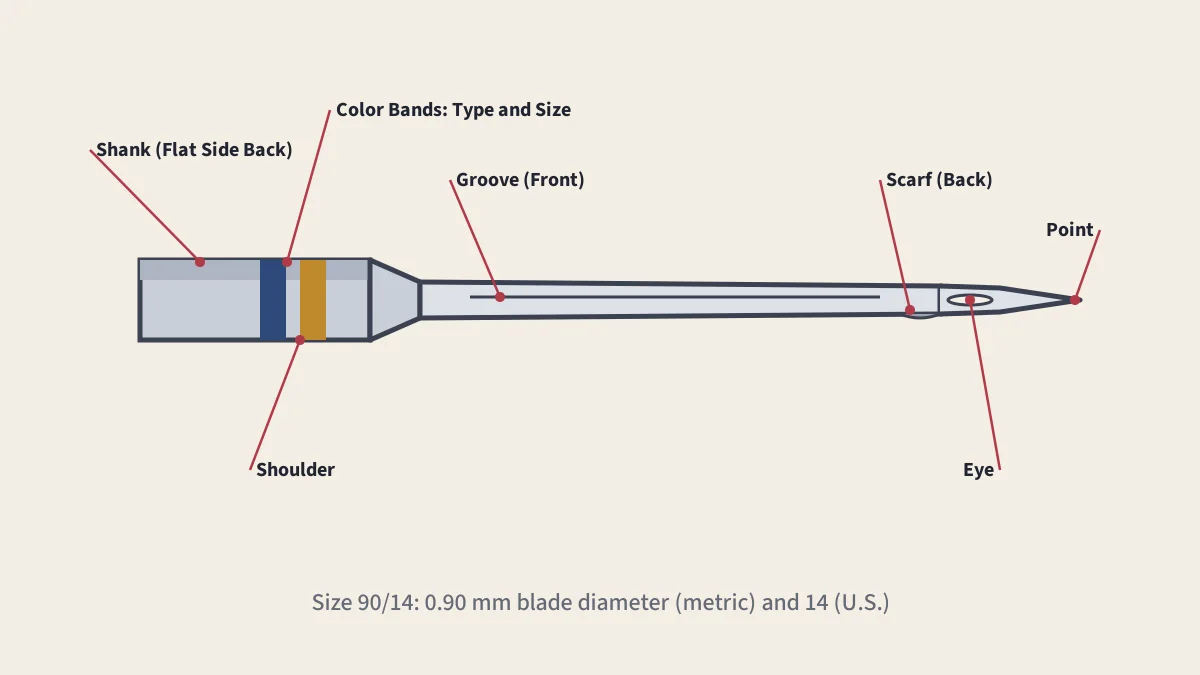
- Use a ballpoint or stretch needle; see sewing machine needles.
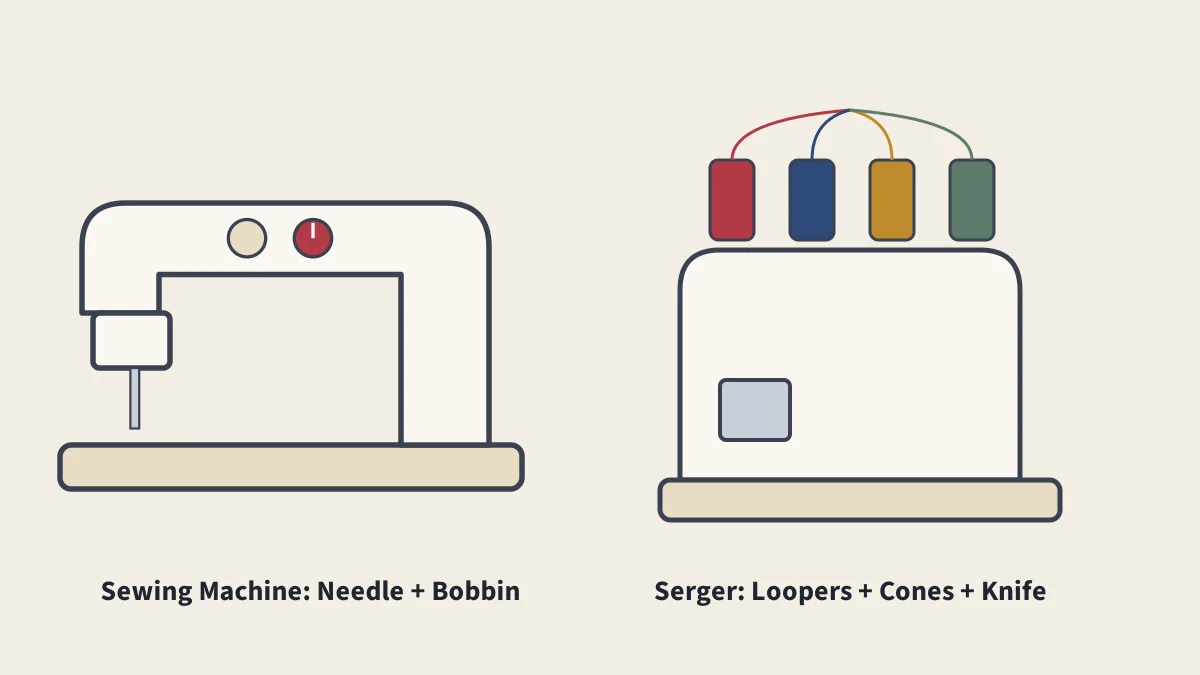
- Use a stretch stitch, a narrow zigzag, or a serger; see serger vs. sewing machine.
- Do not pull the fabric through the machine; let the feed dogs work. A walking foot can help.
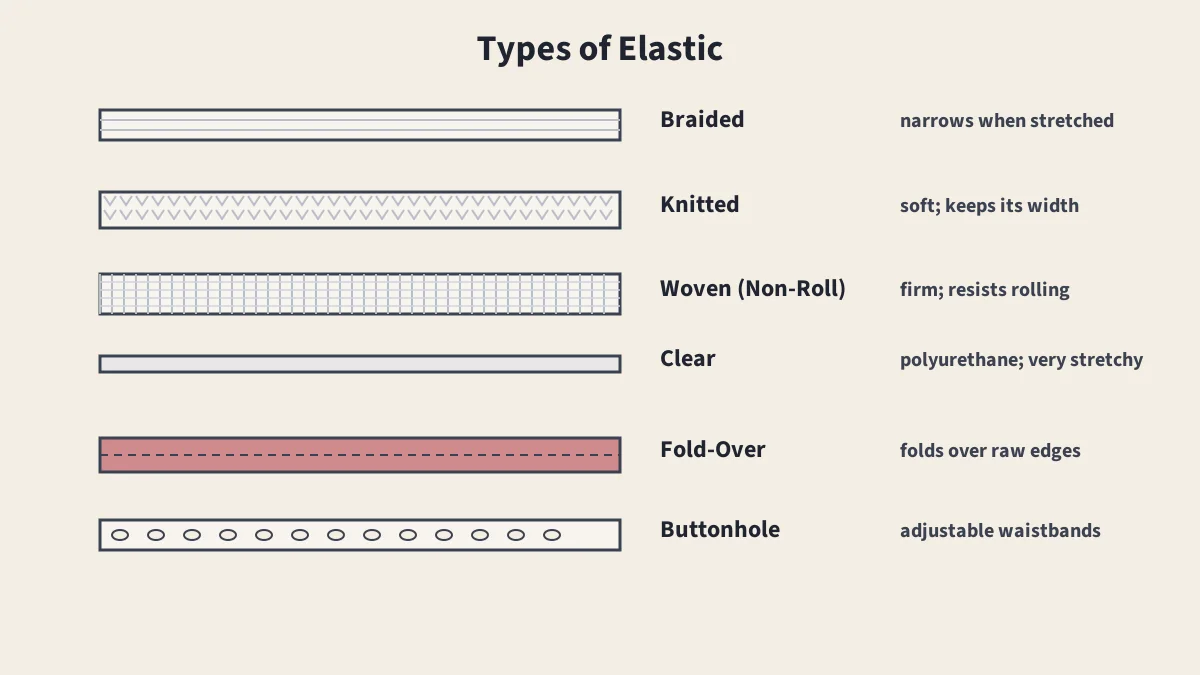
- Stabilize shoulder seams with clear elastic or tape; see types of elastic.
- Hem with a twin needle or a coverstitch machine; see coverstitch machines.
For how to sew them, see sewing knit fabrics.
Sources
- Knitted fabric, Wikipedia
- Jersey (fabric), Wikipedia
Frequently Asked Questions
What is the most common knit fabric?
Single jersey, the knit used for most T-shirts. It has smooth V-shaped columns on the front and small loops on the back, and its edges tend to curl.
What is the difference between weft and warp knits?
Weft knits are made row by row from yarn running across the fabric; they are more common and can run when cut. Warp knits are made from many lengthwise yarns looped together; they resist runs and are used for fabrics such as tricot and raschel lace.
Why do knit edges curl?
Single-knit fabrics such as jersey are unbalanced, with all the loops facing one way, so they curl. Stockinette curls toward the front at the top and bottom and toward the back at the sides. Rib and interlock knits are balanced and lie flatter.
What needle should I use for knits?
A ballpoint or stretch needle, whose rounded tip slips between the loops instead of piercing them. Pair it with a stretch stitch, a narrow zigzag or a serger.
Keep Reading
Woven vs. Knit vs. Nonwoven
How the three constructions differ, and how to tell them apart.
Types of Elastic
Braided, knit, woven, clear and fold-over elastic compared.
Serger vs. Sewing Machine
How a serger and a sewing machine differ, and whether you need both.
Sewing Machine Needle Sizes and Types
Needle sizes, types, color codes and when to change them.