Woven vs. Knit vs. Nonwoven: The Three Ways to Make Cloth (2026)
The same cotton fiber can become a crisp shirt, a stretchy T-shirt or a felt-like wipe. The difference is construction. Knowing whether a fabric is woven, knit or nonwoven tells you how it will stretch, fray and sew.
In This Article
The Three Constructions
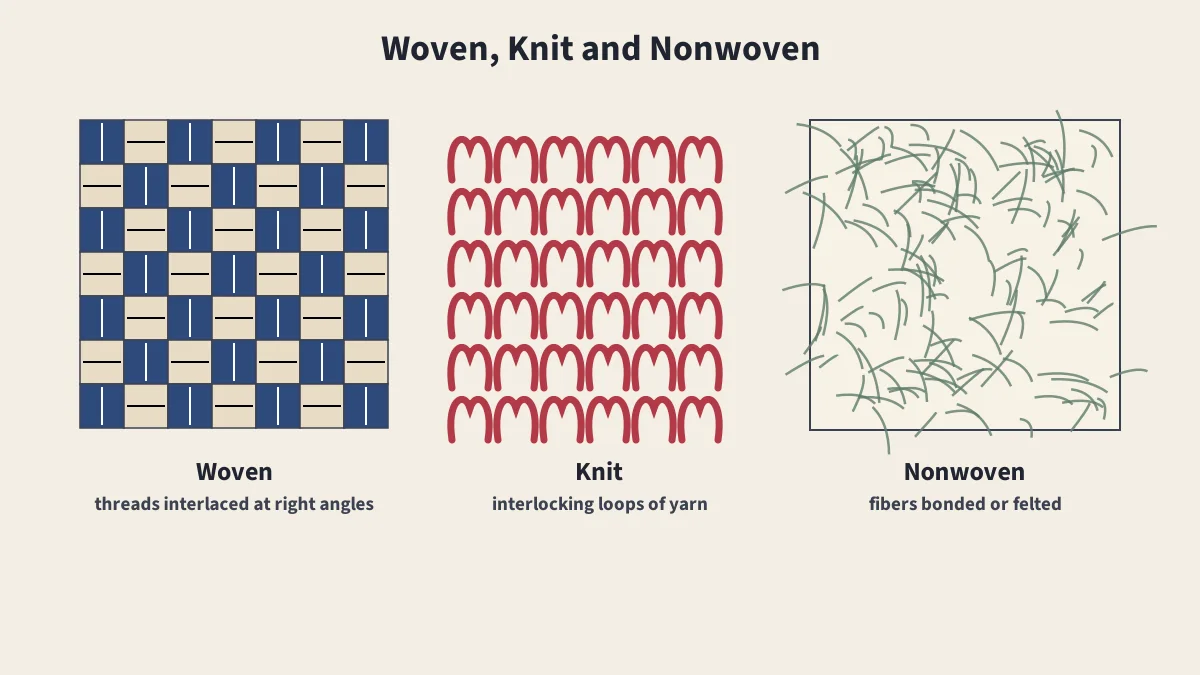
- Woven: two sets of threads interlaced at right angles
- Knit: yarn formed into interlocking loops
- Nonwoven: fibers bonded or felted into a sheet
Fiber tells you what a fabric is made of. Construction tells you how it will behave. A woven cotton poplin and a cotton jersey share the same fiber but sew completely differently, because one is woven and the other knitted.
Side by Side
| Woven | Knit | Nonwoven | |
|---|---|---|---|
| Structure | Warp and weft threads interlaced | Interlocking loops | Fibers bonded or entangled |
| Stretch | Little, except on the bias | Stretches, often a lot | Usually little; varies |
| Cut edges | Fray | Curl; weft knits can run | Do not fray |
| Grain | Yes | Lengthwise ribs (wales) | Usually none |
| Examples | Denim, poplin, satin, canvas | Jersey, rib, fleece, tricot | Felt, interfacing, wipes |
Woven Fabric
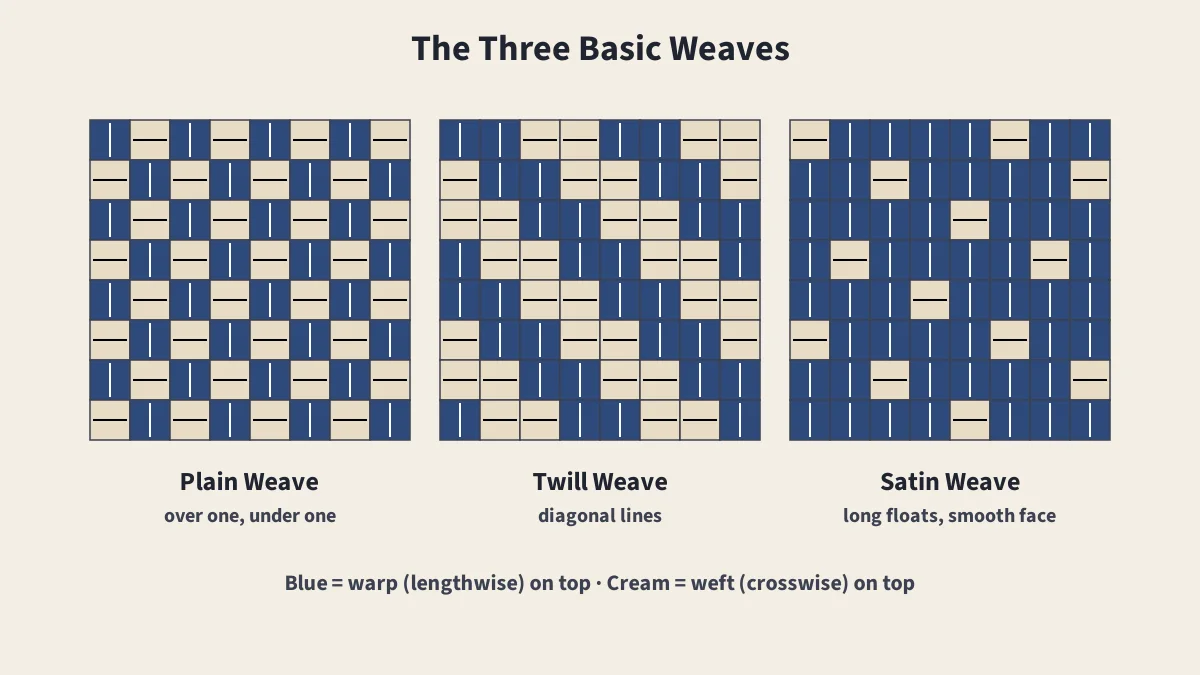
Weaving interlaces two sets of threads at right angles. The lengthwise threads are the warp, and the crosswise threads are the weft, also called woof or filling. A loom holds the warp in place while the weft is passed through it. Most woven fabrics use one of three basic weaves: plain, twill or satin; see fabric weaves.
Because the threads run straight, woven fabrics are stable along the grain and stretch mainly on the diagonal bias. That is why bias-cut strips curve around edges; see bias tape.
Knit Fabric
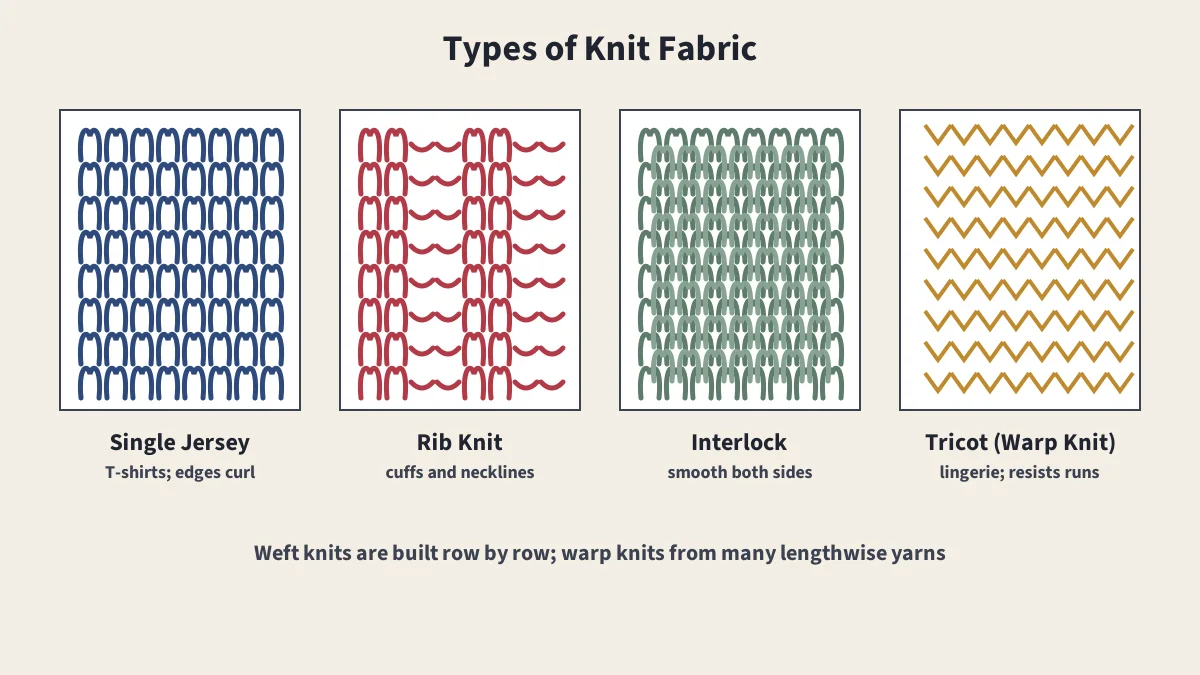
Knit fabric is made of interlocking loops. There are two basic varieties: weft knits, built row by row across the fabric, which are easier to make and more common, and warp knits, made from many lengthwise yarns, which resist runs. Knits are much more flexible than wovens and can stretch a great deal, which suits close-fitting garments and comfortable everyday clothes. See types of knit fabric.
Nonwoven Fabric
Nonwovens are sheets of fibers that are neither woven nor knitted. The fibers are joined by chemical, mechanical, heat or solvent treatment: needle-punched, glued with binders, melted together or entangled with high-pressure water jets. Felt is the classic example. Nonwovens are used for interfacing, medical gowns and masks, wipes and geotextiles. See interfacing types.
What It Means When You Sew
- Wovens: use a straight stitch, finish seams to stop fraying, and follow the grain line when cutting; see seam finishes.
- Knits: use a ballpoint or stretch needle and a stretch stitch or serger, and avoid stretching the fabric as you sew; see sewing machine needles.
- Nonwovens: can often be cut in any direction and left unfinished.
- Patterns: designs drafted for knits rely on stretch for fit, so a woven substitute may not fit.
Sources
- Weaving, Wikipedia
- Knitted fabric, Wikipedia
- Nonwoven fabric, Wikipedia
Frequently Asked Questions
How can I tell if a fabric is woven or knit?
Stretch it and look closely. Woven fabric has little stretch along its threads and shows a grid of crossing threads; knit fabric stretches easily, especially crosswise, and shows rows of tiny V-shaped loops on its face.
Do woven fabrics stretch?
Very little along the lengthwise and crosswise threads, unless spandex is added. Woven fabrics do stretch more on the bias, the diagonal direction.
Do knit fabrics fray?
Knits do not fray like wovens, but some weft knits can run or ladder when cut, and many knits curl at the edges.
What is nonwoven fabric used for?
Nonwovens are made from fibers bonded together rather than woven or knitted. They are used for felt, interfacing, medical gowns and masks, wipes, and geotextiles.
Keep Reading
Fabric Weaves
Plain, twill and satin weaves, plus dobby and jacquard.
Types of Knit Fabric
Jersey, rib, interlock, ponte, fleece and tricot explained.
How Fabric Is Made
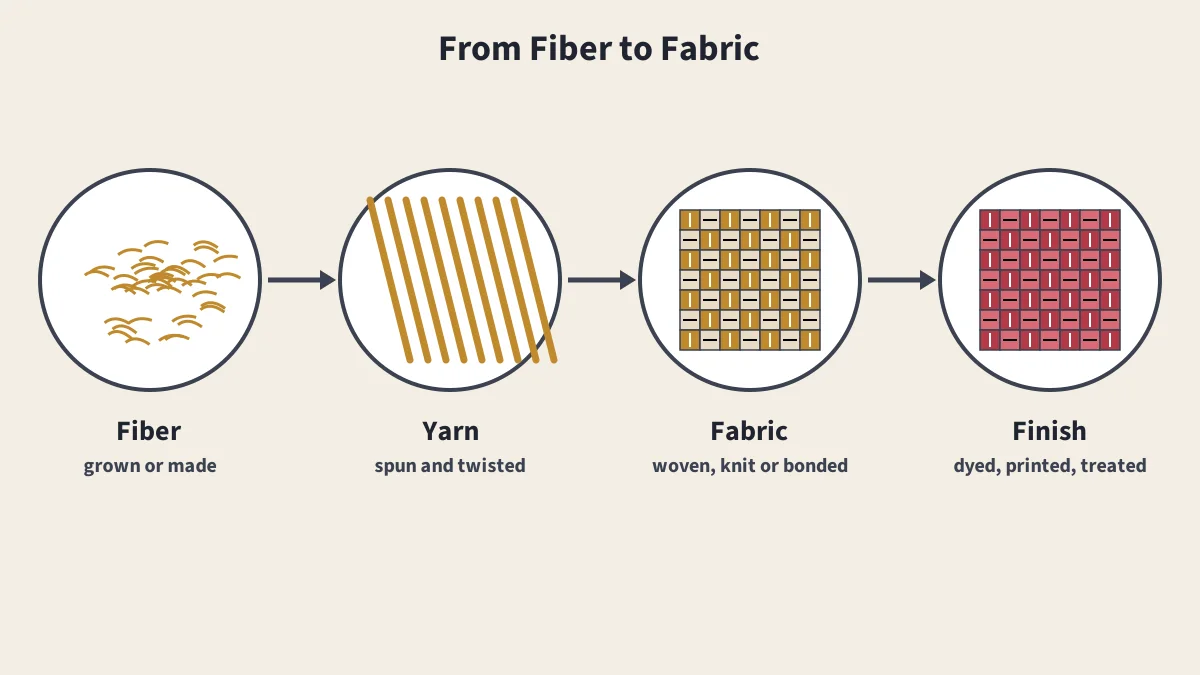
The four stages: fiber, yarn, fabric construction and finishing.
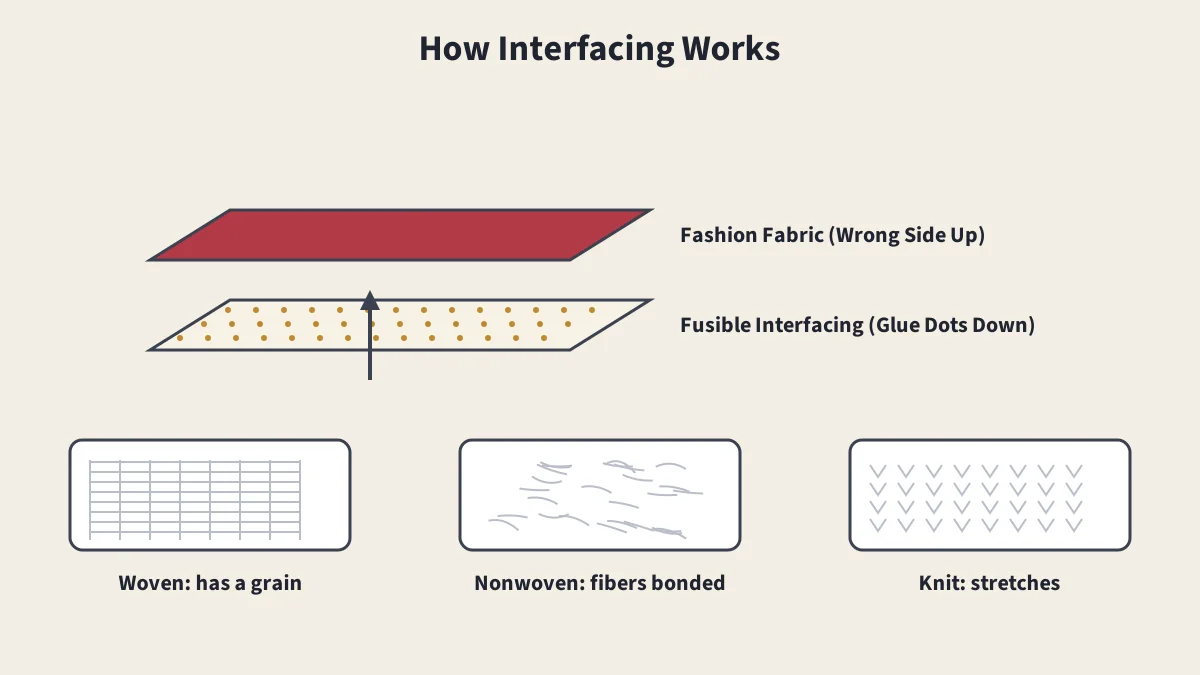
Interfacing Types
Fusible vs. sew-in, woven vs. nonwoven vs. knit, and how to apply it.