Bamboo Fabric: What It Really Is and How It Is Made (2026)
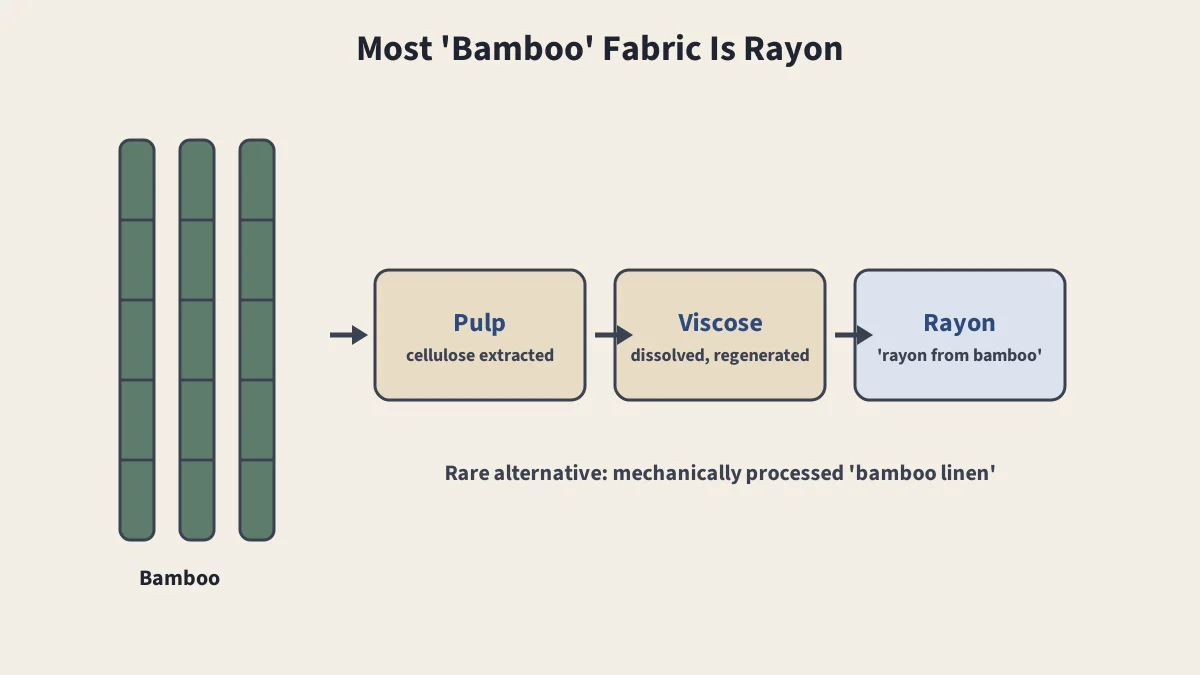
Bamboo grows fast, and bamboo fabric feels silky. But most of what is sold as bamboo fabric is rayon, made by dissolving bamboo pulp, and its natural qualities do not survive the process.
In This Article
Bamboo Fabric in Brief
- Usually: viscose rayon made from bamboo pulp
- Less common: mechanically processed bamboo fiber
- US label: "rayon" or "rayon made from bamboo"
- Feel: soft, smooth and drapey, like other rayons
- Caution: antibacterial and eco claims are often unsupported
Bamboo is a fast-growing grass, and bamboo fabric is marketed as soft, natural and eco-friendly. The reality is more complicated. According to Wikipedia, textiles claiming to be bamboo are usually viscose rayon, and the processing makes the result functionally identical to rayon from other plants. For how rayon is made, see rayon, viscose, modal and lyocell.
Two Ways to Make Bamboo Fabric
| Method | How | Result |
|---|---|---|
| Chemical (viscose) | Bamboo pulp is dissolved and regenerated into fiber | Bamboo rayon: soft, silky and drapey; the most common type |
| Mechanical-bacterial | Fibers separated in a process similar to retting flax | Bamboo "linen": coarser and less common |
What the Label Must Say
In the United States, the Federal Trade Commission requires that yarn not made directly from bamboo fiber be labeled as rayon, or "rayon made from bamboo." The FTC has sued major retailers over bamboo marketing and settled cases against manufacturers over claims that bamboo rayon was environmentally friendly, biodegradable or antimicrobial.
Environmental Picture
Bamboo grows quickly and yields more per hectare than trees or cotton, but it uses considerable water, and some plantations have replaced forests. Making bamboo rayon by the viscose process uses the same chemicals as other viscose, including carbon disulfide. Whether bamboo fabric is a greener choice depends heavily on how and where it is made.
Properties of Bamboo Rayon
- Soft, smooth and cool against the skin
- Drapes fluidly
- Absorbent and easy to dye
- Weaker when wet, like other viscose; it may shrink and stretch
Sewing With Bamboo Fabric
- Pre-wash as the finished item will be washed.
- Use a stretch or ballpoint needle for bamboo jersey; see types of knit fabric.
- Handle gently; slippery knits can stretch out of shape as you sew.
- Press at medium heat with a pressing cloth.
Sources
- Bamboo textile, Wikipedia
- Rayon, Wikipedia
Frequently Asked Questions
Is bamboo fabric natural?
Usually not in the way it sounds. Most bamboo textiles are viscose rayon made from bamboo pulp, and the process makes them functionally identical to rayon made from other plants.
How must bamboo fabric be labeled in the US?
The Federal Trade Commission requires fabric that is not made directly from bamboo fiber to be labeled rayon, or 'rayon made from bamboo.' The FTC has taken action against companies over misleading bamboo marketing.
Is bamboo fabric antibacterial?
The FTC has settled cases over 'false and unsubstantiated' claims that bamboo rayon was antimicrobial, environmentally friendly or biodegradable. The manufacturing process removes the natural characteristics of the raw bamboo.
Is there real bamboo fiber fabric?
Yes, but it is less common. Some bamboo fiber is extracted by a mechanical-bacterial process similar to retting flax, sometimes called bamboo linen.
Keep Reading
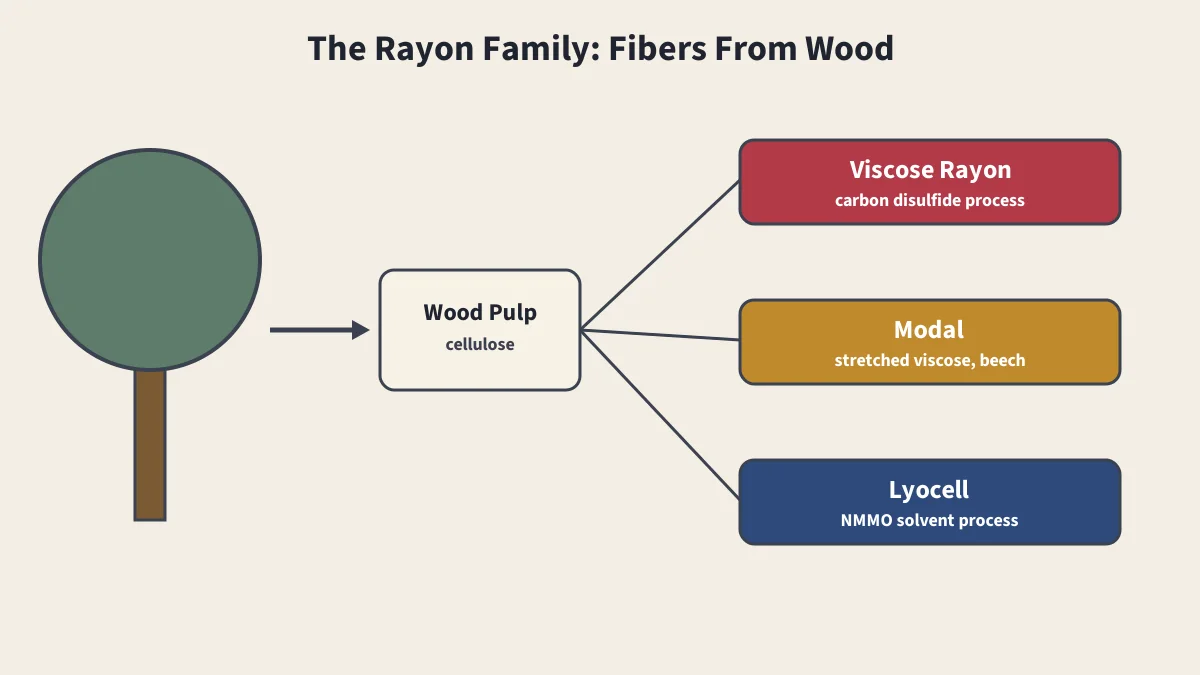
Rayon, Viscose, Modal and Lyocell
How the wood-based fibers are made, and how they differ.
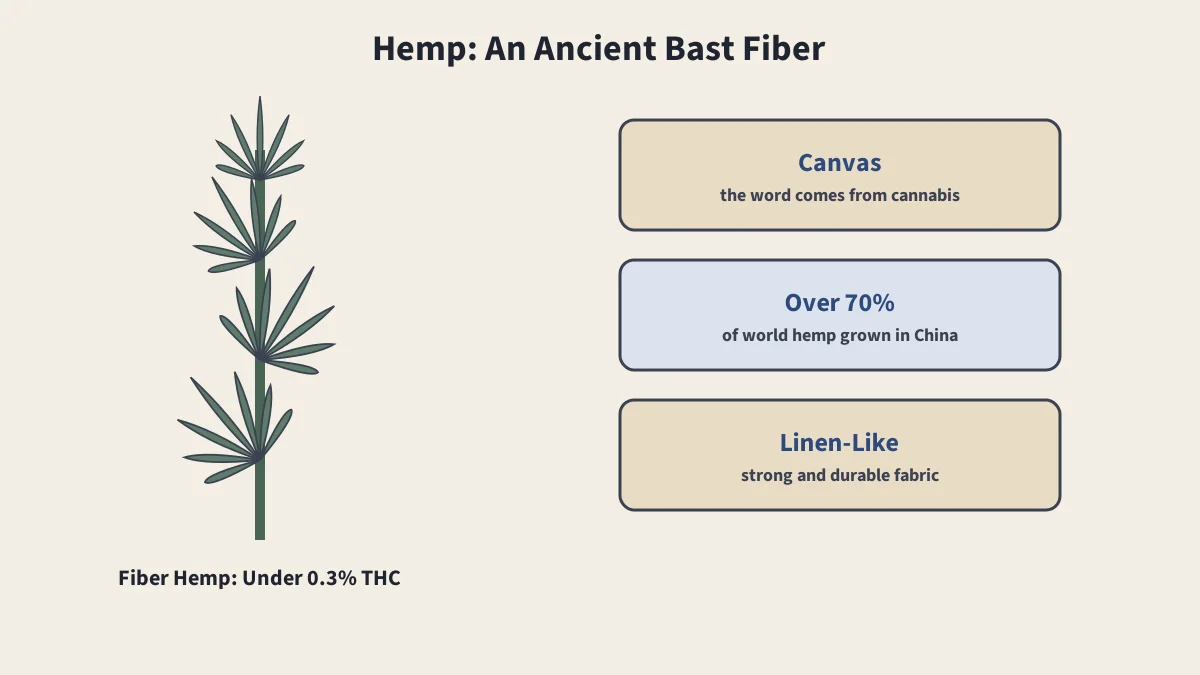
Hemp
The bast fiber behind sails, rope and the word canvas.
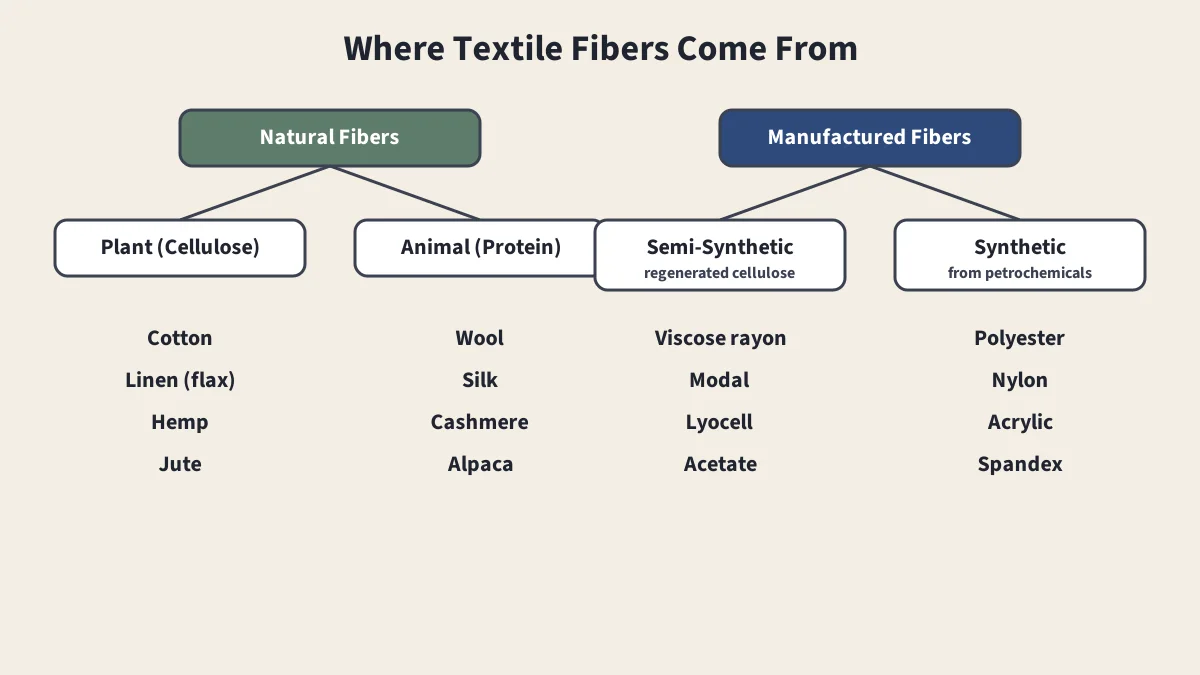
Natural vs. Synthetic Fibers
Plant, animal, semi-synthetic and synthetic fibers compared.
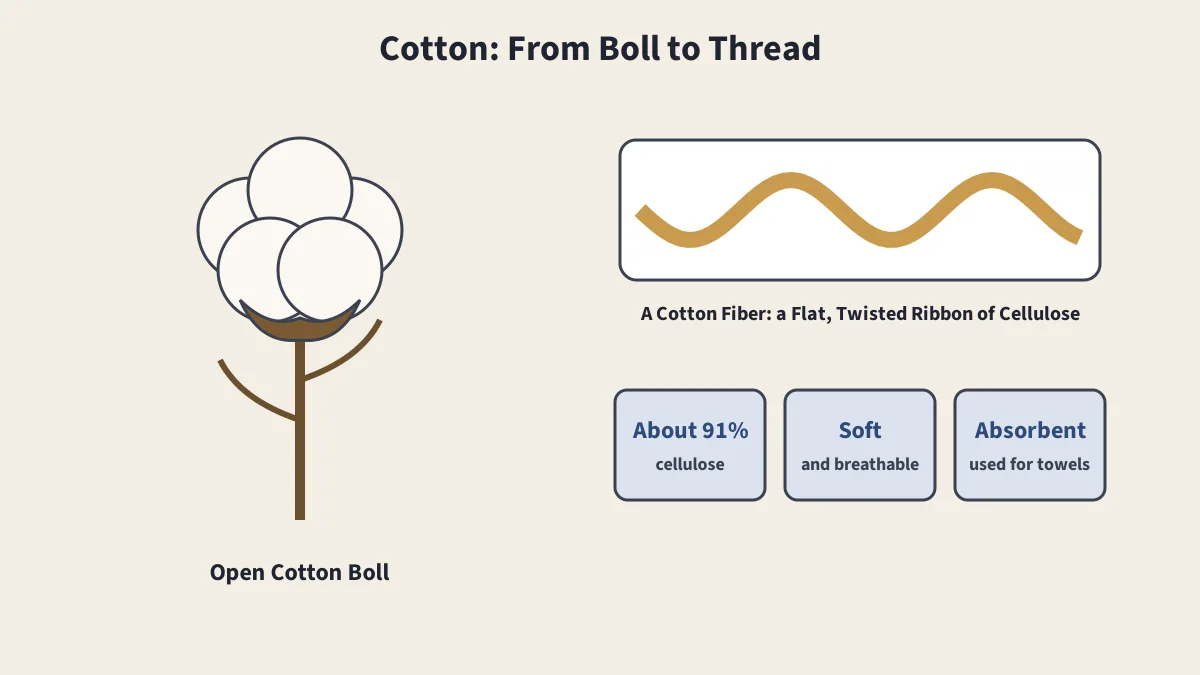
Cotton
Where cotton comes from, its history and how it behaves.