Acrylic: The Lightweight Synthetic That Imitates Wool (2026)
Acrylic gives sweaters, socks and blankets a soft, wool-like warmth at a lower price. It is light, colorful and easy to wash, but it pills, melts and sheds more microfibers than most fabrics.
In This Article
Acrylic in Brief
- Made of: polyacrylonitrile
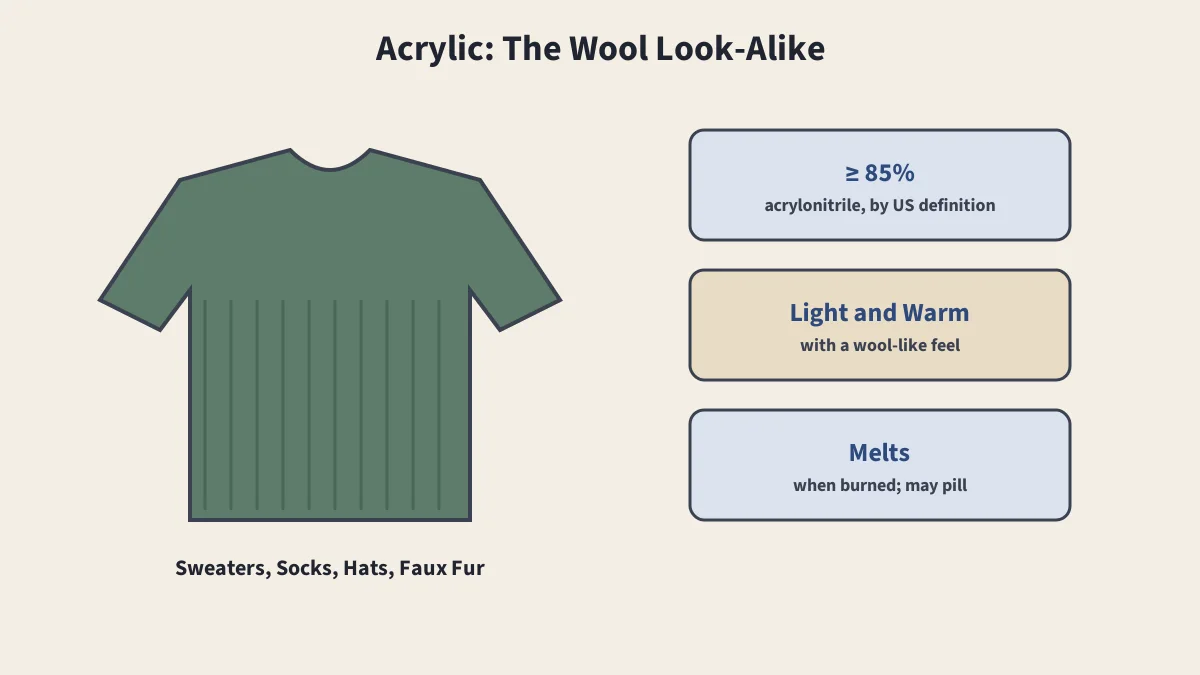
- US definition: at least 85% acrylonitrile
- Feel: light, soft and warm, like wool
- Weak points: pills, melts, very flammable
- Uses: sweaters, socks, hats, rugs, faux fur
Acrylic is a synthetic fiber developed as an alternative to wool. It is lightweight, soft and warm, with a wool-like feel, and it is also used as a cheaper substitute for cashmere. Because it takes dye brilliantly and is machine-washable, it is a staple of knitting yarns, sweaters and craft fabrics. See wool for the fiber it imitates.
What It Is
Acrylic is made from polyacrylonitrile. In the United States, a fiber must contain at least 85% acrylonitrile to be called acrylic. DuPont introduced the first acrylic fibers under the trade name Orlon; Wikipedia gives both 1941 and 1948 for its arrival, so dates vary by source.
Properties
| Strength | Weakness |
|---|---|
| Light, soft and warm | Can fuzz and pill easily |
| Takes color well | Much more flammable than natural fibers |
| Machine-washable | Melts when burned, with acrid smoke |
| Generally hypoallergenic | Sheds many microfibers in the wash |
Modacrylic and Faux Fur
Modacrylic is a modified acrylic containing between 35% and 85% acrylonitrile, with additives that make it flame retardant. It is used for faux fur, wigs and protective clothing. Ordinary acrylic is also used for fake fur and pile fabrics; see pile fabrics.
Where You Will Find Acrylic
- Sweaters, tracksuits, socks, hats and gloves
- Knitting and crochet yarn
- Rugs and awnings
- Faux fur and fleece
- Blends with wool, cotton and other fibers
Sewing and Caring for Acrylic
- Use a ballpoint or stretch needle on acrylic knits; see sewing machine needles.
- Press on low heat, or steam lightly without touching the iron to the fabric; heat can flatten or melt acrylic.
- Wash gently and inside out to reduce pilling.
- Keep away from flames; acrylic is far more flammable than wool.
Sources
- Acrylic fiber, Wikipedia
Frequently Asked Questions
What is acrylic fabric made of?
Acrylic is a synthetic fiber made from polyacrylonitrile. In the United States, a fiber must contain at least 85% acrylonitrile to be called acrylic.
Is acrylic like wool?
It is designed to be. Acrylic is lightweight, soft and warm, with a wool-like feel, and it is used as a cheaper alternative to wool and cashmere. Unlike wool, it melts when burned and is far more flammable.
Why does acrylic pill?
Some acrylic fabrics fuzz and pill easily, as short fibers work loose from the yarn surface and tangle into small balls.
What is modacrylic?
A modified acrylic containing between 35% and 85% acrylonitrile, with added chemicals that make it flame retardant. It is used for faux fur, wigs and protective clothing.
Keep Reading
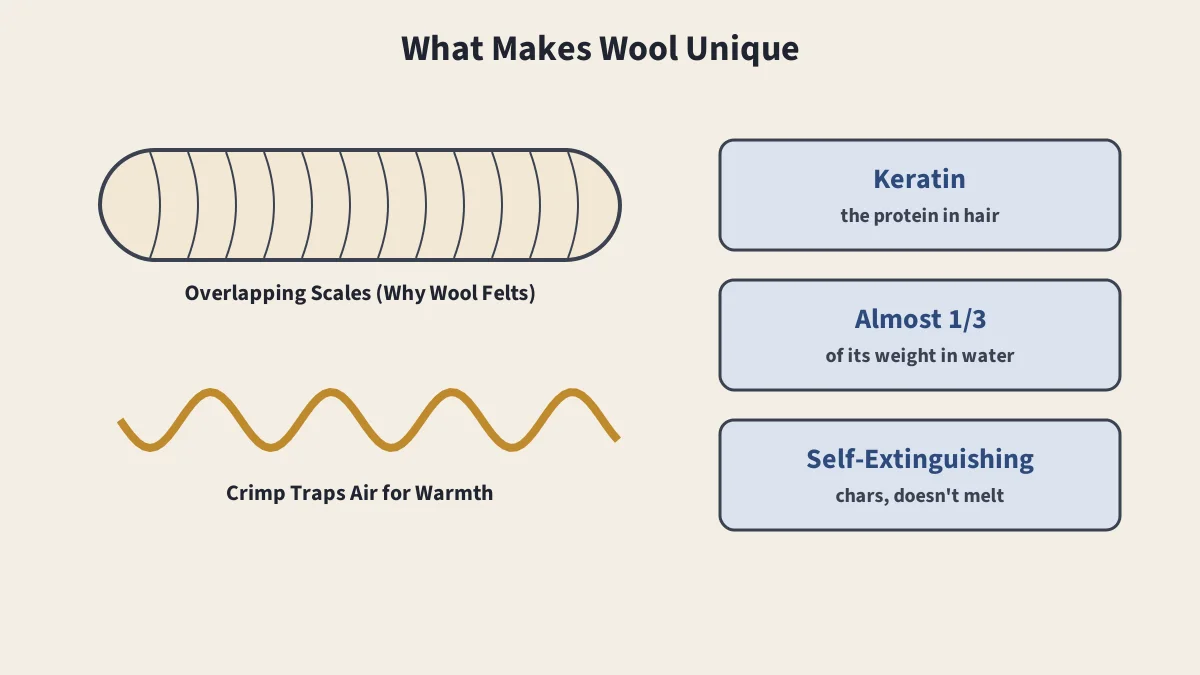
Wool
What wool is, why it is warm and felts, and how to sew it.
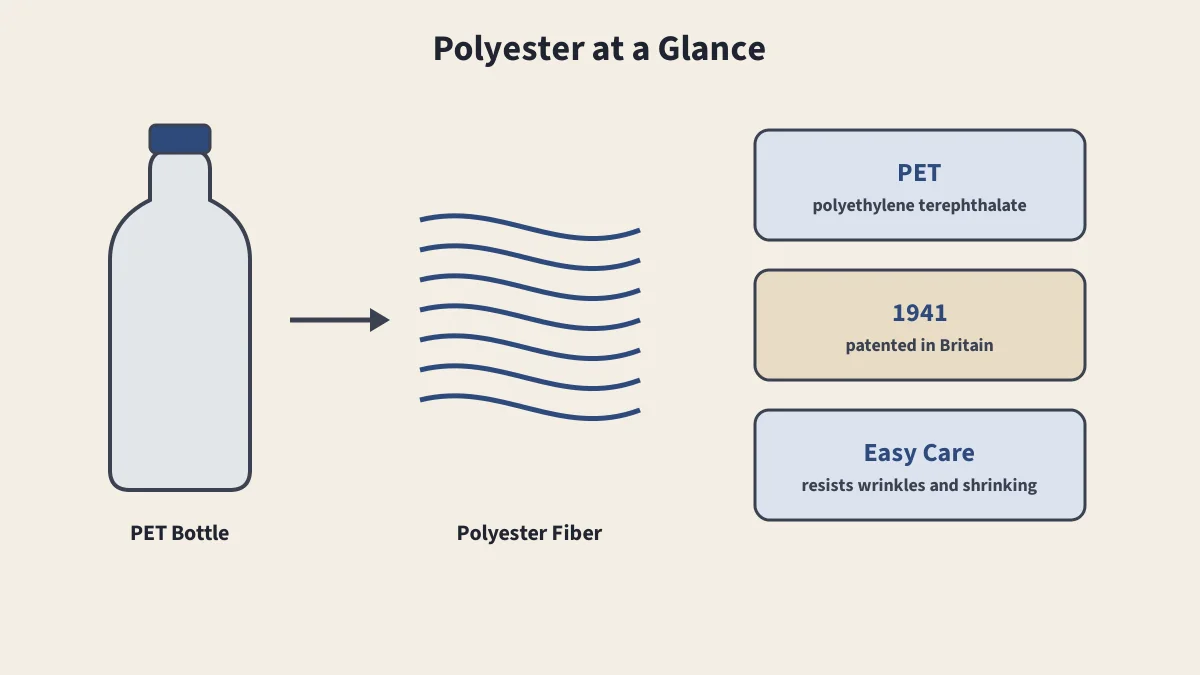
Polyester
What polyester is, its history, its pros and cons and how to sew it.
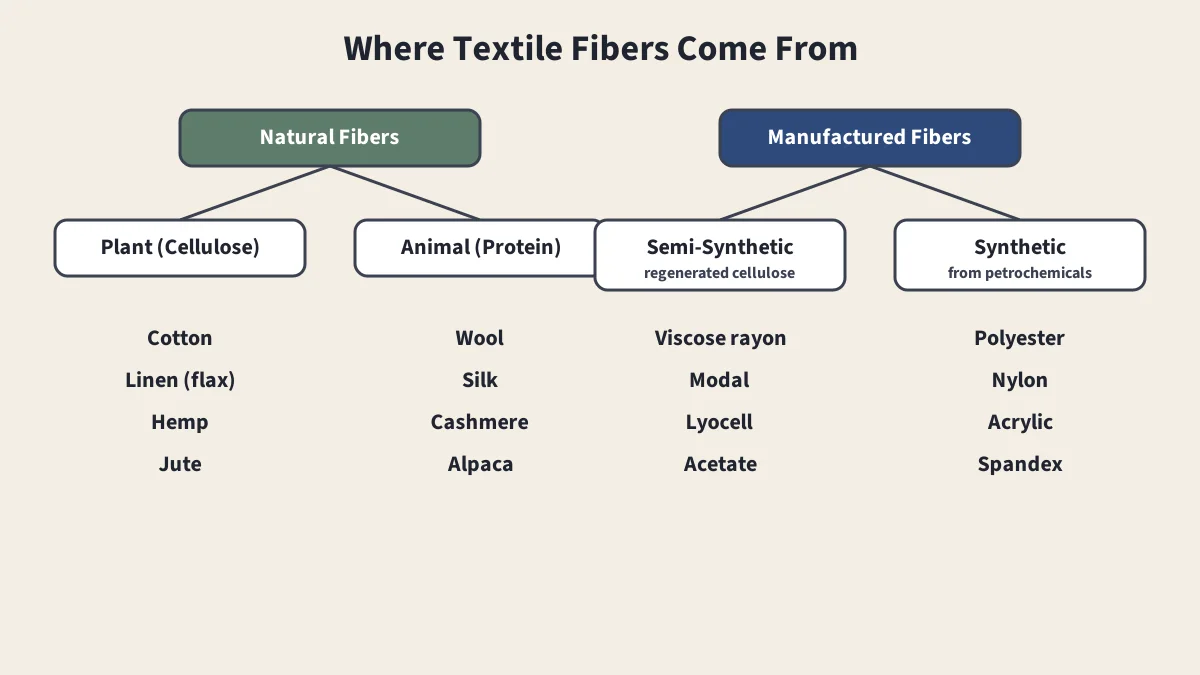
Natural vs. Synthetic Fibers
Plant, animal, semi-synthetic and synthetic fibers compared.
Pile Fabrics
Velvet, velveteen, velour, corduroy, chenille and terry compared.