Thread Count Explained: What the Number Really Means (2026)
Sheet packaging loves big thread counts. But the number only counts threads in a square inch, and it can be inflated. Here is what thread count measures, where it stops mattering, and what to look for instead.
In This Article
Thread Count in Brief
- Measures: warp + weft threads per square inch
- Standard sheets: about 150
- Percale: 200 or higher
- Plied yarns: count as one thread each
- Above about 400–500: often misleading
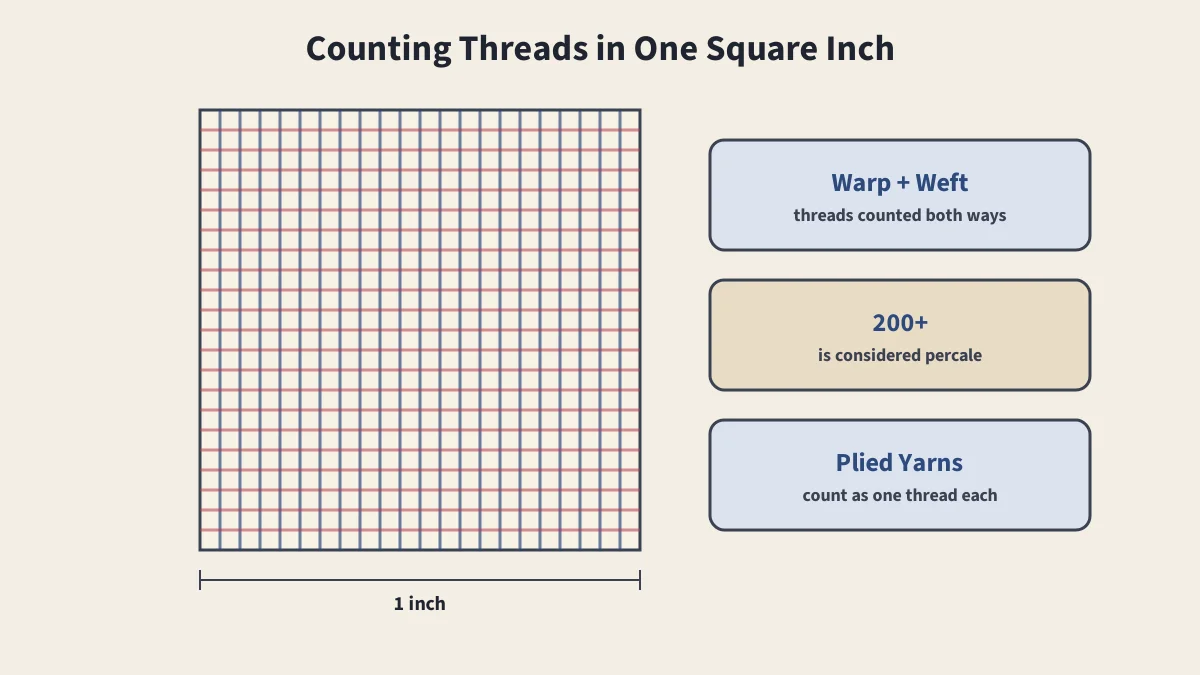
Thread count, also called threads per inch, measures how coarse or fine a woven fabric is. You count the threads in one square inch, including both warp and weft. It is most often quoted for bed sheets, where it has become a marketing number, sometimes stretched far beyond what a square inch of cloth can hold.
Typical Thread Counts
| Thread Count | What It Means |
|---|---|
| About 150 | Standard cotton sheets |
| 180 and up | Considered good quality |
| 200 and up | Considered percale |
| Above about 400–500 | Often misleading; little noticeable difference |
The Plied-Yarn Problem
Plied yarns are made by twisting finer threads together. Some makers count each of those finer threads separately, which inflates the number: a fabric with 250 two-ply yarns in each direction could be sold as "1,000 thread count." Under accepted industry practice, cited by the US National Textile Association and ASTM, each plied yarn counts as one thread.
What Matters More
- Fiber: long-staple cotton or linen feels and wears differently from short-staple cotton or polyester blends; see cotton and linen.
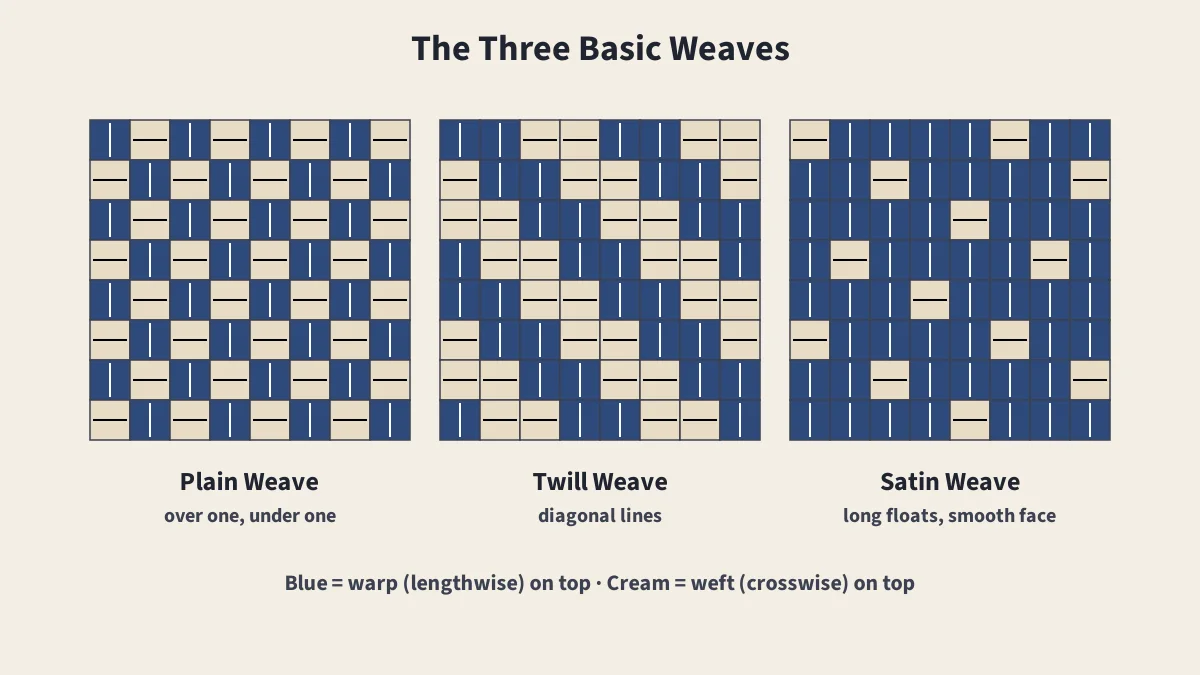
- Weave: percale is a crisp plain weave; sateen is a smooth satin weave; see fabric weaves.
- Yarn quality: fine, single-ply yarns of good fiber make a smooth, durable fabric.
- Finish: finishing affects softness, sheen and shrinkage.
Linen experts say there is no noticeable difference beyond about 400, and only so many threads physically fit in a square inch.
Thread Count for Sewists
Thread count also matters when choosing fabric to sew. Tightly woven, high-count fabrics such as cotton batiste and poplin give crisp results and hold fine details, while low-count, loosely woven fabrics fray more and may need seam finishes; see seam finishes. For a second measure of fabric, see fabric weight.
Sources
- Thread count, Wikipedia
Frequently Asked Questions
What is thread count?
The number of threads in one square inch of fabric, counting both the lengthwise (warp) and crosswise (weft) threads.
What is a good thread count for sheets?
Standard cotton sheets are around 150, good-quality sheets start at about 180, and 200 or higher is considered percale. Counts above roughly 400 to 500 are often a marketing tactic rather than a sign of better quality.
Why are 1,000-thread-count sheets misleading?
Some makers count each fine strand in a plied yarn separately. A fabric with 250 two-ply yarns each way could be marketed as 1,000 threads, but accepted industry practice counts each plied yarn as one thread.
What matters more than thread count?
The fiber, the quality and length of the yarn, the weave and the finish. Thread count alone doesn't determine quality.
Keep Reading
Fabric Weaves
Plain, twill and satin weaves, plus dobby and jacquard.
Types of Cotton Fabric
Muslin, poplin, gingham, chambray, denim, corduroy and more.
Fabric Weight (GSM and Oz)
GSM, oz/yd² and momme explained, with a converter.
Cotton
Where cotton comes from, its history and how it behaves.