Fabric Pattern Names: Tartan, Houndstooth, Paisley and More (2026)
Many of the patterns on our clothes have names with surprising stories, from a Scottish weaving town to a 19th-century dance craze. Here is a guide to the classic fabric patterns and how to recognize them.
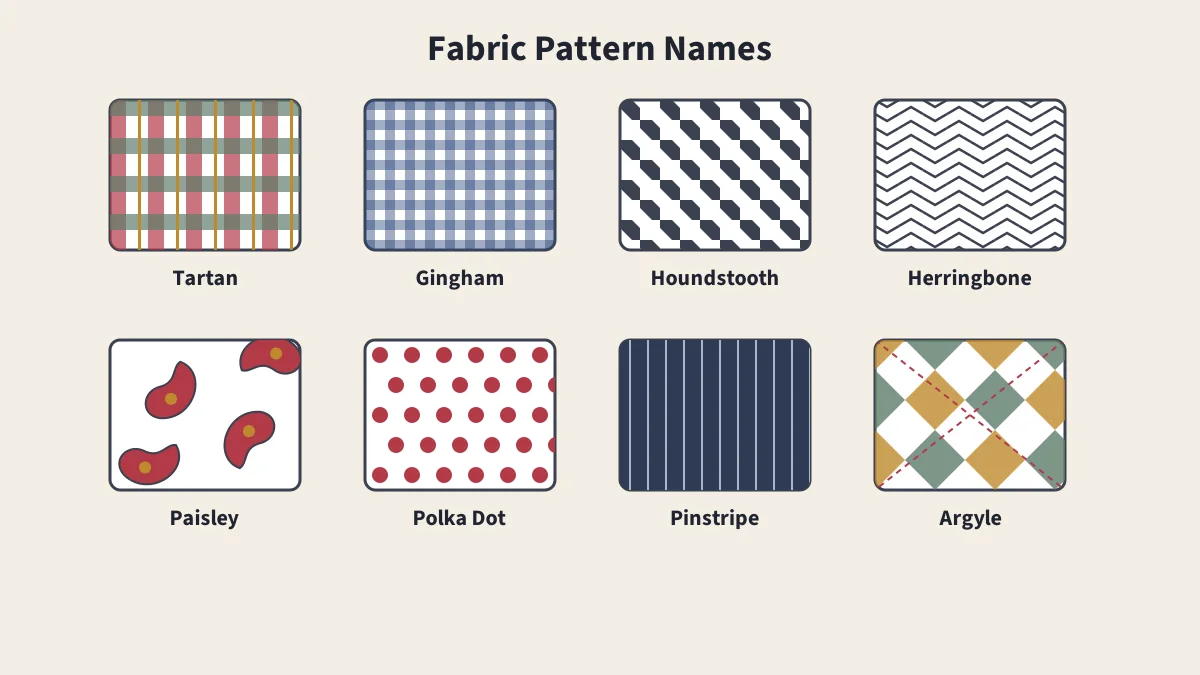
In This Article
Patterns in Brief
- Woven checks: tartan, gingham, houndstooth, madras
- Woven textures: herringbone, chevron
- Stripes: pinstripe, chalk stripe, seersucker
- Printed motifs: paisley, polka dot, toile de Jouy
- Knitted: argyle
Some patterns are woven into fabric with colored yarns; others are printed on afterward. Woven patterns, such as tartan and houndstooth, run right through the cloth, while printed patterns sit on the surface. Knowing the names helps when shopping, following patterns and reading fashion history. For how printing works, see textile printing methods.
Tartan and Plaid
Tartan is a patterned cloth of crossing horizontal and vertical bands in multiple colors. The pattern of a particular tartan is called its sett, the smallest repeating square of stripes. In North America, "plaid" is commonly used to mean tartan, but the word comes from the Scottish Gaelic plaide, meaning blanket, and first referred to a rectangular garment.
After the 1745 Jacobite rising, the Dress Act 1746 banned Highland dress for men and boys in Scotland north of the River Forth, with exceptions for the landed gentry and Highland regiments of the British Army; the ban lasted about two generations.
A Guide to Classic Patterns
| Pattern | What It Looks Like | Story |
|---|---|---|
| Gingham | Even checks of a color and white | Woven from pre-dyed yarns; originally striped when it reached Europe in the 17th century |
| Houndstooth | Broken checks with pointed edges | May have begun in Scottish Lowlands tweed; woven in a 2:2 twill with bands of four dark and four light threads |
| Herringbone | Zigzag columns like fish bones | A twill that reverses direction at regular intervals |
| Madras | Lightweight cotton plaid | Named after Madras, now Chennai, India |
| Paisley | Teardrop shapes with curled tips | The Persian boteh motif, named after the Scottish weaving town of Paisley |
| Polka dot | Evenly spaced round dots | Named during the 19th-century polka dance craze |
| Toile de Jouy | One-color pastoral scenes on a pale ground | Named after Jouy-en-Josas, near Paris |
| Pinstripe | Very fine stripes on a dark ground | Classic suiting pattern |
| Argyle | Diamonds with overlapping diagonal lines | Associated with Scottish knitwear and socks |
| Chevron | Repeated V shapes | Similar to herringbone, but without the break |
Paisley
The paisley motif is the Persian boteh, a teardrop shape with a curved upper end. Westerners came to know it through Kashmir shawls imported from India in the 18th and 19th centuries, which European makers then copied. The English name comes from the town of Paisley in Scotland, whose weavers used Jacquard looms to reproduce the design. It was most fashionable from about 1800 to 1850 and declined in the 1870s as cheap printed versions flooded the market.
Polka Dots
Dotted patterns may date back to the Middle Ages, but irregular dots were once associated with diseases, so they were not popular. Mechanized weaving and printing made perfectly round, evenly spaced dots possible. The name "polka dot" is believed to come from the polka dance, which was wildly popular in the 19th century, when many products took the "polka" name.
Sewing With Patterned Fabric
- Match plaids and stripes at seams by cutting single layers and aligning the pattern.
- Buy extra fabric for large repeats.
- Check direction: some prints, such as toile, have an up and down.
- Use the bias for a deliberate diagonal effect; see grain, bias and selvage.
To sew checks so they line up at seams, see matching plaids and stripes.
Sources
- Tartan, Wikipedia
- Paisley (design), Wikipedia
- Houndstooth, Wikipedia
- Polka dot, Wikipedia
- Toile de Jouy, Wikipedia
Frequently Asked Questions
What is the difference between tartan and plaid?
Tartan is a pattern of crossing horizontal and vertical bands in several colors. In North America, 'plaid' is commonly used to mean tartan, but the word comes from the Scottish Gaelic plaide, meaning blanket, and originally referred to a rectangular garment.
Why is it called paisley?
The English name comes from the town of Paisley in Scotland, a weaving center whose weavers used Jacquard looms to reproduce the teardrop-shaped boteh motif seen on imported Kashmir shawls.
How is houndstooth made?
Traditional houndstooth alternates bands of four dark and four light threads in both warp and weft, woven in a simple 2:2 twill.
Why are they called polka dots?
The name is believed to come from the polka dance, which was hugely popular when the pattern became fashionable in the 19th century.
Keep Reading
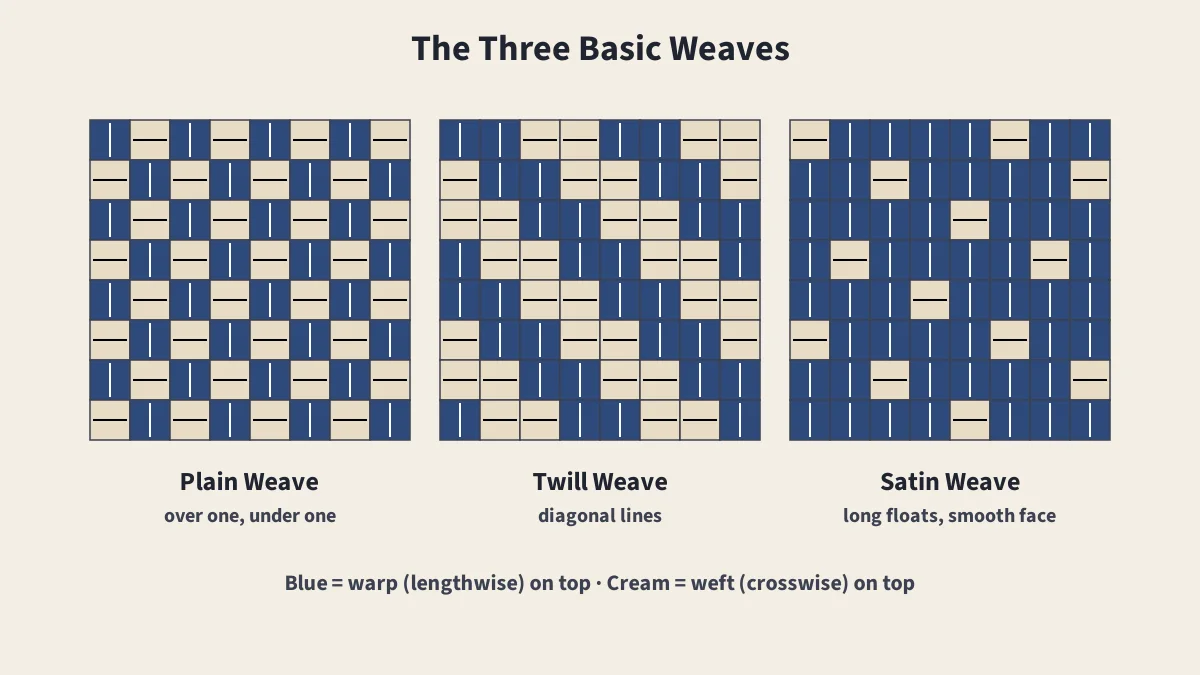
Fabric Weaves
Plain, twill and satin weaves, plus dobby and jacquard.
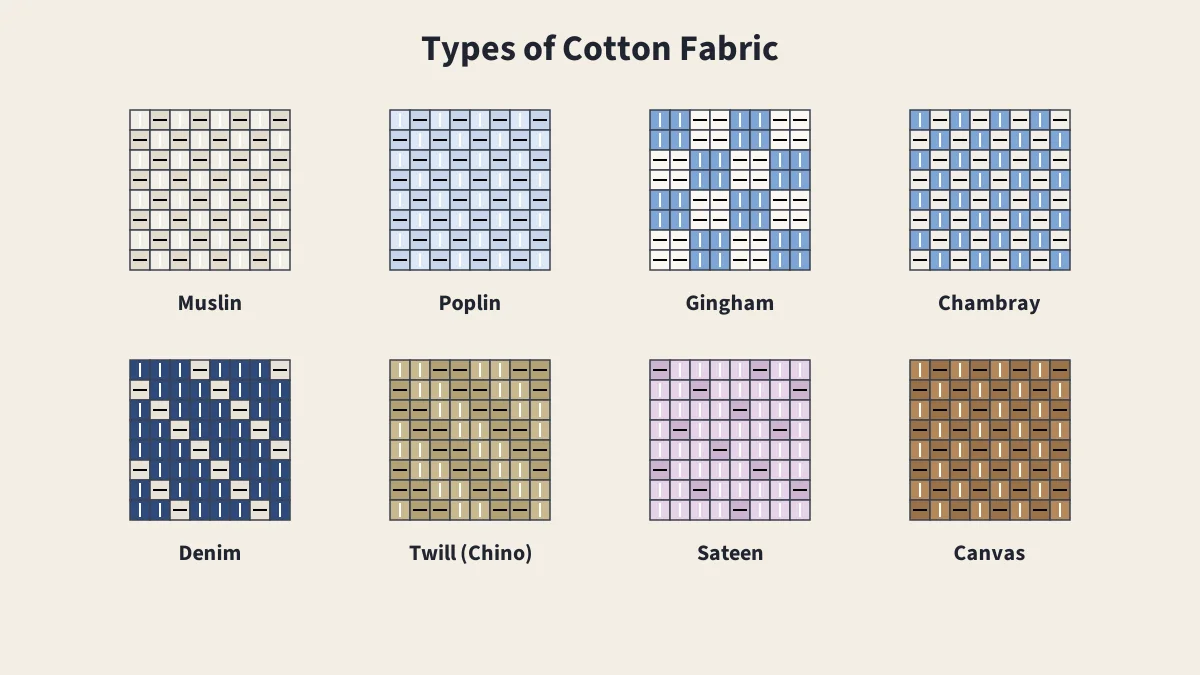
Types of Cotton Fabric
Muslin, poplin, gingham, chambray, denim, corduroy and more.
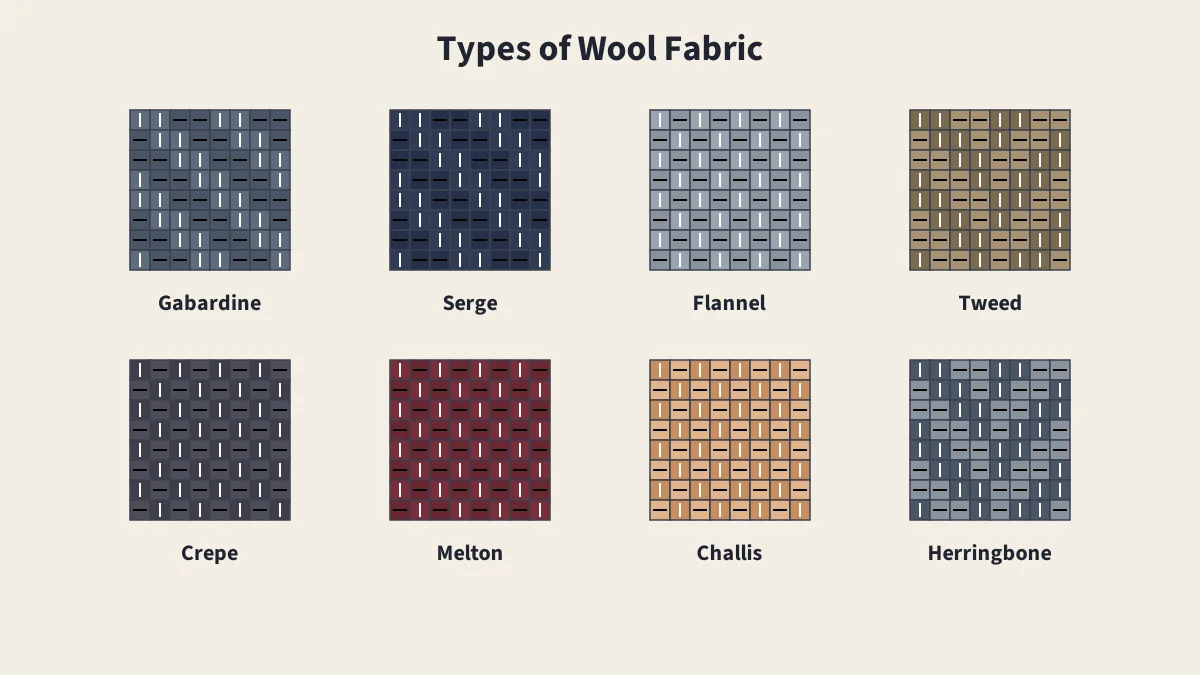
Types of Wool Fabric
Worsted vs. woolen, plus gabardine, tweed, flannel and more.
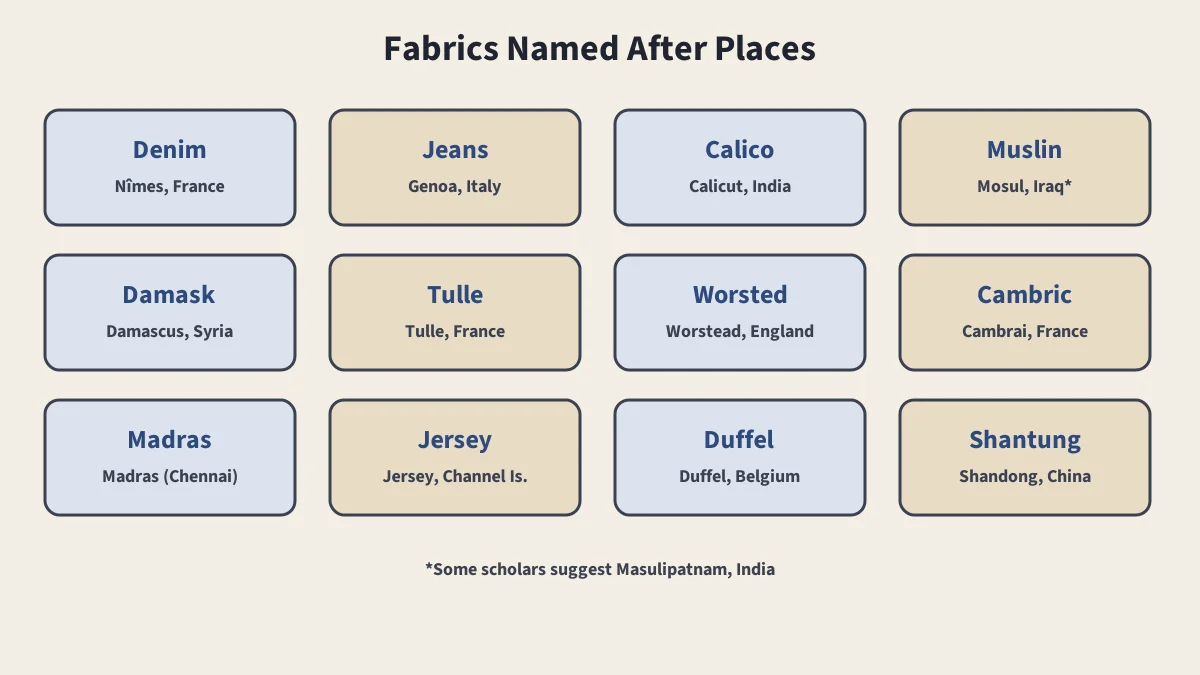
Fabrics Named After Places
Denim, calico, damask, tulle, madras and other place names.