Brocade vs. Damask vs. Jacquard: Patterned Weaves Explained (2026)
Brocade, damask and jacquard all describe fabrics with patterns woven in rather than printed on. They overlap, but they are not the same. Here is how to tell them apart.
In This Article
The Three Terms in Brief
- Damask: reversible pattern from contrasting weaves
- Brocade: raised pattern from an extra weft
- Jacquard: any fabric woven on a jacquard loom
- Overlap: damask and brocade are often jacquard-woven
Most fabrics with complex designs are printed. Brocade, damask and jacquard fabrics have their designs woven in, which makes them richer and more durable, and historically far more expensive. The three words are often used loosely, but each has a specific meaning. For basic weaves, see fabric weaves.
Side by Side
| Damask | Brocade | Jacquard | |
|---|---|---|---|
| What it is | A woven, reversible patterned fabric | A fabric with a decorative supplementary weft | Fabric made on a jacquard loom |
| How the pattern forms | Contrast of satin and sateen weaves | Extra weft threads added to the structure | Warp threads lifted individually |
| Reversible? | Yes, in reverse | Usually not; floats on the back | Depends on the fabric |
| Look | Flat, often one color, subtle sheen | Raised, often multicolored or metallic | Anything from subtle to elaborate |
| Uses | Table linens, upholstery, curtains | Formal wear, upholstery | Upholstery, garments, linens |
Damask
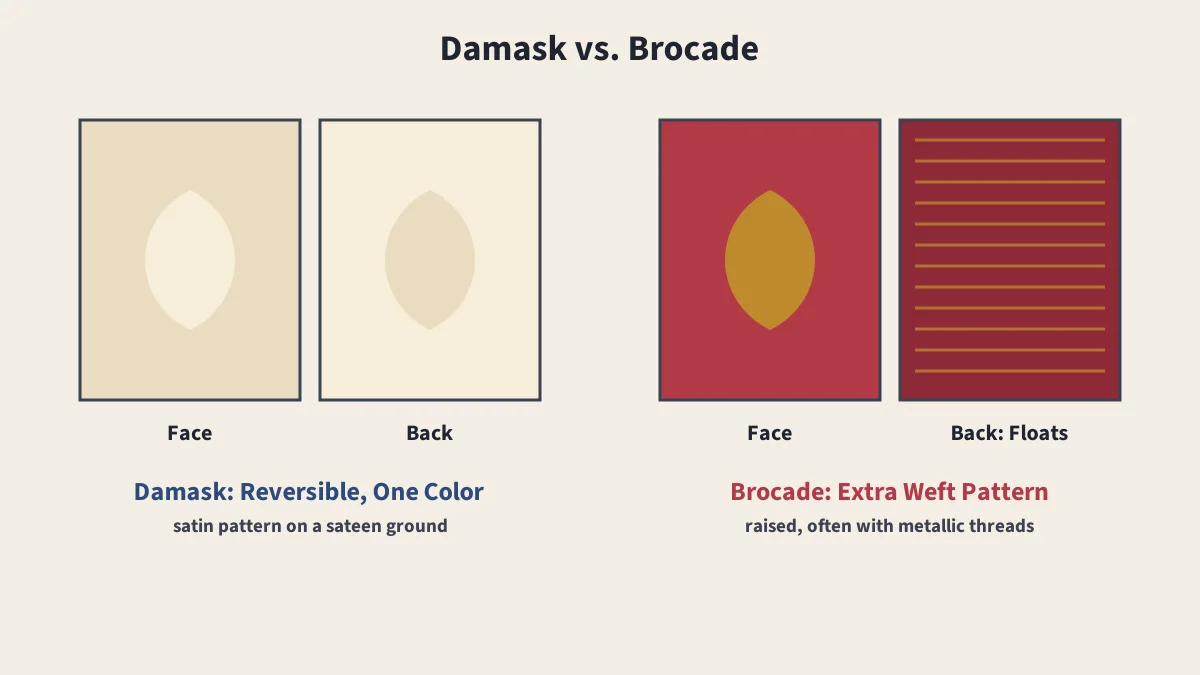
Damask is a woven, reversible patterned fabric. The pattern is usually in a warp-faced satin weave and the background in a weft-faced or sateen weave, so the design shows through contrast in how the light falls. On the back, the same pattern appears in reverse. The fabric is named after Damascus, Syria, a large trading center on the Silk Road. Chinese weavers may have produced damasks as early as the Tang dynasty (618 to 907), and damask was one of the basic weaving techniques of early medieval Byzantine and Middle Eastern weaving centers.
Brocade
Brocade is a richly decorative shuttle-woven fabric whose pattern comes from a supplementary, non-structural weft added to the weft that holds the cloth together. The extra threads give the pattern the effect of low relief, and they are often colored silks, sometimes with gold and silver threads. On the back, extra threads float between motifs; in a continuous brocade they run from selvage to selvage. The name comes from the Italian broccato, meaning "embossed cloth." Brocade is woven, not stitched, but it is designed to look as though the pattern were embroidered.
Brocade making began in China during the Warring States period. From the 6th to the 9th century, Byzantium was the main producer of silk brocades for the Western world, and during the Renaissance, Italy became Europe's most important maker of fine silk fabrics.
Jacquard
Jacquard is less a fabric than a method. A jacquard loom controls each warp thread individually, so it can weave patterns of almost any complexity. Joseph Marie Jacquard patented his punched-card loom in 1804; see fabric weaves. Damask, brocade, brocatelle and tapestry-like fabrics are all described as jacquard patterns, and today "jacquard" is also used for many knit and woven fabrics with patterns made this way.
How to Tell Them Apart
- Turn it over. The same pattern in reverse suggests damask; loose floating threads suggest brocade.
- Feel the surface. A raised pattern suggests brocade; a flat one with a sheen contrast suggests damask.
- Count the colors. Damask is often one or two colors; brocade often uses many, plus metallics.
- Check the label. "Jacquard" tells you how it was woven, not exactly which structure it has.
Sources
- Damask, Wikipedia
- Brocade, Wikipedia
- Jacquard machine, Wikipedia
Frequently Asked Questions
What is the difference between brocade and damask?
Damask is a reversible patterned fabric in which the pattern and background are made by contrasting satin and sateen weaves, often in one color. Brocade adds an extra, non-structural weft to create a raised, often multicolored or metallic pattern, with loose threads floating on the back.
Is jacquard the same as brocade?
Not exactly. Jacquard refers to fabric woven on a jacquard loom, which controls warp threads individually to make complex patterns. Brocade and damask are often made on jacquard looms, so they are types of jacquard-woven fabric, but jacquard covers many other patterned weaves too.
Why is it called damask?
Damask is named after Damascus, Syria, a large trading center on the Silk Road. The name appears in French records from the mid-14th century.
What does brocade mean?
The word comes from the Italian broccato, meaning 'embossed cloth,' describing the low-relief effect of its pattern.
Keep Reading
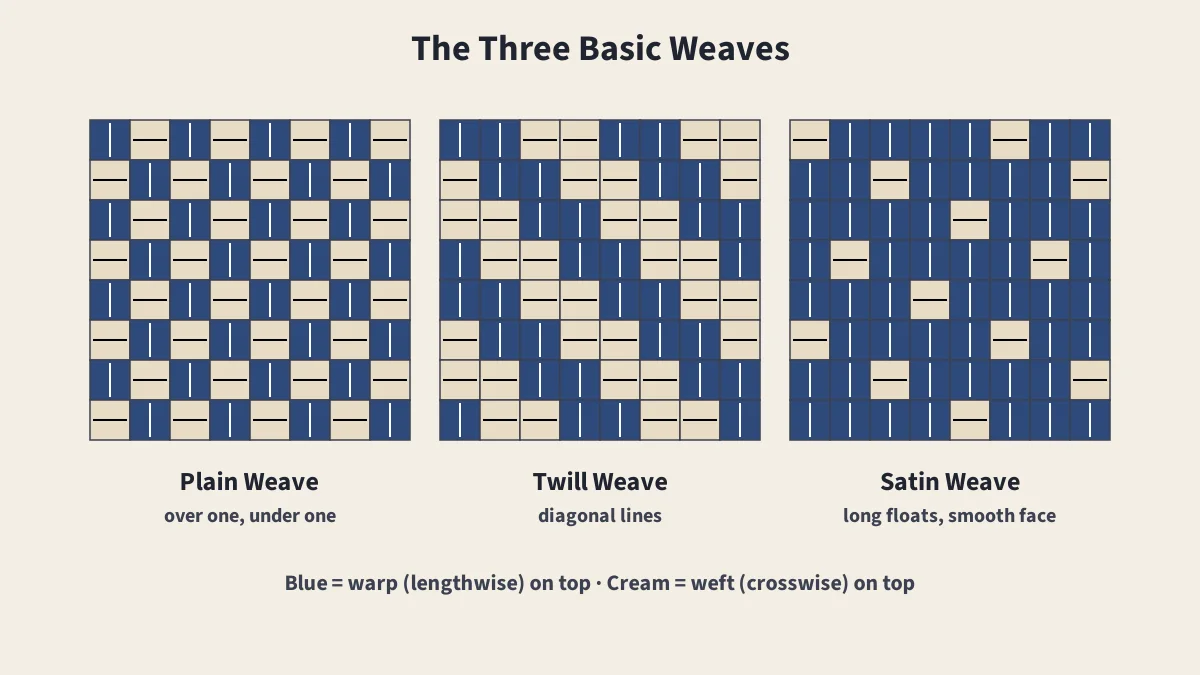
Fabric Weaves
Plain, twill and satin weaves, plus dobby and jacquard.
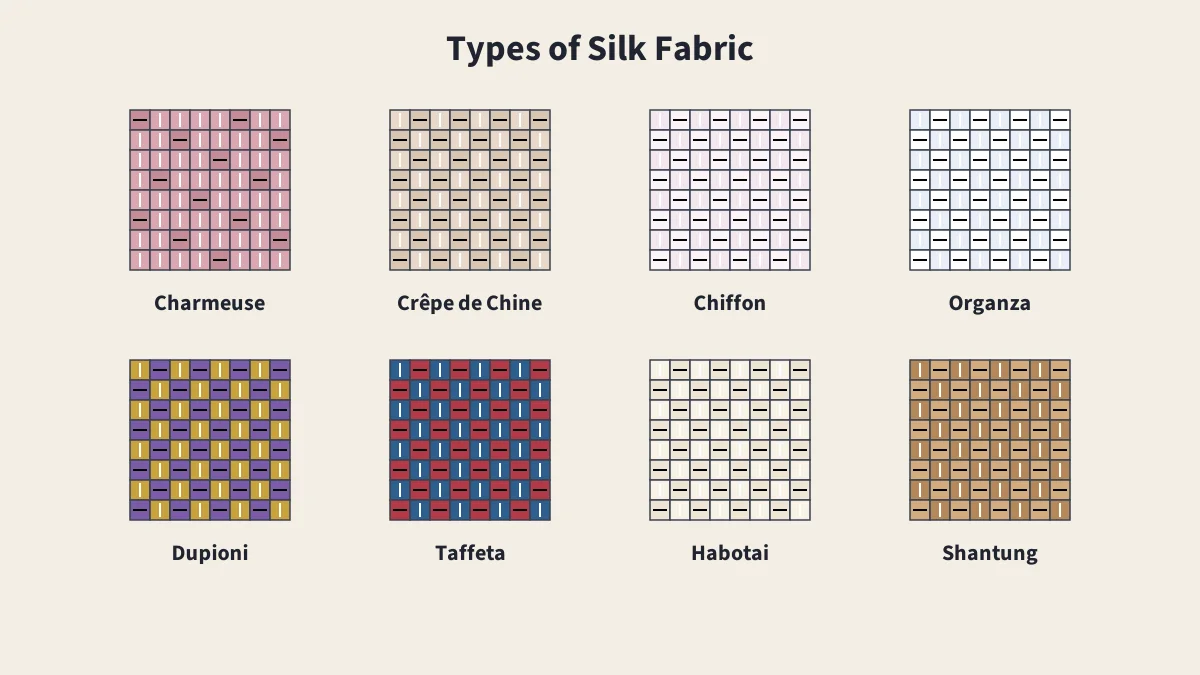
Types of Silk Fabric
Charmeuse, crêpe de chine, organza, dupioni, taffeta and more.
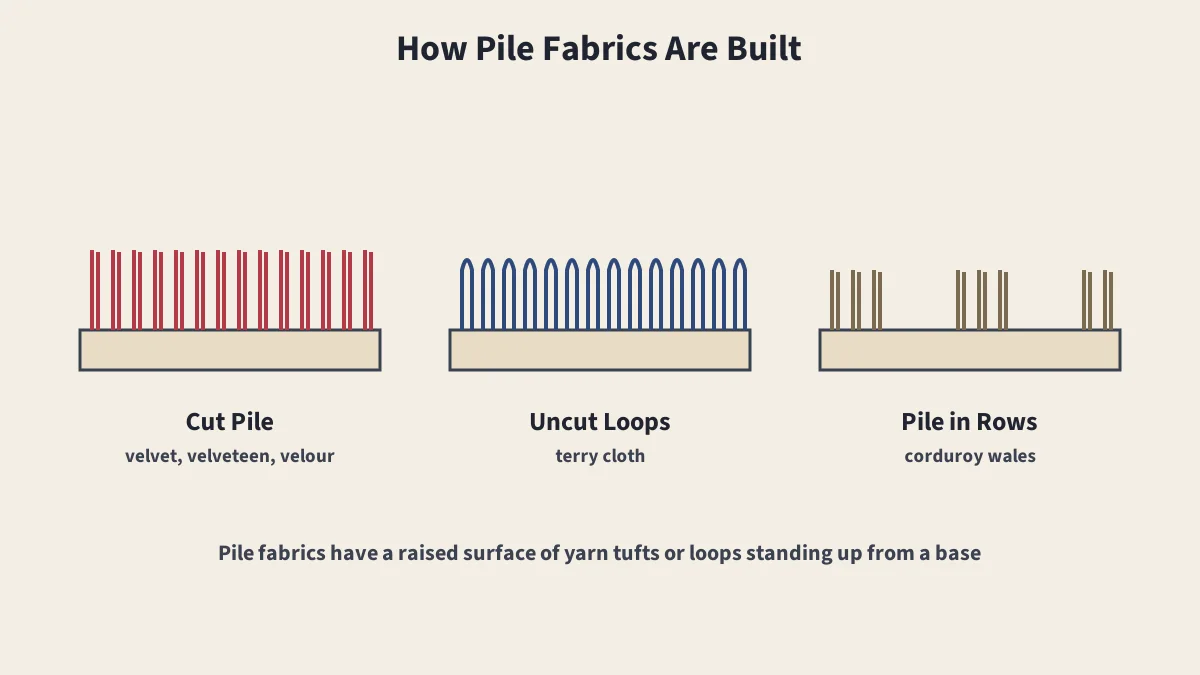
Pile Fabrics
Velvet, velveteen, velour, corduroy, chenille and terry compared.
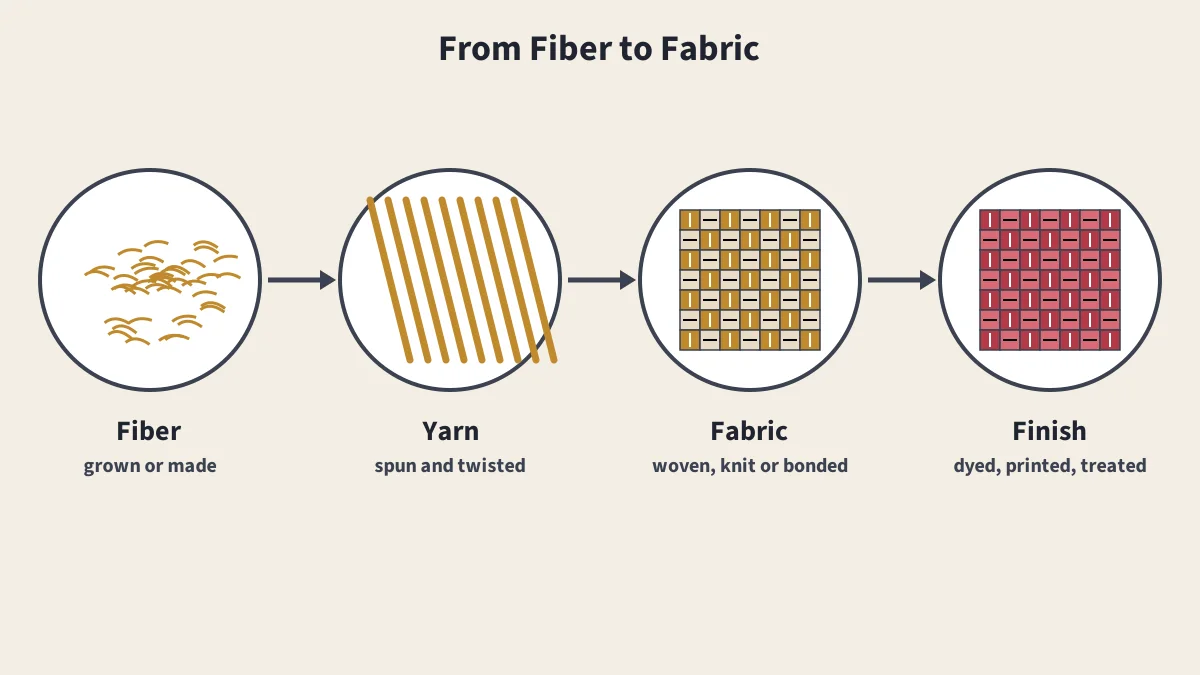
How Fabric Is Made
The four stages: fiber, yarn, fabric construction and finishing.