Quilting Cotton vs. Apparel Cotton: Which to Use When (2026)
Quilting cotton is the most visible fabric in many fabric shops, with endless prints. It is perfect for patchwork, but it is not always the best choice for clothes. Here is how it compares with cottons made for garments.
In This Article
The Difference in Brief
- Quilting cotton: medium weight, crisp, stable, often printed
- Apparel cottons: wide range, many lighter and drapier
- Quilting cotton for clothes: fine for structured styles
- Choose apparel cotton for: flowing, soft or lightweight garments
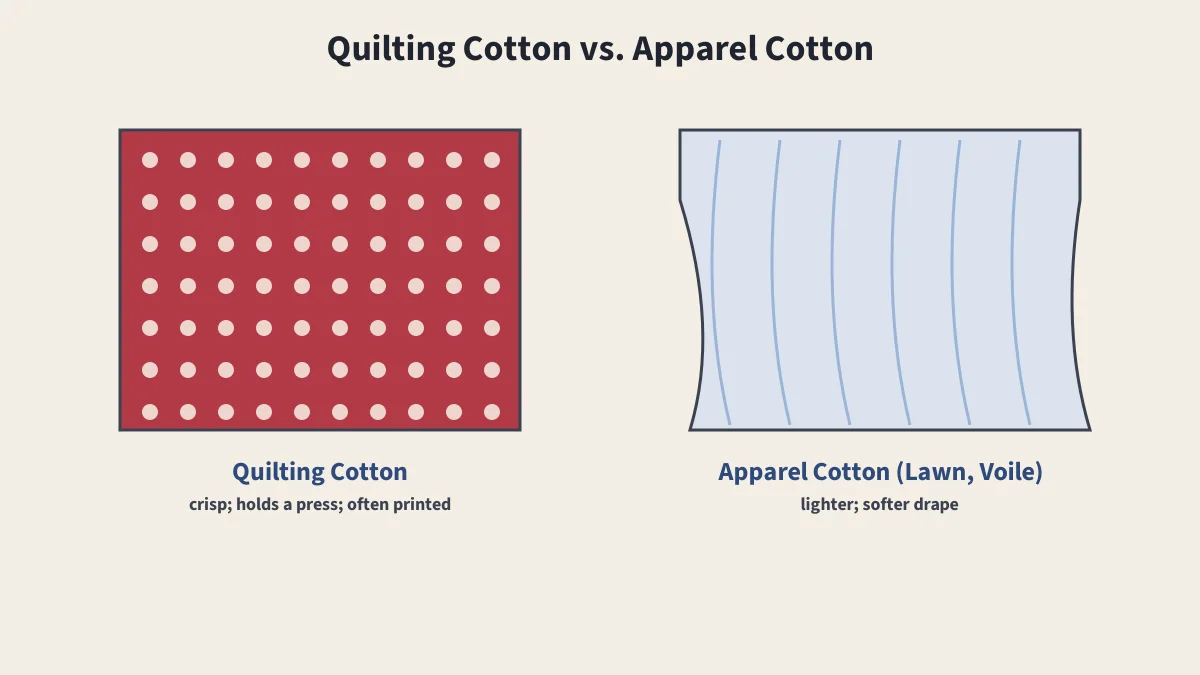
Both are made from cotton, often in a plain weave. The differences lie in yarn, density, finish and intended use. Quilting cotton is engineered to behave well when cut into small, precise pieces; apparel cottons are designed to drape, move and feel comfortable against the skin.
Side by Side
| Quilting Cotton | Apparel Cottons | |
|---|---|---|
| Weight | Medium | From sheer lawn to heavy twill |
| Hand | Crisp, holds a press | Varies: soft, silky, crisp or stretchy |
| Drape | Stands away from the body | Often flows and moves |
| Prints | Huge range, often coordinated collections | Varies; many solids, wovens and garment prints |
| Typical width | Often around 107–112 cm (42–44 in) | Often wider, varies by fabric |
| Best for | Quilts, bags, aprons, structured garments | Shirts, dresses, skirts, trousers |
When Quilting Cotton Works for Clothes
- Full skirts and gathered styles that benefit from body
- Children's clothes, which need durable, washable fabric
- Aprons, pajama bottoms and casual tops
- Fitted bodices, where crispness helps hold shape
- Test garments, when you want a print
When to Choose Apparel Cotton
| Garment | Better Choice |
|---|---|
| Flowing blouses and summer dresses | Lawn, voile, batiste |
| Button-up shirts | Poplin, broadcloth, oxford |
| Casual shirts and dresses | Chambray, double gauze |
| Trousers and jackets | Twill, denim, corduroy |
| T-shirts and leggings | Cotton jersey and knits |
See types of cotton fabric and sheer fabrics for more.
Tips for Sewing Clothes From Quilting Cotton
- Pre-wash to soften the fabric and remove shrinkage; see pre-washing.
- Choose patterns that suit body, such as A-line or gathered shapes.
- Check print direction; many quilting prints are one-way.
- Finish seams to stop fraying through washing; see seam finishes.
For bundles of quilting cotton cut to standard sizes, see quilting precuts.
Sources
Frequently Asked Questions
What is quilting cotton?
A medium-weight, plain-weave cotton, usually printed, made to be cut accurately, pressed crisply and pieced into quilts. It is stable and easy to sew.
Can I use quilting cotton for clothes?
Yes, for structured garments such as simple skirts, children's clothes, aprons and some dresses and tops. It is often too crisp for flowing styles and can feel stiff compared with cottons made for apparel.
What cottons are better for clothing?
Lawn, voile and batiste for light, soft garments; poplin and broadcloth for shirts; chambray and twill for casual wear; and cotton knits for T-shirts.
Why is quilting cotton good for quilts?
It holds a crease, frays relatively little, stays stable when cut into small pieces and comes in coordinated prints and solids, all of which suit patchwork.
Keep Reading
Types of Cotton Fabric
Muslin, poplin, gingham, chambray, denim, corduroy and more.
Cotton
Where cotton comes from, its history and how it behaves.
Fabric Weight (GSM and Oz)
GSM, oz/yd² and momme explained, with a converter.
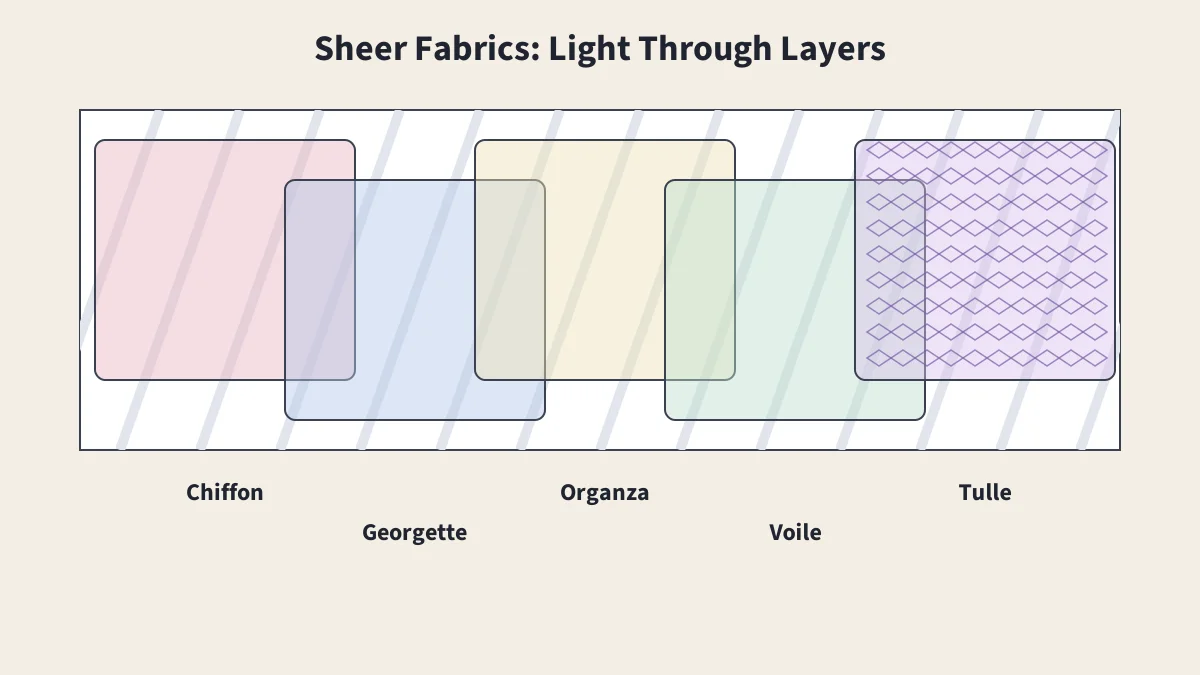
Sheer Fabrics
Chiffon, georgette, organza, voile and tulle compared.