Textile Printing Methods: How Patterns Get Onto Fabric (2026)
From carved wooden blocks to inkjet heads, people have found many ways to put patterns on cloth. Here is how the main textile printing methods work and what each is used for.
In This Article
Printing in Brief
- Oldest: block printing
- Industrial breakthrough: roller printing, patented 1785
- Most common today: screen printing
- Fastest growing: digital inkjet printing
- Special effects: discharge and resist printing
Printing adds color to selected areas of fabric, unlike dyeing, which colors the whole cloth. Over the centuries, the tools have changed from hand-carved blocks to engraved rollers, mesh screens and inkjet heads, but the aim is the same: to put a sharp, lasting pattern on cloth. Woven patterns are a different thing entirely; see fabric pattern names.
The Main Methods
| Method | How It Works | Notes |
|---|---|---|
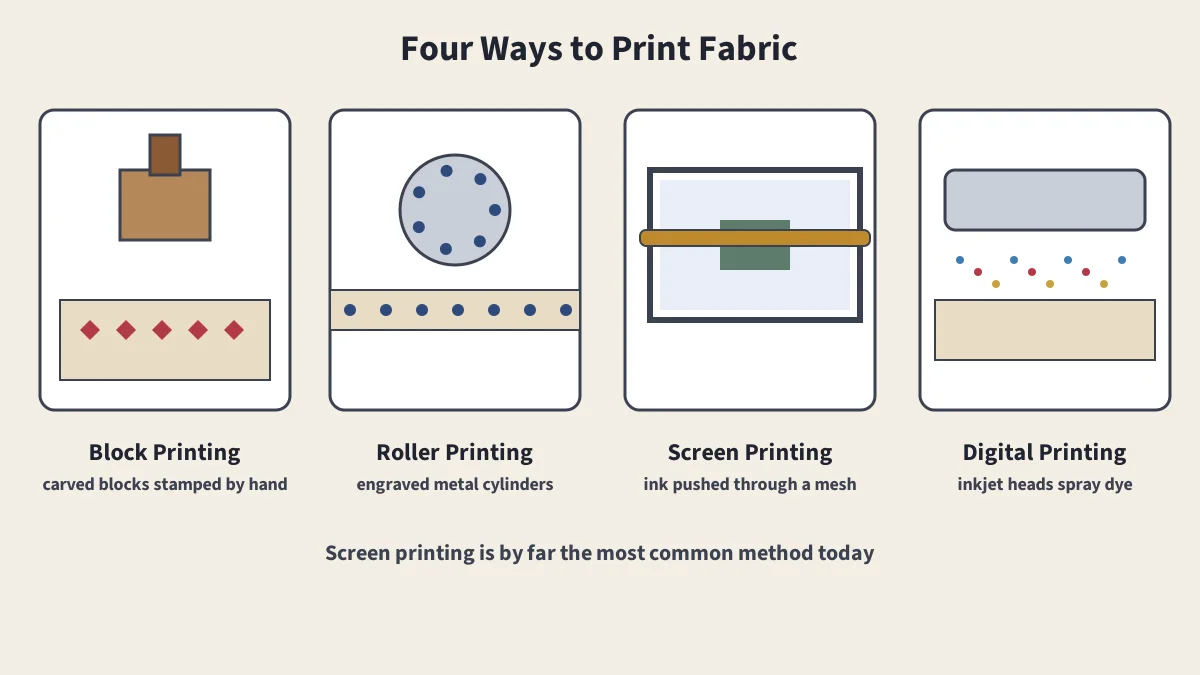
| Block printing | A carved block is inked and pressed onto cloth | The earliest, simplest and slowest method; one block per color |
| Roller (cylinder) printing | Engraved metal rollers print continuously | Patented by Thomas Bell in 1785; 10,000 to 12,000 yards a day |
| Stencil printing | Color brushed through cut-out patterns | Designs need ties to hold the stencil together |
| Screen printing | Ink pushed through a fine mesh, blocked where no color is wanted | By far the most common today; rotary and flat-bed |
| Digital (inkjet) printing | Inkjet heads spray dye or pigment | Short runs and photographic detail |
| Heat transfer and sublimation | Designs transferred with heat | Sublimation suits polyester |
Block Printing
Block printing is the earliest, simplest and slowest of all printing methods. A design is carved into a block, usually wood, which is inked and pressed onto the cloth; every color needs its own block. Woodblock printing probably originated in antiquity in China. Hand block printing is still practiced in many places, including India, where it is an important craft; see Indian handloom textiles.
Roller Printing
Thomas Bell patented roller printing in 1785. Engraved cylinders printed cloth continuously and were highly productive, with 10,000 to 12,000 yards commonly printed in a day, far faster than printing by hand.
Screen Printing
In screen printing, ink is pushed through a fine mesh with a squeegee. The mesh is blocked in areas where no color is wanted, and each color needs its own screen. Rotary screens, in which the screen is a cylinder, allow continuous printing. Screen printing is by far the most common textile printing technology today.
Digital Printing
Digital textile printing uses specialized or modified inkjet technology to print directly onto textiles and garments. It needs no screens, so it suits short runs, custom designs and photographic images. Dye-sublimation inks, which bond with polyester when heated, have allowed direct printing on polyester since the early 1990s.
Discharge and Resist Printing
- Discharge printing: a bleaching agent is printed onto dyed fabric to remove some or all of the color, making light patterns on a dark ground.
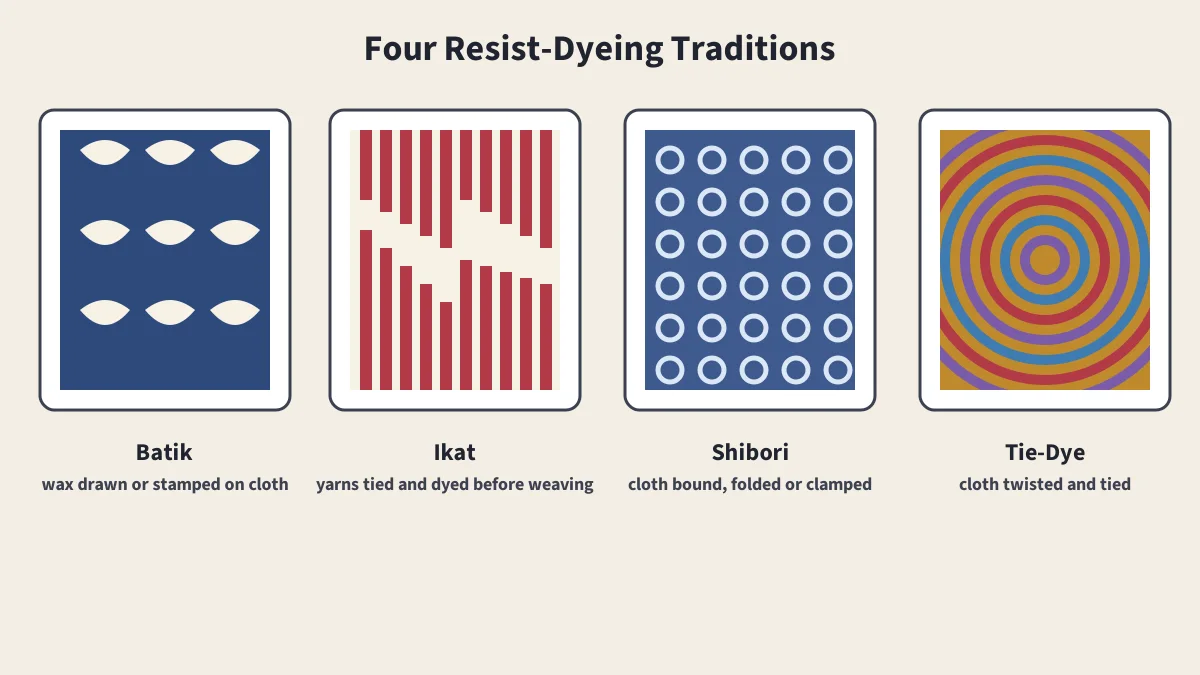
- Resist printing: wax or another substance is printed onto fabric, which is then dyed; the resisted areas stay undyed. See resist dyeing.
Spotting a Printed Fabric
- Look at the back. Printed fabric is usually paler on the back; woven patterns look similar on both sides.
- Check the selvage. Printed fabrics often have color dots or the designer's name printed there; see grain, bias and selvage.
- Check alignment. Prints are not always perfectly on grain.
Sources
- Textile printing, Wikipedia
- Screen printing, Wikipedia
Frequently Asked Questions
What is the most common way to print fabric?
Screen printing, in its rotary and flat-bed forms, is by far the most common textile printing technology today.
What is the oldest textile printing method?
Block printing, in which a pattern carved into a block is inked and pressed onto cloth. It is the earliest, simplest and slowest method, and each color needs its own block.
What is discharge printing?
A method in which a bleaching agent is printed onto previously dyed fabric to remove some or all of the color, creating light patterns on a dark ground.
What is dye sublimation?
A digital printing process in which dye is turned into a gas with heat and bonds with polyester fibers. Dye-sublimation inks allowed direct printing on polyester from the early 1990s.
Keep Reading
Resist Dyeing
How batik, ikat, shibori and tie-dye block the dye.
Fabric Pattern Names
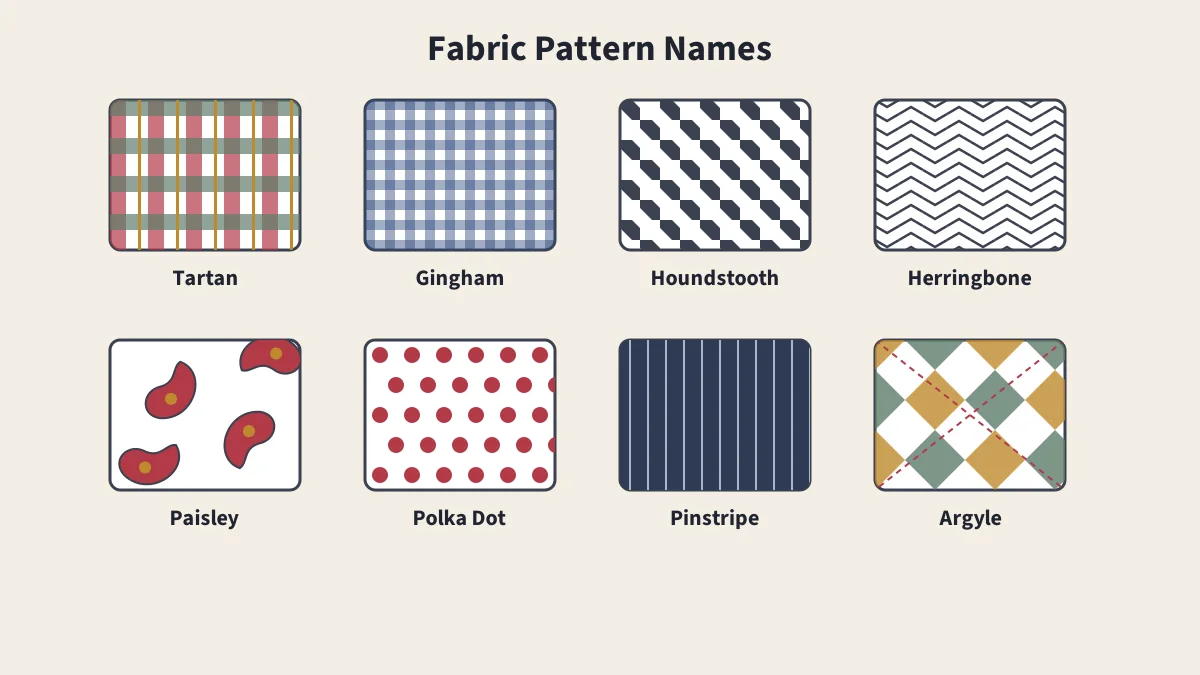
Tartan, gingham, houndstooth, paisley, polka dots and more.
Indian Handloom Textiles
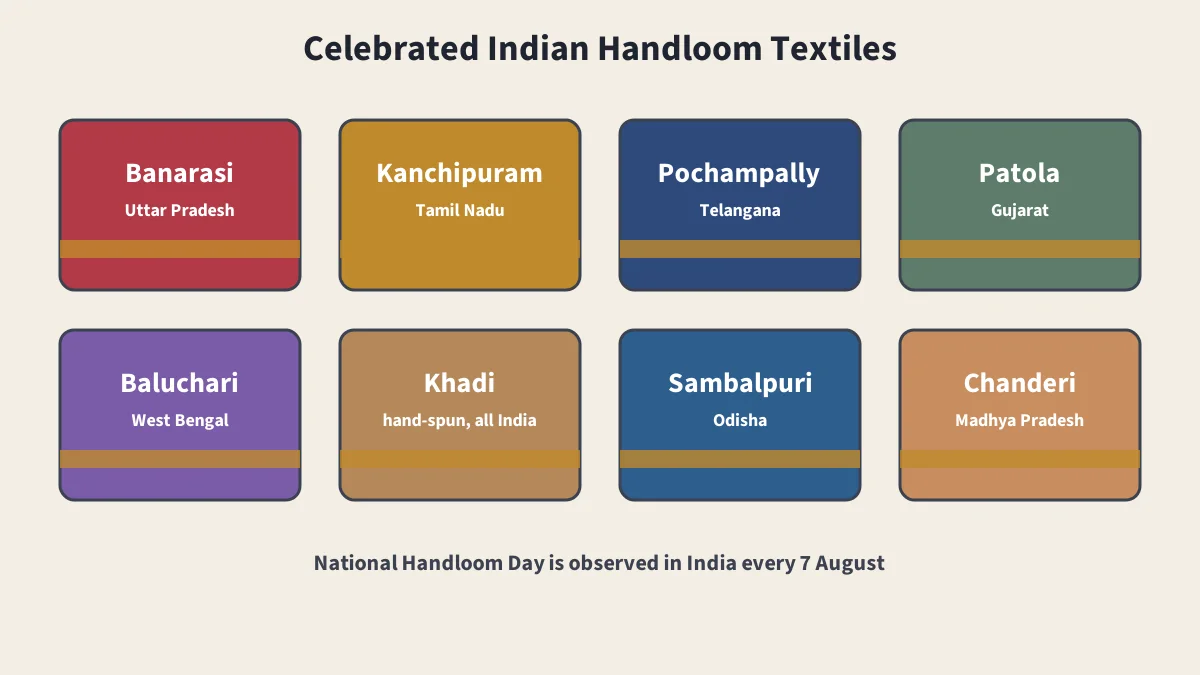
Banarasi, Kanchipuram, Pochampally, Patola, Jamdani and khadi.
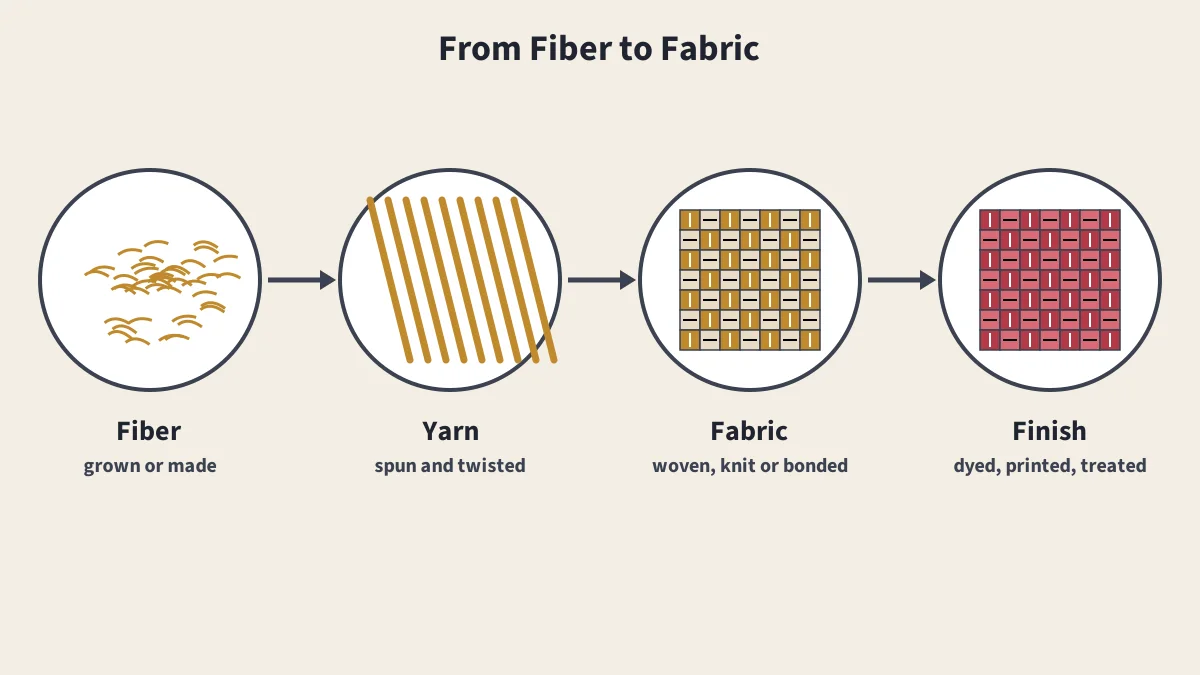
How Fabric Is Made
The four stages: fiber, yarn, fabric construction and finishing.