Technical and Outdoor Fabrics: How Performance Cloth Works (2026)
Rain jackets that breathe, tents that resist tearing and vests that stop bullets all rely on engineered textiles. Here is the science behind the most common technical and outdoor fabrics.
In This Article
Technical Fabrics in Brief
- Membranes: waterproof yet breathable
- DWR: surface finish that makes water bead up
- Ripstop: grid of strong yarns that stops tears
- Aramids: Kevlar and Nomex for strength and heat resistance
- Coated fabrics: polyurethane or silicone for waterproofing
Technical fabrics are engineered for a job: keeping rain out, letting sweat escape, resisting tears, or surviving heat and impact. Most are built from synthetic fibers such as nylon and polyester, then woven, laminated or coated to add performance.
Waterproof, Breathable Membranes
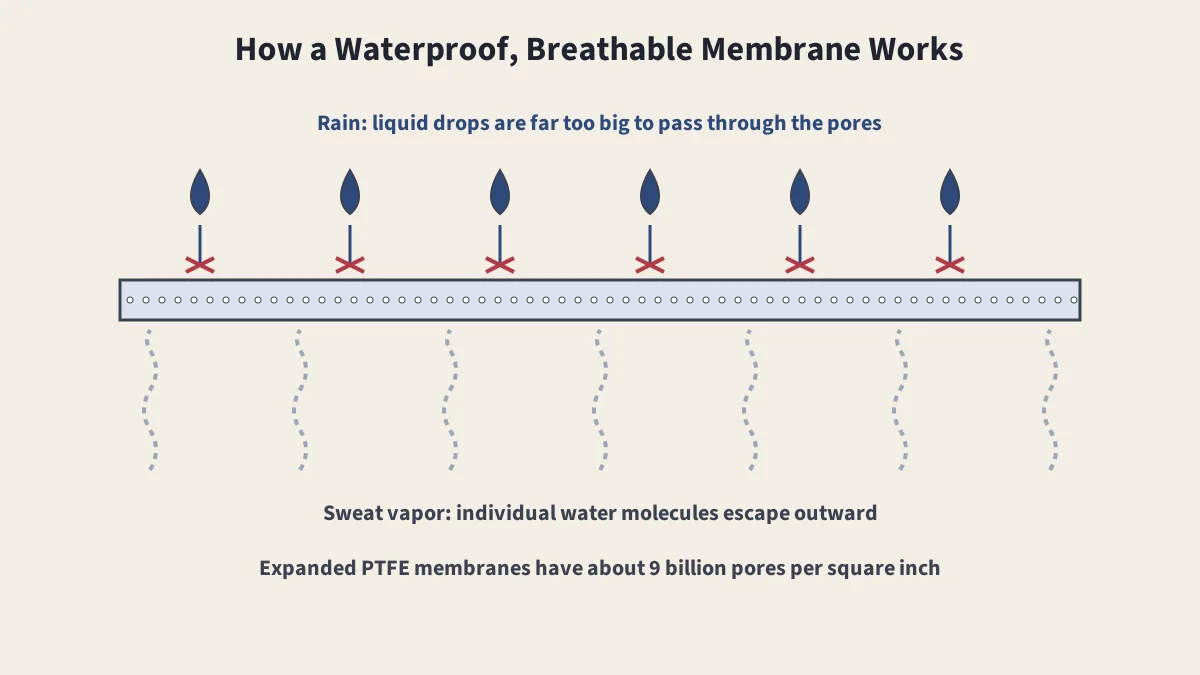
The best-known example is Gore-Tex, created by Bob Gore in 1969 by rapidly stretching heated PTFE, producing a microporous membrane. Its pores are about 1/20,000 the size of a water droplet, so liquid water cannot get through, but water vapor can, and the membrane has roughly 9 billion pores per square inch. Membranes like this are laminated to outer and inner fabrics to make 2-layer, 2.5-layer and 3-layer jackets.
Durable Water Repellent (DWR)
DWR is a coating or finish added at the factory to make a fabric's surface water-repellent, so rain beads up and rolls off rather than soaking in. Most factory treatments have been fluoropolymer-based and wear off with time, so garments may need re-treatment. In some cases, heat can reactivate a worn finish, and some researchers argue that silicon- and hydrocarbon-based finishes can reach similar repellency without PFAS.
Ripstop
Ripstop is a woven fabric, often nylon, with stronger and often thicker reinforcement yarns woven in at regular intervals in a crosshatch pattern. If the fabric is punctured, the grid stops the tear from running. It is used for backpacks, sleeping bags, tents, parachutes, yacht sails, hot air balloons and kites.
Other Technical Fabrics
| Fabric | What It Does | Typical Uses |
|---|---|---|
| Coated nylon or polyester | Polyurethane or silicone coating makes it waterproof | Tents, tarps, rain covers |
| Softshell | Stretchy, wind- and water-resistant woven fabric | Jackets, trousers |
| Fleece | Napped polyester knit that traps warm air | Mid layers, blankets |
| Aramids (Kevlar, Nomex) | Very high strength or heat resistance | Body armor, protective clothing |
| Waxed cotton and oilcloth | Traditional wax or oil treatments shed water | Jackets, bags, tablecloths |
| High-tenacity nylon | Abrasion-resistant woven nylon | Luggage, packs |
Sewing Technical Fabrics
- Pin only in seam allowances, or use clips; holes in waterproof fabric are permanent; see closures and pins.
- Use a sharp microtex needle and polyester or nylon thread; see types of thread.
- Lengthen the stitch slightly to avoid perforating the fabric.
- Seal seams on waterproof items with seam tape or seam sealer.
- Press cautiously, if at all; many coatings and membranes melt.
For the layered fabrics of the Apollo moon suits, see the Apollo spacesuit seamstresses.
Sources
- Gore-Tex, Wikipedia
- Durable water repellent, Wikipedia
- Ripstop, Wikipedia
- Kevlar, Wikipedia
Frequently Asked Questions
How can a fabric be both waterproof and breathable?
Membranes such as expanded PTFE have pores about 1/20,000 the size of a water droplet, so liquid water cannot pass through, but water vapor from sweat can escape.
What is ripstop fabric?
A woven fabric, often nylon, with stronger and often thicker reinforcement yarns woven in at regular intervals in a crosshatch pattern, which stops small tears from spreading.
What is DWR?
Durable water repellent: a coating or finish added to fabrics at the factory to make their surface water-resistant, so water beads up and rolls off. It wears off over time and may need renewing.
What is Kevlar?
An aramid fiber developed by Stephanie Kwolek at DuPont in 1965. By tensile strength-to-weight ratio, it is about five times stronger than steel, and it is used in body armor, tires and racing sails.
Keep Reading
Nylon
The first synthetic fiber, from stockings to parachutes.
Polyester
What polyester is, its history, its pros and cons and how to sew it.
Fusible Web and Adhesives
Fusible web, fusible tape, fabric glue and basting spray compared.
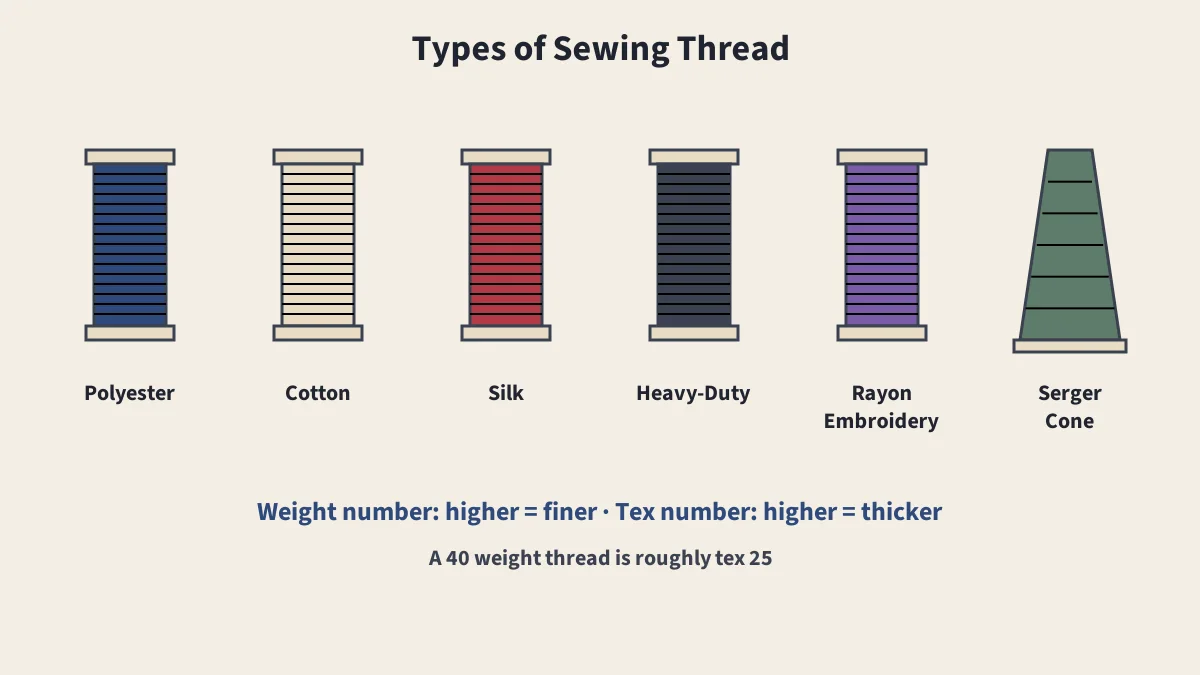
Types of Thread
Thread fibers, uses, and weight, tex and denier explained.