Ironing Temperatures by Fabric: Getting the Heat Right (2026)
Too cool and wrinkles stay; too hot and synthetics melt, wool shines and silk scorches. Care labels use one, two or three dots to set the iron. Here is what they mean and how common fabrics compare.
In This Article
Iron Settings in Brief
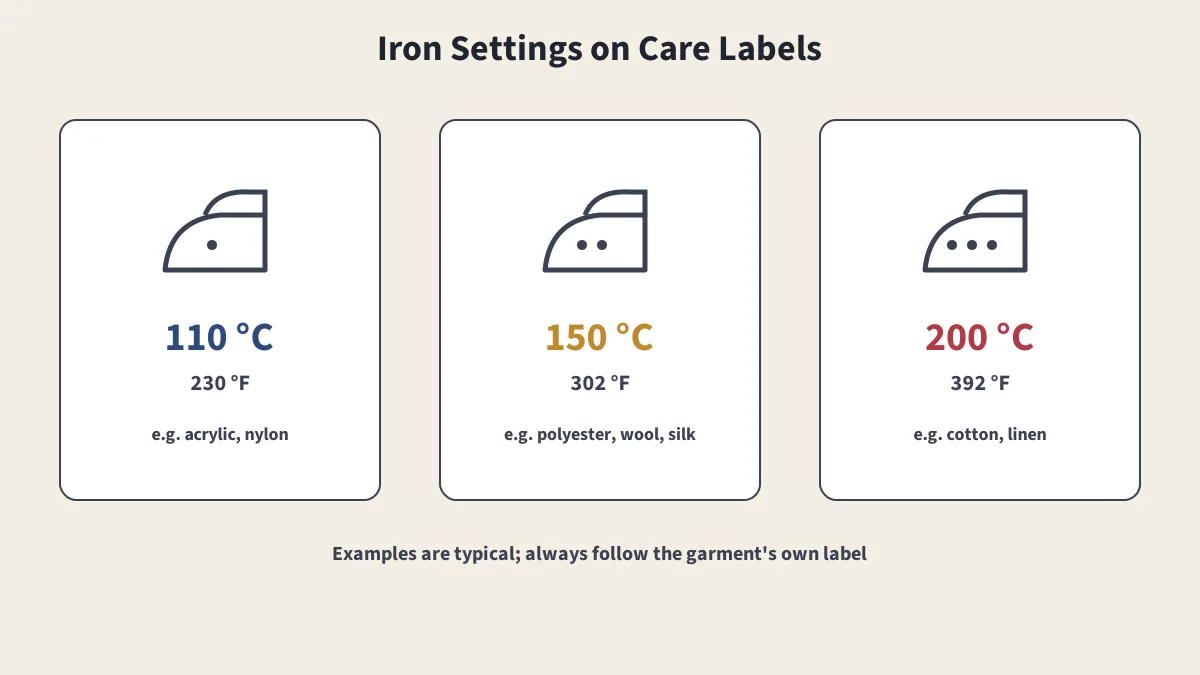
- One dot: up to 110 °C (230 °F)
- Two dots: up to 150 °C (302 °F)
- Three dots: up to 200 °C (392 °F)
- Crossed-out iron: do not iron
- Blends: use the lowest setting among the fibers
Every fiber has a heat limit. Plant fibers such as cotton and linen tolerate high heat and need it, with moisture, to press well. Protein fibers like wool and silk need moderate heat and protection, and many synthetics soften or melt at temperatures cotton shrugs off. Care labels translate that into dots on an iron symbol; see laundry care symbols.
Iron Dots
| Symbol | Maximum Temperature | Typical Fibers |
|---|---|---|
| One dot | 110 °C (230 °F) | Acrylic, nylon, acetate and other heat-sensitive synthetics |
| Two dots | 150 °C (302 °F) | Polyester, wool, silk, many blends |
| Three dots | 200 °C (392 °F) | Cotton, linen |
Typical fibers are a general guide; the garment's own label always takes priority, because finishes, trims and blends change what a fabric can take.
Fabric by Fabric
| Fabric | Setting | Tips |
|---|---|---|
| Cotton | High | Use steam; press while slightly damp |
| Linen | High | Steam; iron dark linen on the wrong side to avoid shine |
| Wool | Medium, with steam | Always use a pressing cloth; press, don't slide |
| Silk | Low to medium | Wrong side; pressing cloth; avoid water spots |
| Rayon | Medium | Wrong side; avoid stretching while damp |
| Polyester | Low to medium | Pressing cloth; test first |
| Nylon | Low | Pressing cloth; melts easily |
| Acrylic | Low | Steam lightly without touching |
| Velvet and pile | Low to medium steam | Steam from the back over a towel or needle board |
Tips for Pressing Without Damage
- Start low and increase the heat gradually.
- Test on a scrap or a hidden seam allowance.
- Use a pressing cloth to prevent shine and scorching; see pressing tools.
- Press on the wrong side for dark, textured or delicate fabrics.
- Keep the soleplate clean, especially after using fusibles.
Sources
- Laundry symbol, Wikipedia
- Clothes iron, Wikipedia
Frequently Asked Questions
What do the dots on an iron mean?
They show the maximum safe temperature: one dot is 110 °C (230 °F), two dots 150 °C (302 °F) and three dots 200 °C (392 °F).
What temperature should I iron cotton at?
Cotton and linen usually tolerate the hottest setting, three dots, ideally with steam, unless the label says otherwise.
Can you iron polyester?
Yes, at a low to medium setting, usually one or two dots depending on the label, preferably with a pressing cloth. Too much heat can melt or glaze it.
How do I iron blends?
Use the setting for the most heat-sensitive fiber in the blend, and test on a hidden area or scrap first.
Keep Reading
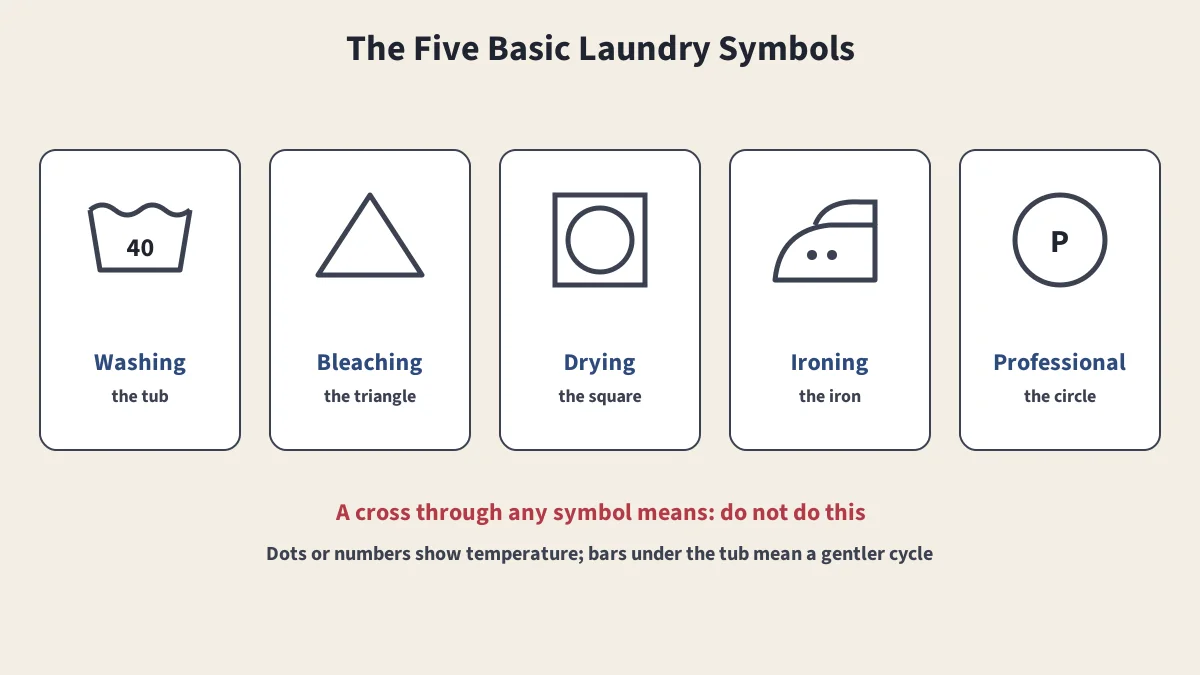
Laundry Care Symbols
The tub, triangle, square, iron and circle, with dots and bars.
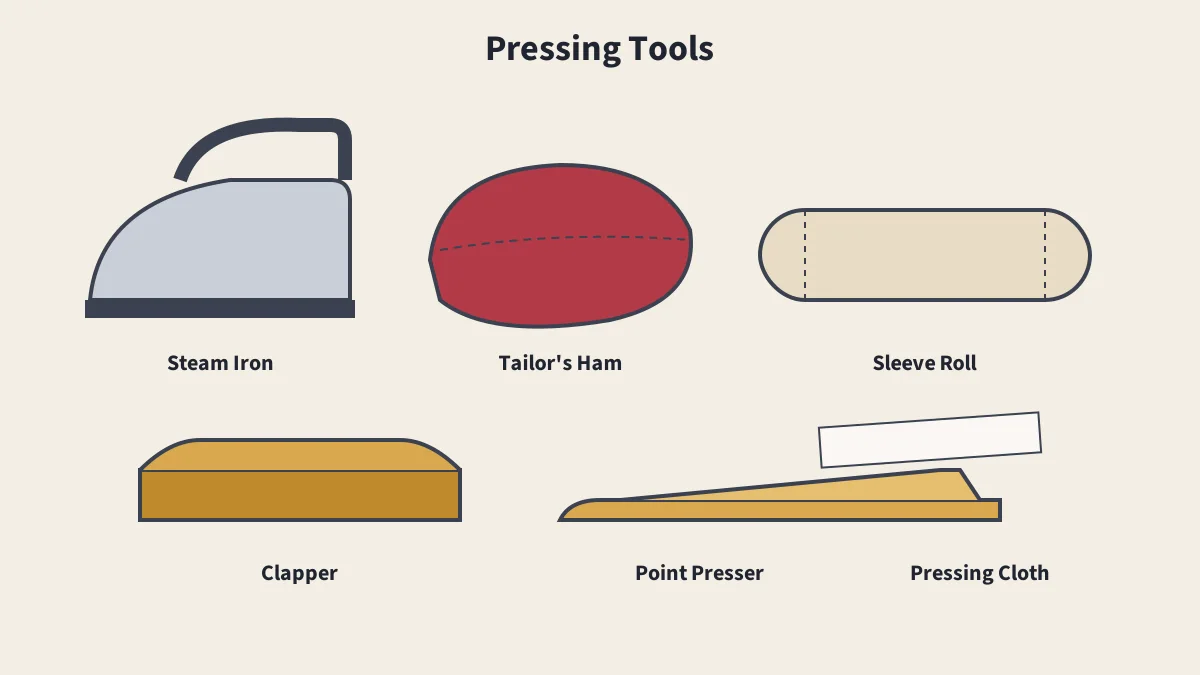
Pressing Tools
The iron, tailor's ham, sleeve roll, clapper and pressing cloth.
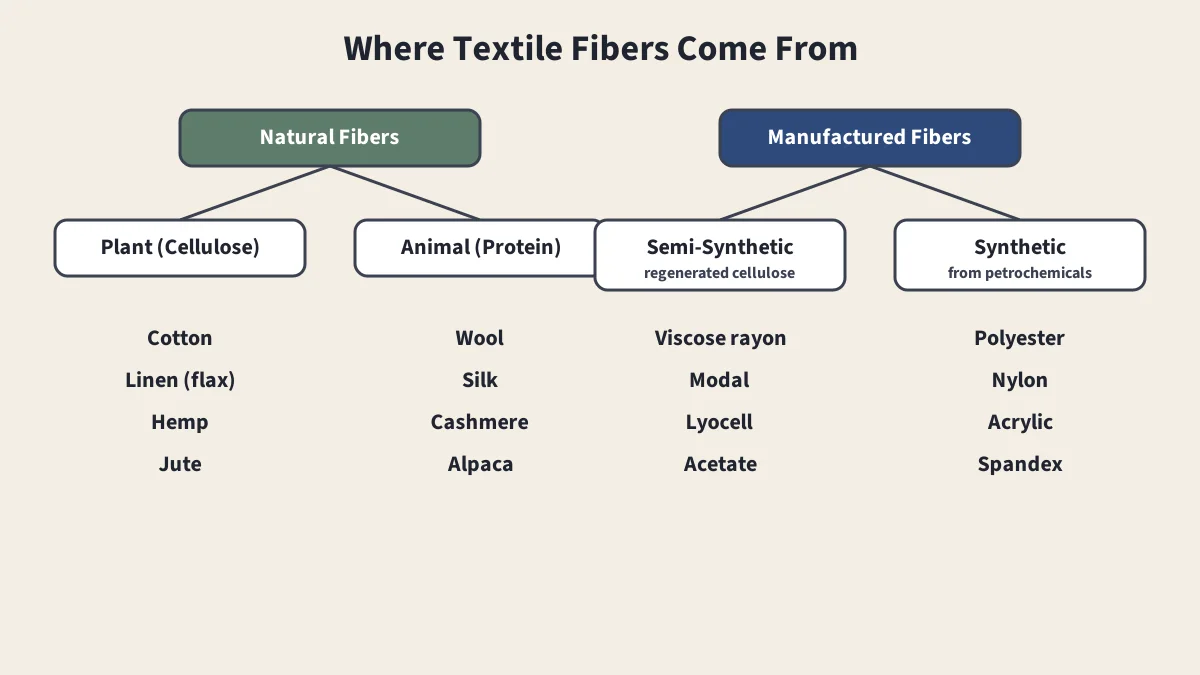
Natural vs. Synthetic Fibers
Plant, animal, semi-synthetic and synthetic fibers compared.
Polyester
What polyester is, its history, its pros and cons and how to sew it.