How Fabric Is Made: The Journey From Fiber to Cloth (2026)
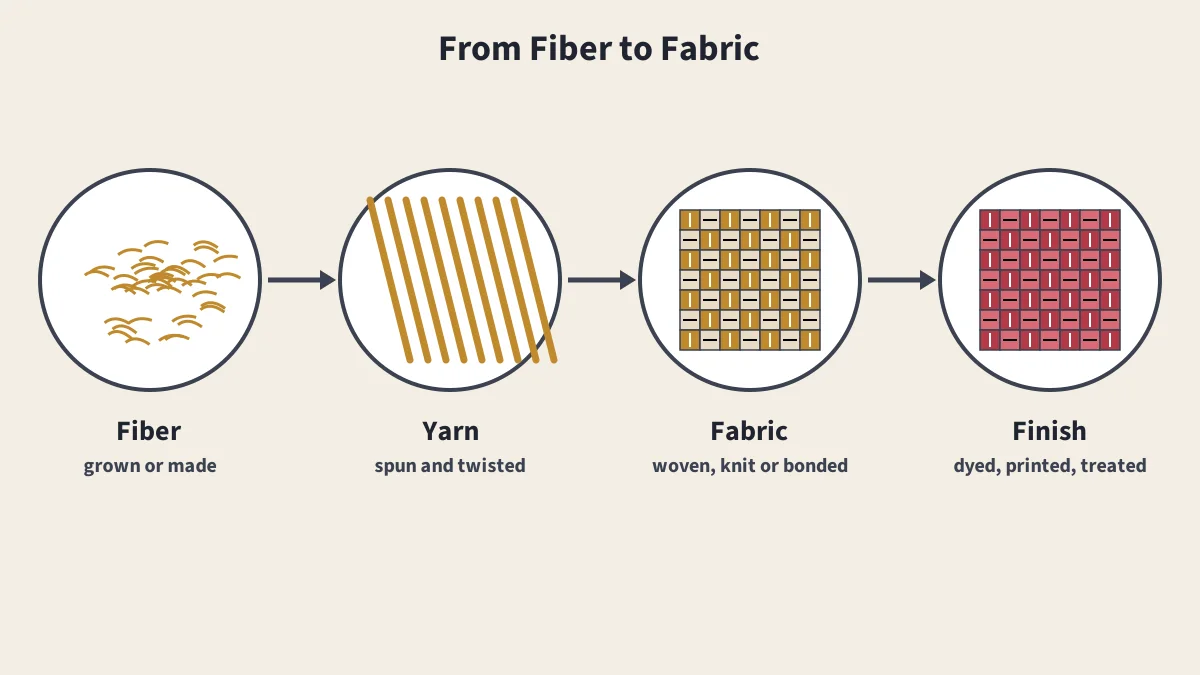
A cotton shirt and a polyester jacket start in very different places, but they follow the same basic path: fiber, yarn, fabric and finish. Here is what happens at each stage.
In This Article
Fabric Making in Brief
- 1. Fiber: grown, raised or manufactured
- 2. Yarn: fibers spun and twisted together
- 3. Fabric: woven, knitted or bonded
- 4. Finish: dyed, printed and treated
Whether it is handwoven linen or factory-made fleece, fabric follows the same broad path from raw material to cloth. Understanding that path explains why fabrics behave as they do, from how they drape to how they shrink.
Stage 1: Fiber
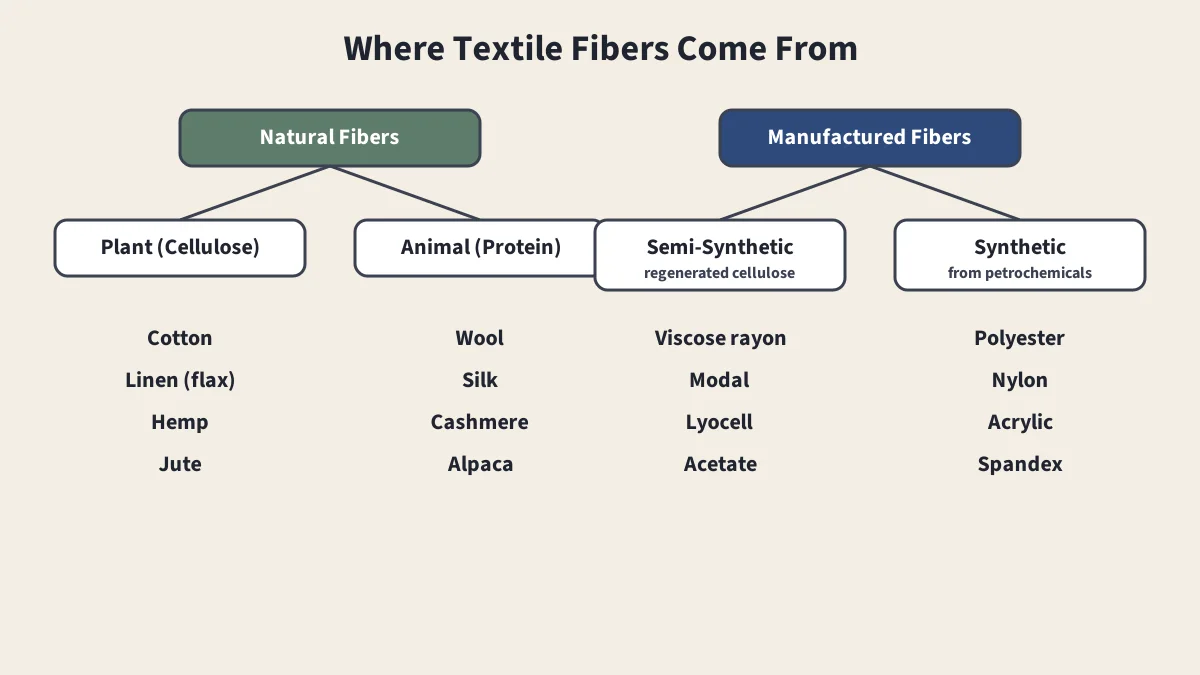
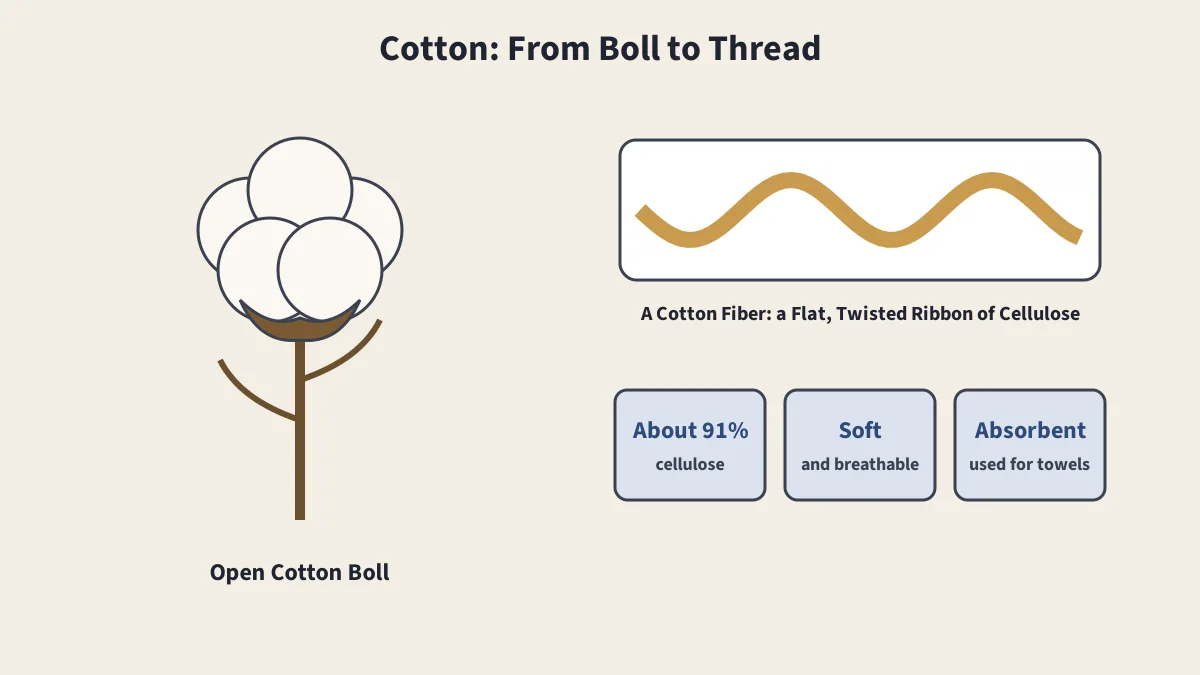
Fiber is the raw material. Natural fibers come from plants and animals: cotton from seed hairs, linen from flax stems, wool from sheep, silk from silkworm cocoons. Manufactured fibers are either regenerated from natural cellulose, like rayon, or made by chemical synthesis, like polyester and nylon. See natural vs. synthetic fibers.
Fibers are either short staple fibers, such as cotton and wool, measured in centimeters, or long continuous filaments, such as silk and most synthetics. Synthetic filaments can also be cut into staple lengths to imitate natural fibers.
Stage 2: Yarn
Before staple fibers can become yarn, they are cleaned, then carded or combed so the fibers lie roughly parallel. Spinning then draws them out and twists them together. The twist locks the fibers together and gives the yarn its strength. Yarns can be single or plied, smooth or textured, tightly or loosely twisted, and each choice changes the final fabric.
Stage 3: Fabric Construction
| Method | How It Works | Examples |
|---|---|---|
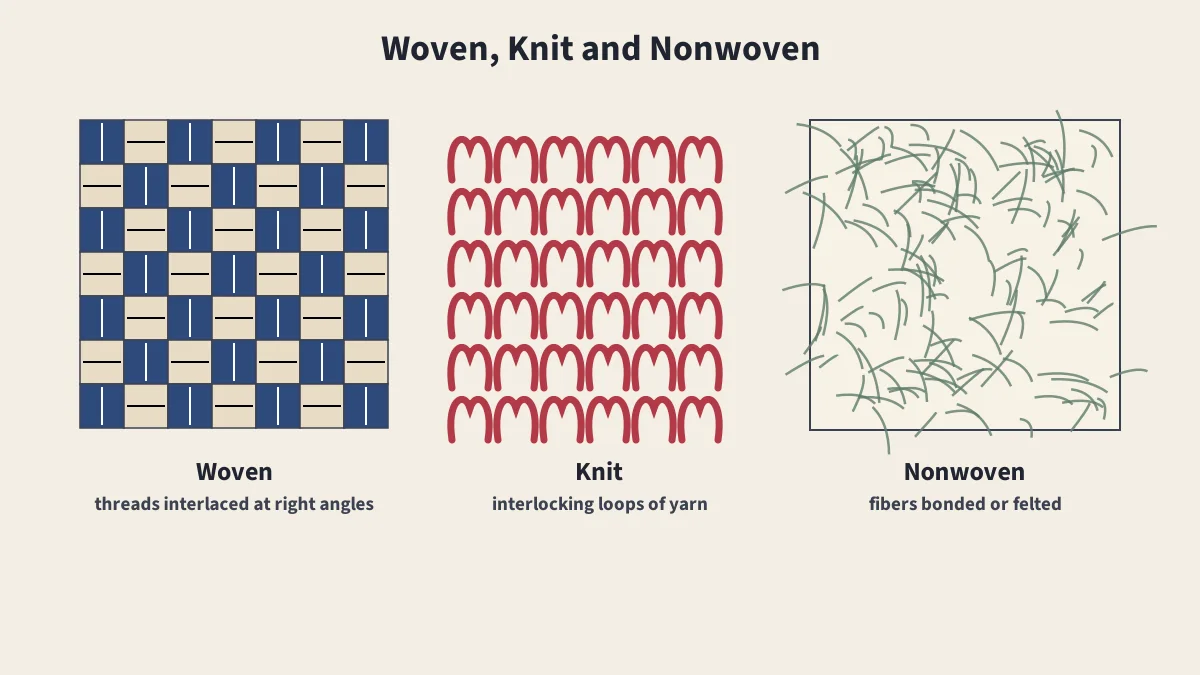
| Weaving | Two sets of threads interlaced at right angles on a loom | Denim, poplin, satin, linen |
| Knitting | Yarn pulled through loops to make interlocking rows | Jersey, rib, fleece |
| Nonwoven | Fibers bonded by chemical, mechanical, heat or solvent treatment | Felt, interfacing, wipes |
| Other | Twisting, looping or knotting threads | Lace, net, braid |
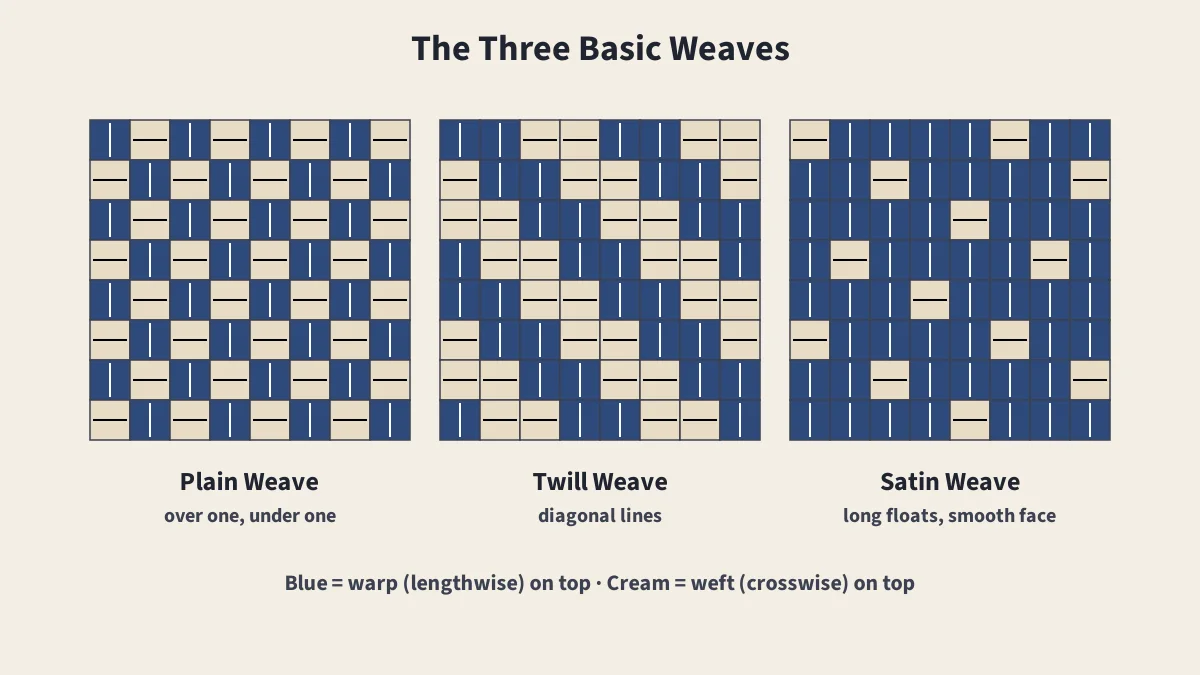
See woven vs. knit vs. nonwoven for how these differ, and fabric weaves for the main weave structures.
A Short History of Mechanization
| Date | Development |
|---|---|
| 1785–1792 | Edmund Cartwright patents the power loom |
| 1793 | Eli Whitney's cotton gin |
| 1804 | Joseph Marie Jacquard patents a loom controlled by punched cards |
| 1935 | Nylon, the first fully synthetic fiber, is synthesized at DuPont |
Stage 4: Finishing
Raw, or "greige," cloth straight off the loom or knitting machine is rarely ready to use. Finishing turns it into the fabric you buy:
- Preparation: washing and scouring to remove oils, sizes and impurities, and bleaching for white or pale colors.
- Coloring: dyeing (at the fiber, yarn or fabric stage) and printing.
- Mechanical finishes: brushing or napping for softness, calendering for smoothness or shine, and preshrinking.
- Chemical finishes: wrinkle resistance, water repellency, flame retardancy and stain resistance.
Sources
- Textile, Wikipedia
- Weaving, Wikipedia
- Cotton, Wikipedia
- Nonwoven fabric, Wikipedia
Frequently Asked Questions
What are the steps in making fabric?
Most fabrics are made in four stages: producing fibers, spinning them into yarn, constructing fabric by weaving, knitting or bonding, and finishing it with dyeing, printing or other treatments.
What is spinning?
Spinning draws out and twists short fibers together into a continuous yarn. Twist gives the yarn strength. Long continuous filaments, like silk or polyester, can be used with little or no spinning.
What is a loom?
A loom is a device that holds the lengthwise warp threads in place while the crosswise weft threads are woven through them.
What does fabric finishing mean?
Finishing is everything done to cloth after it is constructed, such as washing, bleaching, dyeing, printing, and treatments that change how it feels, wrinkles, shrinks or repels water.
Keep Reading
Woven vs. Knit vs. Nonwoven
How the three constructions differ, and how to tell them apart.
Fabric Weaves
Plain, twill and satin weaves, plus dobby and jacquard.
Natural vs. Synthetic Fibers
Plant, animal, semi-synthetic and synthetic fibers compared.
Cotton
Where cotton comes from, its history and how it behaves.