Pile Fabrics: Velvet, Corduroy, Terry and Chenille Explained (2026)
Pile fabrics have a surface of tiny upright yarns or loops. Cut them and you get velvet or corduroy; leave them as loops and you get terry towels. Here is how the main pile fabrics are made and how they differ.
In This Article
Pile Fabrics in Brief
- Velvet: cut warp pile
- Velveteen: cut weft pile, usually cotton
- Velour: knitted pile
- Corduroy: cut pile in ridges called wales
- Terry: uncut loops; chenille: fuzzy yarn
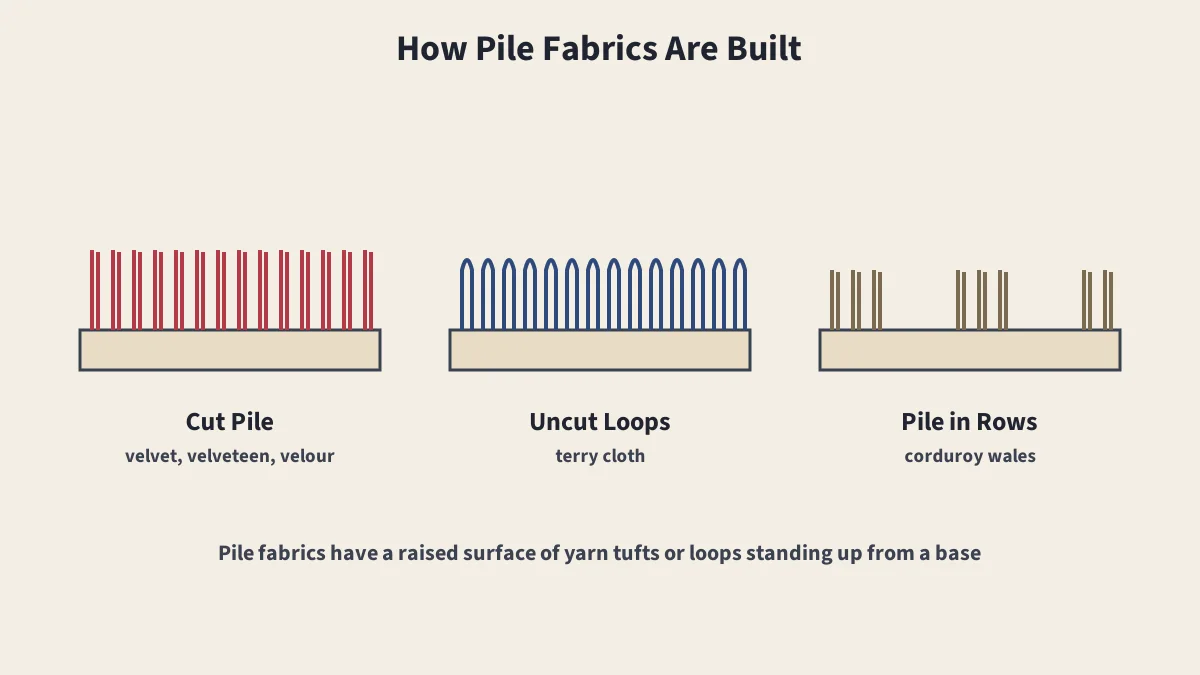
A pile fabric has a raised surface of yarn tufts or loops standing up from a base fabric. The pile can be cut or left as loops, made with extra warp or weft yarns, or built into the yarn itself. Pile fabrics feel soft and rich and catch the light differently depending on which way the pile lies.
Velvet, Velveteen and Velour
| Fabric | How the Pile Is Made | Usual Fiber |
|---|---|---|
| Velvet | Cut warp yarns | Traditionally silk; now also rayon, polyester and blends |
| Velveteen | Cut weft yarns | Usually cotton |
| Velour | Knitted pile | Often polyester |
Velvet is woven on a special loom that makes two layers of fabric at once, joined by an extra warp yarn; the layers are then cut apart, leaving pile on each. Velvet reached Baghdad by the reign of Harun al-Rashid (786 to 809), Cairo became the largest producer in the Mamluk era, and Italian cities made some of the most prized velvets of medieval Europe. Its softness and cost made it a mark of nobility.
Velvet comes in many forms: crushed velvet, panne velvet with the pile pressed one way, devoré or burnout velvet with parts of the pile dissolved to leave a pattern on a sheer base, and chiffon velvet on a very light base.
Corduroy
Corduroy has extra yarns woven into the base fabric, which are cut to form raised ridges of pile called wales. The wale count is the number of wales per inch; counts range from about 1.5 to 21, with 10 to 12 traditional. Pincord, also called pinwale or needlecord, has more than 16 wales per inch, while wide wale is used mainly for trousers and upholstery.
Terry Cloth
Terry cloth is woven with many protruding loops of thread that can absorb large amounts of water, which makes it the standard fabric for towels and bathrobes. Industrial production began in 1850 at Christy, an English towel maker, based on handwoven terry seen in Turkey; Queen Victoria approved the name "Royal Turkish Towels." French terry, a knit, has loops on the inside and a smooth outer face.
Chenille
Chenille, the French word for caterpillar, is a yarn made by placing short lengths of pile between two core yarns and twisting them together, so the pile stands out like a caterpillar's fur. Chenille-type yarn dates to 18th-century France. In the 1920s and 1930s, Dalton, Georgia, became the tufted bedspread capital of the US, and its hand-tufted bedspreads were known as chenille.
Sewing Pile Fabrics
- Cut with the nap: lay all pieces in the same direction, as pile looks lighter or darker depending on its direction.
- Use a walking foot to stop layers creeping.
- Press carefully: steam from the back over a towel or needle board to avoid crushing the pile; see pressing tools.
- Baste or pin within the seam allowance, as pins can mark velvet.
- Expect shedding when cutting; clean the machine afterward.
Sources
- Velvet, Wikipedia
- Corduroy, Wikipedia
- Terrycloth, Wikipedia
- Chenille fabric, Wikipedia
Frequently Asked Questions
What is the difference between velvet and velveteen?
Velvet has a warp pile, made by cutting extra warp yarns, and was traditionally silk. Velveteen has a weft pile, made by cutting weft yarns, and is usually cotton, with a shorter, firmer pile.
What is velour?
Velour is a knitted pile fabric, often polyester, that looks like velvet but stretches. What fabric stores sell as 'panne velvet' is often better described as velour.
What do corduroy wale numbers mean?
Wale count is the number of wales, or ridges, per inch. A lower number means thicker wales. Counts range from about 1.5 to 21, with 10 to 12 traditional; pincord or needlecord has more than 16.
Does corduroy mean 'cord of the king'?
That is a common but possibly false etymology. Wikipedia notes that the true origin of the word is not known and no documents support the story about French royal servants.
Keep Reading
Types of Cotton Fabric
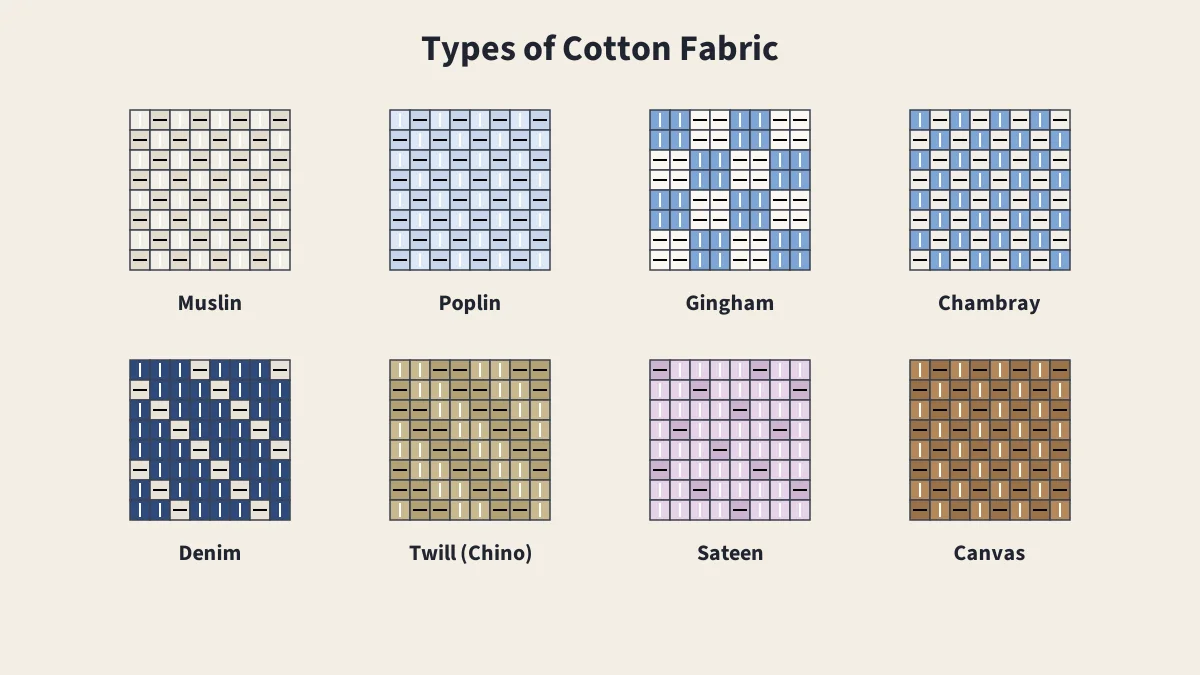
Muslin, poplin, gingham, chambray, denim, corduroy and more.
Types of Silk Fabric
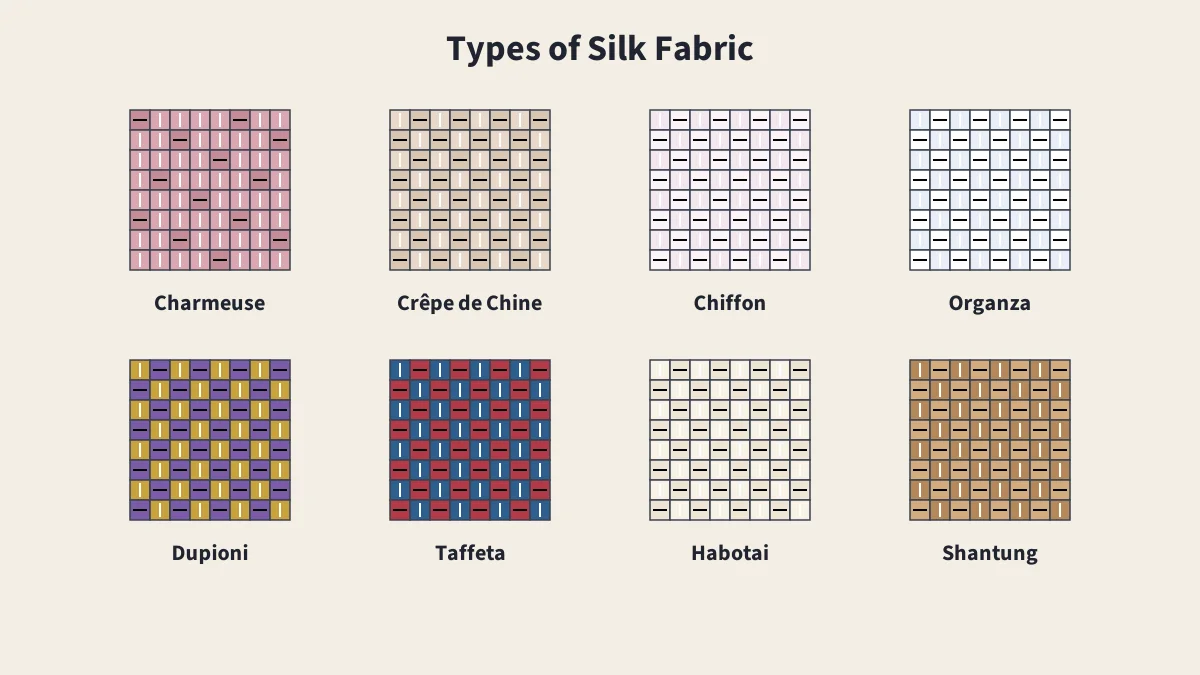
Charmeuse, crêpe de chine, organza, dupioni, taffeta and more.
Sewing Trims
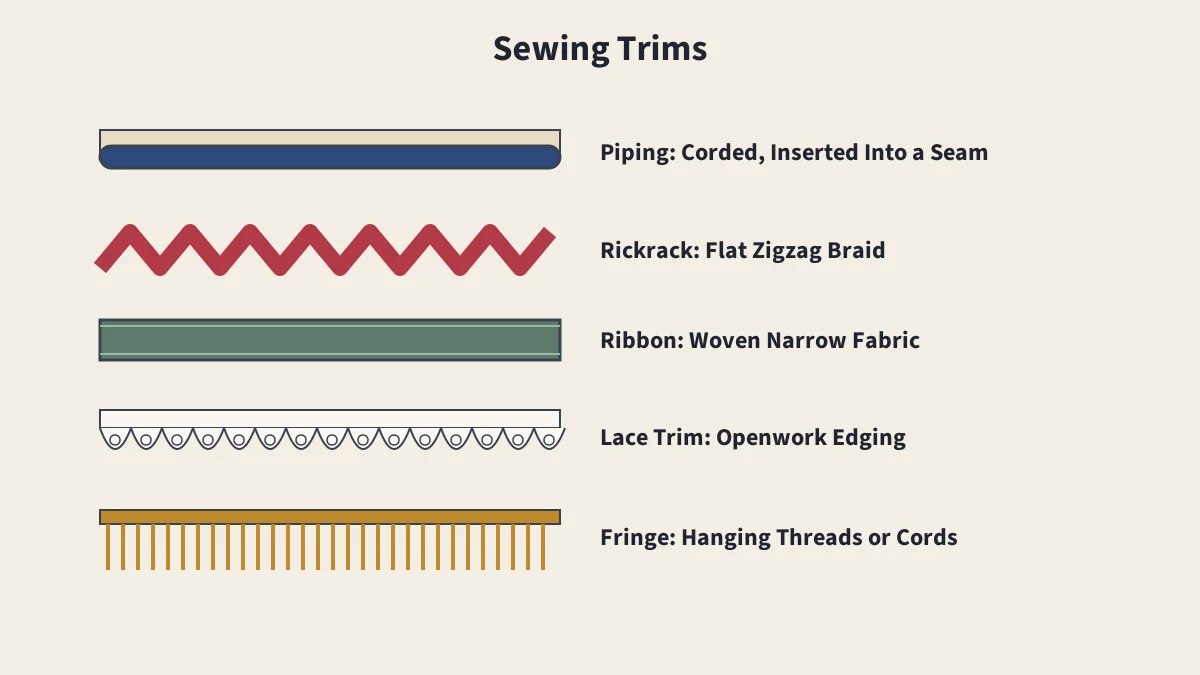
Piping, rickrack, ribbon, lace trim and fringe explained.
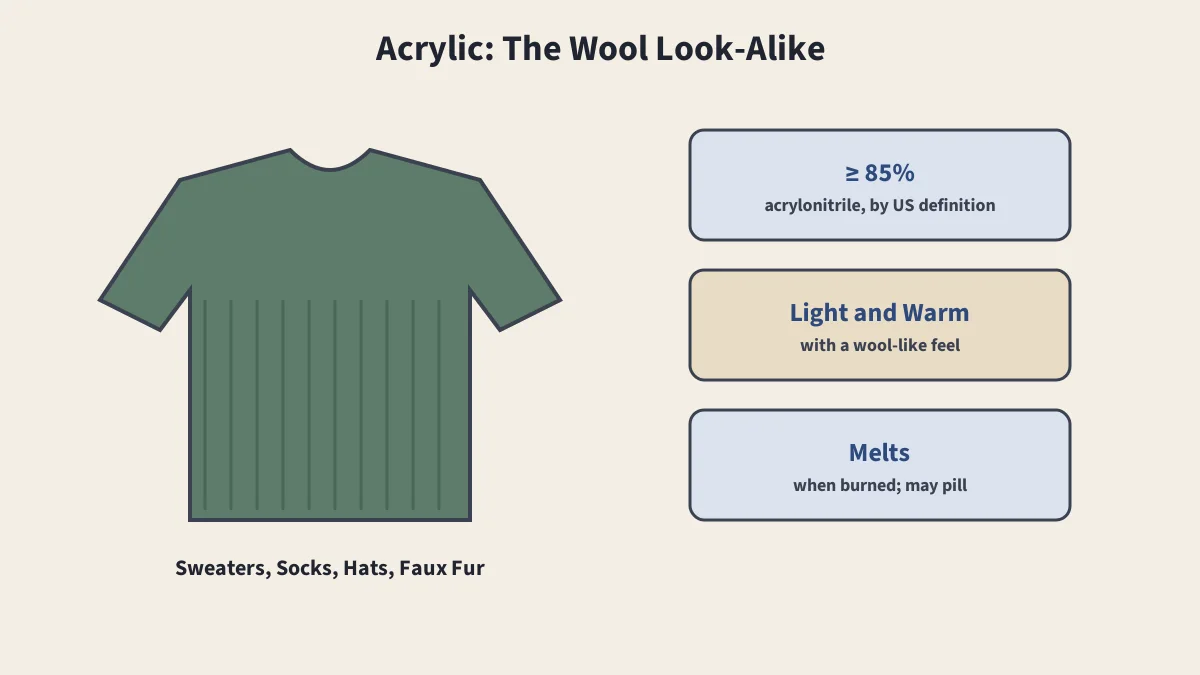
Acrylic
The wool look-alike: properties, modacrylic and faux fur.