The Fabric Burn Test: Identifying Mystery Fabric by Flame (2026)
Thrifted fabric, inherited stashes and unlabeled remnants rarely come with a fiber label. A careful burn test on a few threads can tell plant fibers, animal fibers and synthetics apart.
In This Article
Burn Test in Brief
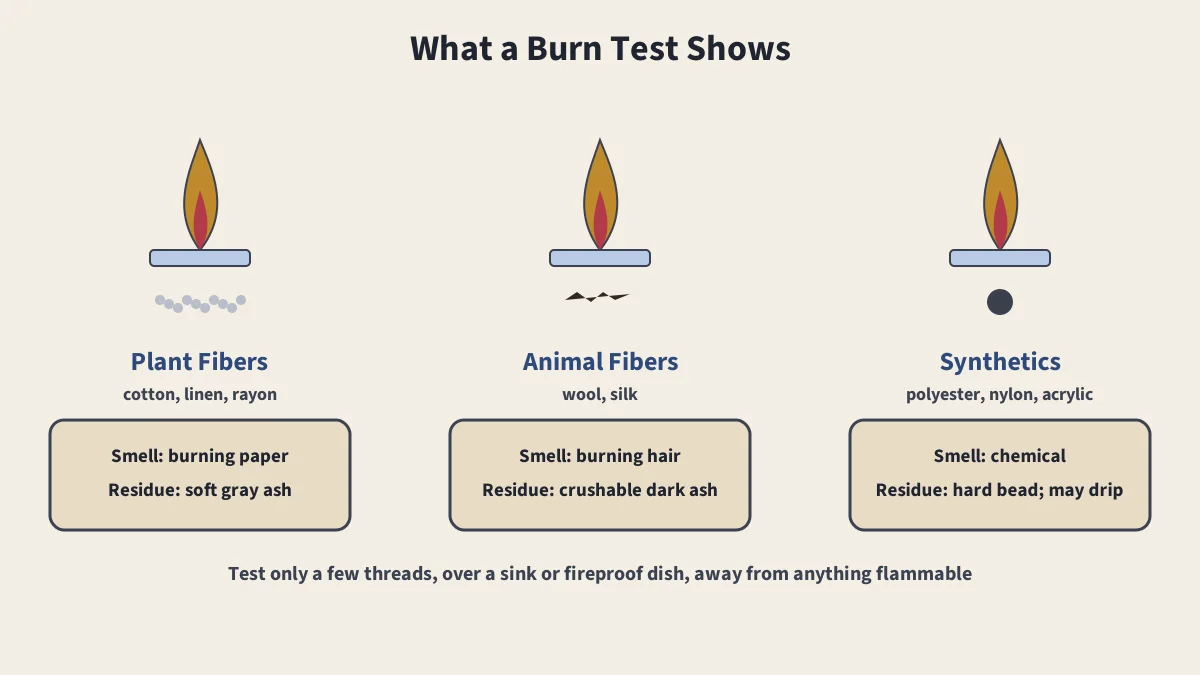
- Plant fibers: burn fast, paper smell, soft gray ash
- Animal fibers: slow, hair smell, crushable dark ash
- Synthetics: melt and drip, chemical smell, hard bead
- Blends: mixed results; hard to read
- Safety: a few threads only, over water or a fireproof dish
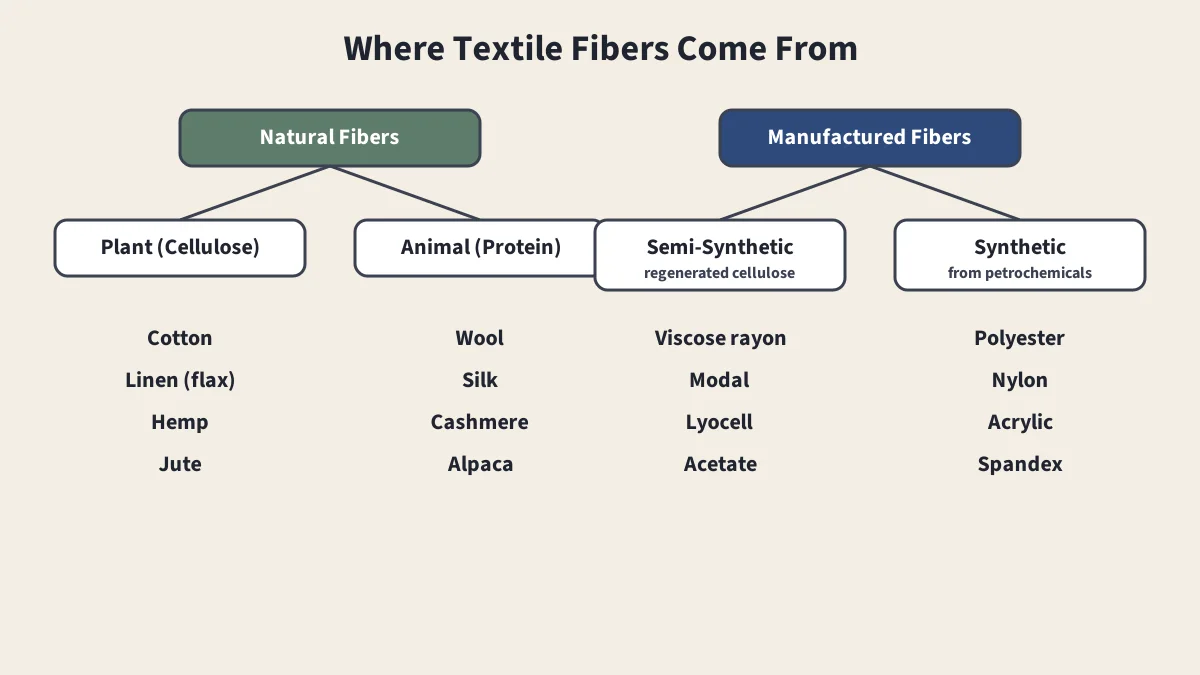
A burn test is a simple way to get a rough idea of what a fabric is made of. Different fiber families burn, smell and leave residue in distinctive ways, because plant fibers are cellulose, animal fibers are protein and synthetics are plastics; see natural vs. synthetic fibers. It is a quick, rough guide, not a laboratory test.
How to Do It
- Take a sample from a seam allowance or scrap: a few warp and weft threads, tested separately if you suspect a blend.
- Hold it with tweezers and bring it slowly to a small flame.
- Watch whether it shrinks from the flame, melts, flares or burns steadily.
- Remove it from the flame and see whether it keeps burning or goes out.
- Smell the smoke carefully, without leaning in.
- Let the residue cool, then rub it between your fingers.
What to Look For
| Fiber | Burning | Smell | Residue |
|---|---|---|---|
| Cotton, linen, hemp | Ignites easily; burns steadily; afterglow | Burning paper or leaves | Soft gray ash |
| Rayon, viscose, lyocell | Like cotton, often faster | Burning paper | Little soft ash |
| Wool and hair fibers | Slow; curls from flame; often self-extinguishes | Burning hair | Dark, crushable ash |
| Silk | Slow; curls from flame | Burning hair | Dark, crushable beads |
| Polyester | Melts and shrinks away; may drip | Sweetish chemical | Hard, dark bead |
| Nylon | Melts and shrinks; may drip | Chemical | Hard bead |
| Acrylic | Melts, flares and burns | Acrid, sour | Hard, irregular bead |
Limits of the Test
- Blends give mixed results: a polyester-cotton may smell of paper but leave tiny hard beads.
- Finishes such as flame retardants or coatings change how fabric burns.
- The test identifies fiber, not weave. A satin can be silk, polyester or nylon.
- It cannot measure percentages, so it cannot confirm a label's exact content.
Sources
- Natural fiber, Wikipedia
- Synthetic fiber, Wikipedia
- Acrylic fiber, Wikipedia
Frequently Asked Questions
How do I do a fabric burn test?
Twist a few threads or a tiny snip of fabric together, hold it with tweezers over a sink or fireproof dish, and bring a small flame to it. Watch how it burns, note the smell, and look at the residue once it has cooled.
How does cotton burn?
Cotton and other plant fibers, including linen and rayon, ignite easily, burn without melting, smell like burning paper and leave a soft, gray ash.
How can you tell wool and silk in a burn test?
Animal fibers burn slowly, tend to curl away from the flame and may go out on their own. They smell like burning hair and leave a dark, crushable ash.
How do synthetics behave in a burn test?
Polyester, nylon and acrylic melt and shrink from the flame, may drip, smell chemical and leave a hard bead that does not crush easily.
Keep Reading
Natural vs. Synthetic Fibers
Plant, animal, semi-synthetic and synthetic fibers compared.
Cotton
Where cotton comes from, its history and how it behaves.
Wool
What wool is, why it is warm and felts, and how to sew it.
Polyester
What polyester is, its history, its pros and cons and how to sew it.